🛒 Best Price Today on Amazon
Prime members get fast, free shipping on everything above, plus member-only deals. New members get a 30-day free trial — cancel anytime.
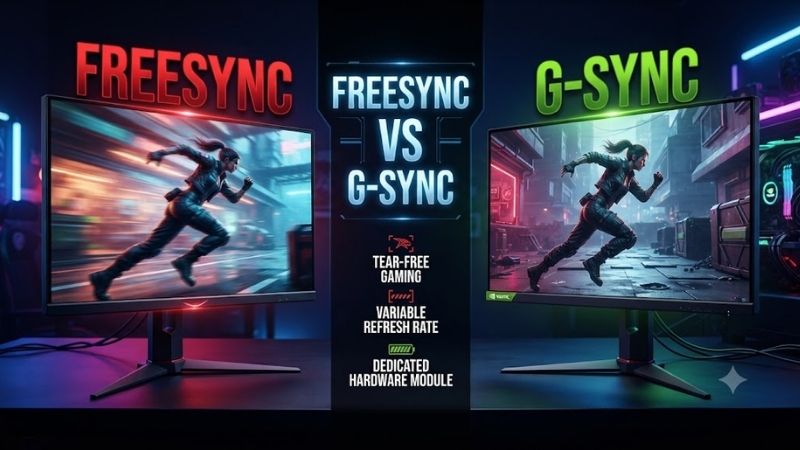
Freesync vs Gsync remains a perplexing dilemma for gamers struggling with screen tearing, input lag, and mismatched graphics hardware. Choosing the wrong display protocol can ruin your visual immersion and waste your hard-earned cash. This comprehensive guide clarifies key technical distinctions to help you buy the right screen.
How to Choose the Right Adaptive Sync Monitor
When weighing Freesync vs Gsync, visual clarity depends heavily on matching your display with your graphics processing hardware. Buyers often overlook technical specifications that dictate everyday gaming performance. Evaluating critical panel metrics before purchasing ensures smooth motion and prevents expensive compatibility mistakes.
Graphics Card Ecosystem and GPU Compatibility
Your current graphics card represents the starting point for picking an adaptive sync screen. While modern graphics drivers allow cross-platform functionality in many setups, understanding the core Freesync vs Gsync ecosystem requirements guarantees that dynamic synchronization operates without unexpected software crashes.
Nvidia cards function seamlessly with certified compatible monitors over DisplayPort, whereas AMD Radeon cards leverage open royalty-free standards across varied price tiers. Investing in mismatched protocols can limit advanced driver utilities, so checking official hardware validation lists saves considerable frustration.
Variable Refresh Rate Range and LFC Support
The effective synchronization window determines how well a monitor handles dipping frame rates during demanding action sequences. Premium panels maintain variable refresh rates from maximum speeds down to thirty hertz, providing consistent frame pacing even when intensive visual effects cause sudden rendering drops.
Low Framerate Compensation duplicates rendered frames beneath minimum refresh thresholds to preserve buttery smoothness without tear lines, making Freesync vs Gsync evaluation vital. Always verify that your chosen display supports this feature so that challenging gaming scenes remain visually fluid and fully responsive.
Display Panel Technology and Response Times
Panel chemistry plays an immense role in how synchronized frames appear during fast competitive gameplay. In-plane switching panels deliver rich color accuracy alongside broad viewing angles, whereas fast twisted nematic screens prioritize raw pixel transitions to eliminate distracting motion blur during tournaments.
Vertical alignment panels offer superior contrast ratios and deep black levels for atmospheric single-player campaigns, yet slower pixel transitions can occasionally introduce subtle dark smearing. Choosing the correct panel type balances vivid colors against lightning-fast clarity across varied gaming genres.
Connection Ports and Interface Bandwidth
Physical connection interfaces dictate maximum refresh capabilities and determine whether adaptive synchronization functions properly. Most monitors require modern DisplayPort cables to unlock full variable refresh rates, especially when pushing high resolutions like fourteen-forty-p or ultra-high-definition four-k.
Recent revisions of high-definition multimedia interface cables now support variable refresh rates on modern consoles, but desktop graphics cards frequently demand dedicated DisplayPort links. Examining your monitor input ports ensures your gaming rig outputs full resolution and peak refresh speeds without signal drops.
Resolution Scaling and Desktop Pixel Density
Screen resolution directly impacts the computational strain placed on your graphics card while defining overall visual fidelity. Pairing high resolutions like fourteen-forty-p or four-k with dynamic refresh synchronization ensures sharp game textures without jagged edges, but demanding pixel counts require robust graphical hardware.
Balancing physical screen dimensions against native pixel density prevents text fringing and enhances fine gaming details. Choosing twenty-seven-inch monitors for quad-high-definition displays yields optimal sharpness without forcing aggressive scaling, maintaining crystal-clear sightlines during high-speed competitive skirmishes.
Top Picks for Adaptive Sync Gaming Displays
Navigating the modern Freesync vs Gsync landscape requires looking closely at real-world gaming performance, build quality, and value. The market offers compelling choices spanning enthusiast hardware modules to versatile open-standard panels. The following selections represent outstanding options for every budget tier.
| Monitor Model | Sync Technology | Resolution & Refresh | Standout Feature | Best For |
|---|---|---|---|---|
| ASUS ROG Swift PG279QM | G-Sync Module | 1440p at 240Hz | Reflex Latency Analyzer | Competitive Esports |
| LG 27GP850-B UltraGear | G-Sync Compatible | 1440p at 180Hz | Nano IPS Panel | Fast Action Gaming |
| Dell S2722DGM Curved | FreeSync Premium | 1440p at 165Hz | Deep VA Contrast | Budget Gamers |
ASUS ROG Swift PG279QM
Competitive esports enthusiasts demanding zero compromises will appreciate this display, which delivers premium performance in the Freesync vs Gsync arena. Powered by a dedicated synchronization processor, this monitor delivers pristine motion handling, ultra-low input latency, and consistent performance across its entire refresh range.
The integrated reflex latency analyzer offers valuable hardware-level diagnostic feedback, while the fast IPS panel displays remarkable color precision right out of the box. However, the premium price tag represents a significant investment, and the internal hardware module requires active cooling that generates faint fan noise.
LG 27GP850-B UltraGear
Mainstream PC gamers seeking an outstanding balance of speed, color vibrancy, and sensible pricing should choose this versatile display. Its Nano IPS panel achieves blazing-fast pixel response times that rival esports-grade screens while supporting certified compatibility across diverse desktop graphics hardware setups.
Wide color gamut coverage ensures stunning visuals during open-world role-playing titles, and the flexible stand supports effortless ergonomic adjustments. On the downside, moderate native contrast ratios produce slightly elevated black levels in dimly lit rooms, and high dynamic range highlights remain somewhat limited.
Dell S2722DGM Curved Gaming Monitor
Value-conscious gamers wanting immersive gameplay without draining their savings will find exceptional performance in this curved display. The curved vertical alignment screen wraps gently around your peripheral vision, producing rich contrast and deep atmospheric shadows that enhance narrative-driven gaming experiences.
Solid construction and intuitive menu controls make everyday operation delightfully simple, while flawless tear-free performance keeps gameplay engaging. Nonetheless, rapid dark transitions can exhibit minor ghosting artifacts, and viewing angles remain narrower compared to more expensive in-plane switching alternatives.
Frequently Asked Questions About Variable Refresh Rate
Clear answers regarding Freesync vs Gsync dispel common myths and streamline your purchasing journey significantly. Understanding cross-platform compatibility, latency implications, and cable specifications prevents costly misunderstandings. The detailed explanations below clarify critical technical considerations for modern setups.
Can an Nvidia Graphics Card Run on an AMD Display?
Modern Nvidia graphics cards easily drive certified adaptive sync panels using DisplayPort connections through compatible driver modes. This flexible arrangement allows gamers to enjoy tear-free visual performance without purchasing displays equipped with proprietary hardware processors, lowering the financial threshold for smooth gaming.
To activate this feature, users simply open the graphics control panel, navigate to display settings, and enable synchronization manually. While uncertified displays occasionally exhibit minor brightness fluctuations, verified compatible monitors function reliably and provide a responsive, tear-free visual experience across games.
Does Variable Refresh Rate Technology Increase Input Lag?
Unlike traditional vertical synchronization methods that introduce noticeable controller delay, modern adaptive refresh protocols operate with practically negligible latency overhead. Frame presentation aligns precisely with graphics processor rendering intervals, eliminating stutter without buffering frames inside video memory.
For optimal responsiveness during competitive matches, players should cap frame rates slightly below peak monitor refresh limits. This straightforward technique keeps the monitor within its active synchronization threshold, preventing sudden latency spikes caused by standard vertical sync engagement during frantic gaming sessions.
Is HDMI Capable of Supporting Adaptive Sync Protocols?
Modern connection standards allow variable refresh signals to travel across high-speed multimedia cables under specific technical revisions. While earlier implementations relied exclusively on computer DisplayPort connections, newer consoles and computer graphics cards transmit dynamic sync over version two-point-one television ports.
However, PC monitor makers frequently reserve their widest synchronization frequency ranges for dedicated DisplayPort connections. Inspecting manufacturer port specifications prior to purchasing guarantees that your preferred display cables unlock maximum resolution, full color depth, and unrestricted dynamic refresh speeds.
Why Do Some Budget Displays Flicker With Sync Enabled?
Screen brightness fluctuations on entry-level displays typically stem from narrow synchronization windows or unstable voltage delivery during aggressive refresh adjustments. When game frame rates oscillate rapidly around the lower threshold boundary, panel backlights can produce subtle flickering artifacts that distract players.
Selecting displays with official manufacturer certification and proven low framerate compensation prevents these visual anomalies effectively. Investing in validated hardware ensures panel voltages stay remarkably consistent across fluctuating framerates, preserving pristine image stability during intensive gaming sequences.
View more products:
- Ips Vs Va Vs Oled
- Monitor Response Time Guide
- Monitor Refresh Rate Guide
- Best ultrawide gaming monitor
Final Thoughts on Choosing Your Gaming Monitor
Ultimately, your ideal Freesync vs Gsync monitor hinges on your graphics hardware, competitive aspirations, and target budget. Enthusiasts craving uncompromising frame pacing can invest in dedicated hardware processors, while open-standard displays provide unmatched value. Match your screen to your system to enjoy flawless visual gaming.
Product links and buying checks
As an Amazon Associate, we earn from qualifying purchases.
- LG UltraGear 27GP850-B on Amazon — Check the exact model, selected variant and seller before ordering.
Prices, availability and included accessories can change. Review the current listing and the compatibility guidance above before purchasing.