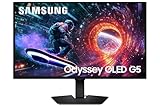
- Top Pick: Samsung 27" Odyssey OLED G6 (G61SH) QD-OLED, QHD (1440P) Gaming Monitor
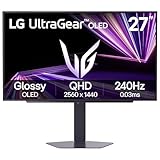
- Best Value: LG 27GX704A-B 27-inch Ultragear QHD (2650×1440) OLED Gaming Monitor 240Hz, 0.03ms, NVIDIA G-Sync Compatible, AMD FreeSync Premium Pro, VESA Display HDR TrueBlack400, HDMI 2.1, DisplayPort, Black
- Premium Choice: Samsung 49" Odyssey (G93SC) Series QD-OLED Curved Gaming Monitor
OLED has become the dream panel for gamers who want the absolute best image quality. With self-lit pixels that switch off completely for perfect blacks and near-instant response times measured in fractions of a millisecond, an OLED gaming monitor delivers stunning contrast, vivid color, and blur-free motion that traditional LCDs simply cannot match.
We compared OLED and QD-OLED gaming monitors across sizes and refresh rates, weighing panel quality, response time, and gaming features. Below are our top picks, a buying guide to help you understand what OLED offers, and answers to the questions gamers ask most before investing in this premium technology.


As an Amazon Associate we earn from qualifying purchases at no extra cost to you.





🎮 Get More From Your Setup — Free
Prime Gaming gives you free PC games every month, in-game loot, and a free Twitch channel sub — plus fast free shipping on all the gear above. New members get a 30-day free trial.
Watch: Best Gaming Monitor Oled — Video Review
How to Choose an OLED Gaming Monitor
- Panel type: QD-OLED adds quantum dots for extra brightness and color, while standard OLED offers superb contrast and deep blacks.
- Refresh rate: OLED’s fast pixels pair beautifully with 240Hz refresh rates for exceptionally smooth, blur-free motion.
- Resolution and size: QHD 27-inch panels balance sharpness and drivability, while ultrawide and 49-inch options maximize immersion.
- HDR performance: Look for DisplayHDR TrueBlack certification, which showcases OLED’s ability to render bright highlights against perfect blacks.
- Burn-in protection: Modern OLEDs include pixel-shifting and refresh features that greatly reduce burn-in risk during normal use.
The Best OLED Gaming Monitors Reviewed
Samsung 27″ Odyssey OLED G6
The Odyssey OLED G6 brings QD-OLED to a 27-inch QHD panel with vivid color and deep contrast. It’s a superb all-around choice for gamers wanting premium image quality.
LG 27GX704A UltraGear OLED
This 27-inch LG OLED runs QHD at 240Hz with a 0.03ms response and G-Sync compatibility. It’s a competitive-focused pick that pairs speed with OLED clarity.
Samsung 49″ Odyssey G93SC QD-OLED
The 49-inch G93SC super-ultrawide wraps you in QD-OLED immersion with a dramatic curve. It’s the showpiece choice for gamers who want maximum screen real estate.
Alienware AW3425DW 34″ QD-OLED
Alienware’s 34-inch WQHD QD-OLED runs at 240Hz with a 0.03ms response and an 1800R curve. It’s a premium ultrawide built for immersive, high-refresh gaming.
AOC Q27GAZD 27″ QD-OLED
The AOC Q27GAZD delivers QHD QD-OLED at 240Hz with a 0.03ms response and G-Sync compatibility. It’s a compelling value entry into premium OLED gaming.
Related Guides
- Best Dell Monitor Settings For Gaming (2026)
- Best Monitor Best Buy Black Friday (2026)
- Triple Portable Monitor (2026)
Frequently Asked Questions
Is OLED worth it for gaming?
If image quality is your priority, absolutely. OLED delivers perfect blacks, vivid color, and near-instant response that make games look and feel dramatically better than on LCDs.
Should I worry about OLED burn-in?
Modern gaming OLEDs include pixel-shifting and panel-refresh features that greatly reduce burn-in risk. With normal varied use, burn-in is unlikely to be a problem.
What’s the difference between OLED and QD-OLED?
QD-OLED adds a quantum-dot layer that boosts brightness and color saturation over standard OLED. Both offer perfect blacks and fast response; QD-OLED simply pushes color and brightness further.
How much refresh rate do OLED monitors offer?
Many OLED gaming monitors run at 240Hz, and their fast pixel response makes that refresh rate feel exceptionally smooth and blur-free compared to LCD panels.
Final Thoughts
The Samsung 27″ Odyssey OLED G6 is our top overall pick for balancing QD-OLED quality with a sensible size, while the Alienware AW3425DW is the choice for immersive ultrawide gaming. Value-focused buyers should give the AOC Q27GAZD a serious look.
Top picks from this guide
 AOCAOC 27" Gaming Monitor QHD 240Hz QD OLED NVIDIA G-SYNC…$370 \xc2\xb7 99/100
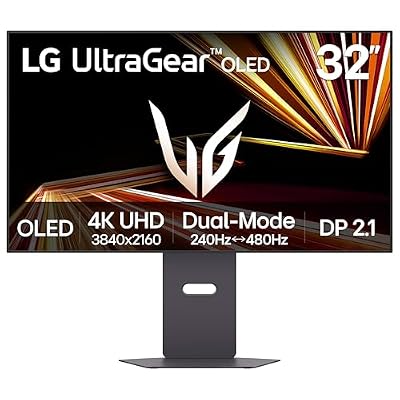 LGLG 32GX870A-B 32-inch Ultragear 4K UHD (3840 x 2160) OLED…$800 \xc2\xb7 98/100
 ASUSASUS ROG XG27AQDMGR 27 Inch 1440p 240Hz Glossy OLED HDR…$399 \xc2\xb7 98/100
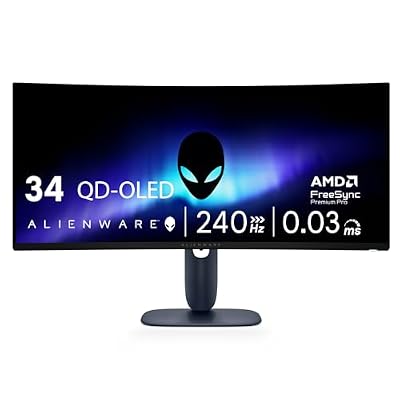 AlienwareAlienware 34 240Hz QD-OLED Curved Gaming Monitor - AW3425DW -…$700 \xc2\xb7 98/100