🛒 Best Price Today on Amazon
Prime members get fast, free shipping on everything above, plus member-only deals. New members get a 30-day free trial — cancel anytime.
- Best Ethernet Cables for Gaming at a Glance
- 1. Cable Matters Snagless Cat6 Ethernet Cable
- 2. Monoprice Flexboot Cat6 Ethernet Cable
- 3. Cable Matters Snagless Cat6A Ethernet Cable
- 4. UGREEN Cat 6 Ethernet Cable
- 5. Amazon Basics Cat 6 Ethernet Cable
- 6. Monoprice Cat6A Ethernet Cable
- How to Choose the Best Ethernet Cable for Gaming
- Ethernet vs Wi-Fi for Gaming
- FAQ
- Conclusion
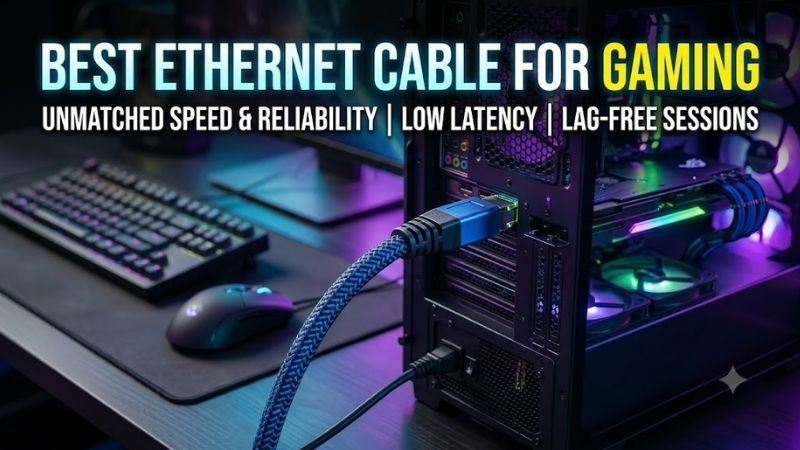
The best Ethernet cable for gaming should provide a stable wired connection without paying extra for specifications your network cannot use. Cat6 is enough for most gaming PCs and consoles, while Cat6a makes sense for longer runs or multi-gig networks. Build quality, length, flexibility, and reliable connectors matter most.
Quick answer: Our top pick in 2026 is the Ethernet Cable — our #1 rated choice. See the full ranked comparison, alternatives and buying advice below.
Best Ethernet Cables for Gaming at a Glance
| Ethernet Cable | Best For | Category | Main Strength |
|---|---|---|---|
| Cable Matters Snagless Cat6 | Overall gaming | Cat6 | Reliable everyday gaming connection |
| Monoprice Flexboot Cat6 | Budget gaming setups | Cat6 | Flexible patch-cable design |
| Cable Matters Snagless Cat6A | Multi-gig gaming networks | Cat6a | Better high-speed headroom |
| UGREEN Cat 6 Ethernet Cable | Gaming laptops and consoles | Cat6 | Flexible, practical construction |
| Amazon Basics Cat 6 Ethernet Cable | Simple home gaming | Cat6 | Straightforward plug-and-play use |
| Monoprice Cat6A Ethernet Cable | Longer high-speed runs | Cat6a | Better choice for 10GbE infrastructure |
1. Cable Matters Snagless Cat6 Ethernet Cable
Best For: Most PC and console gaming setups
Cable Matters Snagless Cat6 is a sensible default for gaming because it focuses on the specifications most home networks actually need. Cat6 provides more than enough bandwidth for typical internet gaming, game downloads, streaming, voice chat, and local network traffic without moving into expensive specialty cabling.
The snagless connector design helps protect the RJ45 locking tabs when cables are routed behind desks, through cable trays, or around other wiring. This detail matters more than extreme bandwidth claims in many gaming rooms because damaged clips can leave a cable sitting loosely inside a router, switch, console, or PC Ethernet port.
For a normal router-to-PC connection, Cat6 is generally the practical sweet spot. Online games rarely need anything close to Gigabit bandwidth, and latency depends more heavily on the network path, router behavior, ISP connection, and server location than on replacing a functioning Cat6 cable with a higher category.
The cable is also available in multiple lengths, making it easier to avoid leaving a large coil of excess wire under the desk. Choosing the shortest practical length keeps cable management cleaner while still leaving enough slack to move a PC tower or access the rear of a console without stressing the connectors.
Key Features
- Cat6 Ethernet specification
- Standard RJ45 connectors
- Snagless connector boots
- Available in multiple lengths
- Suitable for Gigabit networking
- Compatible with PCs, consoles, routers, and switches
What Makes It Different
Its strength is practicality rather than exotic specifications. Gamers get a standard Cat6 cable that works with common Ethernet hardware, protects the connector tabs, and comes in enough lengths for typical desk layouts. There is little reason to complicate a normal gaming connection when Cat6 already exceeds game traffic requirements.
Pros
- Suitable for most gaming networks
- Snagless connectors
- Easy to route behind a desk
- Multiple length options
- Works with standard RJ45 Ethernet devices
- Good balance between capability and simplicity
Cons
- Not intended to maximize long-distance 10GbE performance
- No benefit if the existing cable already works perfectly
- Standard round cable can be more visible than flat designs
Use Case: Gaming PCs, PlayStation, Xbox, desktop switches, routers, and standard home Gigabit internet connections.
Who It’s For: Most gamers who want a dependable wired connection without paying extra for unnecessary Cat7 or Cat8 marketing.
2. Monoprice Flexboot Cat6 Ethernet Cable
Best For: Budget-conscious gaming desks
Monoprice Flexboot Cat6 cables are useful for gaming setups where cost and easy cable routing matter more than premium-looking materials. The Cat6 specification is appropriate for common home networking, while the flexible connector boots reduce the bulky feel found on some heavily reinforced Ethernet cables behind compact desks.
A more flexible connector area can be useful when a gaming PC sits close to a wall or when the router is located inside a crowded networking shelf. Ethernet cables should not be bent sharply at the plug, so a cable that naturally curves away from the port can make installation easier and reduce unnecessary strain.
This model is particularly suitable for short connections between a PC and nearby network switch. A small unmanaged switch on the gaming desk can connect a desktop, console, streaming device, and other wired hardware while a single longer uplink runs back to the main router elsewhere in the apartment or house.
The key advantage remains value. Spending substantially more on a cable does not automatically lower ping when both cables already establish a clean Gigabit connection. For online gaming, reliability and proper termination matter more than decorative braiding, unusually thick jackets, or extremely high theoretical frequency ratings.
Key Features
- Cat6 networking standard
- RJ45 Ethernet connectors
- Flexible connector boot design
- Multiple common cable lengths
- Suitable for wired gaming networks
- Compatible with routers, switches, PCs, and consoles
What Makes It Different
The Flexboot design gives this cable an edge in cramped gaming setups where rigid connector guards can make routing awkward. It keeps the practical advantages of Cat6 while remaining easy to install around PC cases, monitor stands, network switches, and cable-management trays without creating large bends near the ports.
Pros
- Affordable Cat6 option
- Flexible connector area
- Easy to use in compact spaces
- Good for short patch connections
- Suitable for Gigabit gaming networks
Cons
- Basic appearance
- Not necessary for advanced 10GbE cabling projects
- Standard cable still needs sensible bend radius
Use Case: Budget PCs, consoles, LAN setups, desk-mounted network switches, and straightforward router-to-device connections.
Who It’s For: Gamers who want an inexpensive, conventional Cat6 cable and care more about reliability than premium styling.
3. Cable Matters Snagless Cat6A Ethernet Cable
Best For: Multi-gig gaming and home networks
Cable Matters Cat6A is a better fit when the gaming network extends beyond standard Gigabit Ethernet. Cat6a is designed for 10 Gigabit Ethernet over longer structured-cabling distances than Cat6, giving users more headroom for high-speed NAS transfers, multi-gig switches, workstation traffic, and future network upgrades.
Gaming itself does not require 10GbE, but gaming PCs often perform tasks beyond online play. Large local backups, game-library transfers, video editing, streaming projects, and moving files to network storage can benefit from faster LAN speeds when the PC, switch, and storage hardware all support higher Ethernet rates.
Cat6a cables are typically thicker than basic Cat6 patch leads, which improves their suitability for demanding network links but can make desk routing less convenient. Behind a compact gaming desk, the additional stiffness may be unnecessary. For a permanent run between rooms, however, the extra capability can be worthwhile.
A Cat6a cable is therefore best viewed as infrastructure rather than a gaming performance upgrade. It will not magically reduce server latency compared with a healthy Cat6 cable, but it can prevent the cable from becoming a bottleneck when the rest of the network moves to 2.5GbE, 5GbE, or 10GbE equipment.
Key Features
- Cat6a Ethernet specification
- Standard RJ45 connectivity
- Designed for higher-speed wired networks
- Snagless connector protection
- Suitable for multi-gig infrastructure
- Backward compatible with slower Ethernet devices
What Makes It Different
Cat6a provides more networking headroom than ordinary Cat6 without moving into questionable gaming claims. It is a practical option for users building a wired network around multi-gig switches, fast NAS hardware, or workstations where local transfers matter alongside gaming and streaming.
Pros
- Better fit for 10GbE networks
- Useful for multi-gig upgrades
- Reliable wired gaming connection
- Snagless connectors
- Good for permanent high-speed runs
Cons
- Thicker than many Cat6 cables
- Costs more than necessary for basic gaming
- No direct ping advantage on ordinary internet connections
Use Case: 2.5GbE and 10GbE gaming PCs, NAS systems, high-speed home networks, and longer permanent Ethernet connections.
Who It’s For: Gamers building a network for both gaming and high-speed local file transfers rather than online gaming alone.
4. UGREEN Cat 6 Ethernet Cable
Best For: Consoles, gaming laptops, and clean desk setups
The UGREEN Cat 6 Ethernet Cable is a convenient choice for users who want a straightforward wired connection between a router and gaming device. Cat6 is sufficient for common home internet speeds, and the cable works well for PCs, laptops, consoles, televisions, switches, and other devices using standard Ethernet ports.
A gaming laptop can benefit significantly from Ethernet when used permanently at a desk. Wi-Fi remains useful for mobility, but a wired connection removes changing radio conditions caused by distance, neighboring networks, walls, or other wireless devices. The result is usually a more predictable connection during competitive play.
Console users can benefit for the same reason. Download speed may still be limited by the internet plan, game server, or console storage, but Ethernet avoids many wireless variables. It also makes troubleshooting easier because packet loss or latency spikes can be investigated without wondering whether local Wi-Fi interference is responsible.
The cable works best when the required route is measured first. Buying an excessively long cable creates a coil that must be hidden, while a cable that is too short puts tension on connectors. Leave enough slack for device movement and maintenance, but avoid turning extra length into unnecessary clutter beneath the desk.
Key Features
- Cat6 Ethernet cable
- Standard RJ45 connectors
- Compatible with common gaming devices
- Multiple length options
- Suitable for Gigabit home networking
- Works with routers and network switches
What Makes It Different
UGREEN’s Cat6 option is particularly useful as a simple device cable rather than permanent structured wiring. It fits well between a nearby router, wall jack, or switch and a gaming laptop or console where users want predictable wired connectivity without redesigning the entire network.
Pros
- Suitable for PC and console gaming
- Easy plug-and-play installation
- Multiple useful lengths
- Works with standard network equipment
- Practical for desk setups
Cons
- Cat6a is better for planned long-distance 10GbE
- Cable routing still requires measurement
- Higher categories may be preferable for specialized networks
Use Case: Gaming laptops, consoles, TVs, desktop PCs, and devices connected to a router or nearby switch.
Who It’s For: Gamers who want a straightforward Ethernet cable for a single device and do not need advanced network infrastructure.
5. Amazon Basics Cat 6 Ethernet Cable
Best For: Simple home gaming networks
Amazon Basics Cat 6 Ethernet Cable is intended for basic wired networking where unusual features are unnecessary. It connects standard RJ45 devices and gives gaming PCs or consoles a conventional Ethernet path to a router, modem-router, switch, or wall network jack without relying on wireless connectivity.
For casual and competitive gaming alike, the biggest improvement often comes from switching from unstable Wi-Fi to any properly working Ethernet connection. Once that stable link exists, moving from one competent Cat6 patch cable to another usually does not create a measurable gameplay advantage unless the original cable was faulty or poorly terminated.
This makes a basic Cat6 model sensible for secondary gaming stations, consoles, televisions, or spare rooms. Users can reserve more specialized Cat6a cabling for backbone connections while using ordinary Cat6 patch leads from switches or wall outlets to individual devices that do not require multi-gig throughput.
The cable is also useful for troubleshooting. Keeping one known-good Ethernet lead nearby makes it easy to test whether connection issues come from the existing cable, router port, computer, or internet service. For gaming households, a spare cable can save significant time when diagnosing sudden disconnections.
Key Features
- Cat6 Ethernet standard
- RJ45 connectors
- Suitable for standard home networks
- Multiple length choices
- Compatible with PCs, consoles, routers, and switches
- Appropriate for common Gigabit Ethernet use
What Makes It Different
The appeal is simplicity. There are no special gaming claims or unusual networking technologies to understand. It provides the wired connection most users need and works well as either a primary gaming cable or a spare troubleshooting cable kept with other PC and networking accessories.
Pros
- Straightforward Cat6 connection
- Suitable for Gigabit networks
- Useful as a spare cable
- Works with common gaming equipment
- Easy to integrate into home networks
Cons
- Basic construction
- Limited reason to choose it for advanced multi-gig installations
- No performance advantage over another healthy Cat6 cable
Use Case: Console gaming, secondary PCs, basic home networks, spare cables, and router-to-device connections.
Who It’s For: Users who want a simple Ethernet cable and do not need premium construction or specialized multi-gig infrastructure.
6. Monoprice Cat6A Ethernet Cable
Best For: Long high-speed gaming network runs
A Monoprice Cat6A cable is a better choice when Ethernet must travel farther through a room or home while remaining ready for 10GbE networking. Cat6a is designed to maintain 10 Gigabit Ethernet capability across the standard 100-meter channel distance, making it more appropriate for demanding permanent infrastructure.
This matters when the gaming PC is far from the router. A user might run Ethernet through a wall, along baseboards, into another room, or from a central network rack. In that situation, planning for future multi-gig networking can make more sense than buying only around the speed of today’s internet connection.
The disadvantage is physical bulk. Cat6a cabling can be harder to hide around a minimalist gaming desk than thinner patch cables. It is better used where performance headroom and network longevity matter more than flexibility, while shorter Cat6 leads can handle the final connection from a wall jack or switch to the gaming device.
For users building or renovating a network, the choice becomes easier: install infrastructure that can support future equipment, then use shorter patch cables where flexibility is needed. That approach keeps the gaming area cleaner and avoids repeatedly replacing difficult cable runs every time local network speeds increase.
Key Features
- Cat6a networking specification
- Standard RJ45 connectivity
- Suitable for 10GbE infrastructure
- Supports long Ethernet runs
- Compatible with slower Ethernet standards
- Appropriate for home network backbones
What Makes It Different
This option makes the most sense as part of a planned network rather than a short gaming accessory. Cat6a provides enough headroom for fast switches, NAS systems, workstations, and future Ethernet upgrades while still supporting everyday gaming devices that operate at much lower network speeds.
Pros
- Suitable for longer 10GbE runs
- Good infrastructure choice
- Useful for multi-gig networks
- Backward compatible
- Better long-term headroom than basic Cat6
Cons
- Thicker and harder to route
- Unnecessary for most short gaming connections
- Does not independently reduce internet latency
Use Case: Long router-to-room connections, home network backbones, multi-gig switches, NAS systems, and permanent gaming-room wiring.
Who It’s For: Gamers planning high-speed wired infrastructure rather than simply replacing a short cable behind the desk.
How to Choose the Best Ethernet Cable for Gaming
Cat6 Is Enough for Most Gamers
For most gaming PCs and consoles, Cat6 is the sensible choice. Online games use relatively little bandwidth compared with downloading large games or transferring files. A properly terminated Cat6 cable connected to Gigabit Ethernet already provides far more throughput than the actual game session normally requires.
Cat6a Makes Sense for Multi-Gig Networks
Choose Cat6a when the home network includes 2.5GbE, 5GbE, or 10GbE devices, especially for longer cable runs. The upgrade is more useful for local data transfers than online gaming. A fast NAS or workstation can exploit the additional capacity, while game latency remains primarily dependent on the wider network path.
Do Not Buy Cat8 Just for Gaming
Cat8 sounds attractive because its specifications are much higher, but those capabilities are designed for specialized high-speed environments and very short network channels. A normal gaming PC connected to a Gigabit or 2.5GbE router gains no automatic latency improvement simply because the cable is labeled Cat8.
Measure Cable Length First
Measure the actual route from the router or switch to the gaming device instead of measuring a straight line across the room. Cables often need to travel around furniture, along walls, behind a desk, and down to floor level. Add reasonable slack for movement and maintenance without leaving a large unused coil.
Round vs Flat Ethernet Cables
Round cables are usually the safer default when durability and predictable construction matter. Flat Ethernet cables can be easier to hide beneath rugs or along walls, but buyers should pay closer attention to the cable specification and build quality. Choose the form factor based on installation needs rather than gaming performance.
Shielded vs Unshielded Cable
Most home gaming setups do not require shielded Ethernet cable. Unshielded twisted pair works well in ordinary residential environments. Shielding becomes more relevant when Ethernet runs close to equipment producing substantial electromagnetic interference, and the complete shielded installation should be designed correctly.
Check the Connector Quality
A secure RJ45 connector should click firmly into the Ethernet port and remain seated when the device or cable moves slightly. Snagless boots help protect the locking tab during routing. Loose or damaged connectors can create intermittent disconnections that are far more disruptive to gaming than small differences in theoretical cable bandwidth.
Check the Network Ports Too
The cable cannot make the connection faster than the slowest port in the path. A 10GbE cable connected between a 1GbE router and 1GbE gaming PC will still operate at Gigabit speed. Check the router, switch, motherboard, console, and internet service before spending heavily on higher-category cables.
Ethernet vs Wi-Fi for Gaming
Ethernet normally offers a more consistent gaming connection because the data does not need to compete for local radio airtime. Wi-Fi performance can change as nearby networks, walls, Bluetooth devices, and household activity alter the wireless environment. A direct wired connection removes many of those variables immediately.
Modern Wi-Fi can still provide excellent gaming performance when signal quality is strong. The difference is predictability. Ethernet is easier to troubleshoot and less sensitive to changing room conditions, which is why competitive players and stationary gaming PCs generally benefit from using a wired connection whenever practical.
FAQ
Is Cat6 Good Enough for Gaming?
Yes. Cat6 is more than sufficient for most gaming connections, including Gigabit Ethernet. Online games generally use far less bandwidth than the cable can provide. Moving to Cat6a or Cat8 does not automatically reduce ping when the existing Cat6 connection is already stable and operating correctly.
Does a Better Ethernet Cable Lower Ping?
A higher-category cable does not normally lower ping by itself. If the current cable is damaged, poorly terminated, or causing packet loss, replacing it can improve stability. Otherwise, ping is influenced much more by the router, internet provider, network congestion, routing path, and distance to the game server.
Is Cat8 Better Than Cat6 for Gaming?
Cat8 has much higher theoretical networking capability, but those specifications provide little practical value for ordinary gaming networks. Cat6 is already adequate for most home gaming, while Cat6a is the more sensible upgrade when building a multi-gig or 10GbE network with longer permanent cable runs.
What Ethernet Cable Should I Use for 2.5GbE Gaming?
Cat6 is generally suitable for normal 2.5GbE home connections when cable length and installation are appropriate. Cat6a provides additional headroom for users planning faster networking or longer runs. The motherboard, router, and switch must also support 2.5GbE before the gaming PC can use that link speed.
How Long Can an Ethernet Cable Be for Gaming?
Standard Ethernet cabling can cover much longer distances than most residential gaming setups require. The more important question is whether the cable category supports the desired Ethernet standard across that distance. For a normal room or apartment, a correctly made Cat6 cable is usually more than adequate.
Is Flat Ethernet Cable Good for Gaming?
A properly manufactured flat Ethernet cable can work for gaming, but the shape itself provides no performance advantage. Flat designs are mainly useful for routing beneath furniture or along walls. Gamers should focus on verified cable category, connector quality, required length, and installation rather than choosing by appearance.
Conclusion
The best Ethernet cable for gaming is usually a reliable Cat6 cable, not the highest category available. Cable Matters and Monoprice offer practical Cat6 choices, while Cat6a versions make more sense for multi-gig networks and longer runs. Choose the right length, secure connectors, and network standard before paying for unnecessary bandwidth.
Ready to decide? Our #1 pick for 2026 is the Ethernet Cable.
Live price & availability on Amazon.