- Top Pick: ARCTIC Liquid Freezer III Pro 360 A-RGB – AIO CPU Cooler, Water Cooling
- Best Value: BXQINLENX 24-Piece Silver Chrome G1/4" Fittings Kit for Custom PC Water Cooling Systems (Silver)
- Premium Choice: Thermalright Aqua Elite 240 V3 Water Cooling CPU Cooler, Double PWM ARGB Fans with S-FDB Bearings,Efficient PWM Controlled Pump,for AMD/AM4/AM5, Intel LGA1150/1151/1200/1700/1851, (AE240 V3)
Every gaming PC needs to keep its CPU cool, and the choice comes down to two paths: a traditional air cooler with a heatsink and fans, or a liquid cooler that pumps coolant through a radiator. The old assumption that water always wins no longer holds. In 2026 top air coolers rival mid-range liquid units, so the decision hinges on your CPU’s heat output, your case, your budget, and how your build looks.
This comparison weighs air against water cooling for gaming PCs honestly, covering real performance, noise, reliability, price, and aesthetics. Using popular coolers as reference points, we help you decide which approach makes sense for your specific build rather than repeating tired myths.
As an Amazon Associate we earn from qualifying purchases at no extra cost to you.



⚡ Save on Your Next PC — Amazon Prime
Prime members get fast free shipping on the systems above, plus early access to Prime Day & Black Friday PC deals. New members get a 30-day free trial.
Watch: Air vs Water Cooling for Gaming PCs — Video Review
Quick Verdict
For most gaming builds, a high-end air cooler like the Thermalright Peerless Assassin offers superb performance, near silence, and rock-solid reliability at a low price. Step up to a 240mm or 360mm AIO liquid cooler like the ARCTIC Liquid Freezer III when you run a hot high-core CPU, want a cleaner look, or have a case with limited height clearance.
Key Differences
- Cooling ceiling: A large 360mm AIO handles the hottest CPUs better under sustained all-core loads than most air coolers.
- Reliability: Air coolers have no pump to fail, giving them a longer, more worry-free lifespan.
- Price: Quality air coolers cost far less than comparable liquid units for similar everyday gaming performance.
- Clearance: Tall air coolers can block RAM or side panels; AIO radiators mount to the case and free up space around the socket.
- Noise: Both can run quiet, but a well-designed air cooler often idles silently without pump noise.
- Aesthetics: Liquid coolers offer a cleaner look and RGB pump caps that many builders prefer visually.
The Case for Air Cooling
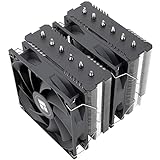
Air cooling wins on value and reliability. A dual-tower cooler like the Thermalright Peerless Assassin 120 SE, with six heat pipes and twin fans, keeps most gaming CPUs comfortably cool while costing a fraction of a premium AIO. With no pump and no coolant, there is simply less to fail, and a good air cooler will outlast several builds.
For a mainstream gaming chip that is not being pushed to extreme all-core loads, air cooling is genuinely all you need. It runs quiet, installs simply, and never risks a leak or pump failure, making it the sensible default for the majority of gamers.
The Case for Water Cooling
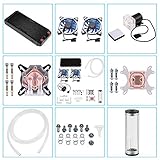
Liquid cooling earns its place with the hottest processors and the cleanest builds. A 360mm AIO like the ARCTIC Liquid Freezer III Pro moves heat to a large radiator, handling sustained loads from high-core CPUs that would push an air cooler to its limits. Custom loops with fittings kits take this further for enthusiasts chasing the lowest temperatures and a showpiece build.
An AIO also clears the area around your socket, avoiding RAM clearance headaches and giving a tidy look. If aesthetics, a hot flagship CPU, or a compact case drive your build, liquid cooling makes sense.
Which Should You Buy?
- Choose air cooling for the best value, reliability, and quiet operation on mainstream CPUs.
- Choose a 240mm or 360mm AIO for hot high-core CPUs under heavy sustained loads.
- Choose liquid cooling if you want a clean look and RAM clearance around the socket.
- Choose air cooling if you want a fit-and-forget cooler with nothing to leak or fail.
- Match the cooler size to your case; confirm radiator or heatsink clearance before buying.
Frequently Asked Questions
Is water cooling better than air cooling?
Not universally. A large AIO cools the hottest CPUs better, but a top air cooler matches mid-range liquid units for most gaming while costing less and being more reliable.
Can an air cooler handle a high-end CPU?
A quality dual-tower air cooler handles most high-end gaming CPUs well. Only the hottest chips under sustained all-core loads truly benefit from a 360mm liquid cooler.
Do AIO coolers leak?
Modern sealed AIOs rarely leak, but the risk is not zero and the pump is a wear component. Air coolers have no such failure points, which is why they are considered more reliable.
Which is quieter, air or water?
Both can be very quiet. A good air cooler often idles silently, while an AIO adds slight pump noise; well-tuned fan curves keep either approach near silent in practice.
Final Verdict
For the majority of gaming builds, a premium air cooler is the smart choice: excellent performance, near silence, low cost, and unmatched reliability. Reach for a 240mm or 360mm AIO when you run a hot high-core CPU, want RAM clearance, or care about a clean, showpiece look. Match the cooler to your chip and case, and either path will keep your PC running cool.
Top picks from this guide
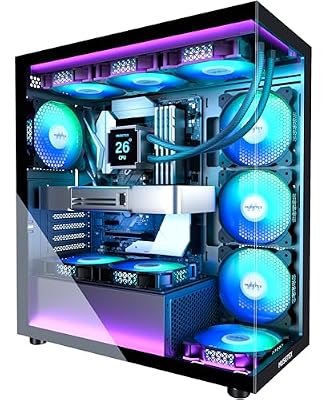 MUSETEXMUSETEX ATX PC Case 7 PWM ARGB Fans Pre-Installed, Type-C…$90 \xc2\xb7 97/100
 ThermalrightThermalright Aqua Elite 240 V3 Water Cooling CPU Cooler, Double…$45 \xc2\xb7 97/100
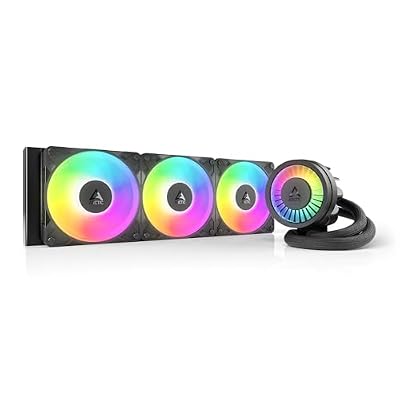 ARCTICARCTIC Liquid Freezer III Pro 360 A-RGB - AIO CPU…$77 \xc2\xb7 96/100
 ThermalrightThermalright Peerless Assassin 120 SE CPU Cooler, 6 Heat Pipes…$31 \xc2\xb7 94/100