🛒 Best Price Today on Amazon
Prime members get fast, free shipping on everything above, plus member-only deals. New members get a 30-day free trial — cancel anytime.
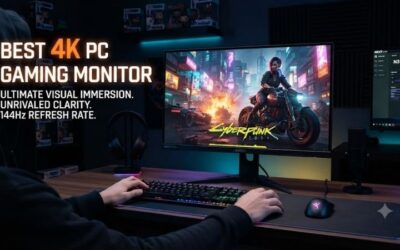
A 27 inch 4K computer monitor delivers excellent pixel density without taking up as much desk space as a 32-inch display. It is a strong choice for gaming, office work, coding, photo editing, video production, and mixed-use setups. The best model depends on whether you prioritize high refresh rate, USB-C, color accuracy, or everyday value.
Quick answer: For most people in 2026, the best 27 inch 4k computer monitor is the Monitor — our #1 rated choice. See the full ranked comparison, alternatives and buying advice below.
Best 27 Inch 4K Computer Monitors at a Glance
| Monitor | Best For | Refresh Rate | Main Strength |
|---|---|---|---|
| Gigabyte M27U | Overall gaming | Up to 160Hz | High-refresh 4K with KVM |
| LG UltraGear 27GR93U-B | Gaming | 144Hz | Strong gaming performance |
| Dell UltraSharp U2723QE | Productivity | 60Hz | Excellent connectivity |
| ASUS ProArt PA279CRV | Creative work | 60Hz | Color-focused features |
| LG 27UP850-W | Home office | 60Hz | USB-C convenience |
| Samsung ViewFinity S8 27 | Everyday work | 60Hz | Sharp 4K productivity |
Gigabyte M27U
Best For: Overall 27-inch 4K gaming
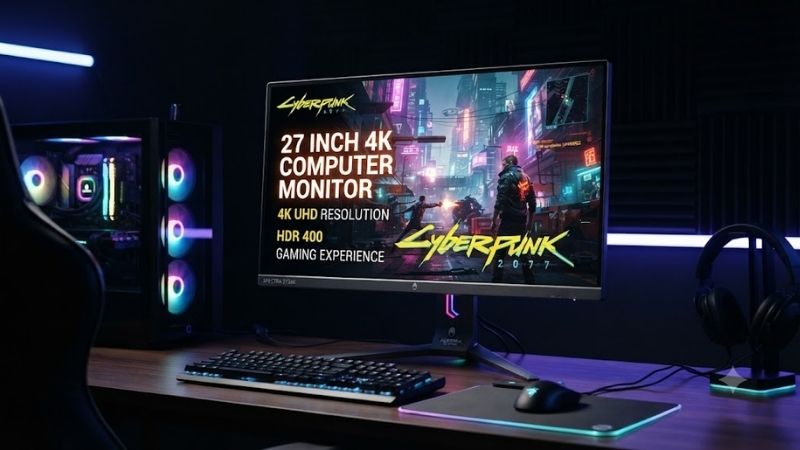
The Gigabyte M27U is one of the most balanced options for users who want 4K resolution and high-refresh gaming in the same display. Its 27-inch IPS panel provides a sharp 3840 × 2160 image while offering much smoother motion than conventional 60Hz 4K office monitors.
For gaming, the higher refresh rate makes camera movement, aiming, scrolling, and fast animation feel noticeably smoother. Competitive titles can take advantage of high frame rates, while demanding AAA games still benefit from the monitor’s image clarity even when they run below the maximum refresh rate.
The built-in KVM is particularly useful for people who use a gaming desktop and work laptop at the same desk. A keyboard and mouse can remain connected to the monitor while the user switches between systems, reducing cable clutter and making the display more practical for mixed work-and-gaming environments.
Its main limitation is GPU demand. Running modern games at 4K with high frame rates requires strong graphics hardware. Users with midrange GPUs may need upscaling or reduced settings, but the monitor remains flexible because it works equally well for productivity, browsing, and media.
Key Features
- 27-inch IPS panel
- 3840 × 2160 resolution
- High-refresh 4K gaming
- Adaptive-sync support
- Built-in KVM
- USB connectivity
- DisplayPort and HDMI
- Gaming-oriented controls
- Suitable for PC and console use
What Makes It Different
The M27U combines three features that rarely appear together at this price level: 4K resolution, high refresh rate, and KVM functionality. It is one of the easiest monitors to recommend when a single desk is used for both work and gaming.
Pros
- Sharp 4K image
- High refresh rate
- Built-in KVM
- Good gaming responsiveness
- Useful productivity features
- Strong mixed-use value
Cons
- Demands a powerful GPU for native 4K gaming
- HDR is limited compared with OLED
- Windows scaling may be necessary
Use Case: Gaming, remote work, dual-system desks, productivity, and high-resolution media.
Who It’s For: Users who want one 27-inch monitor for both serious gaming and everyday work.
LG UltraGear 27GR93U-B
Best For: High-refresh 4K gaming
The LG UltraGear 27GR93U-B focuses more heavily on gaming than productivity. Its 27-inch IPS panel combines 4K resolution with a 144Hz refresh rate, making it suitable for players who want sharper visuals than QHD without dropping back to standard 60Hz motion.
The 144Hz refresh rate provides a clear improvement in responsiveness for shooters, racing games, action titles, and general desktop use. Even outside gaming, window movement, scrolling, and cursor motion feel smoother compared with traditional office displays.
Adaptive-sync support helps reduce tearing when frame rates vary, which is particularly useful at 4K because even high-end GPUs may not maintain a fixed 144 fps in demanding games. The monitor therefore remains useful across a broad range of performance levels.
Its IPS panel offers good viewing angles and consistent image quality, but it cannot match OLED for deep blacks or contrast. Users who mostly play in bright or normally lit rooms may not consider this a major drawback, especially if they prefer avoiding OLED-specific concerns.
Key Features
- 27-inch IPS panel
- 3840 × 2160 resolution
- 144Hz refresh rate
- Adaptive-sync support
- DisplayPort connectivity
- HDMI connectivity
- Gaming-oriented response performance
- Ergonomic stand adjustments
What Makes It Different
The 27GR93U-B is a straightforward choice for users who primarily care about high-refresh 4K gaming. It avoids unnecessary complexity and focuses on the combination of speed, resolution, and reliable IPS performance.
Pros
- 4K at 144Hz
- Smooth gaming performance
- Good image sharpness
- Strong PC and console compatibility
- Reliable IPS behavior
Cons
- Lower contrast than OLED
- Limited productivity extras
- Requires strong hardware for high-frame-rate 4K
Use Case: PC gaming, console gaming, fast action titles, and high-resolution single-player games.
Who It’s For: Gamers who want 4K clarity and smooth motion without moving to a premium OLED monitor.
Dell UltraSharp U2723QE
Best For: Productivity and professional work
The Dell UltraSharp U2723QE is designed primarily for productivity rather than gaming. Its 27-inch 4K panel delivers exceptionally sharp text and interface detail, making it well suited to spreadsheets, programming, document editing, research, and professional home-office setups.
One of its biggest strengths is connectivity. USB-C allows compatible laptops to handle display output, data, and charging through a single cable. This can significantly simplify a work-from-home desk by reducing the number of cables connected directly to the laptop.
The monitor also works well as a central hub for peripherals and wired networking. Users working with several USB devices can keep them connected to the display rather than constantly plugging and unplugging accessories from the computer.
Its main weakness is gaming performance. At 60Hz, the U2723QE does not provide the fluidity of high-refresh monitors. It can still handle casual gaming, but users accustomed to 144Hz or 240Hz will notice the difference immediately.
Key Features
- 27-inch 4K display
- 3840 × 2160 resolution
- USB-C connectivity
- Laptop charging support
- Integrated USB hub
- Ethernet connectivity
- Multi-monitor support
- Ergonomic stand
What Makes It Different
The U2723QE works as both a monitor and a workstation hub. For laptop users, its ability to consolidate display, charging, networking, and peripherals can matter more than high-refresh gaming features.
Pros
- Excellent text clarity
- Strong USB-C connectivity
- Useful built-in hub
- Ethernet support
- Good professional ergonomics
- Excellent for home offices
Cons
- Limited to 60Hz
- Not designed for competitive gaming
- More expensive than basic office monitors
Use Case: Programming, spreadsheets, office work, USB-C laptops, remote work, and dual-monitor setups.
Who It’s For: Professionals who want a sharp 4K display with strong connectivity and docking-style features.
ASUS ProArt PA279CRV
Best For: Photo and video editing
The ASUS ProArt PA279CRV is designed for creators who care about color performance, image detail, and professional connectivity. Its 27-inch 4K panel provides enough resolution for photo editing, video timelines, graphic design, and content production without requiring the space of a larger monitor.
The ProArt series focuses more heavily on factory calibration and wide color-gamut support than general consumer displays. This makes the PA279CRV more appropriate for creative users who need predictable color behavior across editing applications.
USB-C connectivity also improves usability with laptops. Compatible systems can send video, transfer data, and receive charging power through one cable, making the monitor useful for MacBooks, Windows ultrabooks, and mobile creative workstations.
The main compromise is refresh rate. At 60Hz, it is not intended for competitive gaming. Games remain playable, but users paying for ProArt features should be choosing the monitor because of its creative workflow strengths rather than speed.
Key Features
- 27-inch 4K display
- 3840 × 2160 resolution
- Creator-focused color performance
- Factory calibration
- Wide-gamut support
- USB-C connectivity
- Laptop charging
- HDMI and DisplayPort
- Ergonomic stand
What Makes It Different
The PA279CRV is built specifically around creative workflows. Its value comes from combining 4K detail, color-focused tuning, USB-C, and professional usability in a compact 27-inch format.
Pros
- Strong color-focused design
- Sharp 4K resolution
- USB-C connectivity
- Excellent for photo and video work
- Good ergonomic adjustment
- Suitable for dual-monitor creative desks
Cons
- 60Hz refresh rate
- Not intended for esports
- Creative features may be unnecessary for basic users
Use Case: Photography, video editing, graphic design, content creation, and professional laptop workflows.
Who It’s For: Creators who value color consistency and productivity features over gaming refresh rate.
LG 27UP850-W
Best For: Home-office USB-C setups
The LG 27UP850-W is a practical 27-inch 4K monitor for users who primarily work from a laptop and want a clean desk. Its IPS panel provides sharp text, detailed images, and enough workspace for productivity, while USB-C simplifies connectivity.
For office use, 4K resolution is especially useful for spreadsheets, browser windows, writing, and multitasking. Text appears cleaner than on lower-resolution displays, although most users will enable operating-system scaling to keep interface elements comfortable to read.
USB-C is the main reason to choose this model over a basic 4K monitor. A compatible laptop can connect through one cable for display and charging, reducing the need for separate adapters and making it easier to disconnect the laptop when leaving the desk.
Its 60Hz refresh rate is sufficient for productivity and casual games but will not satisfy users accustomed to high-refresh gaming. It is best viewed as a home-office monitor that can also handle media and occasional gaming.
Key Features
- 27-inch IPS panel
- 3840 × 2160 resolution
- USB-C connectivity
- Laptop charging support
- HDR support
- DisplayPort and HDMI
- Adjustable stand
- High pixel density
What Makes It Different
The 27UP850-W provides a simple path to a clean USB-C workspace without moving into a more expensive professional monitor. It is practical, sharp, and easy to integrate into a laptop-based home office.
Pros
- Sharp 4K image
- USB-C convenience
- Good for remote work
- Clean design
- Suitable for laptops
- Strong everyday versatility
Cons
- Limited to 60Hz
- HDR impact is modest
- Not ideal for competitive gaming
Use Case: Remote work, laptop setups, general productivity, media, and light creative work.
Who It’s For: Users who want a straightforward 27-inch 4K USB-C monitor for everyday work.
Samsung ViewFinity S8 27
Best For: Everyday 4K productivity
The Samsung ViewFinity S8 27 is aimed at users who want a sharp, professional-looking 4K display for daily computer work. Its 27-inch size fits easily into most home offices while still providing enough pixel density for detailed text, spreadsheets, research, and general multitasking.
The 4K resolution is particularly valuable for text-heavy tasks because fonts and interface elements appear noticeably sharper than they do on QHD or Full HD displays. Users who spend long hours coding or working with documents may appreciate this improvement more than high refresh rates.
The monitor is productivity-oriented rather than gaming-focused. Casual gaming is possible, but the 60Hz refresh rate means it will not provide the fluid motion of 144Hz or 160Hz alternatives. Its strength lies in desktop clarity, practical ergonomics, and professional styling.
It also works well in dual-monitor arrangements because 27 inches is large enough to provide useful workspace without dominating the desk. Two 27-inch displays can offer a substantial productivity area while remaining more manageable than dual 32-inch monitors.
Key Features
- 27-inch 4K display
- 3840 × 2160 resolution
- Productivity-focused design
- High pixel density
- Multiple display inputs
- Ergonomic adjustment
- Good fit for dual-monitor setups
What Makes It Different
The ViewFinity S8 focuses on straightforward 4K productivity without adding expensive gaming or creator features. It is a sensible option for users who simply want a sharp, professional display for everyday work.
Pros
- Sharp 4K resolution
- Good for text-heavy tasks
- Professional appearance
- Suitable for dual-monitor desks
- Strong office usability
Cons
- 60Hz refresh rate
- Not gaming focused
- Fewer premium features than higher-end monitors
Use Case: Office work, programming, documents, research, spreadsheets, and remote work.
Who It’s For: Users who want a practical 27-inch 4K display primarily for productivity.
How to Choose a 27 Inch 4K Computer Monitor
60Hz vs High Refresh
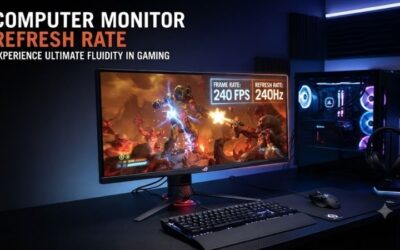
A 60Hz monitor is sufficient for office work, editing, and normal browsing. Gamers should consider 120Hz, 144Hz, or higher because motion becomes noticeably smoother. The higher refresh rate is only valuable if the graphics card can produce enough frames at 4K.
USB-C for Laptop Users
USB-C can simplify a workstation by carrying video, data, and charging over a single connection. Laptop users should check how much charging power the monitor provides because higher-performance notebooks may require more power than basic ultrabooks.
Consider Display Scaling
Four-K resolution is extremely dense at 27 inches. Many users prefer 125% or 150% scaling in Windows because native 100% scaling can make text and icons too small. Scaling preserves the sharpness advantage while improving readability.
Match the Monitor to Your GPU
Gaming at 3840 × 2160 requires substantially more GPU power than QHD. A high-refresh 4K display makes the most sense with a powerful graphics card or games that support effective upscaling. Midrange systems may be better matched with QHD if gaming performance is the priority.
IPS vs OLED
IPS is a practical option for productivity because it handles static content without OLED burn-in considerations. OLED provides deeper blacks, better contrast, and extremely fast pixel response. Users spending most of the day working may prefer IPS, while gaming and media users may prefer OLED.
Check Stand and VESA Support
Height, tilt, swivel, and pivot adjustments improve comfort during long sessions. VESA support is also useful if you plan to install a monitor arm later. A good stand can prevent the need for additional desk risers or accessories.
27 Inch 4K vs 27 Inch 1440p
A 27-inch 4K monitor provides higher pixel density and sharper text than a 1440p display. It is better for productivity, content creation, and users who value image detail. The main downside is greater GPU demand during gaming and more frequent use of operating-system scaling.
A 1440p monitor is easier to drive at very high frame rates and often costs less. Competitive gamers may prefer QHD, while users focused on office work, creative applications, and mixed productivity typically gain more from 4K.
FAQ
Is 4K Worth It on a 27-Inch Monitor?
Yes. Four-K resolution at 27 inches creates very high pixel density, making text, images, and interface elements look exceptionally sharp. It is especially useful for office work, coding, photo editing, and users who sit relatively close to the display.
Is 27 Inches Too Small for 4K?
No. Many users specifically prefer 27-inch 4K because of the sharp image. The main consideration is scaling. A 32-inch monitor makes interface elements physically larger, while a 27-inch screen provides higher pixel density and requires less desk space.
Is 4K 144Hz Good for Gaming?
Yes, provided your graphics card can handle the workload. Four-K 144Hz combines excellent image quality with smooth motion, making it ideal for premium gaming systems. Demanding games may require upscaling or reduced settings to maintain high frame rates.
Should I Buy USB-C?
USB-C is especially useful for laptops because one cable can potentially handle video, charging, and peripherals. Desktop users normally gain less from it because DisplayPort or HDMI already handles video effectively.
Is 27 Inch 4K Better Than 32 Inch 4K?
Neither size is automatically better. Twenty-seven inches offers higher pixel density and uses less desk space, while 32 inches provides a larger physical image. Viewing distance, desk depth, scaling preference, and multi-monitor plans should determine the better choice.
Conclusion
The best 27 inch 4K computer monitor depends on whether you prioritize gaming, productivity, or creative work. Gigabyte M27U and LG 27GR93U-B suit high-refresh gaming, Dell U2723QE excels at office use, ASUS PA279CRV targets creators, while LG 27UP850-W and Samsung ViewFinity S8 offer practical 4K productivity.
Ready to decide? Our #1 pick for 2026 is the Monitor.
Live price & availability on Amazon.