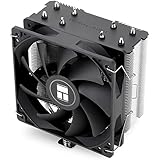
- Top Pick: Thermalright Peerless Assassin 120 SE CPU Cooler, 6 Heat Pipes AGHP Technology, Dual 120mm PWM Fans, 1550RPM Speed, for AMD:AM4 AM5/Intel LGA 1700/1150/1151/1200/1851,PC Cooler
- Best Value: Thermalright Assassin X120 Refined SE CPU Air Cooler, 4 Heat Pipes, TL-C12C PWM Fan, Aluminium Heatsink Cover, AGHP Technology, for AMD AM4/AM5/Intel LGA 1150/1151/1155/1200/1700/1851(AX120 R SE)
- Premium Choice: Thermalright Peerless Assassin 120 SE ARGB CPU Air Cooler,6 Heat Pipes CPU Cooler, Dual TL-C12C-S PWM Fan, Aluminium Heatsink Cover,AGHP Technology,for AMD AM4/AM5/Intel LGA1700/115X/1155/1200/1851
Choosing between a 360 mm all-in-one liquid cooler and a dual-tower air cooler used to be a straightforward budget decision. In 2026 it isn’t. Modern gaming CPUs from both camps push short, aggressive boost spikes rather than sustained triple-digit wattage, and the best air coolers have closed the gap to within a few degrees of premium AIOs for a fraction of the price. At the same time, AIOs have gained thicker radiators, quieter pumps and integrated VRM fans that make them genuinely better in dense, GPU-heavy builds.
The right answer depends less on raw cooling headroom and more on your case, your CPU’s power behaviour, your noise tolerance and how much you care about how the build looks through a glass side panel. Below we compare the two approaches directly, using the coolers that actually dominate recommendation lists this year: ARCTIC’s Liquid Freezer III Pro 360 on the liquid side, and Thermalright’s Peerless Assassin and Phantom Spirit family on the air side.
As an Amazon Associate we earn from qualifying purchases at no extra cost to you.



⚡ Save on Your Next PC — Amazon Prime
Prime members get fast free shipping on the systems above, plus early access to Prime Day & Black Friday PC deals. New members get a 30-day free trial.
Watch: AIO vs Air Cooler: Which Is Best in 2026? — Video Review
Quick Verdict
For most gaming builds, a dual-tower air cooler such as the Thermalright Phantom Spirit 120 SE or Peerless Assassin 120 SE delivers 90–95% of the thermal performance of a premium AIO for roughly a quarter of the cost, with no pump to fail and nothing to leak. Choose the ARCTIC Liquid Freezer III Pro 360 if you’re running a high-wattage flagship CPU, an ITX or compact case with poor top-down airflow, a tall RAM or large GPU clearance conflict, or if you simply want the cleanest look and the lowest possible sustained temperatures under long all-core workloads.
Key Differences
- Peak cooling capacity: A 360 mm AIO like the Liquid Freezer III Pro moves heat away from the socket faster and holds lower temperatures during sustained all-core loads; a good dual-tower air cooler matches it in bursty gaming workloads but falls behind under extended rendering or compilation.
- Price: Air coolers such as the Peerless Assassin 120 SE and Assassin X120 Refined SE sit at entry-level pricing while offering upper-mid performance. A 360 mm AIO typically costs three to five times as much.
- Clearance and compatibility: Air coolers need vertical room and can conflict with tall RAM or the first PCIe slot; AIOs need a case with a supported radiator mount but leave the area around the socket open.
- Noise character: Air coolers produce only fan noise. AIOs add pump hum, which is low but constant — ARCTIC’s PWM-controlled pump is among the quietest available, though it never fully disappears.
- Longevity and risk: Air coolers have essentially no wear items beyond the fans and can outlive several CPU platforms. AIOs have a finite pump lifespan, gradual coolant permeation, and a small but non-zero leak risk.
- Aesthetics: Liquid cooling keeps the motherboard visible and photogenic. Air coolers counter with ARGB variants like the Peerless Assassin 120 SE ARGB, or the Vision MAX with its 5-inch IPS display.
AIO Liquid Cooling: ARCTIC Liquid Freezer III Pro 360
The Liquid Freezer III Pro 360 is the reason AIOs remain relevant at sane prices. Its thicker-than-average radiator, well-tuned P-series fans and integrated VRM fan give it a genuine advantage on power-hungry flagship chips, where it can hold several degrees lower than the best air coolers during sustained multi-core loads. That headroom matters if you stream while gaming, run long renders, or plan to keep power limits unlocked rather than capped.
It’s also the better structural choice in some builds. Moving the heat exchanger to the top or front of the chassis removes a heavy tower from the motherboard, eliminates RAM-height conflicts entirely, and frees airflow around the VRM heatsinks and top M.2 slot. The trade-offs are the price premium, a more involved installation, and the acceptance that a pump is a moving part with a service life measured in years, not decades.
Air Cooling: Thermalright Peerless Assassin and Phantom Spirit
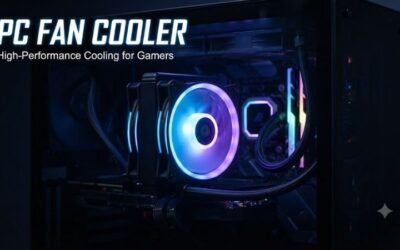
Thermalright reshaped this category. The Phantom Spirit 120 SE uses seven heat pipes and two 120 mm PWM fans to land within a few degrees of 360 mm AIOs on mainstream gaming CPUs, and the six-pipe Peerless Assassin 120 SE is barely behind it. Both mount on current AM5 and LGA 1851 sockets as well as older platforms, so the cooler outlives your CPU upgrade cycle. For lower-TDP or budget builds, the single-tower Assassin X120 Refined SE handles mid-range chips comfortably while costing very little.
If the objection to air cooling is appearance, that argument has weakened. The Peerless Assassin 120 SE ARGB adds addressable lighting and an aluminium heatsink cover without a meaningful thermal penalty, and the Peerless Assassin 120 Vision MAX ARGB Black pairs 2150 RPM fans with a 5-inch IPS screen for temperature or system readouts. Check tower height against your case and RAM clearance before buying — that remains air cooling’s only real constraint.
Which Should You Buy?
- For a mainstream 1440p gaming build: pick the Phantom Spirit 120 SE or Peerless Assassin 120 SE — the money saved is better spent on the GPU.
- For a flagship CPU with unlocked power limits: pick the ARCTIC Liquid Freezer III Pro 360 for sustained-load headroom and VRM cooling.
- For a tight budget or a mid-range CPU: pick the Assassin X120 Refined SE and spend nothing more than you need to.
- For a showcase build with tempered glass: pick the Peerless Assassin 120 SE ARGB, or the Vision MAX if you want a screen; choose the AIO if you want the socket area clear.
- For maximum reliability and set-and-forget ownership: pick air cooling — no pump, no coolant, no service life to worry about.
Frequently Asked Questions
Is a 360 mm AIO actually better than a dual-tower air cooler?
Under sustained all-core loads, yes — usually by a handful of degrees. In pure gaming, where CPU load is intermittent and partial, the difference often shrinks to two or three degrees, which has no practical effect on performance or clock behaviour.
Do AIO coolers leak?
Modern sealed units from reputable brands rarely leak, and warranties typically cover collateral damage. The more realistic concern is pump degradation after several years of use, which air coolers avoid entirely.
Will a big air cooler fit my case and RAM?
Check two figures: your case’s maximum CPU cooler height and your RAM module height. Thermalright’s dual-tower models are around 155 mm tall and are designed to clear standard-height memory, but low-profile cases and tall RGB RAM can cause problems.
Does the stock cooler ever suffice in 2026?
Only on low-TDP CPUs. On anything mid-range or above, even a budget tower like the Assassin X120 Refined SE will reduce temperatures and noise noticeably while allowing higher sustained boost clocks.
Final Verdict
For the overwhelming majority of gaming PCs, a dual-tower air cooler is the smarter purchase: the Phantom Spirit 120 SE and Peerless Assassin 120 SE deliver near-AIO performance, better long-term reliability and enormous value, with ARGB and screen-equipped variants available if aesthetics matter. Step up to the ARCTIC Liquid Freezer III Pro 360 only when your CPU, workload or case layout genuinely demands it — in which case it’s the best-balanced 360 mm AIO you can buy today.