🛒 Best Price Today on Amazon
Prime members get fast, free shipping on everything above, plus member-only deals. New members get a 30-day free trial — cancel anytime.
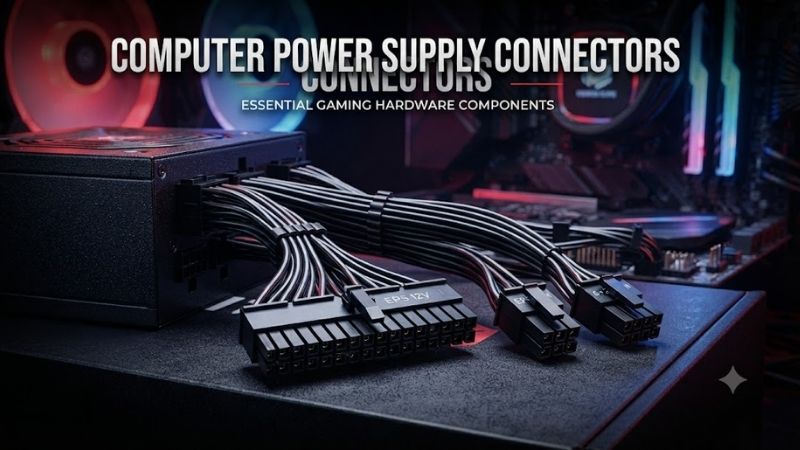
Computer power supply connectors determine how electricity reaches your motherboard, processor, graphics card, and storage devices. Whether you are building a gaming PC or replacing damaged cables, selecting the correct connector is essential. This guide compares practical cable kits, extensions, and adapters for different PC power requirements.
Quick Comparison: Best Computer Power Supply Connectors
| Product | Best For | Key Advantage | Main Limitation |
|---|---|---|---|
| CableMod Pro ModMesh Extension Kit | Premium custom PC builds | Sleeved extensions and cable organization | Requires additional cable space |
| CORSAIR Premium Individually Sleeved Type 4 Cable Kit | Compatible CORSAIR modular PSUs | Direct replacement cables | Limited PSU compatibility |
| AsiaHorse Sleeved PSU Extension Cable Kit | Budget gaming builds | Coordinated cable appearance | Adds length to existing cables |
| StarTech.com PYO2SATA SATA Power Splitter | Additional SATA drives | Expands available SATA power connections | Does not increase PSU capacity |
| CORSAIR Premium 600W PCIe 5.0 12VHPWR Cable | Supported modern GPUs | Dedicated high-power GPU cable | Requires specific CORSAIR PSU compatibility |
| EZDIY-FAB PSU Cable Extension Kit | RGB-focused gaming systems | Decorative sleeved cable routing | Not a direct modular PSU replacement |
| StarTech.com PYO2LP4SATA Power Adapter | Legacy peripheral power setups | Converts LP4 power to SATA power | Legacy power limitations |
Best Computer Power Supply Connectors for Gaming and Desktop PCs
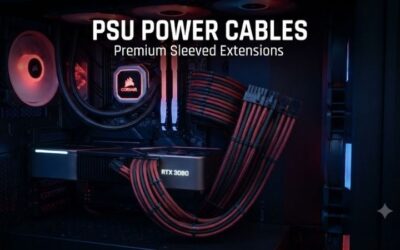
1. CableMod Pro ModMesh Extension Kit — Best Premium Cable Extensions
Best For: Gaming enthusiasts who want organized power cables with a premium sleeved appearance.
Key Features: The CableMod Pro ModMesh extension family includes configurations for common motherboard and graphics card power connections. Its sleeved construction helps users create cleaner cable arrangements, while compatible cable combs keep individual wires aligned through visible sections of a computer case.
What Makes It Different:
CableMod focuses on customization rather than simply providing functional replacement wires. The Pro ModMesh extensions are designed to connect to existing PSU cable ends, allowing builders to improve the visible portions of their wiring without changing the original modular connections inside the power supply.
Performance and Practical Use:
For gaming PCs with tempered-glass panels, the individual sleeving provides a more consistent appearance than standard bundled cables. Extensions can also help route connections behind the motherboard tray. However, additional wire length may create congestion in compact computer cases.
Pros:
-
Individually sleeved construction for organized cable routing.
-
Common motherboard and GPU extension configurations.
-
Compatible with standard PSU cables when connector types match.
-
Useful for visible gaming PC builds.
Cons:
-
Additional cable length requires management.
-
More expensive than basic unadorned extensions.
Who Should Buy It:
Choose CableMod Pro ModMesh extensions if your computer already has suitable power cables but needs improved routing and appearance. These extensions are especially appropriate for larger ATX gaming cases with cable-management channels and sufficient clearance behind the motherboard.
2. CORSAIR Premium Individually Sleeved Type 4 Cable Kit — Best for Compatible CORSAIR PSUs
Best For: Owners of compatible CORSAIR modular power supplies who need replacement cables or a cleaner internal layout.
Key Features: CORSAIR’s premium Type 4 cable family includes motherboard, CPU, PCIe, and peripheral power cables in supported kit configurations. Individual sleeving improves cable separation and routing flexibility compared with conventional flat or bundled power supply wiring.
What Makes It Different:
Unlike extension-only products, compatible CORSAIR Type 4 cables connect directly to designated modular PSU sockets. This eliminates unnecessary extension joints and can simplify cable management. However, the PSU-side pinout must match the specific power supply model, not merely the connector shape.
Performance and Practical Use:
Direct modular cable replacements are useful when stock cables are too bulky or unattractive for a custom computer build. Their suitability depends on CORSAIR’s cable compatibility documentation, since Type 3, Type 4, and Type 5 cable families are not universally interchangeable across every CORSAIR PSU.
Pros:
-
Direct modular cable replacements for supported units.
-
Premium individually sleeved construction.
-
Potentially reduces unused cable length.
-
Suitable for organized desktop builds.
Cons:
-
Not compatible with every CORSAIR power supply.
-
Unsuitable as universal replacements for other PSU brands.
Who Should Buy It:
This cable family is a sensible choice for users with supported CORSAIR modular supplies who want factory-defined compatibility rather than universal-looking aftermarket wiring. Confirm the exact PSU model, cable family, motherboard connector, and GPU requirements before selecting a kit.
3. AsiaHorse Sleeved PSU Extension Cable Kit — Best Budget Upgrade
Best For: Budget gaming PC builders who want attractive cables without replacing their existing modular PSU wiring.
Key Features: AsiaHorse offers sleeved extension kits with common 24-pin ATX, EPS CPU, and PCIe GPU connection options. Available configurations vary, so buyers should confirm the included connector quantities, cable lengths, and GPU connection types before purchasing.
What Makes It Different:
AsiaHorse targets builders who prefer an affordable visual upgrade instead of purchasing complete PSU-specific replacement cable sets. Because its extensions attach to existing cable ends, their usefulness does not depend on matching the modular pinout of a particular PSU at the extension’s input.
Performance and Practical Use:
These extensions can hide exposed stock wiring and create more consistent cable routes around the motherboard. Their benefit is primarily organizational and cosmetic rather than electrical performance. Users should inspect the connectors carefully and avoid poorly seated plugs or excessively tight bends.
Pros:
-
Budget-oriented cable customization.
-
Common motherboard, CPU, and PCIe extension options.
-
Useful for improving visible cable organization.
-
Compatible with many standard cable-end connections.
Cons:
-
Increases the total amount of wiring.
-
Kit contents and connector combinations vary.
Who Should Buy It:
AsiaHorse is appropriate for gaming enthusiasts upgrading an existing PC without changing the power supply. Select the kit according to your motherboard and GPU connectors, and ensure the computer case has enough internal space for the original cable connections and additional extensions.
4. StarTech.com PYO2SATA SATA Power Splitter — Best for Additional Storage
Best For: Desktop users installing additional SATA SSDs, hard drives, or compatible accessories.
Key Features: The StarTech.com PYO2SATA is a SATA power splitter designed to divide an existing SATA power connection into two SATA power outputs. It helps users connect another compatible device when their PSU cable layout lacks a conveniently positioned additional SATA connector.
What Makes It Different:
Unlike decorative extension kits, this splitter solves a specific connectivity problem. Its purpose is to expand available SATA power connection points rather than modify motherboard or graphics card wiring. It is most useful when a computer has sufficient electrical capacity but limited accessible power plugs.
Performance and Practical Use:
A SATA power splitter can simplify adding a second storage device without buying a new PSU cable harness. However, splitting a connection does not increase its electrical capacity. Both devices share the existing cable’s available power, making connector quality and connected-device consumption important.
Pros:
-
Adds an additional SATA power connection.
-
Useful for SATA SSD and hard drive upgrades.
-
Avoids unnecessary PSU replacement when capacity is sufficient.
-
Straightforward installation in compatible systems.
Cons:
-
Connected devices share the same supply wiring.
-
Poor cable routing can place stress on drive connectors.
Who Should Buy It:
Consider the PYO2SATA when adding a SATA SSD or another low-power storage device to a desktop computer. Verify the original cable’s suitability and inspect each connection before powering on. For larger storage arrays, a properly configured PSU cable harness is generally preferable.
5. CORSAIR Premium 600W PCIe 5.0 12VHPWR Cable — Best for Compatible High-Power GPUs
Best For: Users with supported CORSAIR power supplies and graphics cards requiring a 16-pin high-power connector.
Key Features: The CORSAIR Premium 600W PCIe 5.0 12VHPWR Type 4 cable is designed for specified CORSAIR power supplies and compatible graphics cards. It provides a dedicated cable arrangement instead of relying on an unsuitable combination of traditional GPU extension cables.
What Makes It Different:
Modern graphics cards can require a compact high-power connection rather than conventional 6-pin or 8-pin PCIe plugs. A properly specified native-style cable offers a direct way to connect a compatible PSU to the graphics card. The actual supported GPU power still depends on the complete system.
Performance and Practical Use:
Correct seating is particularly important for high-power GPU connectors. The plug should be fully inserted, and the cable should not experience immediate sharp bending near its housing. The older 12VHPWR and newer 12V-2×6 connector designs also differ, so buyers should confirm their exact hardware combination.
Pros:
-
Designed for supported high-power GPU connections.
-
Avoids some multi-adapter cable arrangements.
-
Available in sleeved CORSAIR configurations.
-
Suitable for compatible gaming workstations.
Cons:
-
Requires PSU-specific compatibility verification.
-
Cable and PSU ratings do not guarantee GPU compatibility.
Who Should Buy It:
This CORSAIR cable is intended for builders upgrading to a supported graphics card with a high-power 16-pin connection. Check your exact PSU series, cable model, graphics card requirements, and recommended power supply capacity before installation. Never assume every modular cable is interchangeable.
6. EZDIY-FAB PSU Cable Extension Kit — Best for Stylish Gaming PCs
Best For: RGB gaming setups and custom desktop builders seeking coordinated internal wiring.
Key Features: EZDIY-FAB offers sleeved PSU extension sets for common desktop power connections. Depending on the selected configuration, a kit may include 24-pin motherboard, CPU EPS, and PCIe graphics card extensions alongside cable combs for arranging visible wiring inside the computer chassis.
What Makes It Different:
EZDIY-FAB emphasizes visual customization and convenient cable organization. Its sleeved extensions offer an alternative to standard black PSU wires, allowing builders to coordinate the visible cable layout with the motherboard, graphics card, case fans, and other decorative system components.
Performance and Practical Use:
For computers with clear side panels, a coordinated extension kit can provide a more consistent internal appearance. Extensions should be installed without pulling against motherboard sockets. Builders also need to account for the additional connector joints when arranging cables behind the chassis.
Pros:
-
Decorative sleeved extension configurations.
-
Cable combs help maintain organized wiring.
-
Suitable for common ATX gaming layouts.
-
Does not require replacing the PSU’s original modular cables.
Cons:
-
Requires sufficient space for extra wiring.
-
Connector availability differs between kit variants.
Who Should Buy It:
EZDIY-FAB is worth considering if cable appearance is a major part of your gaming PC build. It works best when the required connectors match the existing PSU cables and the computer case offers enough routing space. Check GPU connector requirements before choosing a particular version.
7. StarTech.com PYO2LP4SATA Power Adapter — Best for Legacy Peripheral Connections
Best For: Users maintaining older desktop computers with available LP4 peripheral power connectors.
Key Features: The StarTech.com PYO2LP4SATA adapter converts an existing four-pin LP4 peripheral power connection into two SATA power connections. This can be useful when older power supplies or cable harnesses include legacy peripheral connectors but lack conveniently located SATA power outputs.
What Makes It Different:
Unlike SATA-to-SATA splitters, this adapter bridges two different peripheral power connector formats. It can help maintain older computer hardware without replacing the entire power supply. Nevertheless, it does not create a new power source or eliminate the limitations of the existing PSU.
Performance and Practical Use:
Legacy LP4 connections can remain useful for compatible low-power storage configurations. However, adapter build quality, connector fit, and proper voltage wiring are important. Poorly constructed peripheral power adapters can create electrical hazards, so damaged or unusually loose connections should never be used.
Pros:
-
Converts a legacy peripheral power output to SATA.
-
Provides two SATA power connectors.
-
Useful for some older desktop upgrades.
-
May avoid replacing a functional PSU solely for connector availability.
Cons:
-
Depends on the quality of the LP4 connection.
-
Not ideal for heavily loaded storage configurations.
Who Should Buy It:
Choose the PYO2LP4SATA only when working with an older desktop that has suitable LP4 power wiring. For modern computers, native SATA power cables are usually preferable. If the PSU is very old or its condition is uncertain, replacing the PSU may be safer than adding adapters.
How to Choose the Right Computer Power Supply Connectors
Understand the Main PSU Connector Types
Computer power supplies use multiple connector formats because different components require different electrical connections. Motherboards need the main ATX power connector, processors use EPS CPU power connections, graphics cards use PCIe power, and storage devices commonly use SATA power connectors.
| Connector | Typical Purpose | Important Consideration |
|---|---|---|
| 24-pin ATX | Main motherboard power | Must match the motherboard connection |
| 4+4-pin EPS | Processor power | Not interchangeable with PCIe 8-pin |
| 6-pin PCIe | Compatible graphics cards | Verify GPU requirements |
| 6+2-pin PCIe | Graphics card power | Provides configurable 8-pin connection |
| 12VHPWR | Supported high-power GPUs | Requires proper seating and rated cabling |
| 12V-2×6 | Newer high-power GPU connection | Confirm PSU and GPU compatibility |
| 15-pin SATA power | SSDs, HDDs, accessories | Observe cable and device load limits |
| 4-pin LP4 | Legacy peripherals | Use approved adapters when required |
Match the Connector to Your Hardware
Connector selection begins with identifying the exact hardware requiring power. Most desktop motherboards use a 24-pin ATX connection, while processor power arrangements can differ between boards. Graphics cards may use traditional PCIe connectors or newer high-power connections depending on the specific model.
Never substitute a CPU EPS cable for a PCIe graphics card cable, even when both appear to have eight pins. Their electrical arrangements differ. Similarly, modular PSU sockets are not standardized across manufacturers, making it essential to verify the exact replacement cable specification before installation.
Distinguish Cable Extensions From Replacement Cables
PSU cable extensions attach to existing cable ends, adding length while maintaining the intended device-side connector format. They are useful for appearance and routing. Modular replacement cables connect directly to the power supply, making their internal wiring compatibility particularly important.
Replacement cable manufacturers may support specific PSU families, but similar-looking connectors do not guarantee matching pinouts. A cable from another model can potentially damage connected hardware. When uncertainty exists, use the manufacturer’s designated cable rather than attempting an unverified replacement.
Consider Wire Gauge and Electrical Capacity
Power cables use conductors of different thicknesses, commonly identified by American Wire Gauge measurements. Lower AWG numbers generally indicate thicker conductors. Cable quality, conductor material, connector design, electrical current, and operating temperature all contribute to safe power delivery.
A thicker wire does not automatically make an adapter suitable for every graphics card or PSU. The connector assembly must support the intended electrical load. For high-power GPUs, prioritize properly rated cables explicitly approved for the power supply and graphics card configuration.
Check Connector Seating and Cable Routing
A power connector should engage fully without unusual force, loose movement, or visible gaps inconsistent with its design. Incorrectly seated connectors may create resistance and excessive heat. This is especially important for modern high-power graphics card connections carrying substantial electrical loads.
Plan cable routes before installing extensions or adapters. Avoid sharp bends directly at the plug, excessive tension against motherboard sockets, and cables interfering with cooling fans. Adequate clearance behind the motherboard tray also helps prevent cables from being compressed by the case panel.
Evaluate Power Supply Capacity
Adding connector outputs does not increase the wattage available from a power supply. A SATA splitter simply shares an existing connection, while GPU adapters redistribute compatible power inputs according to their design. The PSU must still provide adequate capacity for every connected component.
For a gaming PC, consider the processor, graphics card, drives, cooling equipment, and power supply specifications together. High-quality cabling cannot compensate for an undersized or defective PSU. Choose connectors only after establishing that the entire electrical system is appropriate.
Avoid Unnecessary Power Adapters
Every additional connector creates another potential contact point that must remain electrically sound. Adapters are sometimes useful, particularly for storage upgrades or legacy hardware, but unnecessary conversions increase wiring complexity. Native PSU connections are generally the preferred arrangement when available.
Avoid questionable SATA-to-PCIe GPU adapters, improperly specified high-power conversions, and modular cables without documented compatibility. Inspect all cables for damaged insulation, discoloration, or loose terminals before installation. Replace questionable components instead of attempting makeshift repairs.
Common Mistakes When Choosing PSU Connectors
Using Cables From Another Modular Power Supply
One of the most dangerous PC-building mistakes is reusing modular cables from an unrelated PSU. Even when the connectors fit, manufacturers can assign different electrical functions to individual pins. Using an incompatible cable can damage storage drives, motherboards, graphics cards, or other connected components.
Confusing EPS and PCIe Power Connections
CPU EPS and graphics card PCIe connectors can appear similar, especially when both have eight-pin layouts. However, they have different keying and electrical arrangements. Never force a connector into an incompatible socket. Confirm its labeling and intended function before powering the computer.
Overloading Peripheral Power Splitters
Power splitters increase the number of physical connectors but do not provide additional electrical capacity. Connecting several devices through a single cable may exceed the limits of its wires or contacts. Large storage arrays should use appropriately distributed native power connections whenever possible.
Ignoring Modern GPU Cable Requirements
High-performance graphics cards often have specific connector and power supply requirements. Using a poorly rated adapter, an unsupported replacement cable, or an incompletely inserted high-power connector increases the risk of connection failure. Always follow the GPU and PSU manufacturers’ installation instructions.
FAQ About Computer Power Supply Connectors
Are computer power supply connectors universal?
Common device-side connectors such as 24-pin ATX, EPS, and PCIe follow established connection formats, but modular PSU-side wiring is not universally interchangeable. Different manufacturers and PSU families may use different pin assignments. Always confirm compatibility before replacing modular power cables.
Can I use a 6+2-pin PCIe connector in an 8-pin GPU socket?
A properly designed 6+2-pin PCIe connector can function as an eight-pin graphics card power connection when the PSU and cable support the GPU’s requirements. The six-pin and two-pin sections should be aligned and inserted correctly. Never use an EPS CPU cable as a substitute for PCIe graphics power.
What is the difference between SATA and Molex power connectors?
SATA power connectors use a flat 15-contact design commonly found on modern internal storage devices. Traditional four-pin Molex-style LP4 connectors use a larger peripheral format found in older computers and accessories. Adapters can connect certain compatible devices, but electrical limits still apply.
Can I connect a modern graphics card to an older PSU?
Compatibility depends on the graphics card’s connector requirements, the PSU’s available outputs, its electrical capacity, and the cable arrangement. Some cards support traditional PCIe connections, while others require high-power connectors. Avoid relying on improvised adapters to compensate for an unsuitable PSU.
Do sleeved PSU cable extensions improve gaming performance?
Sleeved PSU cable extensions do not normally increase gaming frame rates or processing performance. Their primary advantages are improved appearance and cable routing. Properly specified extensions should deliver suitable power, but their additional connectors and length make correct installation and quality important.
How do I know whether a PSU connector is damaged?
Inspect disconnected cables for melted plastic, discoloration, exposed conductors, bent terminals, or loose connector housings. A burning smell or unusual heat may also indicate a problem. Shut down the system and disconnect power if damage is suspected. Replace affected cables with verified compatible parts.
Conclusion
Choosing the right computer power supply connectors requires understanding ATX, EPS, PCIe, SATA, and modular cable compatibility. CableMod and AsiaHorse extensions suit custom builds, while CORSAIR cables address supported PSU configurations. Prioritize correct pinouts, electrical ratings, secure connections, and reliable construction.