🛒 Best Price Today on Amazon
Prime members get fast, free shipping on everything above, plus member-only deals. New members get a 30-day free trial — cancel anytime.
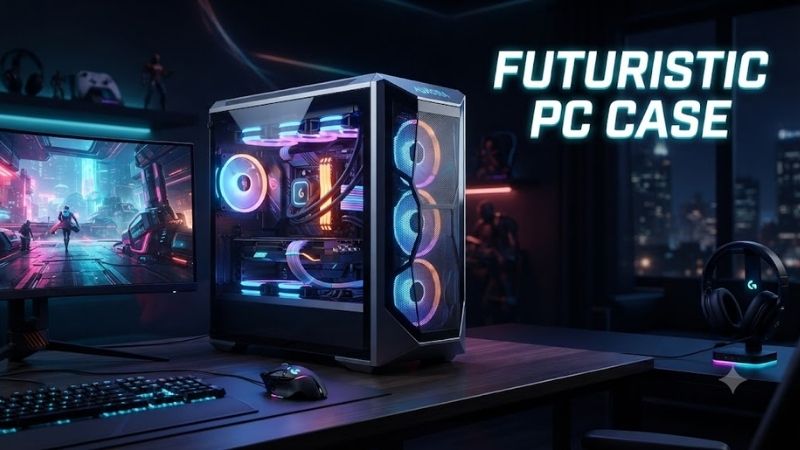
A futuristic PC case can transform an ordinary gaming computer into a striking centerpiece with panoramic glass, unusual geometric shapes, integrated displays, or exposed mechanical structures. However, appearance should never compromise cooling or hardware compatibility. This guide compares six distinctive cases and explains how to choose the right one.
Quick answer: Our top pick in 2026 is the PC Case — our #1 rated choice. See the full ranked comparison, alternatives and buying advice below.
Quick Comparison: Best Futuristic PC Cases
The best futuristic computer cases combine distinctive aesthetics with practical features such as GPU clearance, radiator compatibility, cable routing, and accessible hardware mounting. Some prioritize advanced displays and clean interiors, while others emphasize aggressive industrial shapes or open-frame construction.
| PC Case | Best For | Standout Feature | Main Limitation |
|---|---|---|---|
| HYTE Y70 Touch Infinite | Overall futuristic design | Integrated vertical touchscreen | High cost and wide footprint |
| Thermaltake The Tower 300 | Compact sci-fi aesthetics | Octagonal tower structure | Micro-ATX motherboard limit |
| Antec Torque | Open-air enthusiasts | Angular aluminum construction | Dust and exposure |
| Cougar Conquer 2 | Extreme gaming setups | Detachable internal chassis | Very large exterior dimensions |
| Jonsbo MOD-3 | Robot-inspired builds | Sculptural open-frame body | Specialized building requirements |
| InWin D-Frame 2.0 | Industrial showcase systems | Open tubular framework | Limited practicality for conventional users |
These cases target different kinds of builders. The HYTE and Thermaltake models offer distinctive designs with relatively familiar installation processes. The remaining options lean toward enthusiast hardware showcases, where unusual construction and visual impact may outweigh convenience.
Best Futuristic PC Cases
1. HYTE Y70 Touch Infinite — Best Overall Futuristic PC Case
Best For: Gamers and content creators who want a clean, futuristic desktop with a functional integrated display and extensive cooling options.
Key Features:
-
14.9-inch integrated IPS touchscreen
-
682 × 2560 display resolution
-
60Hz touchscreen refresh rate
-
10-point multitouch functionality
-
Three-piece panoramic glass design
-
Dual-chamber internal layout
-
Included PCIe 4.0 x16 riser cable
-
Support for up to 10 cooling fans
-
ATX, Micro-ATX, Mini-ITX, and compatible E-ATX motherboards
What Makes It Different
The HYTE Y70 Touch Infinite integrates a tall touchscreen into the corner of its panoramic glass enclosure. Unlike cases that use lighting alone for decoration, this display can present system information and customized widgets through HYTE Nexus software. Its design feels closer to an interactive workstation than a conventional tower.
Performance and Practical Use
The dual-chamber layout separates the main components from much of the cable management area, helping maintain a clean presentation. The case supports 360mm radiators at the top and side, providing flexibility for liquid-cooled processors. Large graphics cards can be displayed vertically using the included riser.
Pros:
-
Integrated touchscreen with customizable widgets
-
Panoramic glass creates an expansive hardware showcase
-
Spacious dual-chamber construction
-
Included vertical GPU mounting hardware
-
Extensive cooling flexibility
Cons:
-
More expensive than conventional glass cases
-
Integrated screen adds software and connection requirements
-
Broad chassis consumes substantial desktop space
Who Should Buy It
The Y70 Touch Infinite is ideal for builders who want an interactive visual centerpiece without adopting an exposed chassis. Its combination of display functionality, component visibility, and cooling support makes it especially appealing for premium gaming systems and elaborate RGB configurations.
2. Thermaltake The Tower 300 — Best Compact Sci-Fi Tower Design
Best For: Micro-ATX builders seeking an unusual vertical enclosure with strong component visibility and flexible cooling.
Key Features:
-
Octagonal vertical tower design
-
Micro-ATX and Mini-ITX motherboard support
-
Three tempered-glass viewing panels
-
Two preinstalled CT140 fans
-
Support for a 420mm side radiator
-
Maximum GPU length of 400mm without the power cover
-
USB-C and USB-A front connectivity
-
Optional horizontal positioning accessory
What Makes It Different
The Thermaltake Tower 300 departs from traditional rectangular case construction with an octagonal body that resembles a futuristic display capsule. Its vertical layout and multiple glass panels emphasize the installed hardware while maintaining a relatively narrow footprint compared with many large showcase cases.
Performance and Practical Use
The Tower 300 supports substantial liquid cooling despite its Micro-ATX motherboard limitation. A side-mounted radiator can reach 420mm, making it suitable for demanding processor configurations. Two factory-installed 140mm fans assist airflow, while additional mounting locations provide room for customization.
Graphics card compatibility requires careful attention because the available length changes with the power cover configuration. Builders should also check graphics card thickness, cable routing, and motherboard connector placement. A visually compact exterior does not eliminate the challenges of arranging large components.
Pros:
-
Distinctive octagonal design
-
Large radiator compatibility
-
Three glass viewing panels
-
Includes two cooling fans
-
Suitable for visually focused Micro-ATX systems
Cons:
-
Does not support standard ATX motherboards
-
GPU clearance depends on internal configuration
-
Unusual layout may complicate cable routing
Who Should Buy It
Choose the Tower 300 if you want an unconventional desktop that remains practical for everyday gaming. It is particularly suitable for Micro-ATX systems where visual appeal, substantial radiator support, and an upright presentation are more important than maximum motherboard expansion.
3. Antec Torque — Best Open-Air Futuristic PC Case
Best For: Enthusiasts who appreciate aggressive angular styling, exposed architecture, and custom cooling configurations.
Key Features:
-
Precision-cut aluminum construction
-
Forward-tilted motherboard mounting
-
Open-air chassis architecture
-
Dual 4mm tempered-glass panels
-
E-ATX, ATX, Micro-ATX, and Mini-ITX support
-
Graphics cards up to 450mm long
-
CPU cooler clearance up to 215mm
-
Front and top 360mm radiator support
-
USB-C connectivity
What Makes It Different
The Antec Torque uses sharply angled aluminum elements to create a mechanical appearance inspired by high-performance machinery. Its exposed structure and forward-leaning motherboard position distinguish it from typical RGB gaming towers. The design gives individual hardware components a more prominent architectural role.
Performance and Practical Use
Open-air construction allows heat to dissipate without the restrictions of a conventional closed enclosure. However, unrestricted exposure does not automatically produce superior component temperatures. Radiator placement, fan direction, ambient temperature, and graphics card cooler design still influence sustained performance.
The Torque provides substantial clearance for long graphics cards and tall air coolers. It also accommodates large liquid cooling radiators, making it flexible for enthusiast configurations. However, its exposed construction allows more dust to reach components and offers less physical protection from accidental contact.
Pros:
-
Distinctive angular aluminum appearance
-
Wide motherboard compatibility
-
Substantial GPU and CPU cooler clearance
-
Supports large front and top radiators
-
Excellent visual access to internal hardware
Cons:
-
Exposed construction increases dust exposure
-
Less protection from accidental contact
-
Requires thoughtful placement and maintenance
Who Should Buy It
The Antec Torque is suited to builders who view their gaming computer as a hardware exhibition. It works especially well in a dedicated setup where components remain protected from pets, spills, and frequent movement, and where the owner is comfortable performing regular cleaning.
4. Cougar Conquer 2 — Best Extreme Futuristic Gaming Case
Best For: Enthusiasts building a visually dramatic gaming system with large components, elaborate lighting, and custom cooling.
Key Features:
-
Full-tower futuristic enclosure
-
Detachable internal chassis
-
Metal exterior framework
-
Cougar Trelux addressable RGB lighting
-
Mini-ITX, Micro-ATX, ATX, and CEB motherboard compatibility
-
Graphics card clearance up to 400mm
-
Top-mounted 360mm radiator support
-
Front-mounted 240mm radiator support
-
USB-C front connectivity
What Makes It Different
The Cougar Conquer 2 resembles a futuristic spacecraft or armored mechanical structure rather than a conventional PC enclosure. Its distinctive outer shell surrounds a removable internal chassis, allowing the main system to be assembled separately before being installed within the larger decorative framework.
Performance and Practical Use
The removable chassis offers a useful advantage during installation because builders can access hardware without constantly working around the large exterior structure. Its full-tower dimensions also create a dramatic physical presence, although available cooling and clearance specifications must still be checked for the exact component arrangement.
The Conquer 2 supports graphics cards up to 400mm long, but the maximum CPU air cooler height is only 150mm. This makes careful cooling selection important. Buyers planning a high-power processor may prefer a compatible liquid cooling system rather than assuming any large tower air cooler will fit.
Pros:
-
Unusually aggressive sci-fi exterior
-
Removable internal chassis
-
Addressable RGB lighting
-
Supports large graphics cards
-
Compatible with several motherboard formats
Cons:
-
Very large physical footprint
-
Limited CPU air cooler clearance
-
Heavy construction
-
Complex exterior compared with conventional cases
Who Should Buy It
The Conquer 2 is a strong choice for someone building a visually ambitious desktop rather than a discreet workstation. It is particularly appealing for themed gaming rooms, exhibition systems, and custom RGB builds where size and dramatic styling are intentional parts of the project.
5. Jonsbo MOD-3 — Best Robot-Inspired Futuristic PC Case
Best For: Experienced PC builders who want an unconventional mechanical enclosure with an exposed, sculptural appearance.
Key Features:
-
Open-frame mechanical chassis
-
Angular metallic exterior panels
-
Tempered-glass viewing sections
-
ATX motherboard compatibility
-
Dedicated positions for cooling hardware
-
Support for enthusiast graphics configurations
-
Distinctive asymmetrical visual design
What Makes It Different
The Jonsbo MOD-3 uses a complicated arrangement of angular panels, exposed sections, and geometric structures. Its appearance is reminiscent of futuristic robotics and mechanical armor. Unlike standard panoramic cases, the MOD-3 uses the shape of the chassis itself as the primary design feature.
Performance and Practical Use
The unusual framework provides broad visibility of installed hardware, making component color coordination and cable placement especially important. It is best approached as a showcase project rather than a quick assembly. Buyers should verify the exact model’s dimensional specifications before purchasing major cooling components.
Open-frame cases also require greater attention to environmental conditions. Dust, accidental contact, and exposed cabling can become practical concerns in busy households. The MOD-3 is therefore more appropriate for experienced builders who are comfortable planning component placement and performing periodic maintenance.
Pros:
-
Dramatic robot-inspired appearance
-
Distinctive metallic construction
-
Strong component visibility
-
Suitable for themed custom builds
-
Unconventional design compared with ordinary towers
Cons:
-
Less convenient than mainstream cases
-
Open sections increase maintenance requirements
-
Compatibility requires careful model-specific verification
-
Availability can be inconsistent
Who Should Buy It
The MOD-3 appeals to users who want their computer to resemble a custom mechanical installation. It is less suitable for first-time builders who prioritize straightforward assembly, straightforward dust protection, or standardized layouts over experimental aesthetics.
6. InWin D-Frame 2.0 — Best Industrial Futuristic Showcase
Best For: Enthusiasts seeking a premium open-frame case with exposed structural tubing and an engineering-inspired appearance.
Key Features:
-
Open-frame tubular chassis construction
-
Distinctive industrial styling
-
Tempered-glass side panels
-
Full-size enthusiast system design
-
Support for custom cooling arrangements
-
Exposed component presentation
-
Unconventional structural layout
What Makes It Different
The InWin D-Frame 2.0 uses a tubular structural framework rather than conventional flat exterior panels. Its appearance resembles a mechanical prototype or specialized industrial machine. The exposed chassis gives the case a distinctive identity even without extensive RGB lighting or decorative display panels.
Performance and Practical Use
The open-frame construction provides direct access to much of the system and makes hardware an essential part of the visual design. However, the lack of a conventional sealed enclosure changes how users should approach dust control, noise, and accidental contact. Placement becomes an important part of ownership.
The D-Frame 2.0 is better suited to deliberate showcase builds than ordinary gaming desktops. Because it is an older specialty product, buyers should confirm that all original mounting hardware, panels, and power-related components are included before purchasing a secondhand or remaining-stock example.
Pros:
-
Highly distinctive tubular construction
-
Strong industrial design identity
-
Excellent visibility of components
-
Appropriate for specialized showcase builds
-
Unusual alternative to standard glass cases
Cons:
-
Limited availability
-
Exposed hardware requires additional care
-
Not ideal for dust-prone environments
-
Replacement parts may be difficult to source
Who Should Buy It
Consider the D-Frame 2.0 if industrial aesthetics matter more than conventional convenience. Its appeal lies in structural craftsmanship and originality, making it attractive to collectors and enthusiasts who want a computer that looks fundamentally different from a traditional desktop tower.
How to Choose the Right Futuristic PC Case
Design Style and Visual Impact
Futuristic computer cases generally fall into several design categories: panoramic glass showcases, geometric vertical towers, mechanical open frames, and interactive display enclosures. Each creates a different visual experience, so identifying the intended appearance is an important first step before comparing technical specifications.
Panoramic designs typically suit coordinated RGB builds and clean cable management. Angular open-frame cases emphasize the machinery itself, while integrated-screen cases introduce information displays and animation. Choose the style that complements your workspace rather than assuming more complicated shapes always look better.
Motherboard Compatibility
Motherboard compatibility is one of the most important purchasing checks. A case designed for Micro-ATX hardware cannot necessarily accommodate a standard ATX board, even when its exterior looks physically large. Likewise, E-ATX compatibility sometimes depends on motherboard width and can affect cable routing.
Before buying, compare your motherboard dimensions with the case manufacturer’s supported formats. Check whether wide boards overlap cable-routing openings or interfere with cooling hardware. This is particularly important for unusual enclosures where the internal layout differs considerably from traditional rectangular towers.
Graphics Card Clearance
Modern high-performance graphics cards can be extremely long and thick. Case specifications often list maximum GPU length, but this measurement may assume certain radiator positions or the removal of internal covers. A card that technically fits lengthwise may still have insufficient space for power connections.
Verify GPU length, thickness, slot requirements, and connector clearance. For cases using vertical GPU mounts, examine the available distance between the graphics card fans and glass panels. Restricted intake clearance can increase temperatures and noise, particularly with high-power graphics hardware.
Airflow and Cooling Performance
An unusual exterior does not guarantee better airflow. Some futuristic cases provide extensive fan mounting and mesh ventilation, while others prioritize glass and decorative structures. Cooling performance depends on how effectively fresh air reaches the CPU cooler, graphics card, motherboard components, and storage devices.
Closed cases benefit from planned intake and exhaust airflow paths. Open-frame designs reduce enclosure restrictions but do not automatically maintain low component temperatures. Builders should compare radiator mounting locations, fan compatibility, and component clearances before purchasing cooling hardware.
Liquid Cooling Support
Many futuristic cases are designed with liquid cooling in mind because radiators, illuminated pump blocks, and custom tubing complement elaborate visual designs. However, support for a particular radiator length does not always guarantee compatibility with every radiator thickness or fan arrangement.
Check whether the chosen radiator conflicts with motherboard heatsinks, memory modules, or graphics hardware. A 360mm radiator may fit in one mounting position but block another component. For custom liquid cooling, additional room for reservoirs, pumps, tubing bends, and maintenance access becomes essential.
Cable Management
Cable management has a greater visual impact in showcase cases because internal wiring is frequently visible from multiple angles. Dual-chamber designs can simplify routing by moving much of the wiring behind the motherboard area, while open-frame cases require more deliberate planning to maintain a clean presentation.
Consider the placement of motherboard power connectors, graphics card cables, fan controllers, and RGB hubs. Cases with removable panels and dedicated routing channels typically make installation easier. An attractive exterior can quickly lose its appeal when bulky cables obstruct the intended visual layout.
Build Quality and Materials
Futuristic cases frequently combine steel, aluminum, tempered glass, and plastic elements. Aluminum can support intricate mechanical designs, while steel provides structural strength at a different cost and weight balance. Tempered glass improves hardware visibility but introduces handling considerations during transportation.
Look beyond the exterior finish and consider panel alignment, removable mounting brackets, fastener accessibility, and structural rigidity. Particularly unusual open-frame products may require more assembly steps than conventional cases. The best design should remain practical when hardware needs cleaning, replacement, or upgrading.
Size and Desk Space
Futuristic cases often use unconventional proportions that make them difficult to position in ordinary workspaces. A wide panoramic enclosure may occupy more desk depth than expected, while an angular open-frame system can extend considerably beyond the dimensions of a conventional mid-tower.
Measure the available installation area before selecting a chassis. Allow extra clearance for rear connectors, ventilation, and removable panels. If the computer will sit on a desk, consider its height relative to monitors and shelving. Large showcase cases may be better positioned on dedicated stands.
Dust Protection and Maintenance
Open-frame futuristic cases expose components directly to the surrounding environment. This provides visual access and can reduce airflow restrictions, but it also means dust, pet hair, and accidental contact become more significant concerns. Conventional enclosed designs generally offer more controlled filtration options.
For a frequently used gaming computer, removable dust filters and accessible fan mounts can simplify maintenance. Open-frame systems may need more frequent cleaning depending on room conditions. Users with pets or limited cleaning time should carefully consider whether the visual advantages justify the additional responsibility.
Futuristic Open-Frame vs Panoramic Glass Cases
Both styles can create impressive gaming systems, but their practical characteristics differ substantially. An open-frame design emphasizes exposed mechanical details and unconventional shapes. A panoramic glass case focuses on organized component presentation while retaining more of the familiar structure of an enclosed desktop.
| Feature | Open-Frame Case | Panoramic Glass Case |
|---|---|---|
| Appearance | Mechanical and experimental | Modern and clean |
| Hardware visibility | Highly exposed | Visible behind glass |
| Dust protection | Usually limited | Often better controlled |
| Airflow | Less enclosure restriction | Depends on intake and exhaust |
| Noise containment | Limited | May provide some containment |
| Maintenance | Direct hardware access | Panels often require removal |
| Component protection | More exposed | Greater physical separation |
| Best Use | Enthusiast showcases | Everyday gaming and display builds |
Neither design is universally superior. Open-frame cases can be visually spectacular but require environmental awareness and more deliberate maintenance. Panoramic glass cases generally offer a more practical balance for users who want attractive hardware presentation without exposing every internal component.
Common Mistakes When Buying a Futuristic PC Case
Choosing Appearance Before Compatibility
One of the most common mistakes is selecting a case solely because its exterior looks impressive. Unusual shapes can conceal restrictions involving motherboard sizes, graphics card dimensions, cooling hardware, or power supply placement. These limitations may require expensive component changes later.
Start by identifying the hardware you already own or intend to purchase. Confirm compatibility using the exact case model rather than general product-family descriptions. Prioritizing essential measurements prevents an attractive chassis from becoming an impractical or unnecessarily expensive project.
Underestimating Cooling Requirements
A case with an aggressive design may appear optimized for high-performance hardware, but appearance alone reveals little about actual thermal behavior. Decorative panels, glass placement, and limited intake areas can restrict cooling options even when the case includes numerous nominal fan positions.
Review the intended airflow path and consider whether your CPU and GPU cooling systems can receive sufficient fresh air. High-power components may require additional fans or a larger radiator. Avoid assuming that maximum fan compatibility automatically guarantees quiet or efficient cooling.
Ignoring the Total Build Cost
Futuristic cases can encourage spending beyond the initial chassis purchase. Specialized riser cables, additional fans, lighting controllers, unusual power cable lengths, display connections, and custom liquid cooling components may increase the final cost substantially.
Calculate the cost of completing the build rather than comparing case prices alone. A more affordable enclosure that requires extensive additional equipment may become less economical than a premium model with useful accessories included. Spending should reflect functional priorities as well as visual preferences.
FAQ
What makes a PC case futuristic?
A futuristic PC case typically uses unconventional geometry, panoramic glass, integrated screens, mechanical structures, or advanced lighting to create a distinctive appearance. However, its practical value also depends on cooling, compatibility, and component accessibility. The best examples combine unusual styling with useful engineering features.
Are futuristic PC cases good for gaming?
Yes, futuristic cases can support powerful gaming hardware when they provide sufficient GPU clearance, airflow, and cooling compatibility. Their exterior designs do not directly improve frame rates, but effective cooling can help components maintain stable performance. Compatibility should be verified before choosing any visually unusual enclosure.
Do futuristic PC cases have better airflow?
Not necessarily. Some open-frame cases reduce physical airflow restrictions, while enclosed futuristic designs may rely on carefully positioned fans and ventilation channels. Actual results depend on hardware configuration and cooling implementation. A conventional airflow-focused case can outperform an elaborate showcase enclosure in some builds.
Can I install an RTX 4090 or RTX 5090 in a futuristic case?
Potentially, but compatibility depends on the exact graphics card and enclosure. High-end GPUs vary in length, thickness, slot requirements, and power connector arrangement. Compare the manufacturer’s measurements with case clearances, including space for power cables, radiators, and airflow around the graphics card.
Are open-frame PC cases difficult to maintain?
Open-frame cases generally require more attention to dust accumulation and exposed components. Their accessible layouts can make cleaning convenient, but they offer less protection from pets, accidental contact, and environmental debris. Regular inspection and careful placement help preserve hardware condition and appearance.
Is a touchscreen PC case worth buying?
A touchscreen case can be worthwhile if you regularly use system-monitoring widgets, customized controls, or decorative information displays. However, the screen adds cost, wiring requirements, and software considerations. Buyers primarily interested in gaming performance may find greater value in spending that budget on internal hardware.
Conclusion
A futuristic PC case should deliver more than a dramatic appearance. The HYTE Y70 Touch Infinite offers an interactive showcase, while the Thermaltake Tower 300 balances unusual styling with practical cooling. Open-frame alternatives provide stronger mechanical aesthetics. Choose a design that fits your components, workspace, and maintenance preferences.
Ready to decide? Our #1 pick for 2026 is the PC Case.
Live price & availability on Amazon.