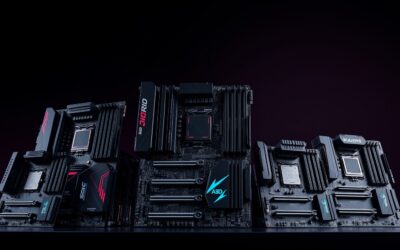
🛒 Best Price Today on Amazon
Prime members get fast, free shipping on everything above, plus member-only deals. New members get a 30-day free trial — cancel anytime.
Choosing the best black gaming motherboard is about more than matching a dark case. The right board should pair clean black styling with the socket, expansion, networking, storage, and rear I/O your gaming PC actually needs. These picks cover premium AMD and Intel builds without sacrificing practical upgrade options.
Quick answer: For most people in 2026, the best black gaming motherboard picks for premium pc builds is the Motherboard — our #1 rated choice. See the full ranked comparison, alternatives and buying advice below.
Best Black Gaming Motherboards Compared
| Motherboard | Platform | Chipset | Memory | M.2 Slots | Networking | Best For |
|---|---|---|---|---|---|---|
| ASUS ROG Strix X870E-E Gaming WiFi | AMD AM5 | X870E | DDR5 | 5 | Wi-Fi 7, 5GbE | Premium AMD builds |
| MSI MAG X870 Tomahawk WiFi | AMD AM5 | X870 | DDR5 | 4 | Wi-Fi 7, 5GbE | Balanced high-end AMD |
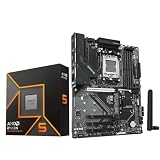
| Gigabyte X870 AORUS Elite WIFI7 | AMD AM5 | X870 | DDR5 | Multiple | Wi-Fi 7 | Feature-rich AMD |
| ASUS TUF Gaming B850-Plus WiFi | AMD AM5 | B850 | DDR5 | 3 | Wi-Fi 7, 2.5GbE | Gaming-first AM5 |
| MSI MAG Z890 Tomahawk WiFi | Intel LGA1851 | Z890 | DDR5 | 4 | Wi-Fi 7, 5GbE | Balanced Intel builds |
| ASUS ROG Strix Z890-E Gaming WiFi | Intel LGA1851 | Z890 | DDR5 | Multiple | Wi-Fi 7 | Premium Intel builds |
A black motherboard works best when the finish is carried across the PCB, heatsinks, I/O shroud, and M.2 covers instead of relying on a few dark accents. That matters in glass-panel systems, where exposed silver parts can break the theme. It also gives RGB lighting a neutral backdrop without competing with bright board colors.
Platform choice comes first because AMD AM5 and Intel LGA1851 boards are not interchangeable. Ryzen 7000, 8000, and 9000 builders should focus on compatible AM5 options, while Intel Core Ultra Series 2 systems need LGA1851. Pick the CPU platform before comparing aesthetics, storage, networking, or rear I/O.
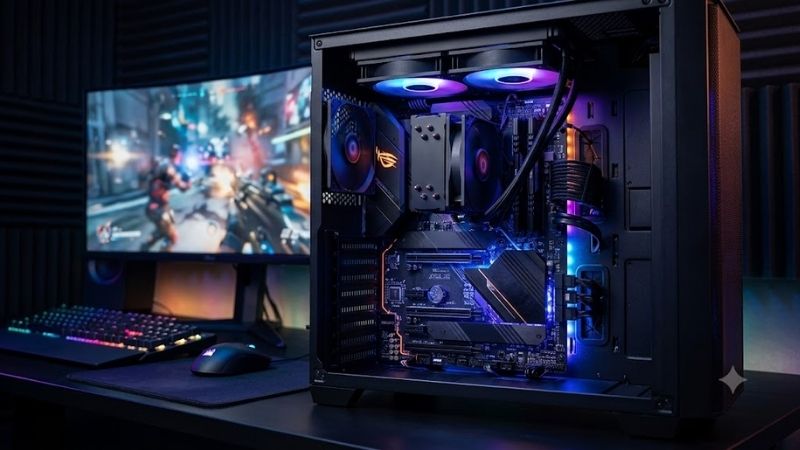
ASUS ROG Strix X870E-E Gaming WiFi
Best For: Premium AMD gaming and enthusiast builds
Key Features
- AMD X870E chipset
- AM5 socket
- DDR5 memory support
- Five M.2 slots
- PCIe 5.0 graphics support
- Wi-Fi 7
- 5Gb Ethernet
- Dual USB4 Type-C
- ATX form factor
The ASUS ROG Strix X870E-E Gaming WiFi targets high-end AM5 systems that need dense storage, fast wired networking, and extensive rear connectivity. Its dark PCB and large black heatsinks suit premium blackout builds, while the X870E platform gives enthusiasts more expansion flexibility than mainstream AM5 boards.
Five M.2 slots, PCIe 5.0 graphics support, Wi-Fi 7, 5Gb Ethernet, and dual USB4 Type-C ports make this board suitable for users who connect many fast devices. That combination is especially useful for gaming plus editing, capture, or large local libraries because fewer hubs and adapters are needed around the desk.
What Makes It Different
Its main strength is how many high-end features are packed into one ATX board without losing the dark visual theme. Builders can combine multiple NVMe drives, a powerful graphics card, fast networking, and modern external storage. The trade-off is complexity, because some expansion and M.2 configurations share available lanes.
Pros
- Five M.2 slots
- Dual USB4 connectivity
- Wi-Fi 7
- 5Gb Ethernet
- Premium black styling
- Extensive rear I/O
Cons
- Excessive for simple gaming builds
- Some configurations involve PCIe lane sharing
Use Case and Who It’s For
This model makes the most sense for a premium Ryzen gaming PC where the motherboard remains visible and expansion matters as much as aesthetics. It suits users with several NVMe drives, fast peripherals, or demanding creator workflows. It is harder to justify if the system only needs one SSD and basic networking.
MSI MAG X870 Tomahawk WiFi
Best For: Balanced high-end AMD gaming builds
Key Features
- AMD X870 chipset
- AM5 socket
- DDR5 support
- Four M.2 slots
- PCIe 5.0 graphics support
- Wi-Fi 7
- 5Gb Ethernet
- Dual rear 40Gbps Type-C
The MSI MAG X870 Tomahawk WiFi takes a more restrained approach than many flagship boards. Its black PCB, dark heatsinks, and minimal decorative accents make it easy to blend into stealth builds. At the same time, it offers modern AM5 support, four M.2 slots, Wi-Fi 7, 5Gb Ethernet, and fast Type-C connectivity.
Two rear 40Gbps Type-C ports and a front 20Gbps Type-C header give the X870 Tomahawk strong external connectivity. Four M.2 slots also provide enough room for a fast boot drive, a large game library, and extra project storage. That balance works well for gaming systems that also handle video or large file transfers.
What Makes It Different
The important limitation is lane sharing. Certain M.2, USB, and expansion configurations can compete for bandwidth, so builders planning several add-in cards should study the slot layout before buying. For a standard one-GPU gaming PC, however, the available connectivity is generous and the board remains easier to justify than many flagships.
Pros
- Understated black design
- Four M.2 slots
- Wi-Fi 7
- 5Gb Ethernet
- High-speed Type-C
- Strong feature balance
Cons
- Some ports and slots share bandwidth
- More connectivity than basic builds require
Use Case and Who It’s For
This board fits a Ryzen gamer who wants modern I/O without paying mainly for decorative extras. The understated styling works especially well with black air coolers, dark AIO radiators, and non-RGB memory. It is also practical for mixed gaming and productivity use because storage and networking are stronger than on basic AM5 boards.
Gigabyte X870 AORUS Elite WIFI7
Best For: Feature-rich AMD gaming PCs
Key Features
- AMD X870 chipset
- AM5 socket
- DDR5 support
- PCIe 5.0 graphics support
- Multiple M.2 slots
- Wi-Fi 7
- High-speed USB connectivity
- Dark AORUS heatsink design
The Gigabyte X870 AORUS Elite WIFI7 is another strong AM5 option for users who prefer broad black heatsink coverage and a more aggressive gaming design. It supports current AM5 Ryzen processors, DDR5 memory, PCIe 5.0 graphics, Wi-Fi 7, and modern high-speed connectivity while remaining focused on a single-GPU desktop build.
Its appeal is balance rather than one extreme specification. The board provides modern CPU support, fast wireless networking, substantial M.2 cooling, and a dark appearance without moving into the most expensive enthusiast tier. That can leave more of the total budget available for the graphics card, CPU cooler, or larger SSDs.
What Makes It Different
Gigabyte also emphasizes easy-access installation features on recent AORUS boards, which can help when a thick graphics card or large heatsink blocks small retention points. For a black build, the broad dark covers hide much of the PCB and keep the finished system visually consistent once the GPU and memory are installed.
Pros
- Broad black heatsink coverage
- PCIe 5.0 graphics support
- Wi-Fi 7
- Multiple M.2 options
- Suitable for showcase builds
- Balanced enthusiast feature set
Cons
- Exact specifications can vary by revision
- Premium features may exceed basic gaming needs
Use Case and Who It’s For
Choose the X870 AORUS Elite WIFI7 if you want a feature-rich AM5 foundation but do not need every premium I/O feature found on X870E boards. It works well for high-refresh gaming systems with one powerful GPU and several NVMe drives. Check the exact revision when comparing specifications, because details can vary by revision.
ASUS TUF Gaming B850-Plus WiFi
Best For: Gaming-focused AM5 systems
Key Features
- AMD B850 chipset
- AM5 socket
- DDR5 memory
- Three M.2 slots
- Four SATA ports
- PCIe 5.0 graphics support with compatible CPUs
- Wi-Fi 7
- 2.5Gb Ethernet
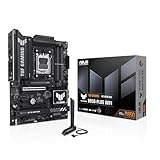
The ASUS TUF Gaming B850-Plus WiFi is a sensible choice for a black AM5 build that prioritizes gaming essentials over flagship extras. It supports current AM5 Ryzen processors, DDR5 memory, PCIe 5.0 graphics with supported CPUs, Wi-Fi 7, 2.5Gb Ethernet, three M.2 slots, and four SATA ports for flexible storage.
Three M.2 slots are enough for most gaming PCs because one drive can handle Windows and applications while one or two larger drives hold games and media. The board also keeps SATA support for older SSDs or hard drives. This makes it easier to reuse existing storage instead of replacing every drive during an upgrade.
What Makes It Different
Compared with X870 models, the TUF B850-Plus trims premium connectivity rather than core gaming functionality. That matters because many gaming systems never use dual USB4 or 5Gb Ethernet. If your setup needs one graphics card, several SSDs, and mainstream peripherals, B850 can keep more money available for the GPU.
Pros
- Dark TUF aesthetic
- Three M.2 slots
- Wi-Fi 7
- 2.5Gb Ethernet
- PCIe 5.0 graphics support
- Practical gaming-focused layout
Cons
- Less high-speed I/O than X870
- Not designed for maximum expansion
Use Case and Who It’s For
This is a strong fit for mainstream and upper-midrange Ryzen gaming PCs where the black theme matters but workstation-style expansion does not. It suits users building around one graphics card and two or three NVMe drives. It is less ideal for anyone who regularly uses several ultra-fast external devices or many add-in cards.
MSI MAG Z890 Tomahawk WiFi
Best For: Balanced Intel Core Ultra gaming PCs
Key Features
- Intel Z890 chipset
- LGA1851 socket
- Core Ultra Series 2 support
- DDR5 memory
- Four M.2 slots
- PCIe 5.0 graphics support
- Dual Thunderbolt 4
- Wi-Fi 7
- 5Gb Ethernet
The MSI MAG Z890 Tomahawk WiFi brings the same understated dark styling to Intel Core Ultra Series 2 systems. It uses the LGA1851 socket, supports DDR5 memory and PCIe 5.0 graphics, and combines Wi-Fi 7 with fast 5Gb Ethernet. Four M.2 slots also provide substantial internal storage capacity for games and projects.
Rear connectivity is a major strength because the board includes dual Thunderbolt 4 ports alongside additional USB Type-A and Type-C connections. That can simplify setups using external SSDs, docks, displays, capture hardware, and other peripherals. It is especially useful for creators who game and edit on the same desktop.
What Makes It Different
The Z890 Tomahawk stands out by delivering serious connectivity without looking visually busy. Its dark heatsinks and limited accent colors fit blackout builds, while Thunderbolt 4 gives it more flexibility than boards focused only on gaming peripherals. The trade-off is platform lock-in, because LGA1851 requires compatible Intel processors.
Pros
- Clean black styling
- Four M.2 slots
- Dual Thunderbolt 4
- Wi-Fi 7
- 5Gb Ethernet
- Strong external connectivity
Cons
- Limited to compatible LGA1851 processors
- Extra connectivity may be unnecessary for gaming-only PCs
Use Case and Who It’s For
Pick this board for an Intel gaming build where clean styling, fast external devices, and strong networking all matter. It is especially suitable for users moving large video files or using high-speed docks. Buyers focused only on game performance can choose a simpler board and redirect more of the budget toward the graphics card.
ASUS ROG Strix Z890-E Gaming WiFi
Best For: Premium Intel gaming builds
Key Features
- Intel Z890 chipset
- LGA1851 socket
- Core Ultra Series 2 support
- DDR5 memory
- PCIe 5.0 graphics support
- Multiple M.2 slots
- Wi-Fi 7
- Thunderbolt 4
- Premium ROG black styling
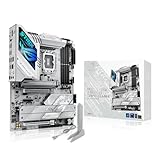
The ASUS ROG Strix Z890-E Gaming WiFi is the premium Intel option for builders who want an elaborate black motherboard with extensive expansion. It supports Core Ultra Series 2 processors, DDR5 memory, PCIe 5.0 graphics, Wi-Fi 7, Thunderbolt 4, and multiple high-speed storage devices within a feature-heavy enthusiast platform.
Its layered black heatsinks, dark PCB, and large integrated covers suit showcase systems built around tempered-glass cases. The board is designed for users who will actually use several M.2 drives, premium networking, fast external storage, and advanced rear I/O. If those features remain unused, much of the extra cost is wasted.
What Makes It Different
What separates the Z890-E from simpler black motherboards is the amount of hardware around storage, networking, and external connectivity. It works well for gaming systems that also handle editing, streaming, virtual machines, or large local project libraries. The extra flexibility matters most when several high-bandwidth devices are used together.
Pros
- Premium blackout styling
- Wi-Fi 7
- Thunderbolt 4
- PCIe 5.0 graphics support
- Extensive M.2 expansion
- Strong rear connectivity
Cons
- Overbuilt for simple gaming systems
- Requires compatible LGA1851 processors
Use Case and Who It’s For
This model fits a high-end Intel build where the motherboard is part of the visual centerpiece and the system will host several fast drives or external devices. It is less appropriate for a tightly controlled gaming budget. In that situation, a less expensive Z890 board can preserve money for the GPU without changing CPU compatibility.
How to Choose the Best Black Gaming Motherboard
Gaming Performance
For pure gaming, the motherboard rarely changes frame rates when the CPU and GPU operate under the same settings. The practical differences are expansion, storage, networking, USB bandwidth, firmware features, and upgrade flexibility. Choose the best black gaming motherboard around the full system rather than expecting extra FPS.
AMD AM5 vs Intel LGA1851
AM5 currently gives builders access to a wide range of Ryzen processors, while LGA1851 targets Intel Core Ultra Series 2. Neither platform should be chosen because of color alone. Decide which processor fits your gaming and productivity workload first, then compare black boards inside that platform based on the features you will actually use.
B850 vs X870 vs X870E
A premium chipset is worthwhile when you need its extra I/O or expansion. X870 and X870E boards can justify their position through features such as USB4, additional high-speed storage, or richer rear connectivity. B850 is often enough for a gaming-focused Ryzen build where one graphics card and several NVMe drives cover the plan.
M.2 Storage and PCIe Lane Sharing
Count storage needs before buying. Three M.2 slots are enough for many gaming PCs, while four or five become useful for large game libraries, scratch drives, or content creation. Also check whether installing a specific M.2 drive reduces bandwidth to another expansion slot, because lane-sharing behavior differs between motherboard models.
Ethernet and Wi-Fi
Networking should match the rest of your home setup. A 5Gb Ethernet port only reaches its full potential with compatible routers, switches, cabling, and storage, while 2.5Gb Ethernet is already more than enough for many gaming networks. Wi-Fi 7 can add wireless headroom, but the router must support the same standard.
USB and Thunderbolt Connectivity
Rear I/O is easy to underestimate during a motherboard purchase. Streamers may need ports for microphones, cameras, capture devices, lighting, controllers, and external SSDs, while creators may benefit from USB4 or Thunderbolt. Count your actual devices before buying so the system does not end up dependent on several external hubs.
Black PC Build Aesthetics
A black motherboard does not need to be completely unbranded to fit a stealth theme. Focus on the visible areas after assembly: VRM heatsinks, M.2 covers, memory slots, PCB, and the I/O shroud. Large graphics cards hide much of the lower board, so a dark upper section often matters more than small logos near expansion slots.
Case and Cooler Compatibility
The motherboard should also match the case and cooler layout. Large air coolers can crowd tall memory modules, while thick graphics cards may cover lower expansion slots or headers. Before buying, compare board size, slot positions, connector placement, and cooler clearance instead of judging appearance from product photos alone.
FAQ
Does an Expensive Gaming Motherboard Improve FPS?
Expensive motherboards do not automatically improve gaming frame rates. Their advantages usually appear in connectivity, storage, firmware controls, power delivery, and expansion. Spend more when those features solve a real requirement. If they do not, allocating the difference to the GPU or CPU can improve gaming performance more directly.
Is B850 Enough for a Gaming PC?
B850 is enough for many gaming PCs using one graphics card and a few NVMe drives. X870 or X870E becomes more attractive when you need additional high-speed I/O, USB4, more storage flexibility, or enthusiast expansion. The right chipset is the one that matches your devices and upgrade plan rather than the one with the highest model number.
How Many M.2 Slots Should a Gaming Motherboard Have?
Three M.2 slots are usually enough for a gaming build because one drive can handle Windows and applications while one or two larger SSDs store games and media. Four or five slots make more sense for users with very large local libraries or systems that combine gaming with editing, recording, virtual machines, or other storage-heavy work.
Are Black Motherboards Good for RGB Gaming Builds?
Black motherboards pair especially well with RGB because the dark surface makes lighting stand out without introducing another dominant color. They also work in no-RGB builds, where black heatsinks and a dark PCB create a cleaner visual line. Matching the graphics card, memory, cooler, and cables matters just as much as the board itself.
Should I Choose AM5 or LGA1851?
Choose AM5 if you are building around a compatible Ryzen processor and LGA1851 if you are using Intel Core Ultra Series 2. The socket determines which CPUs fit, so it must be decided before aesthetics, networking, or storage. After that, compare boards within the correct platform based on the features your system will genuinely use.
Conclusion
The best black gaming motherboard is the one that supports your chosen CPU while giving the build the storage, networking, and I/O it genuinely needs. Premium X870E and Z890 boards suit feature-heavy systems, while X870 and B850 options can deliver a cleaner balance for gaming-first PCs with a dark, cohesive appearance.
Ready to decide? Our #1 pick for 2026 is the Motherboard.
Live price & availability on Amazon.