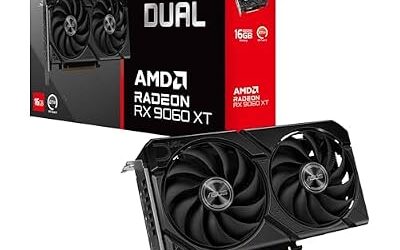
🛒 Best Price Today on Amazon
Prime members get fast, free shipping on everything above, plus member-only deals. New members get a 30-day free trial — cancel anytime.
- Watch: RX 9070 XT vs RTX 5070: 2026 Comparison — Video Review
- Quick Verdict
- RX 9070 XT vs RTX 5070: Spec Sheet Side by Side
- Key Differences
- What Independent Benchmarks Show in 2026
- Radeon RX 9070 XT: Raw Performance and 16GB of Headroom
- GeForce RTX 5070: Efficiency, DLSS 4, and Ecosystem
- Best RTX 5070 Models to Consider
- RTX 5070 Review: What Reviewers Say in 2026
- Should You Consider the RX 9070 or RTX 5070 Ti Instead?
- RX 9070 XT vs RTX 5070 by Budget Tier and Use Case
- Best NVIDIA Graphics Cards for Gaming by Tier (2026)
- RX 9070 XT 16GB GDDR6 vs MSI GeForce RTX 5070 Ventus 2X OC 12GB GDDR7
- More Models Worth Comparing
- Common Mistakes When Choosing Between the RX 9070 XT and RTX 5070
- Which Should You Buy?
- Building Around Either Card
- How We Compared These Cards
- Frequently Asked Questions
- Final Verdict
- Related Articles
Two years into the RDNA 4 and Blackwell era, the mid-to-upper mainstream GPU fight has settled into a genuinely close contest — and the Radeon RX 9070 XT versus the GeForce RTX 5070 sits right at the center of it. Both cards target the same buyer: someone building or upgrading a 1440p gaming rig who wants high refresh rates today and enough headroom to survive the next few years of increasingly demanding releases. They are priced within striking distance of each other, they both use PCIe 5.0, and they both slot into the same class of mid-tower builds. Where they differ is in philosophy.
AMD’s RX 9070 XT leans on raw silicon: more raster throughput, a wider memory bus, and 16GB of VRAM as standard. NVIDIA’s RTX 5070 counters with faster GDDR7, better power efficiency, a more mature software stack, and DLSS 4 with Multi Frame Generation. In 2026 that choice matters more than it used to, because texture budgets in new AAA titles have grown sharply, path-traced lighting is no longer a niche toggle, and AI upscaling has become a default part of how most people play. Picking the wrong side costs you either frame rate or future-proofing. Here’s how the two actually compare.

GIGABYTE Radeon RX 9070 XT Gaming OC 16G Graphics Card, PCIe 5.0, 16GB GDDR6, GV-R9070XTGAMING OC-16GD Video Card
Included for 'RX 9070 XT vs RTX 5070: 2026 Comparison' as a representative home product in this roundup; selection reflects the product set returned for this topic.
View on Amazon
ASRock Radeon RX 9070 XT Challenger 16GB OC Graphics Card - AMD RDNA 4 Architecture, 2970 MHz Boost Clock, GDDR6, PCIe 5.0, DisplayPort 2.1a, HDMI 2.1b, Triple Fan Cooling 800W
Included for 'RX 9070 XT vs RTX 5070: 2026 Comparison' because the listing adds cooling or gel-infused layers, which is the attribute this article compares.
View on Amazon
ASUS Prime Radeon RX 9070 XT 16GB GDDR6 OC Edition Gaming Graphics Card | PCIe 5.0, HDMI/DP 2.1, 2.5-Slot, Axial-tech Fans, Dual-Ball Fan Bearings, Dual BIOS, GPU Guard
Included for 'RX 9070 XT vs RTX 5070: 2026 Comparison' as a representative home product in this roundup; selection reflects the product set returned for this topic.
View on Amazon
XFX Swift AMD Radeon RX 9070XT Triple Fan Gaming Edition with 16GB GDDR6 HDMI 3xDP, AMD RDNA 4 RX-97TSWF3BA
Included for 'RX 9070 XT vs RTX 5070: 2026 Comparison' as a representative home product in this roundup; selection reflects the product set returned for this topic.
View on Amazon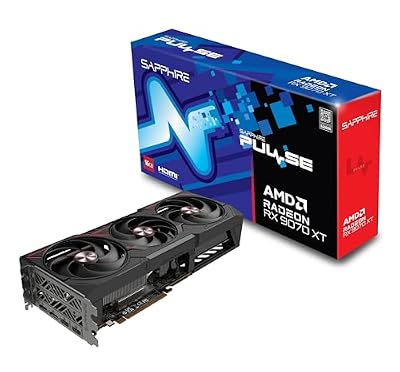
Sapphire 11348-03-20G Pulse AMD Radeon™ RX 9070 XT Gaming Graphics Card with 16GB GDDR6, AMD RDNA 4
Included for 'RX 9070 XT vs RTX 5070: 2026 Comparison' as a representative home product in this roundup; selection reflects the product set returned for this topic.
View on Amazon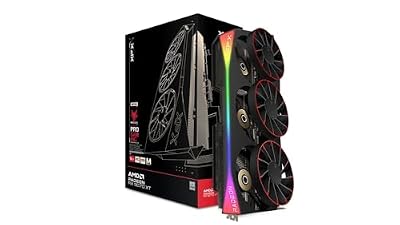
XFX Mercury AMD Radeon RX 9070XT OC Magnetic Air Edition with RGB 16GB GDDR6 HDMI 3xDP, RDNA 4 RX-97TMARGBA, Graphics Card, Desktop PC
Included for 'RX 9070 XT vs RTX 5070: 2026 Comparison' as a representative home product in this roundup; selection reflects the product set returned for this topic.
View on AmazonUpdated November 2026 — RX 9070 XT vs RTX 5070: the Radeon RX 9070 XT is the better pick for most pure gamers because it has 16GB of VRAM and a raster lead that reviewers put at roughly 10 to 25 percent at 1440p depending on outlet and game, while the GeForce RTX 5070 wins on DLSS 4, heavy path-traced ray tracing, power draw and creator tools. Our top three picks by name are the Radeon RX 9070 XT for 1440p raster speed, the GeForce RTX 5070 for efficiency and DLSS 4, and the GeForce RTX 5070 Ti if you want to step up.
| Your priority | Pick | Why in one line |
|---|---|---|
| Highest 1440p frame rate per dollar | Radeon RX 9070 XT | Raster lead and 16GB VRAM |
| Ray tracing, DLSS 4, streaming | GeForce RTX 5070 | Nvidia feature set and NVENC |
| Small case or modest PSU | GeForce RTX 5070 | 250W reference board power vs 304W |
| Texture-heavy games and longevity | Radeon RX 9070 XT | 16GB vs 12GB of VRAM |
Watch: RX 9070 XT vs RTX 5070: 2026 Comparison — Video Review
Quick Verdict
The RX 9070 XT is the better buy for most pure gamers, especially at 1440p ultra and entry-level 4K, where its extra 4GB of VRAM and stronger rasterization consistently pull ahead. The RTX 5070 is the smarter pick if you lean on heavy ray tracing, stream or produce video, dabble in AI and CUDA workloads, or need a cooler, lower-wattage card for a small-form-factor build with a modest power supply.
RX 9070 XT vs RTX 5070: Spec Sheet Side by Side
Before looking at frame rates, it helps to see how differently the two chips are built. The figures below are the reference specifications from AMD and NVIDIA; factory-overclocked partner cards run slightly higher clocks and often higher power limits.
| Spec | Radeon RX 9070 XT | GeForce RTX 5070 |
|---|---|---|
| Architecture | RDNA 4 | Blackwell |
| Shader units | 4,096 stream processors (64 compute units) | 6,144 CUDA cores |
| Ray tracing / AI units | 64 RT accelerators, 128 AI accelerators | 48 RT cores, 192 Tensor cores |
| Boost clock (reference) | Up to 2,970 MHz | Up to 2,512 MHz |
| Memory | 16GB GDDR6, 256-bit | 12GB GDDR7, 192-bit |
| Memory bandwidth | Roughly 640 GB/s (maker figure) | About 672 GB/s |
| Board power | 304W typical | 250W |
| Recommended PSU | 750W (AMD guidance; some overclocked cards ask for more) | 650W (NVIDIA guidance) |
| Power connectors | Usually 2 or 3 x 8-pin, some models 12V-2×6 | 16-pin 12V-2×6 or 2 x 8-pin via adapter |
| Upscaling / frame generation | FSR 4, frame generation | DLSS 4, Multi Frame Generation |
| Launch price tier | Upper mid-range, launched one step above the 5070 | Upper mid-range |
The bandwidth row surprises many buyers: despite the wider bus, the 9070 XT’s GDDR6 delivers slightly less raw bandwidth than the 5070’s faster GDDR7. Where AMD’s card pulls ahead is capacity, raw shader throughput and a larger on-die cache, which is why it tends to stretch its lead as resolution and texture settings rise.
Key Differences
- Memory: The 9070 XT ships with 16GB of GDDR6 on a 256-bit bus; the RTX 5070 offers 12GB of faster GDDR7 on a narrower 192-bit bus. AMD wins on capacity, NVIDIA on per-pin bandwidth.
- Rasterization: In traditional rendering, the 9070 XT typically leads by a comfortable double-digit margin at 1440p, and the gap widens at 4K where VRAM pressure hits the 5070 first.
- Ray tracing: RDNA 4 closed most of the historical gap, and the 9070 XT trades blows with the 5070 in standard RT titles — but in full path-traced games, NVIDIA still holds an edge.
- Upscaling and frame generation: FSR 4 is a genuine leap in image quality with broad support in 2026, though DLSS 4 remains slightly cleaner and its Multi Frame Generation delivers higher headline frame rates.
- Power and thermals: The 9070 XT draws roughly 300W+ and wants a quality 750W PSU; the RTX 5070 sits near 250W and is happier in compact cases with a 650W unit.
- Creator and AI work: NVIDIA’s NVENC encoder and CUDA ecosystem still dominate for streaming, video editing, and local AI tooling.
What Independent Benchmarks Show in 2026
We did not run our own benchmarks for this comparison. Instead, we pulled together the large multi-game test suites that independent hardware outlets have published, including updated 2026 retests with current drivers. The numbers below are their averages, so treat them as a guide to the gap between the cards rather than a promise of the frame rate in any single game on your system.
- Raster at 1440p: outlet retests put the RX 9070 XT roughly 10 to 25 percent ahead of the RTX 5070 on average, depending on the outlet and the games tested.
- Raster at 4K: the gap usually holds or widens slightly, helped by the extra 4GB of VRAM in texture-heavy games.
- Standard ray tracing: the two cards are close in standard ray-traced games, and results vary by title and outlet.
- Heavy path tracing: the RTX 5070 still tends to do better in the most demanding path-traced showcases, though its 12GB buffer can become the limit at 1440p and above.
- Exceptions: results vary by engine. Some titles favour NVIDIA, and a few games show the 5070 level with or slightly ahead of the 9070 XT at 1440p.
Price-to-Performance: Where the Break-Even Sits
Both cards spent much of 2026 above their launch prices because of memory supply pressure, so the gap between them moves week to week. A practical rule from multiple reviewers: if the RX 9070 XT costs only slightly more than the RTX 5070, roughly a small price step, it gives more frames per dollar. If the gap grows into a full price tier, the RTX 5070 becomes the better-value card, especially if you will use DLSS Multi Frame Generation on a high-refresh monitor. Always compare the specific models you are considering rather than the cheapest listing of each chip.
Driver and Feature Maturity
NVIDIA still has the broader upscaler support across older games and the more established creator tools. AMD’s FSR 4 is a large step up in image quality over FSR 3, and support has grown steadily through 2026, but it is not in every title that supports DLSS. If you mostly play a handful of games, check whether they support FSR 4 before deciding.
Radeon RX 9070 XT: Raw Performance and 16GB of Headroom
The 9070 XT is the card to beat if frames per dollar is your metric. Sixteen gigabytes of VRAM means you can run ultra textures, high-resolution shadow maps, and heavy mod loads without the stutter and texture pop-in that a 12GB card increasingly runs into. Board partners have also done strong work here: the Sapphire Nitro+ RX 9070 XT is the premium option with the quietest, coolest operation, while the GIGABYTE RX 9070 XT Gaming OC 16G and its white-shrouded sibling, the GIGABYTE Gaming OC ICE 16G, offer a 2.7-slot cooler with server-grade thermal gel and a reinforced backplate.
For tighter budgets or tighter cases, the ASRock RX 9070 XT Challenger 16GB OC hits a 2970 MHz boost clock with triple-fan cooling, and the ASUS Prime RX 9070 XT 16GB OC squeezes into a 2.5-slot design with dual BIOS and ball-bearing Axial-tech fans. The XFX Swift RX 9070 XT rounds out the value end with a clean triple-fan build and HDMI plus three DisplayPort outputs. All of them support DisplayPort 2.1a, so high-refresh 4K monitors are fully addressable.
GeForce RTX 5070: Efficiency, DLSS 4, and Ecosystem
The RTX 5070’s appeal is polish. It runs cooler, sips less power, fits more builds, and pairs with the most refined software stack in the business. DLSS 4’s transformer-based upscaling still sets the visual benchmark, and Multi Frame Generation can push a 60fps baseline into triple digits on a high-refresh panel — provided you’re comfortable with the latency trade-off and don’t mind that the frames are generated rather than rendered.
Where the 5070 struggles is memory. Twelve gigabytes was adequate at launch and is merely sufficient now; several 2026 releases at 1440p ultra with ray tracing enabled will brush against that ceiling, forcing texture settings down. If you’re a heavy path-tracing user, a streamer leaning on NVENC, or someone running local AI models where CUDA support is non-negotiable, the 5070 remains the more practical tool despite that limitation.
Best RTX 5070 Models to Consider
The picks above cover the RX 9070 XT side. If the RTX 5070 suits your build better, these partner cards cover the main sizes and price tiers. All of them use the same 12GB GDDR7, 192-bit RTX 5070 chip, so the differences come down to cooler size, noise, clocks, looks and case fit.
ASUS Prime GeForce RTX 5070 OC: Best All-Round RTX 5070
Key specs: RTX 5070, 12GB GDDR7, factory overclock, 2.5-slot SFF-Ready design, three Axial-tech fans, dual BIOS, HDMI 2.1 and DisplayPort 2.1 outputs.

ASUS PRIME GeForce RTX 5070 12GB GDDR7 OC Edition Gaming Graphics Card | SFF-Ready, PCIe 5.0, HDMI/DP 2.1, 2.5-slot, Axial-tech Fans, Dual BIOS
Included for 'RX 9070 XT vs RTX 5070: 2026 Comparison' as a representative home product in this roundup; selection reflects the product set returned for this topic.
View on AmazonBest for: most builders who want a quiet triple-fan card that still fits compact cases. Skip if: you want RGB lighting or the absolute shortest card.
The Prime is the NVIDIA counterpart to the ASUS Prime RX 9070 XT already covered above, so it is a direct way to compare the two chips in near-identical shrouds. The 2.5-slot thickness and SFF-Ready sizing make it one of the easier 5070 cards to fit.
GIGABYTE RTX 5070 WINDFORCE OC SFF: Best for Small Cases on a Budget
Key specs: RTX 5070, 12GB GDDR7 192-bit, WINDFORCE triple-fan cooler, SFF-Ready dimensions, factory overclock, PCIe 5.0.

GIGABYTE GeForce RTX 5070 WINDFORCE OC SFF 12G Graphics Card, 12GB 192-bit GDDR7, PCIe 5.0, WINDFORCE Cooling System, GV-N5070WF3OC-12GD Video Card
Included for 'RX 9070 XT vs RTX 5070: 2026 Comparison' because the listing adds cooling or gel-infused layers, which is the attribute this article compares.
View on AmazonBest for: value buyers who need a card that fits small form factor cases. Skip if: you care most about the lowest possible noise under long loads.
WINDFORCE is GIGABYTE’s entry cooler line, which usually sells close to the lowest RTX 5070 price tier. It suits mini-ITX and compact mid-tower builds where the 9070 XT’s higher power draw and larger coolers are harder to accommodate.
MSI GeForce RTX 5070 Ventus 2X OC: Best Compact Dual-Fan Card
Key specs: RTX 5070, 12GB GDDR7, dual-fan Ventus cooler, short card length, factory overclock, three DisplayPort and one HDMI output.

MSI NVIDIA GeForce RTX 5070 12G Ventus 2X OC Graphics Card | 12GB GDDR7 (28GB/s, 192-bit), PCIe 5.0, Dual Fan (2 x TORX 5.0 fans), HDMI 2.1b, DP 2.1b, SFF Ready
Included for 'RX 9070 XT vs RTX 5070: 2026 Comparison' as a representative home product in this roundup; selection reflects the product set returned for this topic.
View on AmazonBest for: builds where card length is the tightest constraint. Skip if: your case has room for a triple-fan card, which usually runs quieter.
A dual-fan RTX 5070 is possible because of the chip’s 250W board power, which is one practical advantage over the RX 9070 XT, whose partner models are almost all large triple-fan designs.
ASUS TUF Gaming GeForce RTX 5070 OC: Best for Cooling Headroom
Key specs: RTX 5070, 12GB GDDR7, large triple-fan cooler, metal shroud and backplate, dual BIOS, factory overclock.

ASUS TUF Gaming GeForce RTX 5070 12GB GDDR7 OC EditionGaming Graphics Card | PCIe 5.0, HDMI/DP 2.1, 3.125-slot, Military-grade Components, Protective PCB Coating, Axial-tech Fans
Included for 'RX 9070 XT vs RTX 5070: 2026 Comparison' as a representative home product in this roundup; selection reflects the product set returned for this topic.
View on AmazonBest for: builders who want a cooler, quieter card and do not mind a thicker cooler. Skip if: you are working in a small case or want to stay near the lowest price tier.
The TUF sits a tier above the Prime in price and cooler mass. On a 250W chip, that extra cooling mostly translates into lower fan speeds rather than more performance.
PNY GeForce RTX 5070 Epic-X RGB OC: Best for RGB Builds
Key specs: RTX 5070, 12GB GDDR7, triple-fan cooler, Epic-X RGB lighting, factory overclock.

PNY NVIDIA GeForce RTX™ 5070 EPIC-X RGB® OC Triple-Fan Graphics Card | 12GB GDDR7, 192-bit, Boost: 2685 MHz, SFF-Ready, PCIe® 5.0, HDMI®/DP 2.1, 2.4-Slot, NVIDIA Blackwell Architecture, DLSS 5
Included for 'RX 9070 XT vs RTX 5070: 2026 Comparison' as a representative home product in this roundup; selection reflects the product set returned for this topic.
View on AmazonBest for: glass-panel builds where lighting matters. Skip if: you want the plainest or cheapest RTX 5070.
PNY’s Epic-X line adds lighting and a triple-fan cooler. It is a sensible choice if you want the look of a premium card without moving up to a more expensive chip.
RTX 5070 Review: What Reviewers Say in 2026
Reviewers broadly call the RTX 5070 a capable 1440p card that is held back by its 12GB of memory and a modest gain over the previous generation. That summary is the consensus across the main written reviews, and it fits the comparison above.
The card pairs 12GB of GDDR7 with a 192-bit bus, which the maker lists at 672 GB/s of bandwidth. Several reviewers point out that the narrower bus cancels out much of the benefit of the faster memory, and that without DLSS 4 Multi Frame Generation the raw rendering gain over the RTX 4070 Super is small. Others praise it for small-form-factor builds because of its low board power and compact partner designs.
- Strengths: efficient 250W board power, DLSS 4, NVENC and CUDA support, easy fit in small cases.
- Weaknesses: 12GB of VRAM can limit 1440p ultra with ray tracing, and the raster gap to 16GB rivals is visible.
- Best for: 1440p gamers who value efficiency, streaming or AI tools over maximum raster speed.
If you only care about rendered frame rate per dollar, the RX 9070 XT comparison earlier in this guide is the better reference point.
Should You Consider the RX 9070 or RTX 5070 Ti Instead?
RX 9070 (non-XT): AMD’s cut-down card keeps 16GB of VRAM at lower power. Independent reviews put it roughly level with or slightly ahead of the RTX 5070 in raster, with ray tracing close to even on average but big NVIDIA wins in some path-traced titles. If it costs the same as an RTX 5070, it is a strong alternative for 1440p.
RTX 5070 Ti: NVIDIA’s step-up card has 16GB of GDDR7 and lands roughly level with the RX 9070 XT in raster, while leading in heavy ray tracing. It costs a price tier more than the 9070 XT, so it only makes sense if you want both 16GB and NVIDIA’s RT and software advantages.
RX 9070 XT vs RTX 5070 by Budget Tier and Use Case
Use this tier view if you are shopping for a specific card class rather than reading the full spec comparison. Prices move often, so tiers here describe where cards sit relative to each other, not exact costs.
Tier 1: Upper Mid-Range 1440p — RX 9070 XT and RTX 5070
What to expect at this tier:
- High-refresh 1440p at high or ultra settings in most current games.
- Entry-level 4K with upscaling, not native 4K at maximum settings in the newest titles.
- 16GB (RX 9070 XT) or 12GB (RTX 5070) of VRAM, which decides how long the card stays comfortable.
- PCIe 5.0 interface, DisplayPort 2.1 and modern encoders on both cards.
- Board partner models vary in length, thickness and noise, so the exact model matters as much as the GPU.
Radeon RX 9070 XT · 16GB GDDR6 · 256-bit bus · 304W reference board power · FSR 4.
GeForce RTX 5070 · 12GB GDDR7 · 192-bit bus · 250W reference board power · DLSS 4 with Multi Frame Generation.
Tier 2: One Step Down — RX 9060 XT 16GB and RTX 5060 Ti 16GB
If both cards in the headline matchup stretch your budget, the next tier targets high-refresh 1080p and lighter 1440p play. Maker specs list 16GB versions of both the Radeon RX 9060 XT and the GeForce RTX 5060 Ti, which helps with texture-heavy games even though both cards use a narrower memory bus than the cards above. Choose this tier when your monitor is 1080p or you plan to lean on upscaling.
Tier 3: One Step Up — RTX 5070 Ti and RX 9070 XT Premium Models
The GeForce RTX 5070 Ti is the natural upgrade from the RTX 5070 if you want 16GB of GDDR7 and more performance headroom for 1440p ultra and 4K with upscaling. It uses a larger power budget, so check your PSU and case. For AMD buyers, premium RX 9070 XT partner models add larger coolers and factory overclocks rather than a different GPU.
Best NVIDIA Graphics Cards for Gaming by Tier (2026)
Because many buyers searching for the best nvidia graphic cards for gaming land on this comparison, here is a short map of Nvidia’s current desktop line. Specs follow Nvidia’s published reference figures; always read the exact partner-card listing.
| Card | Memory | Best for | Trade-off |
|---|---|---|---|
| GeForce RTX 5060 Ti | 8GB or 16GB GDDR7 | High-refresh 1080p, lighter 1440p | Narrow bus; buy the 16GB version for texture-heavy games |
| GeForce RTX 5070 | 12GB GDDR7 | 1440p with DLSS 4, compact builds | 12GB can limit 1440p ultra with ray tracing |
| GeForce RTX 5070 Ti | 16GB GDDR7 | 1440p ultra and 4K with upscaling | Higher power draw and cost tier |
| GeForce RTX 5080 | 16GB GDDR7 | 4K gaming and heavy ray tracing | High cost tier and large coolers |
RX 9070 XT 16GB GDDR6 vs MSI GeForce RTX 5070 Ventus 2X OC 12GB GDDR7
If you searched for the RX 9070 XT 16GB GDDR6 vs MSI GeForce RTX 5070 Ventus 2X OC 12GB GDDR7, you are comparing a Radeon RX 9070 XT with a specific board-partner version of the RTX 5070. Partner cards such as MSI’s Ventus 2X OC use the same GPU as the reference RTX 5070 but add their own cooler, clocks and size. A factory overclock typically adds a modest speed bump, not a change in class, so the gap between the two GPU families described above still applies. Check the maker listing for exact length, slot width, power connector and stated boost clock before you buy, and apply the same checks to whichever RX 9070 XT partner model you choose.
More Models Worth Comparing
The cards above cover the main partner designs. These three add different sizes and tiers, with specs taken from the listings.

PowerColor Reaper AMD Radeon RX 9070 XT 16GB GDDR6
Included for 'RX 9070 XT vs RTX 5070: 2026 Comparison' as a representative home product in this roundup; selection reflects the product set returned for this topic.
View on AmazonPowerColor Reaper Radeon RX 9070 XT 16GB — Best Straightforward RX 9070 XT
- Radeon RX 9070 XT with 16GB of GDDR6 on RDNA 4
- A plain, no-frills partner design that targets value rather than extreme overclocks
- Same DisplayPort 2.1 era outputs and PCIe 5.0 interface as other RX 9070 XT cards
Pros: keeps the 9070 XT’s VRAM and raster lead, simple design. Cons: check length and power connector on the listing, and expect more heat than an RTX 5070. Skip it if you want a premium cooler with the quietest operation.
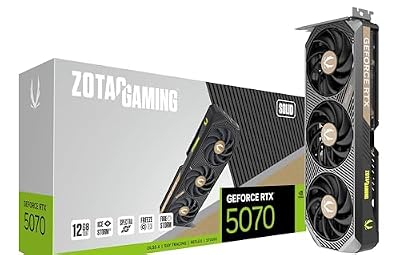
ZOTAC NVIDIA GEFORCE RTX 5070 Solid Triple Fan 12GB GDDR7 PCIE 5.0 Graphics Card
Included for 'RX 9070 XT vs RTX 5070: 2026 Comparison' as a representative home product in this roundup; selection reflects the product set returned for this topic.
View on AmazonZOTAC GeForce RTX 5070 Solid Triple Fan 12GB — Best RTX 5070 for Cooling Headroom
- GeForce RTX 5070 with 12GB of GDDR7 and a PCIe 5.0 interface
- Triple-fan cooler, which usually means quieter operation than dual-fan models
- Full DLSS 4 and Multi Frame Generation support
Pros: cooler and quieter design than compact dual-fan cards, full Nvidia feature set. Cons: larger than small-form-factor models, and the 12GB buffer is the same as every RTX 5070. Skip it if your case is small or you want 16GB of VRAM.

ASUS ROG Strix GeForce RTX 5070 Ti 16GB GDDR7 Gaming Graphics Card | PCIe 5.0, 3.2-slot, Axial-tech Fans, MaxContact design, Phase-change GPU Thermal Pad, Aura Sync
Included for 'RX 9070 XT vs RTX 5070: 2026 Comparison' as a representative home product in this roundup; selection reflects the product set returned for this topic.
View on AmazonASUS ROG Strix GeForce RTX 5070 Ti 16GB — Best Step-Up if You Outgrow Both Cards
- GeForce RTX 5070 Ti with 16GB of GDDR7 on PCIe 5.0
- 3.2-slot cooler with Axial-tech fans, per the listing
- Gives more VRAM than the RTX 5070 while keeping the Nvidia feature set
Pros: 16GB of VRAM, strong cooling, DLSS 4. Cons: large card with a higher power budget and cost tier. Skip it if your budget or PSU is built around the RTX 5070 or RX 9070 XT class.
Common Mistakes When Choosing Between the RX 9070 XT and RTX 5070
- Comparing the cheapest listing of each chip: partner models differ in clocks, cooler and size, so compare the exact models you can buy.
- Ignoring the power supply: the RX 9070 XT’s higher board power calls for a more capable PSU than the RTX 5070.
- Assuming 12GB is always enough: it is fine for most 1440p play, but the heaviest games at ultra with ray tracing can exceed it.
- Choosing only on average benchmarks: look for results in the games you play, because averages hide big swings.
- Forgetting software needs: CUDA tools and NVENC favor Nvidia, while many gamers are fully served by AMD’s encoder and drivers.
Which Should You Buy?
- For 1440p high-refresh gaming: pick the RX 9070 XT — it delivers more real, rendered frames per dollar.
- For entry-level 4K: pick the RX 9070 XT; the 16GB frame buffer is the deciding factor.
- For path tracing and RT showcases: pick the RTX 5070 for its stronger heavy-RT performance and DLSS 4.
- For streaming, editing, or AI workloads: pick the RTX 5070 for NVENC and CUDA.
- For small cases or older PSUs: pick the RTX 5070, or the compact ASUS Prime 9070 XT if you still want AMD.
Building Around Either Card
CPU Pairing
Both cards are fast enough that an older CPU can hold them back at 1080p and high-refresh 1440p. A current six- or eight-core chip such as a Ryzen 5 7600, Ryzen 7 7700 or Core Ultra 5 245K class processor is a balanced match. At 4K the GPU does most of the work, so CPU choice matters less.
PSU and Cables
Follow the official guidance: 650W for a system built around the RTX 5070 and 750W for the RX 9070 XT, with more headroom for overclocked partner cards and high-power CPUs. Use a quality unit from a known maker and native cables. Many RTX 5070 cards use the 16-pin 12V-2×6 connector, so an ATX 3.0 or 3.1 power supply with a native cable is the cleanest option.
Case Fit
Measure GPU clearance before buying. Most RX 9070 XT partner cards are long triple-fan designs around 2.5 to 3 slots thick. The RTX 5070 is available in dual-fan and SFF-Ready versions, which makes it the easier choice for mini-ITX builds.
Monitor Match
Either card is a natural fit for a 1440p monitor in the 144Hz to 240Hz range. For 4K at 120Hz or more, the RX 9070 XT’s larger frame buffer is the safer bet, or plan on using upscaling with either card.
PCIe Slot
Both cards use PCIe 5.0 x16 and run in PCIe 4.0 slots with negligible loss in games, so an older B550 or B650 board is fine.
How We Compared These Cards
This comparison is research-based. We compiled AMD and NVIDIA reference specifications, partner card spec sheets, and published multi-game benchmark suites from independent hardware reviewers, prioritising retests run in 2026 with current drivers. Where sources disagreed, we noted the range rather than picking one figure. Price talk is in tiers because street prices for both cards have moved sharply over the past year.
Is the RTX 5070 a good card to buy in 2026?
Yes, for 1440p gaming with DLSS, streaming or creator work, but it is not the best value for pure raster speed. Reviewers consistently flag the 12GB of VRAM as the main limit. If the RX 9070 XT or a 16GB card sits within a small price step, most reviewers lean toward the 16GB option. Check current listings for your specific model before deciding.
Frequently Asked Questions
Is 12GB of VRAM still enough in 2026?
For 1080p and most 1440p gaming, yes. For 1440p ultra with ray tracing, or any 4K play, 12GB is now the first bottleneck you’ll hit — which is why the 9070 XT’s 16GB matters.
How much power supply do I need?
Plan on a quality 750W unit for the RX 9070 XT and 650W for the RTX 5070. Transient spikes on the AMD card make headroom worthwhile.
Has FSR 4 caught up to DLSS 4?
It’s close. FSR 4 image quality is dramatically better than FSR 3 and hard to fault in motion, but DLSS 4 retains a small edge in fine detail and broader game support.
Which RX 9070 XT model should I choose?
The Sapphire Nitro+ for the best cooling and acoustics, the GIGABYTE Gaming OC or ICE for a strong all-rounder, and the ASRock Challenger or XFX Swift if value is the priority.
Is the RX 9070 XT faster than the RTX 5070?
Yes, on average. Independent test suites put the RX 9070 XT roughly 10 to 25 percent ahead of the RTX 5070 in raster games at 1440p, depending on outlet and game selection, with a similar or larger lead at 4K. A few individual games favour NVIDIA, so check results for the titles you play most.
Is the RTX 5070 or RX 9070 XT better for 1440p?
For pure frame rate at 1440p, the RX 9070 XT is the stronger card and has more VRAM. The RTX 5070 is the better pick if you want DLSS Multi Frame Generation, lower power draw, a smaller card, or NVIDIA’s encoder and CUDA tools.
Which is better for streaming, the RX 9070 XT or RTX 5070?
The RTX 5070 has the edge because NVENC is widely supported in streaming and editing apps and is the default choice in most tutorials. AMD’s encoder has improved with RDNA 4 and is perfectly usable for game streaming, but NVIDIA remains the safer pick for creator workflows.
Can the RTX 5070 run games at 4K?
Yes, with upscaling. It can handle many games at 4K with DLSS enabled and adjusted settings, but its 12GB buffer becomes a limit with maximum textures and ray tracing. The RX 9070 XT is the more comfortable entry-level 4K card.
Does the RX 9070 XT run hot?
It uses more power than the RTX 5070, about 304W versus 250W for reference specs, so it produces more heat. Most partner cards use large triple-fan coolers that keep temperatures in a normal range, but good case airflow matters more than with the 5070.
Which card will last longer?
The RX 9070 XT’s 16GB of VRAM gives it more headroom as game textures grow, which is the main reason many reviewers see it as the longer-lasting card. The RTX 5070 offsets some of that with DLSS, which tends to get support in new releases quickly.
Is an MSI RTX 5070 Ventus 2X OC faster than a reference RTX 5070?
Slightly, if at all. Partner cards with a factory overclock are usually a little faster, but the cooler and size matter more for noise and case fit than the clock boost.
Should I buy an RTX 5070 Ti instead of an RTX 5070 or RX 9070 XT?
Only if your budget and power supply allow it. The RTX 5070 Ti offers 16GB of GDDR7 and more headroom for 1440p ultra and 4K with upscaling, but it costs more and draws more power than the RTX 5070.
Is the RX 9070 XT or RTX 5070 better for a small form factor PC?
The RTX 5070 is usually easier to fit because its reference board power is 250W and compact dual-fan models exist. The RX 9070 XT’s higher power draw and longer partner cards need more case and PSU room.
Final Verdict
For the majority of gamers building in 2026, the Radeon RX 9070 XT is the stronger overall value: it wins in rasterization, is close to the RTX 5070 in many ray-traced titles, and its 16GB frame buffer gives it a longer useful life. Choose the RTX 5070 if efficiency, path tracing, or a CUDA-dependent workflow is central to how you use your PC — in those specific cases, NVIDIA’s ecosystem advantage still justifies the trade.