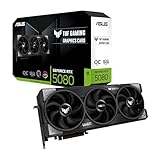
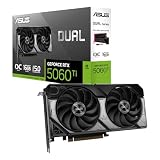
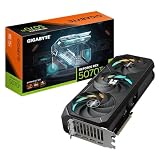
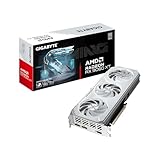
🛒 Best Price Today on Amazon
Prime members get fast, free shipping on everything above, plus member-only deals. New members get a 30-day free trial — cancel anytime.
- RX 6600 XT vs RTX 4060: Quick Verdict
- Raster Performance: The RX 6600 XT Remains Competitive
- Ray Tracing: A Clear RTX 4060 Advantage
- Upscaling and Frame Generation
- Is 8GB of VRAM Enough in 2026?
- Power Consumption, Heat, and System Requirements
- Decision Matrix: Which Card Fits Your Situation?
- Upgrade Value and Buying Advice
- Final Recommendation
For budget 1080p gaming in 2026, the RTX 4060 is the better all-round buy if prices are close, while the RX 6600 XT is the smarter choice only when it is substantially cheaper and you mainly play traditional rasterized games.
Quick answer: Our top pick in 2026 is the Architecture — our #1 rated choice. See the full ranked comparison, alternatives and buying advice below.
RX 6600 XT vs RTX 4060: Quick Verdict
These two graphics cards target the same basic audience: high-refresh 1080p gaming without paying for a high-end platform. Both have 8GB of VRAM, a 128-bit memory bus, and an x8 PCIe interface. The RTX 4060 is newer and more efficient, with stronger ray tracing, DLSS support, frame generation, and AV1 encoding. The RX 6600 XT can still deliver very competitive raster performance, particularly in older or less demanding games, but its advantages depend heavily on its used or discounted price.

ASUS Dual GeForce RTX™ 4060 V2 OC Edition (PCIe 4.0, 8GB GDDR6, DLSS 3, HDMI 2.1a, DisplayPort 1.4a, 2-Slot Design, Axial-tech Fan Design, 0dB Technology, and More) (Renewed)
Included for 'RX 6600 XT vs RTX 4060: Which GPU Should You Buy?' because the listing specifies 8GB GDDR6 and DLSS 3, details this guide uses to compare options.
View on Amazon
ASUS Dual GeForce RTX 4060 Ti EVO OC Edition 8GB GDDR6 (PCIe 4.0, 8GB GDDR6, DLSS 3, HDMI 2.1a, DisplayPort 1.4a, Axial-tech Fan Design, Auto-Extreme Technology), 3 Year Warranty
Included for 'RX 6600 XT vs RTX 4060: Which GPU Should You Buy?' because the listing specifies 8GB GDDR6 and DLSS 3, details this guide uses to compare options.
View on Amazon
ASUS Dual GeForce RTX 4060 V2 OC Edition (PCIe 4.0, 8GB GDDR6, DLSS 3, HDMI 2.1a, DisplayPort 1.4a, 2-Slot Design, Axial-tech Fan Design, 0dB Technology), 3 Year Warranty
Included for 'RX 6600 XT vs RTX 4060: Which GPU Should You Buy?' because the listing specifies 8GB GDDR6 and DLSS 3, details this guide uses to compare options.
View on Amazon
Gigabyte GeForce RTX 4060 WINDFORCE OC 8G Graphics Card, 2X WINDFORCE Fans, 8GB 128-bit GDDR6, GV-N4060WF2OC-8GD Video Card
Included for 'RX 6600 XT vs RTX 4060: Which GPU Should You Buy?' because the listing specifies 2X WINDFORCE Fans and 8GB 128-bit GDDR6, details this guide uses to compare options.
View on Amazon| Specification | Radeon RX 6600 XT | GeForce RTX 4060 |
|---|---|---|
| Architecture | AMD RDNA 2 | NVIDIA Ada Lovelace |
| Video memory | 8GB GDDR6 | 8GB GDDR6 |
| Memory bus | 128-bit | 128-bit |
| Memory bandwidth | 256GB/s | 272GB/s |
| Typical board power | 160W | 115W |
| PCIe connection | PCIe 4.0 x8 | PCIe 4.0 x8 |
| Upscaling and frame generation | FSR; frame generation varies by game and software | DLSS Super Resolution and DLSS Frame Generation where supported |
| Video encoding | H.264 and HEVC; no hardware AV1 encoder | H.264, HEVC, and AV1 hardware encoder |
Raster Performance: The RX 6600 XT Remains Competitive
Rasterization is the conventional rendering method used by most games when ray tracing is disabled. At 1080p, the RX 6600 XT and RTX 4060 are generally close, with the RTX 4060 often slightly ahead overall and the RX 6600 XT occasionally matching or exceeding it in particular games. Exact results vary with the CPU, game patch, driver version, quality preset, and whether a title favors AMD or NVIDIA hardware.
Published reviews commonly place both cards in the range of roughly 60–120 frames per second in demanding modern 1080p games using high settings, although lighter esports games can run far faster and poorly optimized releases can fall below that range. These are broad expectations rather than guaranteed results. Competitive players using reduced settings will usually be limited by the processor before either GPU reaches its full potential.
The RX 6600 XT is especially reasonable for a system with a 1080p 60Hz or 75Hz monitor. If the card costs much less than the RTX 4060, the small raster difference may not be visible during normal play. The RTX 4060 makes more sense for a 1080p 144Hz display, newer games, or anyone who wants extra software features rather than only conventional rendering speed.
Ray Tracing: A Clear RTX 4060 Advantage
Ray tracing adds more realistic reflections, shadows, and lighting, but it can substantially reduce frame rate. The RTX 4060 has second-generation ray-tracing hardware improvements over the RX 6600 XT’s first-generation RDNA 2 implementation, and NVIDIA’s broader software support gives it a meaningful advantage in ray-traced titles.
At 1080p with moderate ray tracing, the RTX 4060 can often deliver playable performance when paired with DLSS. The RX 6600 XT may need ray tracing disabled, reduced to a low preset, or combined with a more aggressive resolution scale. Some games are exceptions, but the practical rule is simple: choose the RTX 4060 if ray tracing is a feature you expect to use rather than merely experiment with.
Upscaling and Frame Generation
Both cards can use upscaling, but the experience is not identical. AMD’s FidelityFX Super Resolution is supported across a wide range of GPUs and can produce a useful performance increase. NVIDIA’s RTX 4060 supports DLSS Super Resolution, which often maintains cleaner fine detail and more stable motion at the same output resolution, though image quality remains game-dependent.
The RTX 4060 also supports DLSS Frame Generation in compatible games. Frame generation creates additional interpolated frames between traditionally rendered frames. It can make a game appear smoother, but it does not replace the responsiveness of a high base frame rate. For the best result, aim for at least approximately 50–60 real rendered frames per second before enabling it, and use it mainly in single-player games where added latency is less disruptive.
AMD’s FSR 3 frame generation can also be available in selected games and is not restricted to one GPU brand. Support, image quality, and latency vary by implementation. Therefore, do not buy the RX 6600 XT solely on the promise of frame generation; the RTX 4060 has the more established feature stack, while FSR offers broader hardware compatibility.
Is 8GB of VRAM Enough in 2026?
At 1080p, 8GB remains workable, but it is no longer an entirely future-proof amount. Texture quality, ray-traced effects, shader compilation, and high-resolution asset packs can push memory usage higher. When VRAM is full, the symptoms can include stuttering, texture pop-in, or sudden drops in minimum frame rate rather than merely a lower average FPS.
Neither card has a VRAM capacity advantage, so this category is effectively a tie. Use these settings as a practical starting point:
- 1080p: high textures are usually reasonable; reduce textures to medium or high if stuttering appears.
- 1440p: use medium-to-high textures, avoid unnecessarily large texture packs, and expect more compromises.
- Ray tracing: keep textures high only if the game’s VRAM indicator leaves comfortable headroom; lower RT reflections and shadows first when memory pressure occurs.
A useful rule is to leave around 0.5–1GB of VRAM below the game’s reported limit rather than targeting the absolute maximum. This will not solve every engine-specific problem, but it reduces the chance of streaming stutter.
Power Consumption, Heat, and System Requirements
The RTX 4060 has a significant efficiency advantage. Its 115W typical board power is 45W lower than the RX 6600 XT’s 160W rating. The actual wall draw of a complete computer depends on the CPU and other components, but the difference matters for compact cases, quiet builds, and older power supplies.
Consider a gaming session lasting three hours. If the complete PC averages 300W with the RX 6600 XT and 255W with the RTX 4060, the energy difference is:
(0.300kW − 0.255kW) × 3 hours = 0.135kWh per session.
At an electricity rate of $0.20 per kWh, that is about 3 cents per three-hour session, or approximately $11 over 365 such sessions. Energy savings alone will rarely repay a large purchase-price difference, but the lower heat output can make fan noise and case airflow easier to manage.
Both cards commonly use one eight-pin power connector through their board-partner designs, although connector arrangements vary by model. A quality 500W power supply is generally sufficient for either card in a mainstream system, provided the processor is not an unusually high-power model and the supply is in good condition. Check the specific card’s connector and length before buying.
Decision Matrix: Which Card Fits Your Situation?
| Your situation | Better choice | Reason |
|---|---|---|
| RX 6600 XT is at least $70–$100 cheaper | RX 6600 XT | Similar raster performance makes the lower purchase price more valuable. |
| Prices are within about $30–$50 | RTX 4060 | Better efficiency, ray tracing, DLSS, and media features justify the small premium. |
| You play ray-traced single-player games | RTX 4060 | Stronger RT hardware and DLSS support provide more usable performance. |
| You mainly play esports and older games | Either; usually RX 6600 XT for a discount | Raster performance is close, and the extra NVIDIA features may not matter. |
| You stream, edit video, or record AV1 | RTX 4060 | Its hardware AV1 encoder is a major practical advantage. |
| You have a small or poorly ventilated case | RTX 4060 | Lower board power generally means less heat to remove. |
| You plan to use 1440p for several years | Neither is ideal | Both are limited by 8GB VRAM; save for a card with more memory if possible. |
Upgrade Value and Buying Advice
From an older entry-level card, either model can be a worthwhile 1080p upgrade. From an RX 6600 XT to an RTX 4060, however, the improvement is usually too modest to justify replacing the AMD card solely for raster performance. Upgrade only if you specifically need better ray tracing, DLSS, AV1 encoding, lower power draw, or a feature unavailable on your current setup.
When comparing new and used offers, judge the complete package rather than the GPU name. Check the card’s physical length, cooler condition, warranty, power connector, and whether your power supply has the required cable. A heavily discounted RX 6600 XT can be excellent value, but a near-new RTX 4060 is usually the safer long-term purchase when the price gap is small.
Final Recommendation
Choose the RTX 4060 for the best overall budget 1080p experience: it is more efficient, better at ray tracing, supports DLSS and frame generation, and has stronger streaming and video-encoding capabilities. Choose the RX 6600 XT when it is clearly cheaper and your priority is conventional 1080p raster performance in games where you do not need ray tracing or NVIDIA-specific features.
Because both cards have 8GB of VRAM, neither should be treated as a premium long-term 1440p solution. For a value-focused 1080p build, though, the deciding rule is simple: buy the RX 6600 XT at a deep discount, otherwise buy the RTX 4060.
Ready to decide? Our #1 pick for 2026 is the Architecture.
Live price & availability on Amazon.