🛒 Best Price Today on Amazon
Prime members get fast, free shipping on everything above, plus member-only deals. New members get a 30-day free trial — cancel anytime.
Lightweight wireless used to mean flagship money. That changed as sensor efficiency improved and smaller brands pushed hard on value: the under 100 dollars bracket now contains mice in the high-50 gram range with top-tier optical sensors, high polling rates and batteries that last for weeks of play. What you give up at this level is mostly polish, extra buttons and brand ecosystems, not raw performance.
This guide collects five lightweight wireless gaming mice that sit in that bracket. Weights run from the mid-50 gram range up to the low 80s for the one battery-sipping outlier, every pick connects over 2.4 GHz for gaming, and several add Bluetooth for a second device. One honest note before the picks: shelf prices in this bracket move around, so treat the under 100 dollars line as the bracket these models live in and confirm the current listing when you buy.
As an Amazon Associate, we earn from qualifying purchases.
Quick Picks
| Product | Best for | Key point |
|---|---|---|
| HyperX Pulsefire Haste 2 Wireless (Black) | Long battery life in a 61 g shell | Up to 100 hours of play with a 26K sensor |
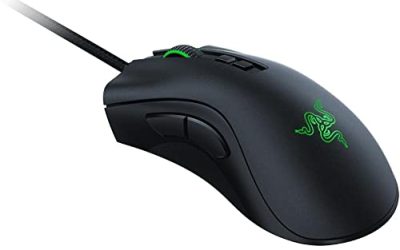
| Razer Viper V3 HyperSpeed | Players who hate charging anything | Up to 280 hours from a single AA battery |
| Cooler Master MM712 (White) | The lightest solid-shell option here | 58 g with no honeycomb holes in the shell |
| Keychron M3 Mini 4K | High polling rates on a small budget | 4,000 Hz wireless polling with a 3395 sensor |
| Fantech Aria XD7 | Small hands and fingertip grips | 59 g egg-shaped shell with tri-mode connection |
How to Choose
Weight is a range, not a contest. The practical lightweight zone for wireless mice runs from about 55 g to 85 g. Below roughly 65 g a mouse feels almost weightless for flick shots and suits fingertip and claw grips. In the 75 to 85 g band you gain stability and, in the case of AA-powered models, enormous battery life. Pick the point on that range that matches your grip and the games you play rather than chasing the smallest number on the box.
Sensor quality is a solved problem here. Every pick in this guide uses a proven optical sensor from the PixArt flagship family or an equivalent from HyperX or Razer, with more DPI and tracking speed than any player can use. That means shape, weight and battery should drive your decision. Sensor anxiety belongs to cheaper mice than these.
Polling rate is the new dividing line. Standard gaming wireless polls at 1,000 Hz. Two picks here, the Keychron M3 Mini 4K and, via its included high-rate receiver design, the enthusiast end of this bracket, push to 4,000 Hz for smoother cursor movement on high-refresh monitors. The gain is subtle and costs battery life, so treat high polling as a bonus feature for competitive players rather than a requirement.
Battery strategy shapes ownership. Built-in rechargeable cells keep weight down and charge over USB-C, but they age with the mouse. AA-powered designs like the Viper V3 HyperSpeed trade a little weight for months of runtime and a battery you can swap in seconds forever. Decide which ownership style you prefer before comparing anything else.
Shape still beats specifications. A symmetrical shell suits claw and fingertip grips and ambidextrous comfort; an ergonomic shell supports the palm for longer, calmer sessions. All five picks here are symmetrical or egg-shaped designs aimed at speed. If your hand is large or your grip is a relaxed palm, try before you commit where possible, because no specification sheet can tell you how a hump feels at hour three.
Best Options
HyperX Pulsefire Haste 2 Wireless (Black)

The Haste 2 Wireless is the balanced pick of this bracket: 61 g, a HyperX 26K sensor rated to 26,000 DPI, and a battery quoted at up to 100 hours of play. That endurance figure matters because it removes the main anxiety of rechargeable lightweight mice. A week of heavy sessions barely dents it, and when it does run low it plays on over its cable while charging.
Connection options cover both desk setups: 2.4 GHz wireless through the receiver for gaming, and Bluetooth for a laptop or second machine. The shell is a clean symmetrical design with a solid top, so there are no honeycomb holes to collect dust, and the TTC Golden micro switches are rated for crisp, durable clicks. For players who want one mouse that does everything well in this bracket, this is the default recommendation.
Specs
- 2.4 GHz wireless and Bluetooth; HyperX 26K optical sensor up to 26,000 DPI; weight 61 g; battery life up to 100 hours; TTC Golden micro switches; solid symmetrical shell; USB-C charging with wired play
Best for: Long battery life in a 61 g shell
Watch out for: Only two side buttons, so bind-heavy players should look at models with more controls; Bluetooth mode is for everyday use rather than fast-paced gaming
Razer Viper V3 HyperSpeed

The Viper V3 HyperSpeed takes the opposite battery philosophy: one AA battery, up to 280 hours of play, and no charging cable in your life at all. That runtime comes with a weight of 82 g, the heaviest in this guide, though part of that figure is the battery itself. In return you get Razer’s Focus Pro 30K optical sensor, the same flagship tracking family found in far pricier Razer mice, inside the proven Viper symmetrical shape.
The shape is the draw for many players: a safe, low-profile symmetrical shell that has suited claw and fingertip grips for years, with mechanical switches and an onboard DPI control. It connects over Razer’s HyperSpeed 2.4 GHz wireless only, with no Bluetooth, which keeps the design focused on one job. Players who value never thinking about power, and who like the Viper shape, will find this the easiest mouse here to live with.
Specs
- HyperSpeed 2.4 GHz wireless; Focus Pro 30K optical sensor up to 30,000 DPI; weight 82 g including battery; battery life up to 280 hours on one AA; mechanical switches; symmetrical Viper shape; onboard DPI button
Best for: Players who hate charging anything
Watch out for: No Bluetooth and no rechargeable cell, and at 82 g it gives away the ultra-light feel the rest of this bracket chases
Cooler Master MM712 (White)

The MM712 answers a specific complaint: many players want a truly light mouse without a honeycomb shell full of holes. Cooler Master reaches 58 g here with a solid shell, clever internal structure and a small battery, making this the lightest sealed-top design in the guide. Under the shell sits a PixArt optical sensor rated to 19,000 DPI, which is far beyond what any player needs in practice.
Connectivity is generous for the bracket: 2.4 GHz wireless for gaming, Bluetooth for a second device, and wired play over USB-C while charging. The shape is a compact symmetrical design that suits small and medium hands in claw or fingertip grips. This white edition also stands out visually in a bracket dominated by black shells. Software covers the usual DPI, polling and button settings, though it is plainer than the big-brand suites.
Specs
- 2.4 GHz wireless, Bluetooth and wired USB-C; PixArt optical sensor up to 19,000 DPI; weight 58 g; solid shell with no honeycomb cutouts; PTFE feet; rechargeable battery with wired play while charging
Best for: The lightest solid-shell option here
Watch out for: The compact shell runs small for large hands and palm grips, and the software is functional rather than polished
Keychron M3 Mini 4K

Keychron brings keyboard-brand value engineering to mice, and the M3 Mini 4K is the enthusiast pick of this bracket. Its PixArt 3395 sensor pairs with a 4,000 Hz polling rate over the 2.4 GHz receiver, a combination usually found in pricier esports models, and the mini shell weighs in the mid-50 gram range. Battery life is quoted at up to 135 hours at the standard 1,000 Hz polling rate, dropping when you run the full 4,000 Hz mode.
The tri-mode connection covers 2.4 GHz, Bluetooth 5.1 and wired USB-C, so the same mouse can game at the desk and pair with a laptop or tablet on the road. Huano switches rated for 80 million clicks handle the main buttons. The mini in the name is honest: this is a small mouse for small and medium hands, and large-handed palm grippers should look at the Haste 2 or Viper V3 instead.
Specs
- 2.4 GHz wireless, Bluetooth 5.1 and wired USB-C; PixArt 3395 optical sensor up to 26,000 DPI; polling rate up to 4,000 Hz over the wireless receiver; weight in the mid-50 g range; battery life up to 135 hours at 1,000 Hz polling; Huano switches rated for 80 million clicks
Best for: High polling rates on a small budget
Watch out for: The mini shell is genuinely small, and running 4,000 Hz polling shortens battery life considerably between charges
Fantech Aria XD7

The Aria XD7 is the cult favourite of the group: a 59 g egg-shaped mouse from Fantech with a PixArt 3395 sensor, tri-mode connectivity and a shape that small-handed fingertip players praise out of proportion to the brand’s size. The egg profile, shorter and rounder than a typical esports shell, encourages a relaxed fingertip grip and quick micro-adjustments.
You get 2.4 GHz wireless for gaming, Bluetooth for a second device and wired USB-C play, plus a rechargeable battery and PTFE feet. What you give up versus the bigger brands is software polish and local retail presence; the configuration tools are basic, and support runs through Fantech’s own channels. For players whose hands suit the shape, it is one of the strongest value picks in the entire lightweight category.
Specs
- 2.4 GHz wireless, Bluetooth and wired USB-C; PixArt 3395 optical sensor up to 26,000 DPI; weight 59 g; egg-shaped symmetrical shell; rechargeable battery; PTFE feet
Best for: Small hands and fingertip grips
Watch out for: The short egg shape divides opinion, and the companion software is more basic than Razer or Logitech equivalents
Which One Fits
- Choose the HyperX Pulsefire Haste 2 Wireless if you want the best balance of low weight, flagship tracking and a battery that lasts for weeks of ordinary play.
- Choose the Razer Viper V3 HyperSpeed if charging is your pet hate and you accept 82 g in exchange for months of runtime and the proven Viper shape.
- Choose the Cooler Master MM712 if you want the lightest possible mouse with a sealed shell and no honeycomb holes to clean.
- Choose the Keychron M3 Mini 4K if you play competitive titles on a high-refresh monitor and want 4,000 Hz polling without leaving the bracket.
- Choose the Fantech Aria XD7 if your hands are small, your grip is fingertip, and shape matters more to you than brand software.
Common Mistakes
Assuming the lightest mouse is automatically the best. Weight interacts with grip, hand size and game type. An 82 g mouse with a shape you love will outperform a 55 g mouse that cramps your hand, every session, without exception.
Running maximum polling and DPI together. High polling rates drain batteries and high DPI settings usually get scaled down in game anyway. Set DPI where you actually play, and save 4,000 Hz for the titles and monitor that can show the difference.
Skipping the bracket check at checkout. Prices in this category move with promotions and seasons. A model can drift above the under 100 dollars line or drop well below it, so confirm the listing in front of you rather than trusting any guide’s bracket, including this one.
Ignoring the second-device question. If the same mouse must serve a work laptop, Bluetooth support quietly becomes the most useful feature on the sheet. The Viper V3 HyperSpeed lacks it; the other four picks include it.
FAQ
How light should a wireless gaming mouse be?
For most players, anything under 85 g counts as lightweight in wireless form, and the 55 to 65 g band is where the effortless flick feel lives. Go lighter for fingertip and claw grips in fast titles; stay nearer 80 g if you prefer stability or AA battery life.
Is 4,000 Hz polling worth it in this bracket?
It is a genuine bonus rather than a necessity. On a high-refresh monitor, cursor movement looks and feels marginally smoother, which competitive players appreciate. Everyone else can run 1,000 Hz, enjoy far longer battery life, and lose nothing they would notice.
Are budget lightweight mice durable enough?
The picks here use switches rated for tens of millions of clicks and proven sensors, so the core hardware is not the compromise. Where the bracket saves money is shell extras, software depth and accessory bundles, not in the parts that decide whether the mouse survives daily play.
Can these mice work for office use too?
Yes, and the Bluetooth-equipped models make it easy: game over the 2.4 GHz receiver at home, then switch to Bluetooth for a work laptop. The Viper V3 HyperSpeed is the exception, with gaming wireless only, though its months-long battery makes it a fine single-desk mouse.
Final Verdict
The HyperX Pulsefire Haste 2 Wireless is the easiest recommendation in this bracket, balancing 61 g, a flagship-class sensor and 100-hour battery life. The Viper V3 HyperSpeed wins the endurance contest outright, the MM712 is the lightest sealed shell, the M3 Mini 4K brings polling rates the bracket rarely sees, and the Aria XD7 proves shape can beat brand. Any of the five delivers the lightweight wireless experience that used to cost far more.