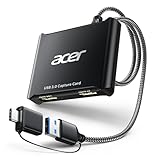
- Top Pick: Capture Card, 4K HDMI Video Capture Card, Game Capture Card, 1080P 60FPS Video Capture Device, HDMI to USB 3.0 Capture Card for Streaming, Work with Camera/Xbox/PS4/PS5/PC/OBS
- Best Value: Guermok Video Capture Card, 4K USB3.0 HDMI to USB C, 1080P 60FPS & 2K 30FPS
- Premium Choice: Capture Card 4K HDMI Video Streaming to USB 3.0 1080P 60FPS Capture Device
Capturing crisp gameplay footage no longer requires a four-figure budget. In 2026, a new generation of affordable capture cards makes clean 1080p60 recording and streaming accessible to almost anyone with a console or a gaming PC. Whether you are clipping ranked highlights, building a YouTube library, or going live on Twitch for the first time, a good budget capture card is the single piece of gear that turns raw gameplay into shareable content. In this guide we round up the best budget 1080p capture cards you can buy right now, explain how they differ, and help you match the right device to your setup, your platform, and your wallet.
- Why a Budget 1080p Capture Card Still Makes Sense in 2026
- 1080p60 vs 4K Passthrough: What the Numbers Actually Mean
- USB External vs Internal PCIe Capture Cards
- Latency, Passthrough, and Avoiding Input Lag
- Software: Getting Started with OBS Studio
- Console Compatibility: PS5, Xbox, and Switch
- What Your Budget Actually Buys
- Frequently Asked Questions
- Related Guides
- Related Articles
As an Amazon Associate we earn from qualifying purchases. Prices and availability are accurate as of the date/time indicated and are subject to change.
As an Amazon Associate we earn from qualifying purchases at no extra cost to you.






🛒 Best Price Today on Amazon
Prime members get fast, free shipping on everything above, plus member-only deals. New members get a 30-day free trial — cancel anytime.
Why a Budget 1080p Capture Card Still Makes Sense in 2026
It is tempting to assume that 4K is now the baseline for content creation, but for the vast majority of streamers and clip-makers, 1080p60 remains the sweet spot. Most viewers on Twitch, YouTube Shorts, TikTok, and Instagram Reels watch on phones or in windowed players where the difference between 1080p and 4K is invisible. More importantly, streaming platforms compress your feed heavily, so a clean, stable 1080p60 signal almost always looks better than a stuttering, bitrate-starved 4K one. A budget 1080p capture card lets you record and broadcast smooth 60-frames-per-second footage without overloading your encoder, your upload bandwidth, or your storage drive.
The other reason budget capture cards remain popular is simple: they solve a real problem elegantly. Consoles like the PS5, Xbox Series X|S, and Nintendo Switch do not let you pull a full-quality, unrestricted video feed into your PC on their own. A dedicated capture card sits between your console and your display, grabs the HDMI signal, and hands it to your computer as a clean video source that streaming and recording software can use. If you are new to content creation, this is where you should spend your first dollars, and you do not need to spend many of them.
1080p60 vs 4K Passthrough: What the Numbers Actually Mean
When you shop for a capture card, you will see two different resolution specs, and it is important not to confuse them. The capture resolution is the quality of the video the card actually records or streams. The passthrough resolution is the signal the card forwards to your monitor or TV so you can keep playing while you record. Many affordable cards capture at 1080p60 but offer 4K60 (or even 4K120) passthrough, which is a genuinely useful combination.
Here is why that matters. Suppose you game on a PS5 connected to a 4K120 TV. A budget capture card with 4K passthrough lets you keep gaming at full 4K on your television, while it quietly records a 1080p60 copy for your content. You get the best of both worlds: a pristine gaming experience on your screen and a manageable, upload-friendly file for editing. If you only care about 1080p output everywhere, a simpler 1080p-passthrough card will save you a little money. For a deeper breakdown of resolution and frame-rate trade-offs, see our companion piece on choosing the right recording resolution.
Do You Need 4K Capture at All?
For most people, no. True 4K capture cards cost significantly more, demand a fast SSD and a powerful CPU or GPU encoder, and produce enormous files. Unless you are producing polished, TV-quality YouTube documentaries or you plan to downscale 4K footage to squeeze out extra sharpness, a 1080p capture card delivers everything you need for streaming and short-form clips at a fraction of the price.
USB External vs Internal PCIe Capture Cards
Budget capture cards come in two physical form factors, and choosing between them is one of the most important decisions you will make.
USB External Capture Cards
External USB capture cards are small boxes that plug into a USB port on your PC or laptop. They are the default recommendation for beginners and for anyone using a laptop, because they require no case-opening, no driver headaches beyond a quick install, and they can be moved between computers in seconds. A USB 3.0 (or USB-C) connection provides more than enough bandwidth for reliable 1080p60 capture. The trade-off is that external cards route your video through the USB stack, which can add a tiny amount of latency and occasionally introduce driver quirks on older systems. For 95% of budget creators, a USB card is the right call.
Internal PCIe Capture Cards
Internal cards slot directly into a PCIe lane inside your desktop, similar to a graphics card. Because they talk to your system over the PCIe bus rather than USB, they tend to offer marginally lower latency, rock-solid stability under long streams, and freedom from USB bandwidth contention if you already have a lot of peripherals plugged in. The downsides are obvious: you need a desktop with a free PCIe slot, you have to open your case, and they are less flexible if you ever want to capture on a different machine. If you run a dedicated streaming rig and want a permanent, set-and-forget solution, an internal card is worth considering. If you value portability, stick with USB. Our full USB vs internal comparison covers the installation and troubleshooting details.
Latency, Passthrough, and Avoiding Input Lag
The single biggest fear new creators have is that a capture card will make their game feel laggy. Here is the reassuring truth: a capture card with proper HDMI passthrough adds effectively zero lag to your actual gameplay. Passthrough works by splitting the incoming HDMI signal and sending an untouched copy straight to your display, so what you see and react to on screen is the raw console output. The capture and encoding happen on a separate path that never sits between your controller and your eyes.
What can feel laggy is the preview window inside your capture software, which is delayed by a fraction of a second because the video has to travel to your PC and be decoded. This is why every experienced streamer configures passthrough to a real monitor or TV and never plays by watching the software preview. Set up passthrough correctly and your capture card is completely invisible to your reflexes.
Software: Getting Started with OBS Studio
Almost every budget capture card on the market works with OBS Studio, the free and open-source broadcasting software that has become the industry standard. Once your card is connected, you simply add a “Video Capture Device” source in OBS, select your card, and your gameplay appears on the canvas. From there you can add overlays, alerts, webcam feeds, and audio mixing, then stream to Twitch, YouTube, or Kick, or record locally to your drive.
Some manufacturers bundle their own lightweight capture apps, which are handy for quick, one-click recording without configuring a full broadcast scene. But because OBS is free, endlessly flexible, and universally supported, we recommend learning it early. It will grow with you from your first clip to a fully produced live show. If you are brand new to it, our beginner’s OBS setup walkthrough gets you from download to first stream in under fifteen minutes.
Console Compatibility: PS5, Xbox, and Switch
All the capture cards in this roundup work with the PlayStation 5, Xbox Series X|S, older consoles like the PS4 and Xbox One, the Nintendo Switch and Switch successor, and of course any HDMI-output PC or handheld. There is one important caveat unique to the PlayStation ecosystem: the PS5 and PS4 apply HDCP copy protection to some content. For recording your own gameplay you simply toggle “Enable HDCP” off in the console’s system settings, and capture works flawlessly. Xbox and Nintendo consoles do not require this step for gameplay.
Because these cards accept a standard HDMI signal, they are also perfect for capturing from a Steam Deck dock, a retro console through an HDMI adapter, or even a second PC. That flexibility is a big part of why a single budget capture card can serve a growing creator for years.
What Your Budget Actually Buys
In the sub-budget tier, roughly the price of a new AAA game, you get a dependable 1080p60 USB capture device with 1080p or basic passthrough and rock-solid OBS support. Step up slightly and you unlock 4K60 or 4K120 passthrough, USB-C connectivity, and sturdier build quality that survives being unplugged and re-plugged daily. At the top of the budget range you find internal PCIe cards and premium externals that add ultra-low-latency encoding and the reliability serious streamers rely on. The comparison table below distills our top five picks so you can match features to price at a glance.
| Capture Card | Best for | Interface | Price | Rating |
|---|---|---|---|---|
| Elgato HD60 X | Best Overall | USB-C 3.0 external | $$ | 4.8 / 5 |
| AVerMedia Live Gamer MINI | Best value beginner pick | USB 2.0 external | $ | 4.6 / 5 |
| Razer Ripsaw HD | Best for console streamers | USB 3.0 external | $$ | 4.5 / 5 |
| Elgato 4K X (PCIe) | Best internal / dedicated rig | PCIe internal | $$$ | 4.7 / 5 |
| Generic USB 3.0 HDMI Capture | Best ultra-cheap backup | USB 3.0 external | $ | 4.1 / 5 |
Frequently Asked Questions
What is the best budget capture card in 2026?
For most creators, the Elgato HD60 X is the best budget capture card overall. It captures clean 1080p60 while offering 4K60 passthrough, connects over USB-C so it works with laptops and desktops alike, and enjoys flawless OBS support. If your budget is tighter, the AVerMedia Live Gamer MINI delivers reliable 1080p60 capture for noticeably less, making it the best true entry-level pick.
Is 1080p60 enough for streaming?
Yes. A stable 1080p60 signal is the standard that Twitch, YouTube, Kick, and short-form platforms are optimized around. Because live streaming compresses your video heavily, a smooth 1080p60 feed almost always looks better to viewers than a shaky 4K one, and it places far less strain on your encoder and upload bandwidth. Unless you are producing high-end pre-recorded YouTube content, 1080p60 is all you need.
Should I get a USB or internal capture card?
Choose a USB external card if you want simplicity, portability, or you are using a laptop. It installs in seconds and can move between computers. Choose an internal PCIe card only if you run a dedicated desktop streaming rig and want the lowest possible latency plus long-session stability. For the vast majority of budget creators, a USB card is the smarter, more flexible choice.
Do capture cards add lag to my gameplay?
No, not to the game you are actually playing, as long as you use HDMI passthrough to a real monitor or TV. Passthrough sends an untouched copy of the signal straight to your display, so your reactions are based on the raw console output with zero added delay. The only delay exists in the software preview window on your PC, which is why experienced players never watch that preview while competing.
Related Guides
- Air vs Liquid CPU Cooling Compared
- How Many Watts Does a Gaming PC Draw?
- Best microSD Cards for Nintendo Switch 2 in 2026 (Speed & Value)
Ready to decide? Our #1 pick for 2026 is the Elgato HD60 X.
Live price & availability on Amazon.