🛒 Best Price Today on Amazon
Prime members get fast, free shipping on everything above, plus member-only deals. New members get a 30-day free trial — cancel anytime.
Four years ago, a true 4K panel with a high refresh rate was a luxury item. Now a 27-inch 4K gaming monitor under 400 dollars is a realistic target, and the real question has shifted from “can I afford 4K?” to “which compromises am I willing to live with?” Some models sacrifice color accuracy for speed, some trim the stand, and some use clever dual-mode tricks to reach very high frame rates at lower resolution.
This guide is for the PC player with a mid-range or better graphics card who wants sharp detail in single-player games and a console owner with a PS5 or Xbox Series who wants 4K at a high refresh rate over HDMI 2.1. Every monitor below is a 27-inch 4K IPS-type panel based on the listing. Only genuine 4K panels made the cut; 1440p and 1080p monitors are left out because they are not what this keyword promises. In 2026 the choices are better than they have ever been in this price bracket, so the details below matter more than the headline numbers.
Quick Picks

CRUA 27" 4K 120Hz Gaming Monitor, IPS White PC Monitor, Built-in Speakers | 120% sRGB, FreeSync, HDMI 2.1, DP 1.4, 178° Wide View, Tilt Adjustable, 75x75mm Wall Mount, for Gaming, Work & Entertainment


As an Amazon Associate we earn from qualifying purchases. Product prices and availability are accurate as of the date/time indicated.

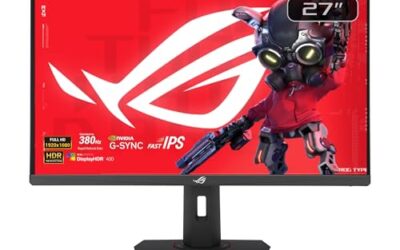
ASUS TUF Gaming VG27UQ1A 27 Inch 4K 160Hz G-SYNC Gaming Monitor | ELMB Sync, 1ms, 95% DCI-P3, FreeSync Premium, DisplayWidget Center, for PS5 and Xbox


As an Amazon Associate we earn from qualifying purchases. Product prices and availability are accurate as of the date/time indicated.

Acer Nitro 27in 4K 3840x2160 IPS 160Hz DFR 320Hz Gaming Monitor VG270K V4 | 0.5ms, AMD FreeSync Premium, 2xHDMI 2.1, DisplayPort, Speaker, VESA Mountable, Bluelight Filter, Flickerless Technology


As an Amazon Associate we earn from qualifying purchases. Product prices and availability are accurate as of the date/time indicated.

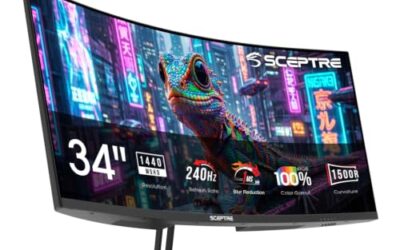
New! Sceptre Curved 34-inch Prime Gaming Monitor 3440 x 1440 up to 240Hz 1500R 1ms 100% sRGB DisplayPort x2 HDMI x2 Build-in Speakers, Machine Black 2027 (C345B-QU240T Series)


As an Amazon Associate we earn from qualifying purchases. Product prices and availability are accurate as of the date/time indicated.
| Product | Best for | Key spec from the title |
|---|---|---|
| CRUA 27″ 4K 120Hz | Console players on a tight budget | 4K 120Hz IPS, HDMI 2.1, built-in speakers |
| ASUS TUF Gaming VG27UQ1A | Players who want wide color and a known brand | 4K 160Hz, G-SYNC, 95% DCI-P3 |
| Acer Nitro VG270K V4 | Multi-device setups needing more ports | 4K 160Hz IPS, 2x HDMI 2.1, DisplayPort |
| Amzfast 27″ 4K | Switching between detail and speed | UHD 160Hz or FHD 320Hz, HDR400 |
| LG UltraGear 27G810A-B | Competitive and cinematic play on one screen | UHD 180Hz or FHD 360Hz, G-Sync |
How to Choose
Check the cable and port standard first
A 4K signal at 120Hz or more needs HDMI 2.1 or DisplayPort 1.4 with compression. Older HDMI 2.0 ports cap 4K at 60Hz, which defeats the purpose. Look for HDMI 2.1 in the title if you own a console, and at least one DisplayPort 1.4 input for a PC. Two HDMI 2.1 ports are useful if a console and a streaming box share the screen.
Read the refresh rate in context
Numbers like 160Hz or 180Hz describe 4K output. Dual-mode monitors add a second figure, such as 320Hz or 360Hz, which applies only after dropping to Full HD. That is useful for fast shooters when your graphics card cannot hold high frame rates at 4K. Do not compare a dual-mode number against a monitor that quotes only its native resolution.
Panel and color specs
IPS panels give wide viewing angles and good color. A percentage of sRGB above 100 or DCI-P3 around 95 suggests a wide gamut, though these numbers rarely translate to accurate colors without calibration. HDR400 is an entry-level label and delivers modest benefits; do not pay a premium for it alone. For adaptive sync, FreeSync Premium and G-Sync listings indicate tear-free play on matching graphics cards.
Ergonomics and extras
A 27-inch 4K screen is sharp enough at a typical desk distance of about 2 to 3 feet. Check whether the stand tilts only or also adjusts height, and whether the monitor accepts a VESA mount if you plan to use an arm. Built-in speakers are a convenience, not a substitute for headphones, and budget monitors often skimp on them.
One more practical point: a 4K monitor is only as good as the graphics card behind it. Midrange cards can run most modern games at 4K with upscaling, but expect to lower settings in the newest releases. If your card struggles, the dual-mode monitors in this list let you drop to Full HD without changing displays, which makes them safer purchases for a PC that may not be upgraded soon.
The 5 Best Options
CRUA 27″ 4K 120Hz
The CRUA is a 27-inch 4K IPS monitor with a 120Hz refresh rate, HDMI 2.1, DisplayPort 1.4 and FreeSync support. It is a white-bodied display with built-in speakers, which suits a bright desk setup or a bedroom console corner. The listing names 120 percent sRGB and a 178-degree viewing angle. For a bedroom or dorm setup where one screen has to serve a console, a laptop and the occasional movie, the built-in speakers save a purchase, even if serious listeners will still move to headphones. FreeSync support covers tear-free play on compatible graphics cards, and the tilt-adjustable stand is simple but functional.
- Strength: HDMI 2.1 means a PS5 or Xbox Series console can use 4K at 120Hz.
- Strength: white finish and tilt stand help it fit a minimalist desk.
- Trade-off: 120Hz is the lowest refresh rate here, so competitive PC players get less headroom.
Skip it if you want a stand that adjusts height or a rate above 120Hz.
ASUS TUF Gaming VG27UQ1A
This ASUS model lists a 27-inch 4K panel at 160Hz with G-SYNC, FreeSync Premium, 1ms response and ELMB Sync, a motion blur reduction feature. The 95 percent DCI-P3 figure points to a wider color gamut than most budget monitors, and it is marketed for PS5 and Xbox owners as well as PC players. That dual marketing is a good sign for console owners, since the HDMI feature set matters more on a PS5 than raw PC horsepower. The DisplayWidget Center utility lets you adjust settings from the desktop instead of fiddling with on-screen buttons, which is a small but real convenience on a daily-use monitor.
- Strength: 160Hz at 4K gives a clear step up over 120Hz screens.
- Strength: the wide gamut and the DisplayWidget Center software make it flexible for tuning.
- Trade-off: motion blur reduction modes usually cannot run together with adaptive sync.
Skip it if you want an integrated speaker setup, since the title does not list one.
Acer Nitro VG270K V4
Acer’s Nitro is a 27-inch IPS panel at 3840 x 2160 and 160Hz, with a DFR mode reaching 320Hz at lower resolution. It lists 0.5ms response, FreeSync Premium, two HDMI 2.1 ports, a DisplayPort and speakers, along with VESA mounting support. The pairing of two HDMI 2.1 ports and a DisplayPort is the standout, because many monitors at this level give you only one HDMI 2.1 input. A household that shares one desk between a gaming PC and a console will appreciate not having to unplug anything, and the VESA pattern makes a monitor arm a practical option.
- Strength: two HDMI 2.1 inputs let you connect two modern consoles or a console and a PC.
- Strength: VESA mount compatibility frees desk space with an arm.
- Trade-off: the 320Hz mode applies only at reduced resolution.
Skip it if you only need a single input and prefer a simpler product name to compare.
Amzfast 27″ 4K
The Amzfast is a Fast IPS 27-inch monitor with UHD at 160Hz or FHD at 320Hz in dual mode, 1ms response, adaptive sync and HDR400. The title adds 126 percent sRGB, HDMI 2.1, DP 1.4 and a height-adjustable stand, as well as what it calls AI gaming features. The AI label is vague marketing, so treat it as a bonus rather than a reason to buy. What matters is the combination of 4K, a high dual-mode ceiling, HDMI 2.1 and an adjustable stand, which together give players real control over how the monitor sits and performs at the desk.
- Strength: height adjustment is rare at this level and helps posture.
- Strength: dual mode lets you trade sharpness for speed per game.
- Trade-off: the brand is less established, so warranty terms deserve a careful read.
Skip it if brand reputation matters more to you than the feature list.
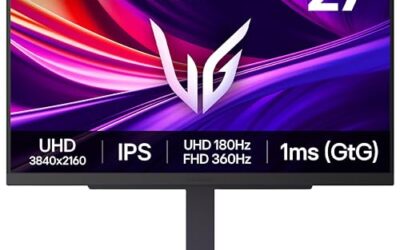
LG UltraGear 27G810A-B
LG’s UltraGear is a 27-inch 4K UHD IPS monitor that runs 180Hz at UHD or 360Hz at FHD, with 1ms response, NVIDIA G-Sync and AMD FreeSync Premium. It has the highest 4K refresh rate on this list and carries the support of a major panel maker. Players who split their time between esports titles and slower cinematic games get the most from this model, because the mode switch lets one screen cover both without a second purchase. Listing both NVIDIA G-Sync and AMD FreeSync Premium also means a future graphics card upgrade, from either brand, will not leave the display unsupported.
- Strength: 180Hz at 4K is the fastest here.
- Strength: both G-Sync and FreeSync Premium are listed, so GPU choice is flexible.
- Trade-off: the shortened title in the listing does not confirm port counts, so check them before buying.
Skip it if you need built-in speakers, which the title does not mention.
Which One Fits Your Situation
You play on a console and a PC
The Acer Nitro VG270K V4 with two HDMI 2.1 ports and a DisplayPort lets a PlayStation or Xbox and a PC share one screen without constant cable swapping. It also keeps a single power brick and a single desk footprint, which matters in a small room. If a friend brings a console over, the spare input is already waiting.
You mostly play fast shooters but want 4K for everything else
The LG UltraGear 27G810A-B or the Amzfast dual-mode monitor lets you drop to Full HD for the higher rate, then switch back to 4K for single-player games. Anyone upgrading from a 1080p monitor will find the Amzfast the gentlest transition, because you can keep playing at Full HD with a very high refresh rate while your graphics card catches up.
You want to spend as little as possible and still reach 4K
The CRUA 27″ 4K 120Hz delivers HDMI 2.1 and 4K at 120Hz, which is enough for most console titles. Spend the money you save on a quality HDMI 2.1 cable and a decent set of headphones, since the speakers here are a convenience rather than a feature to build a setup around.
You care about color and a recognized brand
The ASUS TUF Gaming VG27UQ1A lists 95 percent DCI-P3 and a long feature set, which suits a mixed gaming and content-viewing desk. It is also the pick for anyone who cares about how skies, foliage and film look as much as how many frames per second they get. Pair it with a graphics card that comfortably handles 4K and the 160Hz rate has room to be useful.
Common Mistakes
- Buying a 4K monitor without a graphics card that can drive it at high frame rates.
- Ignoring the cable: an old HDMI cable can cap the signal below 4K at 120Hz.
- Comparing dual-mode refresh numbers directly with native-4K numbers.
- Paying extra for an HDR400 label that adds little in a dim room.
- Skipping the VESA mount check when planning a monitor arm.
Related guides
- Logitech G Pro X 2 Vs Steelseries Arctis Nova Pro Wireless
- Travel Controller Case For 8Bitdo Ultimate Series
- Gaming Pc Under 600 For Roblox And Minecraft
Frequently Asked Questions
Is 27 inches the right size for 4K?
For desk use, yes. It delivers high pixel density, so text and edges look crisp. Larger sizes suit viewing from farther away.
Do I need HDMI 2.1?
For a PS5 or Xbox Series at 4K and 120Hz, yes. A PC can use DisplayPort 1.4 instead and may not need HDMI 2.1 at all.
Is G-Sync better than FreeSync?
Both prevent screen tearing. FreeSync Premium works with AMD cards and many NVIDIA cards, while G-Sync is tuned for NVIDIA. Either is fine if your card supports it.
What does dual mode mean?
The monitor can switch between 4K at a lower refresh rate and Full HD at a much higher one. It helps when you value speed over sharpness in a particular game.