🛒 Best Price Today on Amazon
Prime members get fast, free shipping on everything above, plus member-only deals. New members get a 30-day free trial — cancel anytime.
- Best 2.5 SATA SSDs Compared
- Samsung 870 EVO – Best Overall 2.5 SATA SSD
- Kingston KC600 – Best Premium Alternative
- WD Blue SA510 – Best Everyday SATA SSD
- Crucial BX500 – Best Budget 2.5 SATA SSD
- Samsung 870 QVO – Best High-Capacity Value
- How to Choose a 2.5 SATA SSD
- TLC vs QLC NAND
- DRAM vs DRAM-Less SATA SSD
- 500GB vs 1TB vs 2TB
- SATA SSD vs NVMe SSD
- SATA SSD vs Hard Drive
- Best 2.5 SATA SSD for Gaming
- Best 2.5 SATA SSD for Laptop Upgrades
- FAQ
- Conclusion
The best 2.5 SATA SSD can dramatically improve an older laptop or desktop without requiring an M.2 slot. Samsung 870 EVO is our strongest overall choice, Kingston KC600 offers excellent TLC NAND and hardware encryption, WD Blue SA510 delivers balanced everyday performance, while Crucial BX500 remains one of the best budget options for replacing an aging hard drive.
Quick answer: For most people in 2026, the best 2.5 sata ssd is the SSD — our #1 rated choice. See the full ranked comparison, alternatives and buying advice below.
Best 2.5 SATA SSDs Compared
| SSD | Best For | Read Speed | Write Speed | Capacity Range |
|---|---|---|---|---|
| Samsung 870 EVO | Best Overall | Up to 560 MB/s | Up to 530 MB/s | 250GB–4TB |
| Kingston KC600 | Best Premium Alternative | Up to 550 MB/s | Up to 520 MB/s | 256GB–2TB |
| WD Blue SA510 | Best Everyday SSD | Up to 560 MB/s | Up to 520 MB/s | 250GB–4TB |
| Crucial BX500 | Best Budget Pick | Up to 540 MB/s | Varies by capacity | 240GB–4TB |
| Samsung 870 QVO | Best High-Capacity Value | Up to 560 MB/s | Up to 530 MB/s | 1TB–8TB |
A modern SATA SSD cannot match the headline benchmark numbers of PCIe 4.0 or PCIe 5.0 NVMe storage. That does not make SATA obsolete. Millions of laptops and desktops still use 2.5-inch SATA bays, and replacing a mechanical hard drive with an SSD remains one of the most noticeable upgrades available for an older computer.
The important factors are NAND type, endurance, controller quality, warranty, capacity, and price. Most good SATA SSDs already operate near the practical limit of the SATA III interface, so buying solely by maximum sequential speed rarely makes sense.
Samsung 870 EVO – Best Overall 2.5 SATA SSD
Best For: Laptop upgrades, desktop boot drives, gaming storage, and users wanting proven all-around performance
Samsung 870 EVO remains one of the most recognizable premium SATA SSDs. It uses a 2.5-inch form factor and SATA III connection, allowing it to replace traditional laptop hard drives or add secondary solid-state storage to desktops.
Sequential performance reaches up to approximately 560 MB/s for reads and 530 MB/s for writes, which is close to the practical maximum available through SATA III.
Key Features
- 2.5-inch form factor
- SATA III 6Gb/s interface
- Up to 560 MB/s sequential read
- Up to 530 MB/s sequential write
- Samsung V-NAND
- Dedicated DRAM cache
- Multiple capacities
- TRIM support
- S.M.A.R.T. support
- Five-year limited warranty
What Makes It Different
Consistency is the main reason to consider the 870 EVO.
Many budget SATA drives advertise similar maximum read speeds because virtually every competent SATA SSD can approach the interface limit. The differences become more noticeable during sustained writing, mixed workloads, and long-term operation.
Samsung combines its controller, NAND, firmware, and DRAM in one platform. This makes the 870 EVO more appealing for users who need a primary operating-system drive rather than merely inexpensive secondary storage.
Performance
For Windows and general desktop use, the 870 EVO feels highly responsive. Booting, opening applications, installing software, and accessing large folders are much faster than with mechanical storage.
An NVMe drive can deliver significantly higher sequential throughput, but everyday differences between a good SATA SSD and NVMe SSD are often smaller than benchmark charts suggest for basic workloads.
The biggest upgrade still comes from HDD to SSD.
Endurance
The 870 EVO family provides strong write-endurance ratings that increase with capacity. Higher-capacity versions are particularly suitable for users regularly moving large project files or installing and deleting games.
For ordinary home use, the rated endurance is generally far beyond what most users will write during several years of ownership.
Pros
- Excellent SATA performance
- TLC NAND
- Dedicated DRAM
- Strong endurance
- Five-year warranty
- Broad capacity selection
- Reliable primary-drive option
- Easy laptop replacement
Cons
- More expensive than budget SATA SSDs
- No faster than SATA interface limits
- NVMe drives may cost a similar amount
- Requires SATA power and data cables in desktops
Who It’s For
Choose Samsung 870 EVO when you want a dependable SATA SSD for an operating system, work computer, gaming PC, or important everyday applications and your system cannot use a faster NVMe drive.
Kingston KC600 – Best Premium Alternative
Best For: Business PCs, encrypted storage, professional laptops, and users wanting TLC NAND with DRAM
Kingston KC600 is another premium SATA drive built around 3D TLC NAND. The 2.5-inch version uses the SATA III interface and offers capacities from 256GB through 2TB.
Performance reaches up to approximately 550 MB/s reads and 520 MB/s writes on most capacities.
Key Features
- 2.5-inch form factor
- SATA III interface
- 3D TLC NAND
- Dedicated DRAM cache
- Up to 550 MB/s sequential read
- Up to 520 MB/s sequential write
- AES 256-bit hardware encryption
- TCG Opal support
- Capacities from 256GB to 2TB
- Five-year limited warranty
What Makes It Different
Security is the KC600’s standout feature.
The drive supports hardware-based AES 256-bit encryption along with technologies designed for self-encrypting storage environments. That can make it more attractive for business laptops or workstations where sensitive local information is stored.
It also uses TLC NAND and dedicated DRAM, two features that distinguish it from many cheaper SATA drives.
Performance
The KC600 effectively reaches the useful performance ceiling of SATA III.
The 512GB, 1TB, and 2TB models are rated for up to around 550 MB/s reads and 520 MB/s writes, while random performance reaches roughly 90,000 read and 80,000 write IOPS.
For a SATA-based Windows system, there is very little reason to demand higher sequential numbers because the interface itself is the limiting factor.
Endurance
Endurance scales strongly with capacity.
The 512GB model is rated around 300TBW, while the 1TB version reaches approximately 600TBW and the 2TB version approximately 1,200TBW.
These figures make the KC600 particularly appealing for heavier workloads.
Pros
- 3D TLC NAND
- Dedicated DRAM
- Strong endurance
- Hardware encryption
- Five-year warranty
- Excellent SATA performance
- Good business-drive option
Cons
- Costs more than entry-level SSDs
- Maximum capacity lower than some competitors
- Encryption features may be unnecessary for home users
- NVMe may offer better performance at similar prices
Who It’s For
Choose Kingston KC600 if you want a premium SATA SSD with DRAM, TLC NAND, strong endurance, and additional hardware security features.
WD Blue SA510 – Best Everyday SATA SSD
Best For: Mainstream laptops, family desktops, office machines, and everyday storage upgrades
WD Blue SA510 targets mainstream users rather than high-end workstation applications. It provides 2.5-inch SATA compatibility with capacities covering typical consumer requirements.
Sequential read performance can reach approximately 560 MB/s, placing it near the maximum speed available from SATA.
Key Features
- 2.5-inch design
- SATA III 6Gb/s
- Up to approximately 560 MB/s read
- Up to approximately 520 MB/s write on suitable capacities
- Multiple capacity choices
- Low-profile 7mm design
- Suitable for laptops
- Suitable for desktops
- Low-power solid-state storage
What Makes It Different
The WD Blue family focuses on mainstream reliability and straightforward upgrades.
For users replacing an old HDD, there is little need to pay for extreme benchmark performance. A drive such as the SA510 already removes mechanical seek delays and offers near-interface-limit sequential reads.
This makes it a good middle ground between premium SATA products and very inexpensive DRAM-less drives.
Everyday Performance
Installing Windows on a SATA SSD changes how an older system feels.
Boot times become shorter, applications launch faster, browser cache operations improve, and file searches no longer wait for a mechanical disk head.
The system also becomes quieter because there is no motor or platter vibration.
Laptop Use
A 7mm 2.5-inch SSD fits many laptops originally designed for thin SATA hard drives.
It can also reduce power consumption and eliminate mechanical sensitivity to normal movement.
Before buying, confirm that the laptop actually uses a removable 2.5-inch SATA drive rather than soldered storage or M.2-only storage.
Pros
- Good mainstream performance
- Near SATA speed limits
- Broad compatibility
- Suitable for laptops
- Multiple capacities
- Silent operation
- Good everyday upgrade
Cons
- Not as feature-rich as KC600
- Premium NVMe drives are much faster
- Value depends heavily on current pricing
- SATA is increasingly uncommon in new thin laptops
Who It’s For
Choose WD Blue SA510 if you want a straightforward 2.5-inch SSD for an everyday laptop or desktop and find it priced below premium alternatives.
Crucial BX500 – Best Budget 2.5 SATA SSD
Best For: Affordable HDD replacements, older computers, basic office machines, and secondary storage
Crucial BX500 is one of the most popular budget SATA SSD families because it focuses on the features required for inexpensive computer upgrades.
It comes in a standard 2.5-inch form factor and uses SATA III. Sequential read speed reaches up to approximately 540 MB/s depending on capacity.
Key Features
- 2.5-inch SATA SSD
- SATA III 6Gb/s
- Up to approximately 540 MB/s read
- Multiple capacities
- 3D NAND
- Lightweight design
- Low power consumption
- No moving parts
- Laptop and desktop compatibility
What Makes It Different
Price is the BX500’s greatest strength.
If the computer currently uses a hard drive, spending significantly more on a premium SATA SSD may not produce a proportionally larger improvement in everyday responsiveness.
Even an inexpensive BX500 removes mechanical latency and delivers the near-instant access behavior users associate with SSD-equipped computers.
Performance
Sequential performance is strong enough for ordinary use, but sustained writes can be less consistent than on premium DRAM-equipped drives.
This difference matters mainly when copying very large files or performing heavier storage workloads.
For browsing, office software, Windows startup, school work, and basic gaming, the BX500 remains more than adequate.
Best Capacity
The 500GB and 1TB versions are usually more sensible than very small capacities.
A 240GB SSD can handle Windows and basic applications, but available space disappears quickly once updates, browser data, photos, and software accumulate.
One terabyte provides much better flexibility for games and personal files.
Pros
- Affordable
- Good HDD replacement
- Up to 540 MB/s-class read performance
- 3D NAND
- Broad laptop compatibility
- Low power consumption
- Available in larger capacities
Cons
- Budget-focused architecture
- No dedicated DRAM on typical configurations
- Sustained writes can slow
- Less ideal for heavy workstation use
Who It’s For
Choose Crucial BX500 when the goal is to upgrade an aging HDD-based computer as cheaply as possible while still buying from an established SSD manufacturer.
Samsung 870 QVO – Best High-Capacity Value
Best For: Large game libraries, media collections, secondary desktop storage, and users replacing large hard drives
Samsung 870 QVO is designed differently from 870 EVO. It uses higher-density QLC NAND to offer larger capacities at lower cost per gigabyte.
The series is particularly attractive when you need several terabytes of solid-state storage but do not need premium sustained-write performance.
Key Features
- 2.5-inch SATA format
- SATA III
- Up to 560 MB/s reads
- Up to 530 MB/s writes within suitable conditions
- High-capacity configurations
- Samsung controller platform
- Large dynamic cache
- Designed for capacity-focused workloads
What Makes It Different
Capacity is the primary advantage.
Large SSDs can replace secondary hard drives while eliminating noise, vibration, and mechanical access delays.
QLC NAND stores more bits per cell than TLC, helping lower manufacturing cost but generally providing lower endurance and weaker sustained performance.
That tradeoff is acceptable for game libraries and media storage where reads are much more common than large continuous writes.
Performance
During normal workloads and while cache is available, performance can resemble other SATA SSDs.
During very large sustained writes, however, QLC-based drives can slow more noticeably after their cache is exhausted.
That means the 870 QVO is better suited to storage-heavy consumer workloads than demanding professional write workloads.
Pros
- Excellent large-capacity option
- Near SATA read limits
- Good game-library drive
- Silent alternative to HDD storage
- Useful secondary SSD
- High-capacity models available
Cons
- QLC NAND
- Lower endurance than comparable TLC models
- Sustained write speed can fall significantly
- Not ideal for heavy professional writing
Who It’s For
Choose Samsung 870 QVO when capacity matters more than endurance and you want to replace a large mechanical drive with quiet solid-state storage.
How to Choose a 2.5 SATA SSD
Confirm Your Interface
A 2.5-inch SATA SSD needs a SATA connection.
In a desktop, this normally means one SATA data cable connecting the SSD to the motherboard and one SATA power cable from the power supply.
A laptop usually has a combined internal connector.
Do not confuse a 2.5-inch SATA SSD with an M.2 SATA or M.2 NVMe drive. They use different physical formats.
TLC vs QLC NAND
TLC stores three bits per NAND cell, while QLC stores four.
TLC generally provides stronger endurance and sustained performance, making drives such as Samsung 870 EVO and Kingston KC600 attractive as primary system drives.
QLC increases storage density and can reduce cost per gigabyte.
For large game libraries and read-heavy secondary storage, QLC can be perfectly reasonable.
DRAM vs DRAM-Less SATA SSD
DRAM helps an SSD maintain mapping information efficiently.
Premium SATA products such as Kingston KC600 include dedicated DRAM, while many budget drives eliminate it to reduce cost.
A DRAM-less SSD can still be dramatically faster than a hard drive and perfectly adequate for basic use.
For a primary workstation drive or frequent heavy transfers, a DRAM-equipped model is preferable.
500GB vs 1TB vs 2TB
500GB
Suitable for Windows, office applications, and moderate personal storage.
Gaming users may fill it quickly.
1TB
The best general-purpose capacity for most users.
It provides space for Windows, applications, several large games, and personal files.
2TB
Excellent for gaming libraries, photography, and secondary desktop storage.
Larger capacity also reduces the need for constant storage management.
4TB and Above
Best when replacing large mechanical drives.
Check whether premium SATA pricing makes sense compared with NVMe or external storage at these capacities.
SATA SSD vs NVMe SSD
NVMe is dramatically faster in sequential benchmarks.
A modern PCIe 4.0 SSD may exceed 5,000 or even 7,000 MB/s, while SATA drives generally remain around 500–560 MB/s.
However, NVMe requires a compatible M.2 slot.
If your older laptop has only a 2.5-inch SATA bay, an NVMe SSD simply cannot replace the existing drive directly.
In that scenario, a SATA SSD remains the correct upgrade.
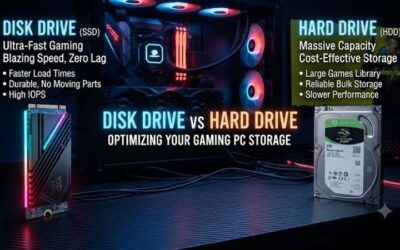
SATA SSD vs Hard Drive
An SSD offers faster access, quieter operation, lower vibration, and better resistance to normal movement.
Hard drives remain cheaper for very large capacities.
For an operating-system drive, SSD is strongly preferable.
For huge archives and backups where performance matters less, HDD storage can still be economical.
Best 2.5 SATA SSD for Gaming
Samsung 870 EVO and Kingston KC600 are excellent choices when an older gaming system does not have available NVMe slots.
Game-loading improvements compared with HDD storage are substantial.
However, SATA SSD speed generally does not increase GPU-rendered frame rates. Storage mainly influences loading, installation, updates, and asset access.
Best 2.5 SATA SSD for Laptop Upgrades
Start by confirming the laptop accepts a 7mm 2.5-inch SATA drive.
Samsung 870 EVO is the best premium option, while Crucial BX500 is attractive for inexpensive upgrades.
If the laptop contains valuable business data, Kingston KC600 provides useful hardware encryption capabilities.
FAQ
What Is the Best 2.5 SATA SSD?
Samsung 870 EVO is the strongest overall option because it combines TLC NAND, DRAM, excellent SATA performance, high endurance, and a five-year warranty.
Is a 2.5 SATA SSD Faster Than a Hard Drive?
Yes. SATA SSDs provide dramatically lower access latency and significantly higher transfer performance than typical mechanical laptop hard drives.
Is SATA SSD Still Worth Buying in 2026?
Yes, when upgrading a system that lacks an NVMe slot or when all available M.2 slots are already occupied. SATA SSDs are also useful for inexpensive secondary desktop storage.
Is Kingston KC600 Good?
Yes. KC600 uses 3D TLC NAND, dedicated DRAM, AES 256-bit encryption, and offers up to approximately 550/520 MB/s read/write performance.
Is Crucial BX500 Good for Windows?
Yes. BX500 is a good budget Windows drive, especially when replacing an HDD. Premium DRAM-equipped drives are preferable for heavier workloads.
Should I Buy SATA or NVMe?
Choose NVMe when your computer supports it and pricing is comparable. Choose 2.5-inch SATA when upgrading a system that lacks an available compatible M.2 NVMe slot.
Conclusion
The best 2.5 SATA SSD depends on budget and workload. Samsung 870 EVO is the strongest overall choice, Kingston KC600 combines TLC NAND, DRAM, encryption, and impressive endurance, WD Blue SA510 is excellent for everyday upgrades, Crucial BX500 delivers budget value, while Samsung 870 QVO works well when high-capacity solid-state storage matters most.
Ready to decide? Our #1 pick for 2026 is the SSD.
Live price & availability on Amazon.