🛒 Best Price Today on Amazon
Prime members get fast, free shipping on everything above, plus member-only deals. New members get a 30-day free trial — cancel anytime.
- SSD vs HDD at a Glance
- What Is a Solid State Drive?
- What Is a Hard Drive?
- SSD vs HDD Speed
- SSD vs HDD for Gaming
- Does an SSD Improve FPS?
- SSD vs HDD Loading Times
- SSD vs HDD Capacity
- SSD vs HDD Durability
- SSD vs HDD Noise
- SSD vs HDD Power Consumption
- SSD vs HDD for Laptops
- SSD vs HDD for Backups
- SSD vs HDD for Video Storage
- SSD vs HDD Reliability
- SSD vs HDD Lifespan
- SSD vs HDD Cost
- SATA SSD vs NVMe SSD
- Which Storage Is Better for a Gaming PC?
- SSD vs HDD: Which Should You Buy?
- FAQ
- Conclusion
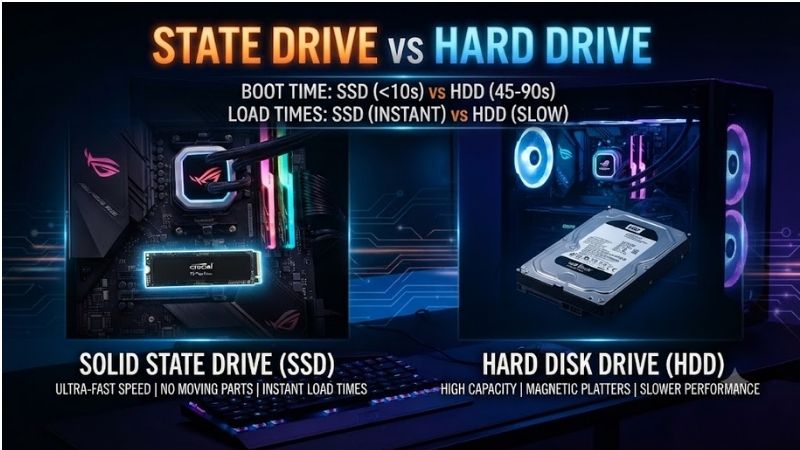
When comparing a state drive vs hard drive, the biggest difference is how data is stored and accessed. A solid state drive uses flash memory with no moving parts, while a hard disk drive uses spinning magnetic platters. SSDs are faster and quieter, while HDDs remain attractive for affordable high-capacity storage.
SSD vs HDD at a Glance
| Feature | Solid State Drive | Hard Drive |
|---|---|---|
| Storage Method | NAND flash memory | Magnetic platters |
| Moving Parts | No | Yes |
| Boot Speed | Faster | Slower |
| Game Loading | Faster | Slower |
| Noise | Silent | Audible |
| Shock Resistance | Better | Lower |
| Power Use | Usually lower | Usually higher |
| Cost per GB | Higher | Lower |
| Large Capacity Value | Good | Excellent |
| Best Use | OS, apps, games | Backups, media, archives |
What Is a Solid State Drive?
A solid state drive, usually shortened to SSD, stores data electronically using NAND flash memory. Because it does not need mechanical parts to locate information, it can access files extremely quickly. This makes SSD storage especially effective for operating systems, applications, games, creative software, and workloads involving many small files.
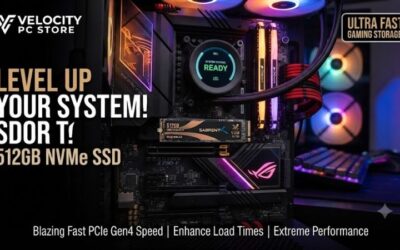
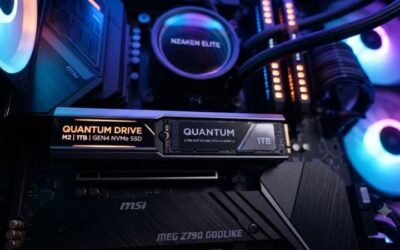
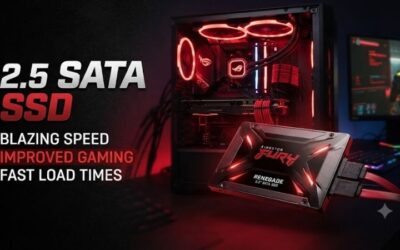
SSDs are available in several formats. A 2.5-inch SATA SSD connects through the same general storage interface used by many hard drives, while M.2 NVMe SSDs use PCIe connectivity for much higher potential throughput. Both types provide substantially lower access latency than traditional mechanical storage.
What Is a Hard Drive?
A hard drive, or HDD, stores data on magnetic platters that rotate at high speed. A mechanical arm moves read and write heads across those platters to locate information. This design allows large amounts of data to be stored economically, but physical movement introduces delays that solid state storage does not have.
Hard drives are still common in desktops, external backup devices, NAS systems, media servers, and archival storage. Their main advantage is cost per gigabyte. Users who need several terabytes for videos, backups, photos, recordings, or rarely used files can usually buy much more HDD capacity for the same budget.
SSD vs HDD Speed
Speed is the area where SSDs have the clearest advantage. A solid state drive can access scattered files without waiting for a read head to move into position. This significantly improves startup time, application launching, updates, file searches, software installation, and other tasks that involve frequent random data access.
Hard drives can still move large sequential files at respectable speeds, but they struggle more when reading many small files from different locations. This is why a computer with an HDD can feel slow even when its processor and memory are adequate. The storage device often becomes the main responsiveness bottleneck.
SSD vs HDD for Gaming
For gaming, an SSD is the better primary storage choice. Modern games load textures, maps, audio, shaders, and other assets constantly, making fast storage increasingly useful. An SSD can reduce loading screens, accelerate game installation, speed up updates, and improve asset streaming in titles designed around faster storage.
An HDD can still store older or less demanding games, particularly when SSD space is limited. However, large modern titles may load noticeably slower from mechanical storage. A practical setup is to keep frequently played games on SSD storage and use a hard drive for inactive titles or archived installers.
Does an SSD Improve FPS?
An SSD usually does not create a large increase in average frame rate because FPS depends mainly on the graphics card, processor, memory, and game engine. Storage affects how quickly data reaches the system, so its benefits appear primarily in loading, level transitions, texture streaming, and general responsiveness.
In some games, very slow storage can contribute to hitching when new assets are loaded while playing. Moving the game to an SSD can reduce these storage-related interruptions. It should not be confused with a GPU upgrade, however, because the SSD does not perform the rendering required to generate frames.
SSD vs HDD Loading Times
Loading times strongly favor SSDs because games and applications frequently request files from many different locations. An SSD handles these requests electronically, while an HDD must physically reposition its read head. The difference can be especially noticeable in open-world games, heavily modded titles, and large professional applications.
Operating systems benefit in the same way. Windows performs many small read and write operations during startup, updates, indexing, and background tasks. Replacing a system hard drive with an SSD can therefore make an older computer feel dramatically more responsive even when the CPU and RAM remain unchanged.
SSD vs HDD Capacity
Hard drives are still difficult to beat when very large capacity is the priority. Multi-terabyte HDDs are widely used for media collections, backups, game recordings, surveillance files, and server storage because the cost per gigabyte remains lower than equivalent SSD capacity.
SSD prices have fallen considerably, making large solid state drives practical for many gaming and desktop systems. Even so, buying several terabytes of flash storage can become expensive. Users who need both speed and capacity often combine the two technologies instead of choosing only one.
SSD vs HDD Durability
SSDs generally handle physical shock better because they have no spinning disks or moving heads. This is especially useful in laptops and portable drives that may be moved while operating. Dropping a running hard drive can cause mechanical damage more easily than dropping a solid state device.
That does not mean SSDs are immune to failure. Flash memory has finite write endurance, and controllers or electronic components can fail unexpectedly. Hard drives also experience mechanical wear over time. Neither technology should be considered permanent storage for irreplaceable data without a separate backup strategy.
SSD vs HDD Noise
A solid state drive operates silently because there are no motors or moving mechanical components. This makes SSDs ideal for quiet gaming PCs, workstations, and laptops. Users building silent systems often remove hard drives entirely because disk spinning and head movement can remain audible even when fans are running slowly.
Hard drives produce mechanical sound during normal operation. The amount varies by model, mounting method, workload, and case construction. Some drives are relatively quiet, while others produce noticeable clicking or vibration during heavy access. Proper mounting can reduce vibration but cannot eliminate the mechanical nature of the device.
SSD vs HDD Power Consumption
SSDs generally consume less power than mechanical hard drives because they do not need motors to spin platters continuously. Lower consumption can help laptop battery life and reduce heat inside compact systems. For a desktop with one drive, the difference is usually modest, but it becomes more important in systems containing many disks.
Hard drives require more power to start and maintain platter rotation. In NAS systems or servers with several HDDs, cumulative consumption becomes more significant. Users planning always-on storage should consider not only drive cost but also cooling, power use, and the number of disks operating continuously.
SSD vs HDD for Laptops
SSDs are usually the better laptop choice because they combine speed, low power consumption, silent operation, and resistance to movement. Many modern laptops no longer include space for mechanical drives at all and instead use one or more M.2 SSD slots.
An external HDD can still complement a laptop when large storage capacity is required. Users can keep Windows, applications, and active projects on internal SSD storage while moving backups or media archives to an external hard drive. This provides speed without paying SSD prices for every stored file.
SSD vs HDD for Backups
Hard drives remain highly practical for backups because backup workloads prioritize capacity and cost more than instant access. A large external HDD can hold multiple system images, game archives, photos, videos, and project files without the expense of equally large solid state storage.
SSDs also work well for backup when portability and fast restoration are important. They are quieter and more resistant to movement, but they cost more per gigabyte. Regardless of device type, critical files should exist in more than one location because any individual storage drive can fail.
SSD vs HDD for Video Storage
Large video collections often favor HDDs because video files can consume terabytes quickly. Finished projects, recorded gameplay, movie libraries, and raw archives may not need the instant random-access performance provided by flash storage, making mechanical drives a more economical long-term option.
Creators often use both. Active editing projects, cache files, and current footage stay on fast SSDs, while completed videos and older source files move to larger HDDs. This allows expensive high-speed storage to be reserved for workloads that actually benefit from it.
SSD vs HDD Reliability
Reliability is difficult to compare with a single simple answer because both technologies can fail in different ways. HDDs contain motors, heads, bearings, and platters, while SSDs depend on NAND flash, controllers, firmware, and electronic components. Manufacturing quality and workload matter as much as storage type.
The most reliable strategy is therefore not choosing one technology and trusting it completely. Important documents, photos, creative work, and business data should be copied to another independent drive or cloud location. Redundancy matters more than trying to predict which single drive will last longest.
SSD vs HDD Lifespan
SSD lifespan is often measured through write endurance because flash cells tolerate a finite number of program-and-erase cycles. For normal consumer workloads, modern drives are designed to handle substantial writing before reaching their rated endurance limits. Most everyday users are unlikely to exhaust an SSD rapidly.
Hard-drive lifespan depends on mechanical condition, vibration, operating temperature, workload, and manufacturing variation. A hard drive can last many years, but it can also fail unexpectedly. Age alone is not a guarantee of safety, which is why old drives containing the only copy of important files should be backed up.
SSD vs HDD Cost
HDDs continue to offer the lowest cost per gigabyte at larger capacities. This makes them practical for users who need several terabytes without spending heavily. Backup servers, home media libraries, surveillance systems, and large archive collections are common situations where HDD economics remain difficult to ignore.
SSDs cost more but provide much better responsiveness. For most general-purpose and gaming computers, the performance improvement is valuable enough that the operating system should be installed on solid state storage. The remaining budget can then be used for additional SSD or HDD capacity depending on storage requirements.
SATA SSD vs NVMe SSD
A SATA SSD is limited by the SATA interface but still delivers a huge improvement over a hard drive in everyday responsiveness. For older desktops and laptops, replacing an HDD with a SATA SSD remains one of the most effective upgrades available.
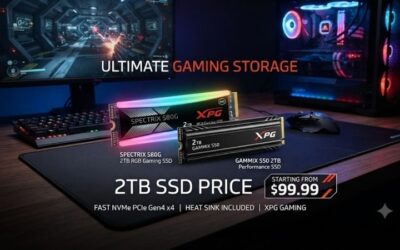
NVMe SSDs use PCIe connectivity and can provide much higher sequential transfer rates and lower latency. They are ideal for modern systems, game libraries, large file transfers, and professional workloads. The improvement from HDD to SATA SSD is usually more dramatic in everyday use than the jump from SATA SSD to NVMe.
Which Storage Is Better for a Gaming PC?
A gaming PC should generally use SSD storage for Windows and active games. NVMe drives are now the most common choice in modern systems because they are compact and fast. A SATA SSD is still perfectly usable when the motherboard lacks suitable M.2 support.
Hard drives make sense as secondary storage for recordings, backups, inactive games, and large media collections. This combination gives the system fast everyday performance while preserving affordable capacity for files that do not need instant access.
SSD vs HDD: Which Should You Buy?
Buy an SSD when speed, responsiveness, silence, portability, and game loading matter most. It should be the default choice for a new operating-system drive and is increasingly the standard option for gaming storage.
Buy an HDD when capacity per dollar is the main priority. It remains a strong choice for backups, archives, media libraries, and other files that are stored in large quantities but accessed less frequently. Many users benefit most from combining both technologies.
FAQ
Is a Solid State Drive Better Than a Hard Drive?
Yes, for performance-focused tasks. An SSD is faster, quieter, more resistant to physical shock, and usually more power efficient. A hard drive remains better when the primary goal is storing a very large amount of data at the lowest possible cost per gigabyte.
Is HDD Still Good for Gaming?
An HDD can still store games, especially older titles, but loading and installation are slower than on an SSD. Modern games increasingly benefit from fast storage, so SSD is the better choice for active titles. HDDs are more suitable for archived games or bulk storage.
Which Is Better for Windows, SSD or HDD?
Windows should generally be installed on an SSD. Operating systems perform many small reads and writes, and solid state storage handles these operations much more efficiently. An HDD system drive can make startup, updates, and application launching feel slow even with a capable CPU.
Can I Use an SSD and HDD Together?
Yes. This is one of the most practical desktop configurations. Use the SSD for Windows, applications, and frequently played games, then use the HDD for backups, media, recordings, and rarely accessed files. Each drive handles the type of workload it performs most efficiently.
Which Lasts Longer, SSD or HDD?
There is no universal winner. SSDs have finite write endurance, while HDDs rely on mechanical components that can wear or fail. Real lifespan depends on model quality, workload, temperature, usage, and luck. Regular backups remain more important than choosing based only on expected lifespan.
Conclusion
In the state drive vs hard drive comparison, SSDs clearly win for speed, gaming, silence, and everyday responsiveness, while HDDs remain better for affordable high-capacity storage. For most modern PCs, the ideal setup is an SSD for Windows and active software with an HDD added only when large backups or archives justify it.