🛒 Best Price Today on Amazon
Prime members get fast, free shipping on everything above, plus member-only deals. New members get a 30-day free trial — cancel anytime.
- Best LCD Screens for PC Cases Compared
- Thermaltake 3.9-Inch LCD Screen Kit
- JONSBO DS8
- Thermaltake Tower 200 LCD Panel Kit
- WOWNOVA 8.8-Inch Sensor Panel
- Generic 5-Inch HDMI IPS Display
- Which LCD Screen Fits Different PC Cases?
- How to Choose an LCD Screen for a PC Case
- Dedicated Sensor Panel vs HDMI Screen
- What Should You Display on a PC Case LCD?
- FAQ
- Conclusion
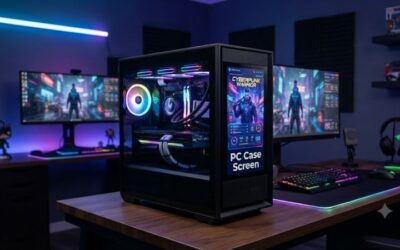
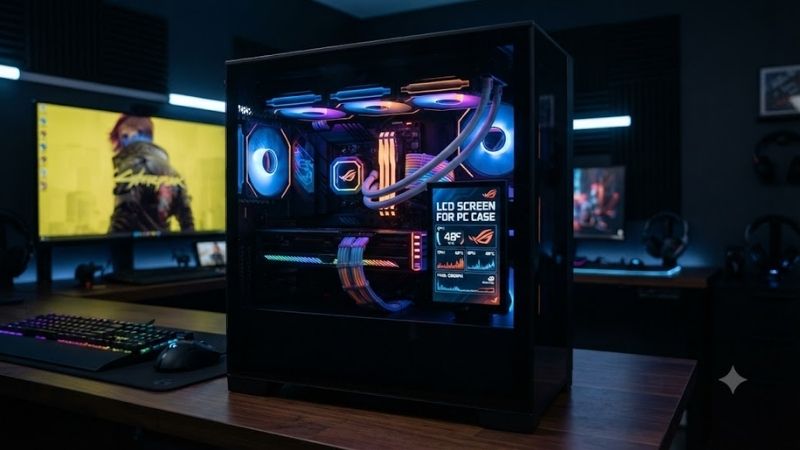
An LCD screen for PC case builds can display CPU temperature, GPU usage, fan speed, system load, animated graphics, or a customized desktop. The best option depends on screen size, resolution, mounting space, connection type, software support, and whether you want a dedicated sensor panel or a true secondary Windows display inside the case.
Quick answer: For most people in 2026, the best lcd screen for pc case is the LCD Screen — our #1 rated choice. See the full ranked comparison, alternatives and buying advice below.
Best LCD Screens for PC Cases Compared
PC case screens fall into two main categories. Dedicated sensor panels communicate through USB and specialized software, while HDMI displays behave like normal secondary monitors. HDMI models generally offer greater customization because Windows can treat them as another desktop, but dedicated panels are often easier to integrate into compatible cases.
| LCD Screen | Best For | Screen Size | Resolution | Connection | Main Use |
|---|---|---|---|---|---|
| Thermaltake 3.9-Inch LCD Screen Kit | Best integrated option | 3.9-inch | 128 x 480 | Internal USB | Hardware monitoring |
| JONSBO DS8 | Best large sensor panel | 8-inch | 1280 x 800 | Mini HDMI + USB-C | AIDA64 and desktop |
| Thermaltake Tower 200 LCD Panel Kit | Tower 200 builds | 3.9-inch | 128 x 480 | Internal USB | Monitoring and GIFs |
| WOWNOVA 8.8-Inch Sensor Panel | DIY customization | 8.8-inch class | Wide-format panel | USB-based setup | Sensor dashboard |
| Generic 5-Inch HDMI IPS Display | Budget DIY builds | Around 5-inch | Varies | HDMI + USB | Flexible secondary display |
Thermaltake 3.9-Inch LCD Screen Kit
Best For: Integrated Thermaltake PC builds
The Thermaltake 3.9-Inch LCD Screen Kit is one of the cleanest choices when you already own a compatible Thermaltake chassis. Rather than mounting a generic mini monitor somewhere inside the case, this kit is designed to fit specific Ceres, Tower, and TR-series cases as an integrated front or side display.
The panel uses a 3.9-inch TFT-LCD with a 128 x 480 resolution. That resolution is narrow compared with a normal monitor, but it suits vertically oriented hardware statistics such as CPU temperature, GPU frequency, RAM load, clocks, and system information.
Thermaltake controls the display through TT RGB Plus 2.0 software. Users can select real-time hardware information or display custom images and animated media. Supported monitoring options include CPU temperature, CPU load, GPU information, RAM information, clock functions, weather, and carousel-style information pages.
Customization goes beyond simple numerical data. The software supports uploaded media for personalized graphics, allowing a build to show a logo, themed animation, character art, or startup graphic. This is useful for showcase PCs where visual appearance matters as much as hardware monitoring.
Installation is cleaner than most DIY HDMI panels because the display is intended to connect through an internal motherboard USB header. That helps prevent HDMI and USB cables from running outside the case and back through a rear opening.
The biggest limitation is compatibility. This is not a universal display designed to attach anywhere. It makes the most sense when your chassis appears on Thermaltake’s compatibility list. Buying it for an unrelated case may require custom mounting that eliminates the main benefit of the kit.
What makes the Thermaltake 3.9-inch display different is integration. It looks like part of the chassis rather than an accessory added later, making it ideal for users who prioritize a clean factory-style build.
Key Features:
- 3.9-inch TFT-LCD
- 128 x 480 resolution
- Internal USB connection
- TT RGB Plus 2.0 support
- CPU and GPU monitoring
- Custom images and animations
- Clock and weather modes
- Integrated case installation
Pros:
- Excellent visual integration
- Simple monitoring software
- No external HDMI requirement
- Supports custom visual content
- Clean cable management
Cons:
- Limited case compatibility
- Low resolution compared with HDMI screens
- Small display area
Use Case: Thermaltake showcase builds, hardware monitoring, custom GIFs, system information, and themed gaming PCs.
Who It’s For: Thermaltake case owners who want a factory-style sensor panel rather than a custom-mounted secondary monitor.
JONSBO DS8
Best For: Large hardware monitoring displays
The JONSBO DS8 is an 8-inch TFT-LCD designed specifically for use as a secondary PC display and hardware-monitoring screen. Its 1280 x 800 resolution gives it considerably more usable screen space than small vertical sensor panels, allowing detailed dashboards with graphs, temperatures, clocks, and multiple system statistics.
JONSBO equips the DS8 with Mini HDMI for video and USB-C for power. Because the display receives a genuine HDMI signal, Windows can recognize it similarly to another monitor. This creates significantly more customization possibilities than proprietary USB-only sensor panels.
AIDA64 is one of the most practical ways to use a screen like this. Users can create SensorPanel layouts containing CPU and GPU temperatures, utilization, memory consumption, network activity, storage information, fan speeds, or custom graphics.
The screen can also display normal Windows content. JONSBO specifically describes compatibility with wallpaper-style uses, allowing the panel to show animated backgrounds or other desktop content when hardware information is not required.
The DS8 operates at up to 60Hz and has a rated brightness of 300 nits. Refresh rate is not particularly important for hardware monitoring, but 60Hz makes movement and animations appear smoother than extremely low-refresh sensor-only displays.
Physical size is the main installation challenge. An 8-inch panel requires much more internal space than a 3.5- or 5-inch screen. It works especially well in large dual-chamber cases where the side fan or radiator area leaves enough visible room behind tempered glass.
Mounting may require brackets, adhesive strips, magnetic hardware, or a custom 3D-printed frame depending on the PC case. Users should carefully measure available space before purchasing because cable connectors also add clearance requirements behind the display.
What makes the DS8 different is that it behaves much more like a true secondary monitor. This gives advanced builders significantly greater control over the final dashboard.
Key Features:
- 8-inch TFT-LCD
- 1280 x 800 resolution
- 60Hz refresh rate
- 300-nit rated brightness
- Mini HDMI video input
- USB-C power
- Windows secondary-display functionality
- AIDA64 sensor-panel suitability
Pros:
- Excellent resolution for dashboards
- Large viewing area
- Highly customizable
- Supports normal desktop content
- Good for detailed AIDA64 layouts
Cons:
- Requires significant case space
- More cables than USB-only panels
- Installation may need custom mounting
Use Case: Large gaming PCs, custom water-cooled builds, AIDA64 dashboards, animated wallpapers, and showcase systems.
Who It’s For: Enthusiasts who want a large, high-resolution internal monitor rather than a small temperature display.
Thermaltake Tower 200 LCD Panel Kit
Best For: Thermaltake Tower 200 owners
The Thermaltake LCD Panel Kit for The Tower 200 is specifically shaped to integrate with the company’s compact Tower 200 chassis. It uses a 3.9-inch display and installs into the chassis as an official expansion accessory instead of requiring a separate bracket or adhesive mounting system.
The display has a 128 x 480 resolution and works through TT RGB Plus 2.0. It can show real-time performance information, custom graphics, GIF animations, time, and weather information.
For a small-form-factor system, this integration is particularly valuable. Compact cases provide less unused interior space than full towers, making generic 7- or 8-inch displays difficult to install without interfering with the graphics card, radiator, or airflow.
The narrow display format works well for temperatures and utilization percentages because these values require little horizontal space. A custom dashboard can prioritize CPU and GPU temperatures, frequency information, or system load while leaving room for branding or themed artwork.
Another advantage is cable management. The screen connects internally rather than requiring the builder to route a full-size HDMI cable through the rear of the case. This helps preserve the clean appearance expected from a compact showcase system.
The major disadvantage is obvious: this is a chassis-specific product. It should not be purchased simply because it looks attractive unless your exact case is supported. A generic HDMI display is much more flexible across future PC upgrades.
What makes the Tower 200 kit valuable is precision fit. It turns otherwise unused chassis space into a functional information display without making the system look modified.
Key Features:
- 3.9-inch LCD
- 128 x 480 resolution
- Designed specifically for Tower 200
- TT RGB Plus 2.0
- Real-time system information
- Custom JPG and GIF content
- Clock functionality
- Weather display
Pros:
- Perfect fit for compatible chassis
- Clean installation
- Useful hardware monitoring
- Easy personalization
- Minimal visible cabling
Cons:
- Highly case-specific
- Limited screen resolution
- Poor choice for future use in unrelated cases
Use Case: Tower 200 gaming builds, compact showcase PCs, temperature monitoring, and personalized system graphics.
Who It’s For: Tower 200 owners who want the cleanest possible LCD integration without building a custom mounting solution.
WOWNOVA 8.8-Inch Sensor Panel
Best For: Wide-format DIY dashboards
An 8.8-inch WOWNOVA-style sensor panel is designed for builders who want the long horizontal display commonly seen inside modern panoramic PC cases. This form factor works especially well underneath a vertical GPU, along the power-supply shroud, or beside the motherboard in dual-chamber cases.
The ultra-wide shape is useful for arranging hardware statistics horizontally. Instead of stacking CPU, GPU, RAM, and storage information vertically, a dashboard can distribute several data groups across one long strip while leaving space for graphs and visual accents.
Many sensor panels in this category prioritize USB connectivity and dedicated monitoring software rather than functioning exactly like full HDMI monitors. This simplifies cabling because builders may need only an internal USB connection, depending on the specific hardware version.
The trade-off is software dependence. A dedicated panel may require its manufacturer’s application to retrieve hardware statistics and display templates. Users should check operating-system support and available dashboard themes before buying rather than assuming every panel works with AIDA64.
Wide-format screens are especially effective in cases such as the HYTE Y60/Y70 style, Lian Li O11 family, and other panoramic layouts where long unused surfaces remain visible behind tempered glass. The display can fill this visual space without covering major components.
Installation still requires planning. Some kits include brackets or stands, while others rely on adhesive or magnetic mounting. Always measure not only the screen dimensions but also the frame, USB connector, and cable bend radius.
A dedicated sensor display also reduces the chance of accidentally moving normal desktop applications onto the internal screen. Users who dislike Windows treating an internal panel as another monitor may prefer this approach over HDMI.
What makes an 8.8-inch panel attractive is presentation. Its unusual aspect ratio fits naturally into modern PC interiors and provides enough width for sophisticated hardware dashboards without requiring a large square display.
Key Features:
- Wide 8.8-inch-class format
- Hardware monitoring focus
- USB-oriented configurations available
- Custom dashboard support
- Horizontal PC case mounting
- CPU and GPU information display
- Suitable for panoramic cases
Pros:
- Excellent visual proportions for PC cases
- Plenty of room for multiple sensors
- Cleaner than a conventional mini monitor
- Fits PSU-shroud installations well
- Good for themed builds
Cons:
- Software differs between versions
- Compatibility requires careful checking
- Mounting hardware varies by seller
Use Case: Panoramic gaming PCs, sensor dashboards, RGB showcase builds, temperature monitoring, and horizontal internal mounting.
Who It’s For: Builders who want a wide information strip rather than a conventional rectangular mini monitor.
Generic 5-Inch HDMI IPS Display
Best For: Budget custom PC builds
A generic 5-inch HDMI IPS display can be one of the most flexible ways to add an LCD screen to a PC case. These screens are commonly designed for Raspberry Pi systems, development projects, cameras, or small secondary monitors, but their HDMI input makes them equally useful inside desktop computers.
Unlike proprietary sensor panels, an HDMI screen normally appears in Windows as another monitor. This means users can run AIDA64 SensorPanel, Rainmeter, browser dashboards, Wallpaper Engine, monitoring applications, or custom graphics without relying on one manufacturer’s software.
Five inches is a useful compromise between readability and installation flexibility. It provides more space than tiny 3.5- or 3.9-inch screens while fitting into cases where an 8-inch panel would cover fans or interfere with other hardware.
Resolution varies between models, so this is one area where buyers need to examine the exact product carefully. A screen marketed as supporting 1080p input may still have a much lower native panel resolution. Native resolution determines how sharp text and small monitoring values actually appear.
IPS technology is preferable when the display will be viewed through tempered glass at an angle. Wider viewing angles help colors and information remain visible even when the PC sits beside the user rather than directly in front.
Most HDMI displays need separate power through USB. Builders can route this internally using a motherboard header adapter or another suitable power solution, but electrical requirements should be verified before connecting anything.
Generic models also require creative mounting. Double-sided adhesive, magnetic strips, small screws, fabricated frames, and 3D-printed brackets are common approaches. This is more work than installing a purpose-built kit, but it allows the display to move into a future case.
What makes a generic 5-inch HDMI display attractive is flexibility. It can become a PC sensor panel today and later serve as a small troubleshooting screen or secondary display for another project.
Key Features:
- Around 5-inch display
- HDMI input
- USB power
- IPS options available
- Windows secondary-monitor operation
- Compatible with common sensor software
- Flexible mounting possibilities
Pros:
- Excellent customization
- Works with many PC cases
- Usually affordable
- Can run normal Windows content
- Reusable for other projects
Cons:
- Requires DIY mounting
- Specifications vary greatly
- HDMI and USB cables add clutter
- Native resolution must be checked carefully
Use Case: Budget sensor panels, custom gaming cases, AIDA64 monitoring, Rainmeter dashboards, and DIY computer projects.
Who It’s For: Builders who prefer flexibility and low cost over a perfectly integrated factory-style installation.
Which LCD Screen Fits Different PC Cases?
For compatible Thermaltake cases, the official 3.9-inch LCD Screen Kit offers the cleanest result because the mounting and software are designed specifically around Thermaltake hardware.
JONSBO DS8 is better for large cases where screen size and customization matter more than hidden cabling. Its 1280 x 800 resolution provides enough space for detailed AIDA64 dashboards instead of displaying only a few temperatures.
An 8.8-inch wide sensor panel is ideal for panoramic builds with long unused surfaces. A generic 5-inch HDMI display remains the most flexible option when budget and compatibility across different cases matter more than factory-style integration.
How to Choose an LCD Screen for a PC Case
Measure the Available Space
Measure the exact installation area before choosing a display. Include the screen frame rather than only the advertised panel size. Cable connectors also need room, particularly HDMI plugs that extend from the side or rear.
Decide Between HDMI and USB
HDMI displays behave like secondary monitors and provide maximum software freedom. Dedicated USB sensor panels can offer cleaner setup but may depend on proprietary monitoring applications.
Check Native Resolution
High resolution matters when displaying small temperatures, graphs, and labels. A physically large screen with low resolution can make text look rough, while a 1280 x 800 panel offers enough pixels for detailed dashboards.
Choose the Right Aspect Ratio
Vertical displays work well beside a motherboard or front panel. Wide screens fit naturally above a PSU shroud. Conventional 16:10 panels provide the most freedom for complex monitoring layouts.
Consider Software
AIDA64 SensorPanel is popular for HDMI-based screens because users can design detailed custom dashboards. Rainmeter and normal Windows applications provide additional options. Proprietary screens may require their own software instead.
Plan Cable Routing
An HDMI sensor panel generally needs both video and power cables. Consider whether cables will run through a PCI slot, internal adapter, or motherboard USB header. Poor cable planning can make an otherwise attractive LCD installation look unfinished.
Do Not Block Airflow
Avoid placing an LCD directly against intake fans or major ventilation openings. The screen and mounting hardware can restrict airflow and raise component temperatures, defeating the purpose of monitoring them.
Dedicated Sensor Panel vs HDMI Screen
A dedicated sensor panel is usually easier to manage because it exists primarily to display computer information. Software can automatically populate temperatures and utilization values without Windows treating the panel like an extended desktop.
HDMI offers far more freedom. You can create almost any layout, display animated wallpapers, use monitoring software, or move ordinary applications onto the screen. The disadvantage is more complicated cable management and Windows display configuration.
For beginners using a supported case, a dedicated panel is usually easier. Enthusiasts who enjoy customization will generally prefer HDMI.
What Should You Display on a PC Case LCD?
CPU and GPU temperatures are the most useful values because they provide an immediate indication of system cooling performance. GPU utilization and CPU load help explain why temperatures change during games or rendering workloads.
Memory usage, fan speed, clock frequency, network activity, storage temperature, and frame-rate statistics can also be displayed. Avoid adding every available sensor, because an overloaded dashboard becomes difficult to read through tempered glass.
A clean sensor panel usually presents four to eight important values with larger fonts, clear graphs, and enough empty space to remain readable from normal seating distance.
FAQ
Can I Put an LCD Screen Inside My PC Case?
Yes. Small HDMI monitors and dedicated USB sensor panels can be mounted inside many desktop cases as long as there is adequate room, power, cable routing, and airflow.
What Software Is Best for a PC Sensor Panel?
AIDA64 SensorPanel is a popular choice for HDMI secondary displays because it allows detailed custom monitoring layouts. Dedicated LCD products may instead use manufacturer-specific software.
Does an Internal LCD Affect Gaming Performance?
A simple sensor panel usually has minimal impact, although animated content and monitoring software consume some system resources. The effect depends on the software and complexity of the displayed content.
What Size LCD Is Best for a PC Case?
Around 5 inches works well for compact builds, while 8- to 8.8-inch displays provide more room for detailed dashboards in larger panoramic cases. Measure your chassis before choosing.
Do I Need HDMI for a PC Case Screen?
Not always. Some sensor panels operate through USB and dedicated software. HDMI is preferable when you want Windows to recognize the LCD as a conventional secondary display.
Can I Use an Old Phone as a PC Sensor Screen?
Yes, monitoring software can turn an old phone or tablet into a network-connected sensor display. A dedicated internal LCD generally provides cleaner integration and can power on with the PC more conveniently.
Conclusion
The best LCD screen for PC case builds depends on case space and customization needs. Thermaltake’s 3.9-inch kit offers excellent integrated monitoring, JONSBO DS8 provides a large 1280 x 800 desktop, wide 8.8-inch sensor panels suit panoramic cases, and generic 5-inch HDMI screens deliver flexible DIY value for custom hardware dashboards.
Ready to decide? Our #1 pick for 2026 is the LCD Screen.
Live price & availability on Amazon.