🛒 Best Price Today on Amazon
Prime members get fast, free shipping on everything above, plus member-only deals. New members get a 30-day free trial — cancel anytime.
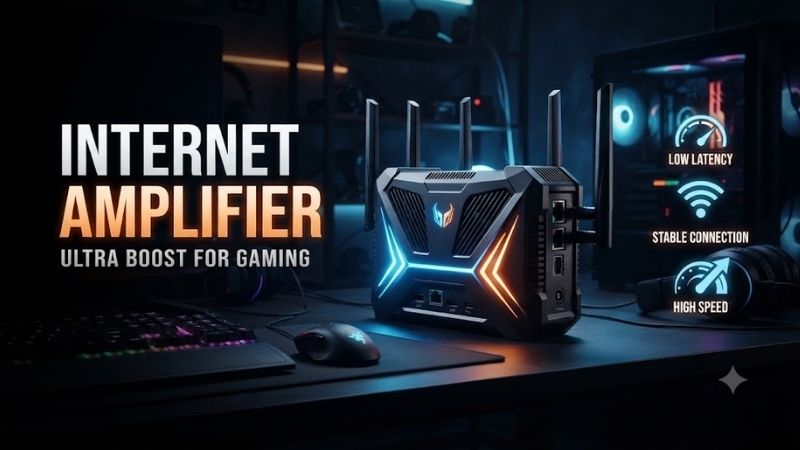
An internet amplifier can help eliminate weak WiFi signals, unreliable connections, and frustrating dead zones throughout your home. Commonly sold as WiFi range extenders or signal boosters, these devices extend your existing wireless network rather than increasing your internet plan’s speed. This guide compares six practical options for gaming, streaming, and everyday connectivity.
Quick Comparison: Best Internet Amplifiers
| Product | Best For | WiFi Standard | Main Limitation |
|---|---|---|---|
| TP-Link RE705X | Overall performance | WiFi 6 AX3000 | Wireless backhaul can limit speed |
| NETGEAR EAX15 | Multiple connected devices | WiFi 6 AX1800 | Shared wireless bandwidth |
| ASUS RP-AX58 | ASUS AiMesh networks | WiFi 6 AX3000 | Best mesh integration requires ASUS equipment |
| TP-Link RE315 | Budget home coverage | WiFi 5 AC1200 | Fast Ethernet port |
| NETGEAR EX6120 | Basic room extensions | WiFi 5 AC1200 | Older WiFi technology |
| TP-Link RE715X | High-speed WiFi 6 extension | WiFi 6 AX3000 | Performance depends on router connection |
Best Internet Amplifiers for Home and Gaming
1. TP-Link RE705X — Best Overall Internet Amplifier
Best For: Households needing a capable WiFi 6 extender for gaming, video streaming, and multiple connected devices.
Key Features:
-
Dual-band WiFi 6 AX3000.
-
Up to 2402 Mbps on 5 GHz and 574 Mbps on 2.4 GHz, as theoretical link rates.
-
Gigabit Ethernet port.
-
160 MHz channel support.
-
Range extender and access point modes.
-
TP-Link Tether app management.
-
Mesh compatibility dependent on regional hardware and firmware.
What Makes It Different:
The TP-Link RE705X combines relatively high wireless link rates with a Gigabit Ethernet connection. Unlike basic WiFi 5 extenders, it supports WiFi 6 features designed to manage wireless transmissions efficiently. Its 160 MHz capability can also benefit compatible clients and routers under suitable conditions.
Performance and Practical Use:
The RE705X is useful when a router’s coverage does not consistently reach bedrooms, upstairs offices, or entertainment spaces. Its dual-band design allows devices to connect through either frequency band. Actual performance depends on the signal received from the main router and environmental interference.
Gaming Performance:
For a gaming PC located away from the router, the Gigabit Ethernet port offers a convenient connection to the extender. However, plugging a computer into this port does not automatically create a fully wired connection to the router. Wireless backhaul can still introduce latency, interference, or inconsistent throughput.
Pros:
-
Modern WiFi 6 connectivity.
-
Supports 160 MHz channels.
-
Gigabit Ethernet connection.
-
App-based configuration.
-
Access point mode for Ethernet-backed installations.
Cons:
-
Maximum advertised rates are not real-world internet speeds.
-
Requires a suitable signal from the existing router.
-
Mesh compatibility varies by router and supported firmware.
Who Should Buy It:
The RE705X is a strong option for households with an existing WiFi 6 router and moderate coverage problems. It is particularly attractive when you want both wireless extension and the option to use an Ethernet connection for a PC, television, or gaming console.
2. NETGEAR EAX15 — Best for Multiple Connected Devices
Best For: Homes with smartphones, laptops, televisions, smart appliances, and other devices sharing wireless connectivity.
Key Features:
-
Dual-band WiFi 6 AX1800.
-
Combined theoretical link rates up to approximately 1.8 Gbps.
-
Four WiFi streams.
-
Gigabit Ethernet port.
-
Smart roaming features.
-
NETGEAR Nighthawk app setup.
-
Wall-plug design.
What Makes It Different:
The NETGEAR EAX15 emphasizes broader wireless coverage alongside WiFi 6 efficiency features. Support for OFDMA and multiple spatial streams helps manage compatible client traffic. Its compact wall-plug construction also avoids requiring additional desk or shelf space in a home office or living room.
Performance and Practical Use:
The EAX15 can extend connectivity to areas where devices frequently disconnect from the primary router. WiFi 6 features are particularly relevant when several supported devices communicate simultaneously. Nevertheless, the extender still shares limited wireless resources with its connection to the router.
Streaming and Gaming:
An EAX15 may improve streaming reliability when poor coverage is the main problem. Its Ethernet port is useful for devices without convenient wireless connectivity. However, competitive gamers should understand that a direct Ethernet connection to the main router usually delivers more predictable latency.
Pros:
-
WiFi 6 support.
-
Four-stream wireless architecture.
-
Gigabit Ethernet connection.
-
Convenient wall-plug installation.
-
App-based management.
Cons:
-
Lower theoretical wireless rates than AX3000 models.
-
A congested wireless backhaul can affect performance.
-
Mesh-style roaming behavior depends on the network.
Who Should Buy It:
Choose the EAX15 if multiple devices experience weak connectivity in areas beyond the router’s normal coverage. It is appropriate for shared living spaces, home offices, and entertainment rooms where improved signal availability matters more than achieving the absolute lowest possible gaming latency.
3. ASUS RP-AX58 — Best for ASUS AiMesh Networks
Best For: Users with compatible ASUS networking equipment who want to expand an existing home network.
Key Features:
-
Dual-band WiFi 6 AX3000.
-
Up to 2402 Mbps on 5 GHz.
-
Up to 574 Mbps on 2.4 GHz.
-
ASUS AiMesh node support.
-
Gigabit Ethernet port.
-
Range extender mode.
-
Access point and media bridge modes.
What Makes It Different:
The ASUS RP-AX58 is particularly interesting because it can operate as an AiMesh node with compatible ASUS routers. This gives existing ASUS users an integrated expansion option instead of relying solely on a conventional standalone extender configuration. The device also supports several operating modes.
Performance and Practical Use:
In a supported AiMesh network, the RP-AX58 can help improve wireless coverage and simplify device management. Its AX3000 wireless capability suits modern phones, laptops, and other WiFi 6 clients. However, wall construction and placement remain important regardless of the underlying mesh technology.
Connection Flexibility:
The Gigabit Ethernet port enables additional uses beyond wireless repeating. Depending on the selected operating mode, the RP-AX58 can connect a wired device or provide wireless access through an Ethernet connection. This flexibility makes it useful when rearranging or expanding an existing network.
Pros:
-
WiFi 6 AX3000 capability.
-
ASUS AiMesh support.
-
Multiple operating modes.
-
Gigabit Ethernet port.
-
Suitable for existing ASUS networking setups.
Cons:
-
Full AiMesh functionality requires compatible ASUS equipment.
-
Dual-band wireless backhaul shares radio resources.
-
Higher theoretical rates require compatible devices and conditions.
Who Should Buy It:
The RP-AX58 is especially appropriate for ASUS router owners who want expanded coverage without replacing their main router. For users without ASUS equipment, its extender and access point capabilities remain useful, but the AiMesh advantage becomes less significant.
4. TP-Link RE315 — Best Budget Internet Amplifier
Best For: Smaller households seeking affordable improvements to WiFi coverage for browsing, video calls, and casual streaming.
Key Features:
-
Dual-band WiFi 5 AC1200.
-
Up to 867 Mbps on 5 GHz.
-
Up to 300 Mbps on 2.4 GHz.
-
Two external antennas.
-
Range extender mode.
-
Access point mode.
-
TP-Link Tether app management.
-
Fast Ethernet connectivity.
What Makes It Different:
The TP-Link RE315 offers an accessible way to extend wireless coverage without investing in a complete mesh system. Its two external antennas and dual-band operation provide a more flexible arrangement than older single-band repeaters. It is primarily intended for coverage improvement rather than maximum throughput.
Performance and Practical Use:
The RE315 works well conceptually for a bedroom, home office, or small area receiving an inconsistent signal. The 5 GHz band provides higher potential data rates over shorter distances, while 2.4 GHz can provide better reach through certain obstacles, although interference and building materials remain important.
Important Limitation:
The RE315 uses a Fast Ethernet port rather than Gigabit Ethernet. This makes it less attractive for users expecting high wired throughput. Its WiFi 5 standard also lacks several efficiency features introduced with WiFi 6, although it can remain sufficient for basic household connectivity.
Pros:
-
Practical entry-level extender.
-
Dual-band WiFi operation.
-
External antennas.
-
Access point mode.
-
Simple setup options.
Cons:
-
No WiFi 6.
-
Ethernet connection limited to Fast Ethernet speeds.
-
Less suitable for demanding high-bandwidth networks.
Who Should Buy It:
The TP-Link RE315 suits buyers whose main goal is making an unreliable room connection more usable. It is particularly appropriate for moderate internet plans, general browsing, smart devices, and video calls. Users with Gigabit internet or performance-focused gaming requirements should consider faster alternatives.
5. NETGEAR EX6120 — Best for Basic WiFi Coverage
Best For: Users who need a straightforward WiFi range extender for everyday internet access.
Key Features:
-
WiFi 5 AC1200.
-
Dual-band 2.4 GHz and 5 GHz support.
-
Two external antennas.
-
FastLane technology.
-
Fast Ethernet port.
-
Range extender mode.
-
Access point mode.
-
Wall-plug installation.
What Makes It Different:
The NETGEAR EX6120 provides a traditional range extender experience without requiring a complete networking upgrade. Its FastLane feature can use the two available bands to optimize a connection under suitable circumstances. This distinguishes it from simpler repeaters with fewer wireless configuration options.
Performance and Practical Use:
The EX6120 is intended to reach areas where the existing wireless network becomes weak. It can be useful for secondary bedrooms, home office desks, or entertainment spaces. Since it uses WiFi 5 technology, users should expect lower potential efficiency and capacity than more advanced WiFi 6 extenders.
Everyday Connectivity:
For HD streaming, web browsing, and routine household tasks, the EX6120 can provide adequate connectivity when properly positioned. The Ethernet port offers an alternative device connection, but its 10/100 Mbps interface limits wired throughput and makes it less suitable for faster broadband connections.
Pros:
-
Dual-band coverage extension.
-
External antennas.
-
FastLane functionality.
-
Compact wall-plug design.
-
Access point operation.
Cons:
-
Older WiFi 5 technology.
-
Fast Ethernet rather than Gigabit Ethernet.
-
Limited appeal for high-speed internet plans.
Who Should Buy It:
The EX6120 is most suitable for buyers who want to improve basic wireless availability in one or two problem areas. It is less compelling for demanding gaming networks or households with many active devices, where modern WiFi 6 hardware or a wired access point can offer greater advantages.
6. TP-Link RE715X — Best High-Speed WiFi 6 Extension Alternative
Best For: Households evaluating an AX3000 extender with modern wireless features and flexible installation options.
Key Features:
-
Dual-band AX3000 WiFi 6 class.
-
2.4 GHz and 5 GHz operation.
-
Range extension functionality.
-
WPS-assisted setup.
-
TP-Link Tether management.
-
Hardware revisions with separate firmware support.
-
Configuration-dependent mesh and access point features.
What Makes It Different:
The TP-Link RE715X offers another AX3000-class option for extending an existing network. Its support for modern WiFi 6 functionality makes it relevant to homes with compatible wireless devices. Buyers should check the specific hardware version and regional specifications because available features can vary.
Performance and Practical Use:
Like other wireless extenders, the RE715X relies on receiving a usable connection from the primary router before retransmitting wireless service. Placing it in an existing dead zone is counterproductive. Positioning it where the router signal remains stable is necessary for useful coverage and throughput.
Installation Considerations:
The RE715X can be configured through supported setup methods, including WPS and the Tether app. Its hardware revisions have their own firmware support resources. Users should select the appropriate firmware for their exact device version rather than assuming all RE715X units use identical software packages.
Pros:
-
Modern AX3000-class WiFi 6 technology.
-
Designed for wireless coverage expansion.
-
App-assisted setup.
-
Suitable for compatible modern home networks.
Cons:
-
Actual throughput depends on wireless backhaul.
-
Hardware and firmware revisions require attention.
-
May not outperform a properly installed wired access point.
Who Should Buy It:
Consider the RE715X when comparing modern TP-Link WiFi 6 extenders and when the device’s specific hardware features meet your needs. If the RE705X and RE715X are both available, compare their exact regional specifications, compatible mesh functions, and current prices before choosing.
How to Choose the Right Internet Amplifier
Understand What an Internet Amplifier Actually Does
An internet amplifier does not increase the broadband speed supplied by your internet service provider. Most consumer products using this name are WiFi extenders that receive an existing wireless network and retransmit connectivity into areas where the original router provides insufficient signal strength.
This distinction matters because the cause of slow internet determines the solution. If your connection is slow even when a computer is connected directly to the router, an extender will not fix the underlying broadband problem. If speeds are strong near the router but poor in another room, coverage improvement may help.
Compare WiFi 5 and WiFi 6
WiFi 5 extenders can remain appropriate for light household usage, particularly when paired with an older router or moderate broadband service. WiFi 6 introduces technologies such as OFDMA and improved efficiency under compatible conditions, making it a more attractive option for networks with many active devices.
| Feature | WiFi 5 Extender | WiFi 6 Extender |
|---|---|---|
| Wireless generation | 802.11ac | 802.11ax |
| Typical use | Basic coverage extension | Modern multi-device networks |
| OFDMA | Not supported | Supported |
| Device compatibility | Broad backward compatibility | Broad backward compatibility |
| High-speed potential | Model-dependent | Often greater with compatible hardware |
| Cost | Often lower | Typically higher |
Pay Attention to Wireless Backhaul
Wireless backhaul is the connection between the extender and the main router. Even if your laptop displays a strong signal from the extender, internet performance can remain poor when the extender itself has a weak upstream connection. This is one of the most misunderstood aspects of WiFi signal boosting.
Many dual-band extenders share wireless capacity between the router connection and client devices. Actual throughput can therefore be substantially lower than advertised link rates. Ethernet-backed access points or systems with dedicated backhaul can improve consistency where installation conditions allow.
Look for a Gigabit Ethernet Port
An extender with Gigabit Ethernet can be useful for connecting televisions, computers, or gaming consoles. Some models also allow the port to provide wired backhaul through access point mode. This offers greater installation flexibility than devices limited to wireless repeating or slower Fast Ethernet connections.
However, connecting a gaming PC to an extender’s Ethernet port does not necessarily remove the wireless portion of the route. When the extender communicates wirelessly with the main router, interference and network congestion can still affect gaming latency, packet loss, and connection stability.
Decide Between a WiFi Extender and Mesh System
A conventional WiFi extender often provides an economical solution for one weak coverage area. A mesh system uses multiple cooperating wireless nodes to distribute network coverage and may support more integrated roaming and management. Neither technology automatically guarantees better performance under every condition.
For large homes, multiple floors, or several disconnected coverage areas, a mesh system may be easier to manage than several independent extenders. A wired access point can be better when Ethernet cabling is available, particularly where stable throughput and low latency are more important than convenience.
How to Install an Internet Amplifier Correctly
Step 1: Identify the Weak Coverage Area
Begin by checking wireless performance near the router and in the room experiencing connection problems. Compare signal stability, latency, and actual internet throughput. If the connection is already poor beside the router, investigate the broadband service or router before purchasing an extender.
Step 2: Choose a Suitable Installation Location
Place the extender between the router and the weak coverage area, ideally where the original WiFi signal is still reliable. Avoid hiding the device behind large metal objects, thick structural walls, or equipment that may cause interference. A central hallway or open outlet can often provide better placement.
Step 3: Configure the Connection
Follow the manufacturer’s setup process using the supported mobile app, web interface, or WPS method. Connect the extender to the correct wireless network and apply available firmware updates from the manufacturer. Select secure wireless settings and a strong administrative password where configuration permits.
Step 4: Test the Extended Network
After installation, test connectivity in the intended room rather than assuming that a stronger signal indicator guarantees better service. Evaluate download and upload speeds, video call stability, and latency. If performance is disappointing, reposition the extender closer to the router and repeat the comparison.
Common Problems With Internet Amplifiers
Strong WiFi Signal but Slow Internet
A strong connection between your phone and extender does not guarantee a strong connection between the extender and router. Check the upstream signal, network congestion, and available backhaul capacity. Moving the extender closer to the main router may improve actual performance more than placing it near the dead zone.
Increased Gaming Latency
Wireless repeating introduces another network connection and can increase the variability of packet delivery. Competitive games are particularly sensitive to latency spikes and packet loss. If gaming responsiveness matters, direct Ethernet or an Ethernet-connected wireless access point is generally preferable.
Devices Connect to the Wrong Network
Some extenders create a separate wireless network name, while compatible mesh systems can use coordinated network identities. Client devices do not always choose the strongest access point immediately. Check roaming settings and network configuration if a phone remains attached to a distant router.
FAQ About Internet Amplifiers
Does an internet amplifier really make WiFi faster?
An internet amplifier can improve usable connection speeds in areas where weak WiFi coverage is limiting performance. However, it cannot increase the speed of your internet subscription. Extenders may also reduce available throughput because they use wireless capacity to communicate with the original router.
What is the difference between a WiFi booster and an extender?
The terms WiFi booster, internet amplifier, and WiFi extender are frequently used interchangeably in consumer product listings. Most refer to devices that extend existing wireless coverage. Their actual functionality depends on the product, and some devices support additional access point or mesh networking modes.
Can I use an internet amplifier for gaming?
Yes, a WiFi extender can help a gaming PC or console connect from a room with weak wireless coverage. However, wireless repeating may introduce additional latency and variability. For competitive gaming, a direct Ethernet connection or properly installed wired access point is generally a more predictable solution.
Where should I place my internet amplifier?
Position the extender where it can receive a sufficiently strong signal from your router while remaining close enough to serve the weak coverage area. Placing it directly inside a complete WiFi dead zone often results in poor performance. Use the device’s signal indicator and practical speed tests to refine placement.
Will a WiFi 6 extender work with an older router?
Most WiFi 6 range extenders support backward compatibility with common older WiFi standards, allowing them to connect to many existing routers. However, performance and available features depend on both devices. Advanced mesh integration and certain WiFi 6 capabilities may require compatible networking hardware.
Is a mesh WiFi system better than an internet amplifier?
A mesh system may provide better network management and coverage across larger homes, especially when several nodes are needed. A single extender is often more economical for one weak room. For the most consistent throughput and latency, an Ethernet-connected access point can outperform either wireless-only arrangement.
Conclusion
The best internet amplifier depends on your router, home layout, and connection requirements. The TP-Link RE705X is a versatile WiFi 6 option, the ASUS RP-AX58 suits AiMesh users, and the RE315 addresses basic coverage needs. Prioritize reliable backhaul, suitable placement, and Ethernet connectivity over advertised maximum wireless speeds.