🛒 Best Price Today on Amazon
Prime members get fast, free shipping on everything above, plus member-only deals. New members get a 30-day free trial — cancel anytime.
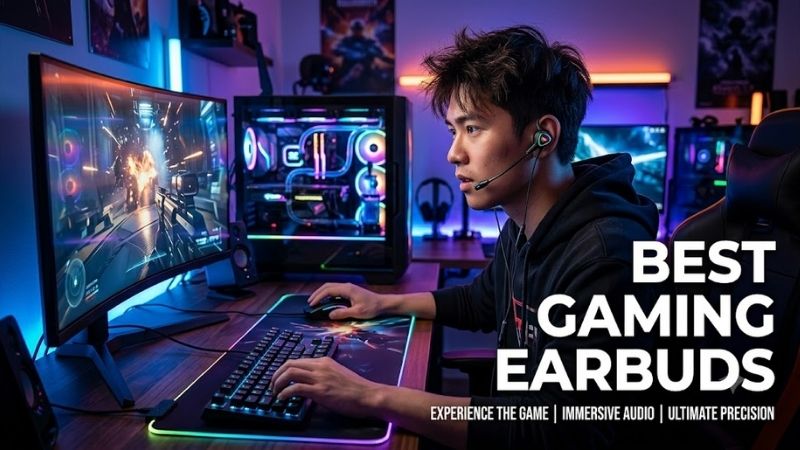
The best gaming earbuds combine low-latency wireless audio, a secure fit, reliable microphones, and enough battery life for long sessions without the bulk of a headset. This roundup focuses on true wireless models designed for PC, console, handheld, and mobile gaming rather than ordinary Bluetooth earbuds with gaming labels.
Quick answer: For most people in 2026, the best gaming earbuds is the Gaming Earbuds — our #1 rated choice. See the full ranked comparison, alternatives and buying advice below.
Quick Comparison
| Gaming Earbuds | Best For | Gaming Connection | ANC | Battery Highlight |
|---|---|---|---|---|
| SteelSeries Arctis GameBuds | Best overall | 2.4GHz + Bluetooth 5.3 | Yes | Up to 10 hours per charge |
| Sony INZONE Buds | Long gaming sessions | 2.4GHz + LE Audio | Yes | Up to 12 hours via transceiver |
| ASUS ROG Cetra True Wireless SpeedNova | PC and multiplatform gaming | 2.4GHz + Bluetooth 5.3 | Adaptive ANC | Up to 46 hours with case |
| Razer Hammerhead V3 X HyperSpeed | Fast multiplatform gaming | 2.4GHz + Bluetooth 5.3 | Model focused on gaming connectivity | Platform dependent |
SteelSeries Arctis GameBuds
Best For: Overall PC, PlayStation, Switch, and handheld gaming
Key Features:
- 2.4GHz wireless connection
- Bluetooth 5.3
- Quick-Switch between wireless modes
- Active noise cancellation
- Transparency mode
- 100+ game audio presets
- Up to 10 hours per charge
- Up to 40 hours with charging case
- Qi wireless charging
- IP55 resistance
SteelSeries designed the Arctis GameBuds around gaming rather than treating them as music earbuds with a low-latency mode added later. The USB-C dongle provides a dedicated 2.4GHz connection for gaming devices, while Bluetooth 5.3 handles phones and other mobile hardware. A triple tap switches between the two wireless paths.
That dual-connection approach is useful for gamers who frequently move between a desktop, console, handheld, and phone. The PlayStation version works with PS5, PC, Switch, VR devices, and compatible tablets through its dongle. Buyers using Xbox should choose the platform-specific version rather than assuming every edition works identically.
SteelSeries also gives these earbuds an unusually software-heavy feature set. More than 100 game-specific audio presets are available through the companion app, allowing users to change tuning for different titles without building an EQ from scratch. Separate mobile and gaming presets can also be stored for different listening situations.
Battery life is another practical advantage for long gaming sessions. SteelSeries rates the earbuds for up to 10 hours per charge using the 2.4GHz connection with noise control disabled, while the charging case extends total use to 40 hours. A 15-minute fast charge can provide up to three additional hours of playback.
What Makes It Different: The Arctis GameBuds combine gaming-focused 2.4GHz connectivity, mobile Bluetooth, ANC, game presets, and a wireless charging case in one system. Many gaming earbuds handle one or two of those features well, while SteelSeries attempts to make the earbuds practical as both gaming audio and everyday portable earphones.
Pros:
- Dedicated 2.4GHz gaming wireless
- Bluetooth 5.3
- Quick-Switch controls
- Active noise cancellation
- Extensive game EQ presets
- Strong battery life
- Qi wireless charging
- IP55 resistance
Cons:
- Platform-specific versions require careful selection
- Small built-in microphones cannot replicate a full boom mic
Use Case: A gamer who moves between a gaming PC, PS5, Nintendo Switch, handheld PC, and smartphone while wanting one compact audio system.
Who It’s For: Players who want the broadest balance of gaming features, portability, ANC, battery life, and software customization.
The Arctis GameBuds make the most sense for someone replacing both ordinary wireless earbuds and a lightweight gaming headset. The dongle handles latency-sensitive play while Bluetooth supports everyday listening. Their biggest limitation remains microphone geometry because no true wireless earbud can position its mic near the mouth like a boom headset.
Sony INZONE Buds
Best For: Long PC and PS5 gaming sessions
Key Features:
- Dedicated 2.4GHz USB transceiver
- Bluetooth 5.3 LE Audio
- Active noise cancellation
- Ambient Sound mode
- 360 Spatial Sound for Gaming
- Up to 12 hours through USB transceiver
- Up to 24 hours including case via transceiver
- Five-minute quick charge for one hour
- IPX4 resistance
Sony’s INZONE Buds stand out for endurance. Sony rates continuous listening through the USB transceiver at up to 12 hours with noise cancellation switched off, or up to 11 hours with ANC enabled. That makes them particularly relevant for gamers who dislike stopping during long sessions to return earbuds to a charging case.
The dedicated transceiver is the connection to prioritize for PC and compatible gaming hardware because it is designed around the gaming use case. Sony also includes LE Audio through Bluetooth 5.3, but these earbuds do not support conventional Bluetooth Classic audio. That compatibility detail matters when pairing them with older phones or devices.
For competitive gaming, the value of the INZONE Buds is not enormous bass or cinematic processing alone. Their compact in-ear form and dedicated wireless connection make them useful when headsets become hot or uncomfortable during long play. Sony’s 360 Spatial Sound for Gaming can also be configured for supported gaming environments.
ANC and Ambient Sound provide flexibility outside quiet gaming rooms. Noise cancellation can reduce steady background distractions, while Ambient Sound allows more of the room to remain audible. Neither feature should replace a secure ear-tip fit because passive sealing still influences perceived bass, isolation, and consistency between the left and right earbuds.
What Makes It Different: Battery endurance is the clearest reason to consider the INZONE Buds. Up to 12 hours on the transceiver is enough for gaming sessions that would force many true wireless earbuds back into their case. A five-minute quick charge providing about one hour of use also reduces downtime when the battery does run low.
Pros:
- Up to 12 hours per transceiver charge
- Dedicated 2.4GHz connection
- Active noise cancellation
- Ambient Sound mode
- 360 Spatial Sound for Gaming
- Lightweight earbud format
- Fast charging
- IPX4 rating
Cons:
- Bluetooth support is LE Audio only
- Device compatibility needs closer checking than standard earbuds
Use Case: Extended gaming sessions on a PC or PlayStation setup where battery life, low bulk, and noise control are more important than RGB lighting.
Who It’s For: Players who routinely game for several hours at a time and want earbuds that can last through those sessions without frequent case charging.
The INZONE Buds are especially attractive to users who find over-ear headsets tiring after several hours. Their long runtime reduces one of the main compromises associated with true wireless gaming audio. The trade-off is Bluetooth compatibility, so buyers wanting one pair for many older devices should verify LE Audio support first.
ASUS ROG Cetra True Wireless SpeedNova
Best For: Feature-rich PC and multiplatform gaming
Key Features:
- ROG SpeedNova 2.4GHz wireless
- Bluetooth 5.3
- USB-C receiver
- USB-C to USB-A adapter
- 10 mm drivers
- Adaptive ANC
- Bone-conduction and beamforming microphones
- Multipoint connectivity
- IPX4 resistance
- Wireless case charging
- Up to 46 hours total in supported battery mode
The ROG Cetra True Wireless SpeedNova offers both Bluetooth 5.3 and ASUS’s dedicated 2.4GHz SpeedNova connection. The receiver can be used with PC, Mac, Nintendo Switch, PS4, PS5, Android devices, and other compatible hardware. ASUS also includes a USB-C-to-USB-A adapter for systems without a convenient USB-C connection.
ASUS uses adaptive active noise cancellation rather than a simple fixed ANC setting. Users can choose automatic behavior or different cancellation strengths, depending on whether they are gaming in a quiet room, shared office, or noisier environment. An Ambient mode is also available when hearing nearby voices or surroundings is more important.
Microphone design is another differentiator. ASUS combines bone-conduction sensing with AI noise-canceling beamforming microphones, targeting clearer speech when the earbuds are used for multiplayer communication. The physical distance from the mouth still limits what an earbud can achieve compared with a dedicated headset boom microphone.
Battery behavior varies significantly depending on RGB and ANC settings. ASUS lists up to 11.5 hours from the earbuds and 34.5 additional hours from the case with Bluetooth, ANC disabled, and RGB disabled. Turning on lighting or noise cancellation reduces runtime, so users should choose features based on the situation rather than enabling everything.
What Makes It Different: The Cetra SpeedNova combines gaming connectivity with features normally associated with premium everyday earbuds, including adaptive ANC, wireless case charging, wear detection, and multipoint support. It is a strong fit for users who want one portable pair that can move between gaming and general multimedia use.
Pros:
- Dedicated 2.4GHz SpeedNova connection
- Bluetooth 5.3
- Adaptive ANC
- Advanced microphone system
- Multipoint support
- Wireless case charging
- Wear detection
- IPX4 resistance
Cons:
- RGB reduces battery life
- Extensive feature set can be unnecessary for simpler setups
Use Case: A gaming PC and console setup where the same earbuds also need to work for travel, mobile listening, calls, and handheld gaming.
Who It’s For: Gamers who value ANC, connection flexibility, microphone processing, and everyday earbud features alongside dedicated 2.4GHz gaming audio.
The Cetra SpeedNova is most compelling when versatility matters as much as competitive gaming. It can operate as a dedicated dongle-based gaming device and then switch roles for music or mobile use. Buyers primarily interested in PC gaming may not use every feature, but multiplatform users can benefit from the broader connectivity package.
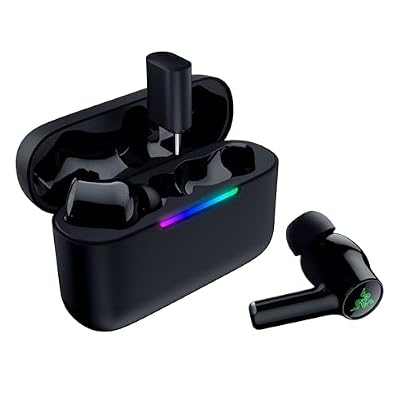
Razer Hammerhead V3 X HyperSpeed
Best For: Simple low-latency multiplatform gaming
Key Features:
- Razer HyperSpeed 2.4GHz wireless
- Bluetooth 5.3
- USB wireless connectivity
- PC support
- PlayStation 5 support
- Steam Deck support
- Mobile and tablet compatibility
- Gaming-focused low-latency connection
Razer’s Hammerhead V3 X HyperSpeed takes a more direct gaming-first approach. HyperSpeed uses a dedicated 2.4GHz wireless link for gaming devices, while Bluetooth 5.3 provides another route for phones and tablets. The standard model targets PC, mobile, Steam Deck, PlayStation 5, and other supported USB-compatible platforms.
That distinction is important because Razer also offers an Xbox-specific Hammerhead V3 X HyperSpeed model. Console compatibility should therefore be checked before ordering rather than assuming one version covers every platform. Choosing the correct edition is particularly important for Xbox, where wireless audio support differs from standard USB implementations.
The main benefit over ordinary Bluetooth earbuds is the dedicated 2.4GHz mode. Bluetooth is convenient for music and casual mobile use, but timing-sensitive games benefit from a wireless path designed to keep audio and gameplay synchronized. This matters for gunfire, rhythm cues, directional effects, and other sounds tied closely to on-screen actions.
Razer also keeps the earbuds relevant outside a desktop gaming setup by including Bluetooth 5.3. A player can use the gaming connection at a PC or console, then switch to a phone without carrying another pair of earbuds. That reduces equipment clutter, although buyers should compare battery requirements and noise-control needs with competing models.
What Makes It Different: The Hammerhead V3 X HyperSpeed focuses heavily on fast gaming connectivity across several device categories without requiring a full headset. It is particularly attractive for gamers already using Razer peripherals who prefer consistent controls and styling across their keyboard, mouse, controller, and audio equipment.
Pros:
- HyperSpeed 2.4GHz wireless
- Bluetooth 5.3
- Broad gaming-device support
- Compact true wireless format
- Suitable for PC and handheld gaming
- Dedicated platform variants available
Cons:
- Xbox users need the correct edition
- Earbud microphones remain less direct than headset boom mics
Use Case: Gaming across PC, PlayStation, Steam Deck, tablets, and mobile devices while keeping the audio setup small enough for travel.
Who It’s For: Players who want straightforward gaming-focused wireless earbuds and already use devices within the Razer ecosystem.
The Hammerhead V3 X HyperSpeed is a logical alternative when connection speed and portability matter more than having the largest set of audio customization tools. Dedicated gaming wireless addresses the biggest limitation of generic Bluetooth earbuds, while the compact format works well for handheld systems and gaming away from a desk.
How to Choose the Best Gaming Earbuds
Prioritize 2.4GHz Wireless for Competitive Games
A dedicated 2.4GHz dongle is one of the most important features in wireless gaming earbuds because it avoids relying entirely on ordinary Bluetooth audio. For shooters, rhythm titles, fighting games, and other timing-sensitive genres, keeping game audio synchronized with visible action is more useful than chasing the largest driver specification.
Check Platform Compatibility Carefully
Not every USB wireless earbud works identically across PC, PlayStation, Xbox, Switch, and mobile hardware. Xbox compatibility requires particular attention, while some Bluetooth functions may differ by device. Choose the exact platform version you need and verify dongle support before assuming a multiplatform label covers every console.
Battery Life Matters More Than Case Capacity
Large total battery figures can hide short earbud runtime because manufacturers often combine several case recharges into one number. For gaming, continuous play time per charge matters more. A ten-to-twelve-hour earbud battery is useful for long sessions because you do not need to pause simply because the charging case still holds unused energy.
Microphone Quality Has Physical Limits
True wireless earbuds place their microphones around the ears rather than directly in front of the mouth. Beamforming, AI processing, and noise reduction can improve voice capture, but they cannot completely remove that physical disadvantage. Team-focused gamers should prioritize microphone processing or use a separate desktop microphone when possible.
ANC Helps in Shared Gaming Spaces
Active noise cancellation is useful when gaming near air conditioning, computers, household noise, or other steady background sounds. It can make quieter game details easier to hear without increasing volume. ANC is less important in an isolated gaming room, and enabling it often reduces battery life compared with using passive isolation alone.
Get the Ear-Tip Fit Right
Ear-tip fit affects far more than comfort. A poor seal can weaken bass, reduce isolation, shift tonal balance, and make positional cues less consistent between ears. Test the included tip sizes individually because your ears may not require the same size on both sides. A secure seal should feel stable without creating painful pressure.
Consider Physical Controls
Touch controls look clean, but physical buttons can be easier to use during intense games because they provide clear feedback without requiring precise taps. Either design can work well when implemented properly. Look for convenient access to volume, mute, ANC, connection switching, and playback controls without reaching for a phone.
Think About PC Dongle Placement
A USB-C dongle can block neighboring ports on laptops, consoles, or handheld systems if its housing is unusually wide. Adapters or extension cables can solve this problem, but they add hardware to the setup. Check the port layout around your gaming device, particularly if USB-C is also needed for charging, storage, or a controller.
Do Not Choose by Driver Size Alone
A larger driver does not automatically produce more accurate positioning, stronger detail, or better overall gaming sound. Tuning, enclosure design, ear-tip seal, DSP, and game audio implementation all matter. Driver size is useful as a specification, but it should not outweigh wireless stability, comfort, and platform compatibility.
FAQ
Are Gaming Earbuds Better Than a Gaming Headset?
Gaming earbuds are lighter, easier to transport, and less likely to trap heat around the ears. Gaming headsets generally provide larger controls, longer continuous battery life, and microphones positioned closer to the mouth. The better format depends on whether portability and comfort matter more than microphone performance and maximum isolation.
Are Bluetooth Earbuds Good for Competitive Gaming?
Bluetooth earbuds can work for casual gaming, but a dedicated 2.4GHz connection is preferable when audio timing matters. Bluetooth latency varies by hardware, codec, operating system, and implementation. Gaming-focused dongles create a more controlled wireless path and avoid depending entirely on the Bluetooth stack of the source device.
Can Gaming Earbuds Work on PS5?
Several models in this roundup support PS5 through a USB wireless transceiver, including compatible versions of the Arctis GameBuds, INZONE Buds, ROG Cetra SpeedNova, and Razer Hammerhead. Support should still be checked for the exact model because Bluetooth audio and USB wireless compatibility are not interchangeable.
Are Gaming Earbud Microphones Good Enough for Discord?
They are adequate for many casual Discord conversations, especially models using beamforming or noise-processing technology. However, their microphones sit much farther from the mouth than a boom mic. Streamers, competitive teams, and users in noisy rooms may get clearer communication from a dedicated USB microphone or gaming headset.
Do Gaming Earbuds Have Surround Sound?
Some gaming earbuds support spatial-audio technologies or virtual surround processing, but these features do not create physical surround speakers inside the ear. Stereo earbuds can already reproduce positional cues when a game uses good binaural audio. Spatial processing should be treated as an optional presentation choice rather than a requirement.
How Long Should Gaming Earbuds Last Per Charge?
For long gaming sessions, eight hours or more per charge is a useful target, although actual battery life changes with ANC, lighting, volume, and connection mode. Sony’s INZONE Buds and SteelSeries Arctis GameBuds emphasize long continuous gaming use, while charging cases extend total runtime when breaks are available.
Conclusion
The best gaming earbuds should match your platforms, session length, noise environment, and communication needs rather than simply offering the biggest feature list. Arctis GameBuds balance gaming and daily use, INZONE Buds favor endurance, ROG Cetra SpeedNova adds premium features, and Hammerhead V3 X targets fast multiplatform play.
Ready to decide? Our #1 pick for 2026 is the Gaming Earbuds.
Live price & availability on Amazon.