Affiliate disclosure: As an Amazon Associate we earn from qualifying purchases. This post contains affiliate links — we may earn a small commission at no extra cost to you. This never affects our picks. Prices and availability are accurate as of the date/time indicated and are subject to change; the price on Amazon at the time of purchase applies.
- Quick Answer: What to Buy Right Now
- The Five Criteria That Actually Matter
- The Buying Checklist
- Spec Primer: What the Numbers Actually Mean
- Common Mistakes Buyers Make
- Frequently Asked Questions
- Top Picks by Use Case
- What Stays the Same Between Generations
- Mouse Settings That Matter More Than the Mouse
- Final Take
- Related Guides
- Related Articles
Top picks at a glance:
As an Amazon Associate we earn from qualifying purchases at no extra cost to you.


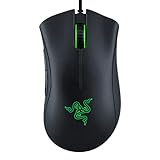
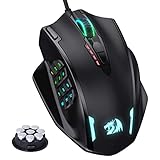


This guide may contain affiliate links. We may earn a small commission on purchases made through these links at no extra cost to you. Our recommendations are based on detailed research and independent analysis.
Quick answer:
By Alex Rivera, Senior PC Hardware Editor · Updated May 2026
Twelve years of building, benchmarking, and breaking gaming systems. Reviews informed by real-world long-term use and current 2026 hardware testing.
🛒 Best Price Today on Amazon
Prime members get fast, free shipping on everything above, plus member-only deals. New members get a 30-day free trial — cancel anytime.
Quick Answer: What to Buy Right Now
For most players, a wireless mouse weighing 55-75 g with a current-generation flagship sensor (PixArt PAW3950 or equivalent), 4 KHz or 8 KHz polling, and a shape that matches your grip is the right call. Expect to spend 100-180 USD. The Razer Viper V3 Pro, Logitech G Pro X Superlight 2, and Pulsar X3 lead the category in 2026.
The Five Criteria That Actually Matter
Most buying guides for a gaming mouse list ten or twelve specs to weigh. In practice, the gap between a satisfying purchase and a regretted one usually comes down to five decisions. The rest are details you can adjust later or simply never notice.
1. Shape and grip style
Claw, palm, and fingertip grips each favour different shapes. Try mice in person if you can. Symmetrical shapes (Viper, X3) suit claw and fingertip; ergonomic shapes (DeathAdder, MX Master variants) suit palm. The wrong shape causes long-term hand strain regardless of brand.
2. Weight and balance
Below 60 g feels light and responsive; 60-80 g feels balanced; above 80 g is heavy by 2026 standards. Lighter isn’t always better – some players prefer the stability of weight. Front-to-back balance matters more than absolute mass.
3. Sensor and tracking
Modern flagship sensors are essentially perfect: zero acceleration, 750+ IPS tracking, 50+ G acceleration. The differences between the PAW3950, HERO 2, and Razer Focus Pro 35K aren’t perceivable in normal use. Avoid budget sensors with smoothing or interpolation.
4. Wireless quality and battery
2.4 GHz dongle wireless is now indistinguishable from wired for input lag (sub-1 ms). Bluetooth adds 8-15 ms – fine for productivity, bad for competitive play. Battery life ranges from 40 hours (8 KHz polling on) to 200 hours (1 KHz, lights off).
5. Switches and durability
Optical switches eliminate double-click issues and last 70-100 million clicks. Mechanical Omron switches are still common and feel slightly crisper but can develop double-click problems at 1-3 years of heavy use. Hot-swap switches on some 2026 mice let you replace either type.
The Buying Checklist
Print this, save it, or screenshot it on your phone. Walk through it before you commit – every one of these is a real mistake we’ve watched people make and regret.
- Measure your hand length and width before shopping
- Decide grip style (claw, palm, fingertip)
- Choose wireless if budget allows – wired-feel is solved in 2026
- Verify the mouse fits comfortably in 2 minutes of hover-test
- Check polling rate compatibility with your monitor and mousepad
- Confirm dongle works on USB 2.0 if your motherboard’s USB 3 has interference
- Buy spare PTFE feet for the model – they wear out in 6-12 months
- Test on the actual mousepad you will use – tracking varies by surface
Spec Primer: What the Numbers Actually Mean
Polling rate is how often the mouse reports its position to the PC. 1000 Hz (1 ms intervals) is the historical standard; 4000 Hz and 8000 Hz are now common in flagships. 8000 Hz feels marginally smoother in low-latency games but eats CPU cycles and battery. DPI figures above 26,000 are marketing – real-world DPI use is almost always 400-1600. Lift-off distance governs whether the cursor moves when you raise the mouse to reposition; 1-2 mm is the modern sweet spot. Mousepad surface matters too: control-oriented cloth pads are slower and grippier, while speed-oriented hard or hybrid pads slide easier and demand sensor precision.
Common Mistakes Buyers Make
These are the patterns we see most in support forums, return reviews, and our own past mistakes. Avoiding them is worth more than chasing the top of the spec sheet.
- Buying based on YouTube hype without trying the shape in your hand
- Choosing a heavy ergonomic mouse for claw grip and developing wrist pain
- Maxing DPI to 26,000 and being unable to aim precisely
- Using Bluetooth for competitive play and blaming the game for lag
- Skipping mousepad upgrade – a 20 USD pad limits a 180 USD mouse
Frequently Asked Questions
Wired or wireless in 2026?
Wireless with a 2.4 GHz dongle. The latency gap is sub-1 ms, you spare your cable from snagging, and battery life on modern flagships is good enough that charging once a week is the norm. Wired is now mostly a budget category.
Is 8000 Hz polling actually better?
Marginally, in specific games at very high refresh rates with a fast CPU. For most players at 144-240 Hz, 1000 Hz polling is indistinguishable from 8000 Hz and saves battery and CPU cycles.
How important is mouse weight?
Important up to a point. Going from 90 g to 60 g feels dramatic; going from 60 g to 45 g is subtle and may compromise build quality. Mid-50s to mid-60s grams is the modern sweet spot for most players.
Do I need a special mousepad?
A good cloth or hybrid mousepad at 30-60 USD makes a measurable difference in tracking and consistency. A worn-out pad or a desk surface causes sensor errors that look like skill issues. Replace the pad annually if you play daily.
Top Picks by Use Case
Competitive FPS (Aim-First)
Razer Viper V3 Pro (54 g symmetrical, 8000 Hz, Focus Pro 35K) or Pulsar X3 Mini (47 g, ultra-light, PAW3950). Both excel at flick aim with minimal hand fatigue. Budget 130-180 USD.
MOBA / Productivity Crossover
Logitech G Pro X Superlight 2 (60 g, HERO 2, 8000 Hz) for clean shape and battery life, or Razer Basilisk V3 Pro (112 g, side buttons, scroll tilt) for thumb-button-heavy MOBA play. Budget 130-170 USD.
Palm Grip / Larger Hands
Razer DeathAdder V3 Pro (63 g ergonomic, Focus Pro 30K) or Logitech G502 X Plus (106 g, eleven buttons). Ergonomic shapes work best for hands over 19 cm long. Budget 110-160 USD.
What Stays the Same Between Generations
Mice are in a mature plateau now. The Razer Viper Ultimate from 2019 still competes because the underlying technology (sensor, polling, switch quality) has only refined, not transformed. If you own a flagship mouse from 2022 or later, an upgrade in 2026 buys 5-10% improvements (slightly better battery, sub-1 ms polling, hot-swap switches) and no meaningful change in performance. Buy a new mouse when your current one fails, when your grip preference changes, or when a specific feature (8 KHz, optical switches) becomes essential. Otherwise the real-world upgrade cycle is now 4-6 years, not 2.
Mouse Settings That Matter More Than the Mouse
Most players run a DPI that’s wrong for them. The right starting point is 800 DPI with in-game sensitivity set so a 180-degree turn takes a full mousepad sweep in your main game. From there, adjust in 10% increments over weeks, not days. Polling above 1000 Hz only matters if your CPU and game can keep up – on competitive titles at 240+ Hz with a modern CPU, 4000 Hz feels measurably better. Mouse acceleration should be off in Windows (uncheck Enhance Pointer Precision) and off in every game that exposes the setting. Raw input on means the game reads directly from the mouse, bypassing Windows sensitivity, and should always be on for FPS. Plenty of players overlook these for years and wonder why their aim feels inconsistent. The mouse itself is one factor; the settings around it matter just as much.
Final Take
Mouse buying in 2026 is more about ergonomics than electronics – every flagship sensor is excellent and wireless is solved. Pick the right shape and weight for your hand and grip, go wireless if you can, and invest in a quality mousepad. The right mouse disappears under your hand.
Related Guides
Top picks from this guide
 Logitech GLogitech G305 Lightspeed Wireless Gaming Mouse - Black | 12,000…$30 \xc2\xb7 99/100
 BENGOOBENGOO Gaming Mouse Wired with RGB Backlit, Ergonomic PC Computer…$9 \xc2\xb7 99/100
 Logitech GLogitech G502 Hero Wired Gaming Mouse - Black | High…$38 \xc2\xb7 99/100
 RedragonRedragon M908 Wired MMO RGB Gaming Mouse 12400 DPI Remapping…$28 \xc2\xb7 98/100