🛒 Best Price Today on Amazon
Prime members get fast, free shipping on everything above, plus member-only deals. New members get a 30-day free trial — cancel anytime.
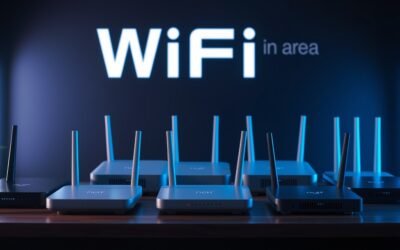
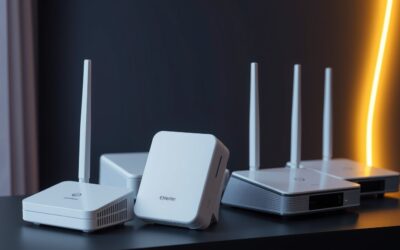
The best mesh WiFi for gaming should maintain a stable connection when your gaming room sits far from the main router. Strong backhaul, Ethernet ports, traffic management, and intelligent node selection matter more than huge advertised speeds. These systems are built for demanding whole-home gaming networks.
Quick answer: For most people in 2026, the best mesh wifi for gaming is the Mesh System — our #1 rated choice. See the full ranked comparison, alternatives and buying advice below.
Quick Comparison
| Mesh System | Best For | WiFi Standard | Key Wired Connectivity | Main Gaming Advantage |
|---|---|---|---|---|
| ASUS ZenWiFi BQ16 Pro | Premium WiFi 7 gaming homes | WiFi 7 | Dual 10GbE | Quad-band AiMesh backhaul |
| TP-Link Deco BE85 | Multi-gig wired gaming | WiFi 7 | 2 x 10G + 2 x 2.5G per unit | Combined wired/wireless backhaul |
| NETGEAR Orbi 970 | Large homes | WiFi 7 | 10G + multiple 2.5G ports | Dedicated enhanced backhaul |
| eero Max 7 | Easy setup | WiFi 7 | 2 x 10G + 2 x 2.5G | TrueMesh path optimization |
| ASUS ROG Rapture GT6 | Gaming-focused WiFi 6 | WiFi 6 | 2.5G WAN + Gigabit LAN | Triple-level game acceleration |
ASUS ZenWiFi BQ16 Pro
Best For: Premium WiFi 7 gaming across a large home
Key Features:
- Quad-band WiFi 7
- BE30000-class wireless platform
- Two 6 GHz bands
- 320 MHz channel support
- Multi-Link Operation
- One 10GbE WAN/LAN port
- One 10GbE LAN port
- AiMesh
- 12 internal antennas
The ASUS ZenWiFi BQ16 Pro is built for households where gaming traffic must share the network with streaming, cloud backups, smart devices, and multiple high-speed computers. Its quad-band WiFi 7 design uses 2.4 GHz, 5 GHz, and two separate 6 GHz bands, creating substantial capacity for client traffic and mesh communication.
Those two 6 GHz bands are particularly relevant to mesh performance. ASUS can use its AiMesh system and WiFi 7 Multi-Link Operation to select or combine available links between nodes. A stronger backhaul reduces the bottleneck that often appears when a gaming PC connects to a satellite instead of directly to the primary router.
Each unit also provides one 10Gbps WAN/LAN port and one dedicated 10Gbps LAN port, plus additional Gigabit connectivity. That gives users several ways to connect a gaming PC, switch, NAS, or Ethernet backhaul. Wired backhaul remains especially attractive when minimum latency and predictable performance matter more than installation convenience.
The BQ16 Pro supports 320 MHz channels and 4096-QAM on compatible WiFi 7 devices. These features can increase available throughput, but they should not be confused with guaranteed lower online-game ping. Internet routing, server distance, congestion, interference, and the quality of the mesh backhaul still determine the latency experienced in a game.
What Makes It Different: The BQ16 Pro combines a very high-capacity quad-band wireless design with dual 10GbE connectivity and ASUS AiMesh. It is less gaming-branded than the ROG GT6, but its hardware gives advanced users more headroom for multi-gig internet, wired backhaul, WiFi 7 clients, and busy households.
Pros:
- Quad-band WiFi 7
- Dual 6 GHz bands
- Two 10GbE ports
- 320 MHz support
- Multi-Link Operation
- AiMesh expansion
- Strong backhaul flexibility
Cons:
- Overkill for modest internet plans
- WiFi 7 benefits require compatible clients
- Large homes may still benefit from Ethernet backhaul
Use Case: A multi-floor home with a gaming PC on one node, consoles elsewhere, several 4K streaming devices, and multi-gigabit fiber service.
Who It’s For: Enthusiasts who want a high-end mesh platform capable of supporting both wireless and wired gaming as their home network expands.

TP-Link Deco BE85
Best For: Multi-gig Ethernet and flexible mesh backhaul
Key Features:
- Tri-band WiFi 7
- 6 GHz, 5 GHz, and 2.4 GHz operation
- 320 MHz channels
- Multi-Link Operation
- One 10G RJ45/SFP+ combo port
- One additional 10GbE port
- Two 2.5GbE ports per unit
- USB 3.0
The TP-Link Deco BE85 is one of the most connectivity-focused mesh systems for gaming environments. Each unit includes two 10Gbps-class connections, with one operating as an RJ45/SFP+ combo interface, plus two 2.5Gbps Ethernet ports. That port selection is useful when several gaming or workstation devices need wired access near a mesh node.
Deco BE85 uses tri-band WiFi 7 across 2.4 GHz, 5 GHz, and 6 GHz. It supports 320 MHz channels and Multi-Link Operation on compatible devices. TP-Link also supports combined wired and wireless backhaul, allowing the mesh to use available links between Deco units rather than treating Ethernet and wireless backhaul as completely separate choices.
That flexibility can be valuable in gaming homes with partial Ethernet wiring. You might hardwire two nodes while leaving another wireless in a room where running cable is difficult. A gaming PC connected by Ethernet to the nearby Deco can avoid its own WiFi hop, although traffic between that node and the primary unit may still depend on the mesh backhaul.
The BE85 is also useful when gaming shares bandwidth with a NAS or fast home server. Two 10Gbps-class interfaces and two 2.5Gbps ports per unit offer substantially more wired flexibility than mesh products with only one or two Ethernet connectors. Actual internet gaming needs far less bandwidth, but local network workloads may not.
What Makes It Different: Deco BE85 provides unusually broad multi-gig Ethernet connectivity on every unit. That matters if your mesh nodes double as distributed wired switches for gaming PCs, consoles, access points, storage, or workstations, reducing the need to place a separate Ethernet switch beside every satellite.
Pros:
- Two 10Gbps-class interfaces per node
- Two additional 2.5GbE ports
- WiFi 7 with 320 MHz channels
- Multi-Link Operation
- Wired and wireless combined backhaul
- Strong fit for wired gaming clients
Cons:
- Gaming-specific controls are not its main focus
- Full capability requires modern client hardware
- High-end connectivity may exceed normal household needs
Use Case: A home where gaming systems, PCs, NAS devices, and media hardware need fast wired connections from several mesh locations.
Who It’s For: Gamers who value Ethernet connectivity and flexible backhaul more than dedicated gaming-themed software.
NETGEAR Orbi 970 Series
Best For: Large homes with many simultaneous devices
Key Features:
- Quad-band WiFi 7
- Up to 27Gbps aggregate advertised wireless capacity
- Enhanced Dedicated Backhaul
- 10GbE WAN
- 10GbE LAN
- Multiple 2.5GbE LAN ports
- 320 MHz channels
- Multi-Link Operation
- Up to 200 connected devices
NETGEAR’s Orbi 970 uses a quad-band architecture with 2.4 GHz, two 5 GHz bands, and 6 GHz. Its Enhanced Dedicated Backhaul combines a dedicated 5 GHz connection with available 6 GHz capacity between Orbi units. This architecture is intended to preserve more bandwidth as traffic moves across a multi-node network.
For gaming, the backhaul design is more important than the headline BE27000 rating. A mesh node can provide a strong signal to your PC while still delivering inconsistent performance if its connection to the main router is weak. Orbi’s dedicated backhaul architecture attempts to maintain a high-capacity path between the router and satellites.
The router includes a 10Gbps internet port, one 10Gbps LAN port, and four 2.5Gbps Ethernet ports. An Orbi 970 satellite also includes one 10Gbps Ethernet port and two 2.5Gbps connections. Those ports make wired backhaul and node-side Ethernet practical for gaming PCs and consoles in distant rooms.
NETGEAR lists up to 6,600 square feet of coverage for a two-pack and up to 10,000 square feet for a three-pack, although real coverage depends heavily on walls, floors, construction materials, interference, and node placement. For gaming, using fewer well-positioned nodes can sometimes perform better than adding unnecessary satellites.
What Makes It Different: Orbi 970 focuses heavily on maintaining fast communication between nodes across very large properties. Its combination of dedicated backhaul design and extensive multi-gig ports makes it particularly relevant when a gaming room sits far from the internet connection and hardwiring the entire home is difficult.
Pros:
- Quad-band WiFi 7
- Enhanced dedicated backhaul
- 10GbE WAN and LAN
- Multiple 2.5GbE ports
- 320 MHz channels
- Strong multi-node hardware
- Designed for large coverage areas
Cons:
- Excessive for smaller apartments
- Large node design requires placement space
- Fast WiFi cannot fix poor ISP routing
Use Case: Large multi-story homes where a gaming PC or console is positioned several rooms or floors away from the modem.
Who It’s For: Gamers who need mesh coverage across a large property and want extensive Ethernet options at both router and satellite locations.
eero Max 7
Best For: Simple WiFi 7 mesh management
Key Features:
- Tri-band WiFi 7
- 2.4 GHz, 5 GHz, and 6 GHz
- Two 10GbE ports
- Two 2.5GbE ports
- TrueMesh
- Up to 4.3Gbps supported wireless speeds
- Up to 9.4Gbps wired speeds
- Up to 2,500 square feet per unit
The eero Max 7 takes a simpler approach than systems filled with advanced gaming menus. It uses tri-band WiFi 7 and eero’s TrueMesh software to determine how traffic should move between units. For gamers who prefer automatic network management instead of manually tuning bands and routing options, that simplicity can be a meaningful advantage.
Each Max 7 provides two auto-sensing 10Gbps Ethernet ports and two 2.5Gbps ports. That allows a node to connect to a gaming PC over Ethernet while retaining enough wired connectivity for backhaul, a switch, NAS, or another high-speed device. Eero lists supported wired speeds up to 9.4Gbps under appropriate conditions.
The wireless platform supports channel widths up to 320 MHz and operates across all three current WiFi bands. Eero states wireless speeds up to 4.3Gbps and coverage up to 2,500 square feet per unit. Those maximum figures are environment-dependent, but the hardware gives modern WiFi 7 gaming laptops and PCs substantial local bandwidth.
TrueMesh dynamically chooses paths through the network, which can reduce the amount of manual intervention required as devices move between rooms. For a stationary gaming PC, however, automatic routing should still be paired with good node placement. A weak satellite location cannot be completely compensated for by software or higher theoretical speeds.
What Makes It Different: eero Max 7 emphasizes ease of deployment and automatic mesh decisions rather than giving gamers a long list of specialized acceleration controls. That makes it attractive for households where the network must remain straightforward for everyone while still supporting multi-gig Ethernet and current WiFi 7 hardware.
Pros:
- Four multi-gig Ethernet ports
- Two 10GbE connections
- WiFi 7
- TrueMesh automatic path selection
- Simple management
- Up to 2,500 square feet per unit
- Smart-home integration
Cons:
- Fewer gaming-specific tuning features
- Advanced controls are less extensive than some enthusiast routers
- Some optional services use a subscription
Use Case: A busy household needing dependable mesh coverage for gaming, streaming, work devices, smart-home equipment, and mobile devices without constant manual configuration.
Who It’s For: Gamers who want WiFi 7 and multi-gig wired connectivity but prefer an automated mesh experience over extensive networking controls.
ASUS ROG Rapture GT6
Best For: Gaming-specific features without requiring WiFi 7
Key Features:
- Tri-band WiFi 6
- AX10000-class platform
- Two 5 GHz bands
- 160 MHz channels
- Dedicated mesh backhaul capability
- 2.5GbE WAN port
- Three Gigabit LAN ports
- Triple-level game acceleration
- Nine internal antennas
The ROG Rapture GT6 is the only WiFi 6 system in this roundup, but it remains relevant because ASUS designed it specifically as a gaming mesh platform. It uses tri-band WiFi with two 5 GHz radios, allowing one high-capacity band to support backhaul while another serves compatible gaming and household devices.
ASUS rates the GT6 as an AX10000-class system, with up to 574Mbps on 2.4 GHz and up to 4,804Mbps on each 5 GHz band. It also supports 160 MHz channels where regulations permit. Those specifications are older than WiFi 7 hardware but remain capable for gaming devices using WiFi 6 or wired Ethernet.
Gaming software is the GT6’s main differentiator. ASUS includes triple-level game acceleration that addresses device prioritization, game packet handling, and the path toward game servers. These features do not guarantee lower ping in every game, but they give users more gaming-specific traffic controls than general-purpose mesh platforms.
Connectivity includes one 2.5Gbps WAN port, three Gigabit LAN ports, and USB 3.2 Gen 1. The LAN side is therefore less future-proof than newer 10GbE WiFi 7 systems. For a typical gaming PC with Gigabit Ethernet, however, bandwidth is rarely the limiting factor because online gaming usually requires stability more than enormous throughput.
What Makes It Different: The GT6 is explicitly built around gaming traffic rather than simply offering fast mesh hardware. Its dedicated backhaul architecture, game acceleration tools, and ROG software make it useful for players who want traffic controls but do not need the cost or client requirements associated with a premium WiFi 7 system.
Pros:
- Gaming-specific traffic controls
- Triple-level game acceleration
- Dedicated mesh backhaul
- Two high-capacity 5 GHz bands
- 160 MHz support
- 2.5GbE WAN
- Nine internal antennas
Cons:
- WiFi 6 rather than WiFi 7
- Gigabit LAN ports limit faster wired clients
- Less future-proof for multi-gig local networking
Use Case: Competitive and general PC or console gaming in a home where coverage is difficult but most clients still use WiFi 6 or Gigabit Ethernet.
Who It’s For: Gamers who prioritize dedicated gaming features and mesh optimization over having the newest WiFi standard.
How to Choose the Best Mesh WiFi for Gaming
Prioritize Latency Over Advertised Speed
Online games rarely need several gigabits of bandwidth, so buying the mesh system with the largest speed number does not automatically improve gameplay. Stable latency, low jitter, reliable backhaul, and good placement matter more. A consistent 300Mbps connection can deliver a better gaming experience than an unstable multi-gigabit link.
Use Ethernet for the Gaming Device When Possible
Connecting your gaming PC or console by Ethernet to a nearby mesh node removes the wireless hop between that device and the node. Traffic may still cross a wireless backhaul afterward, but reducing one radio link can improve consistency. For the lowest latency, Ethernet from the gaming device all the way to the main router remains preferable.
Consider Wired Backhaul
Ethernet backhaul connects mesh nodes through cable rather than WiFi, preserving wireless capacity for client devices and reducing dependence on walls or interference. If your home already has Ethernet wiring, prioritize systems with enough multi-gig ports to use it. Wired backhaul is one of the most meaningful upgrades for a gaming mesh network.
Look for Strong Wireless Backhaul
When running Ethernet is impossible, choose a mesh platform with enough radio capacity to maintain a strong node-to-node connection. Tri-band and quad-band systems can dedicate or intelligently allocate more resources to backhaul. Placement still matters, because a satellite hidden in a weak-signal room cannot create bandwidth that never reaches it.
Do Not Add Too Many Nodes
More mesh units do not automatically mean better gaming performance. Nodes placed too close together can create unnecessary roaming decisions and additional wireless competition. Start with the minimum number needed to eliminate genuine weak zones, then expand only when measurements show that a specific area still lacks reliable coverage.
Multi-Gig Ports Matter for Some Setups
A 10GbE port will not make an online game need 10Gbps, but multi-gig Ethernet is valuable for fast internet plans, wired backhaul, game transfers from local storage, NAS access, and high-performance workstations. Consider the entire network rather than buying 10GbE exclusively because a product is marketed as faster for gaming.
WiFi 7 Can Help Modern Gaming Devices
WiFi 7 adds features such as 320 MHz channels and Multi-Link Operation on compatible hardware. These technologies can increase throughput and improve how links use available spectrum. The benefits are greatest when both the mesh system and gaming client support them, so check your PC motherboard, laptop, or wireless adapter before paying a premium.
Place Mesh Nodes Carefully
A satellite should usually sit where it still receives a strong connection from the primary router, not inside the dead zone you are trying to fix. Moving a node one room closer can improve backhaul significantly. Avoid enclosed cabinets, floor-level placement, large metal objects, and locations directly beside equipment that creates radio interference.
Traffic Prioritization Can Help Busy Networks
QoS and gaming-priority features become useful when other household devices are uploading, streaming, downloading, or backing up data while you play. They cannot shorten the physical path to a remote game server, but they can prevent local traffic from overwhelming your internet connection and adding unnecessary latency under load.
FAQ
Is Mesh WiFi Good for Gaming?
Mesh WiFi can work well for gaming when a conventional router cannot provide reliable coverage to the gaming room. The main challenge is the backhaul between nodes. A well-placed tri-band or quad-band system can perform consistently, while wired backhaul is preferable whenever competitive gaming and minimum latency are top priorities.
Is WiFi 7 Better Than WiFi 6 for Gaming?
WiFi 7 offers more capacity, wider channels, and Multi-Link Operation on compatible devices, but it does not automatically reduce internet ping. A well-configured WiFi 6 connection can still perform extremely well. WiFi 7 makes the most sense when you also need higher local throughput, multi-gig networking, and long-term upgrade headroom.
Should My Gaming PC Connect to the Main Router or a Mesh Node?
A direct Ethernet connection to the primary router is typically the simplest path. If that is impossible, connecting the PC by Ethernet to a nearby mesh node can still be useful. The performance then depends heavily on how that node communicates with the router, making a strong wireless or wired backhaul important.
Does Mesh WiFi Increase Ping?
Mesh can add another network hop when traffic travels from a device to a satellite and then to the router. Whether that increase is noticeable depends on backhaul quality, interference, traffic, and hardware. A strong modern mesh can remain responsive, while a weak node connection may create higher latency and inconsistent jitter.
How Many Mesh Nodes Do I Need for Gaming?
Use enough nodes to provide a strong signal without excessive overlap. Smaller homes may need only two, while large or multi-floor properties can require three or more. Manufacturer coverage figures are useful starting points, but walls and construction matter greatly. Gaming performance should be measured at the actual gaming location.
Is Ethernet Backhaul Worth It for Gaming?
Yes, particularly when stable latency matters. Ethernet backhaul removes the wireless link between mesh units, reducing the effect of interference and preserving radio capacity for client devices. It does not guarantee lower ISP or server latency, but it makes the home-network portion of the connection more predictable during heavy usage.
Conclusion
The best mesh WiFi for gaming depends on backhaul quality, node placement, Ethernet options, and the devices you actually use. ZenWiFi BQ16 Pro delivers premium WiFi 7 capacity, Deco BE85 excels in multi-gig connectivity, Orbi 970 targets large homes, eero Max 7 simplifies management, and ROG GT6 focuses on gaming controls.
Ready to decide? Our #1 pick for 2026 is the Mesh System.
Live price & availability on Amazon.