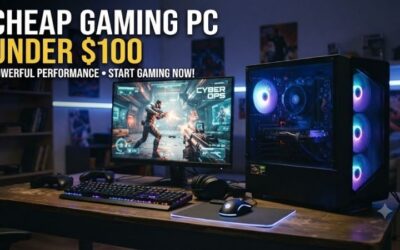
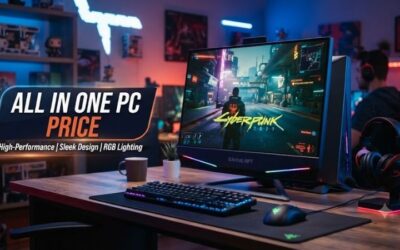
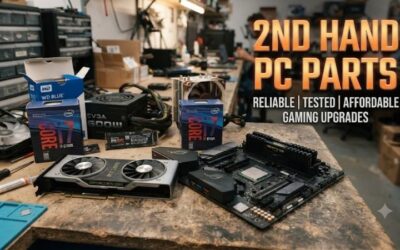
- Top Pick: KOTIN Prebuilt Gaming PC RTX 5070 12GB, Ryzen 7 9700X, 32GB DDR5, 1TB SSD
- Best Value: msi Codex Z2 Gaming Desktop: AMD R7-8700F, GeForce RTX 5070, 32GB DDR5, 2TB m.2 NVMe SSD, USB Type-C, VR-Ready, Windows 11 Home : A8NVP-436US
- Premium Choice: STGAubron Gaming PC Desktop,Core I7,RX 580 8G,16G RAM,512G SSD
Shopping for a gaming PC under $1500 in 2026 is genuinely harder than it looks. The market is flooded with prebuilt systems that pair a strong graphics card with a weak CPU, or cram a decent spec sheet into a case with almost no airflow, and the differences rarely show up until you’re mid-game and watching your frame rate collapse. Add fluctuating GPU pricing and the constant temptation to stretch “just a little” past your budget, and it’s easy to overpay for a machine that will feel dated in eighteen months.
This guide cuts through that. We’ve focused on prebuilt desktops that stay realistically within the $1500 ceiling while delivering the components that actually matter for 1080p and 1440p gaming: a current-generation GPU, a CPU that won’t bottleneck it, at least 16GB of fast memory, and enough NVMe storage to hold a modern game library. Below you’ll find how to evaluate these systems, honest reviews of the strongest options, and answers to the questions buyers ask most.
As an Amazon Associate we earn from qualifying purchases at no extra cost to you.




⚡ Save on Your Next PC — Amazon Prime
Prime members get fast free shipping on the systems above, plus early access to Prime Day & Black Friday PC deals. New members get a 30-day free trial.
Watch: Best Gaming PC Under $1500 — Video Review
How to Choose Gaming PC Under $1500
- Prioritize the GPU, but not blindly: Your graphics card determines the majority of your gaming performance. At this budget, an RTX 5070 is the sweet spot for high-refresh 1440p. Be wary of listings that lead with a big-sounding GPU name but hide a 4GB or 8GB VRAM buffer — modern titles will hit that wall fast.
- Match the CPU to the card: A Ryzen 7 9700X or Intel Core Ultra 7 265F has more than enough headroom to feed an RTX 5070 without bottlenecking. Older quad- and hexa-core chips paired with a new GPU are a classic prebuilt shortcut that costs you frames in CPU-heavy games like strategy titles and open-world shooters.
- Insist on 32GB DDR5 where you can get it: 16GB is still playable, but 32GB of DDR5 has become the practical baseline for gaming while streaming, running a browser with a dozen tabs, or playing anything built on a modern engine. It’s also the upgrade most annoying to do later on a prebuilt with limited slots.
- Check storage type and capacity, not just the number: A 1TB NVMe SSD is the realistic minimum in 2026, since single AAA installs routinely pass 100GB. A 512GB drive will have you uninstalling games within weeks, and any system still shipping a mechanical hard drive as primary storage should be skipped outright.
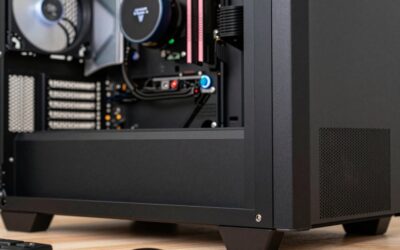
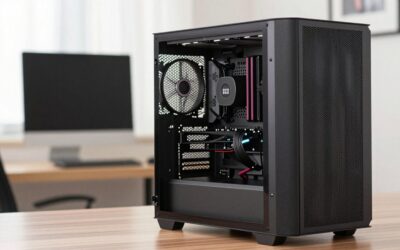
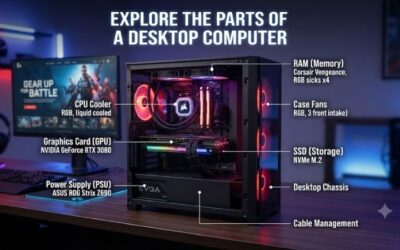
- Look at the case, cooling, and PSU headroom: Cheap prebuilts save money on the parts you can’t see. Look for mesh front panels, multiple intake fans, and a power supply with room to spare — this is what determines whether your machine sustains its boost clocks or thermal throttles after twenty minutes, and whether you can drop in a better GPU in three years.
The Best Picks Reviewed
KOTIN Prebuilt Gaming PC (RTX 5070, Ryzen 7 9700X)
This is the most balanced spec sheet on the list for the money, pairing an RTX 5070 with a Ryzen 7 9700X, 32GB of DDR5, and a 1TB SSD — a combination that handles maxed-out 1440p in nearly everything and leaves genuine headroom for future titles. Build quality and support are a step below the big brands, but if you want the most raw performance per dollar under $1500, this is it.
MSI Codex Z2 (R7-8700F, RTX 5070)
MSI’s Codex Z2 matches the RTX 5070 with a capable Ryzen 7 8700F and doubles the storage to a 2TB NVMe drive, which is a meaningful practical advantage if you keep a large library installed. You’re getting a properly engineered chassis with sane airflow and a real warranty, making this the safest all-round pick for most buyers.
Alienware Aurora (RTX 5070, Core Ultra 7 265F)
The Aurora brings Dell’s engineering and support network to a solid RTX 5070 and Core Ultra 7 265F pairing, with cooling that holds up under sustained load better than most prebuilts at this price. You pay a modest premium for the brand and the chassis design, and upgrade paths can be more restrictive than a standard ATX build — worth it if service and reliability rank above maximum specs.
Lenovo Legion Tower 5i (RTX 5070 Ti, Core Ultra 7 265F)
The Legion Tower 5i is the performance leader here thanks to the step up to an RTX 5070 Ti, which delivers a real margin at 1440p and makes entry-level 4K genuinely viable. Configurations with 32GB of memory and a 1TB drive typically sit at the very top of this budget, so check the exact SKU, but the cooling and serviceability are excellent for a mainstream prebuilt.
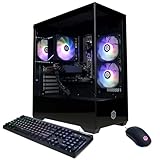
CyberPowerPC (Ryzen 5 5500, RX 6500 XT)
This is the budget-entry option, and it should be understood as such: the Ryzen 5 5500 and 4GB RX 6500 XT are built for 1080p esports titles like Valorant, CS2, and Rocket League rather than modern AAA games. If your budget is closer to $600 than $1500 it’s a functional starting point with room to upgrade the GPU later, but anyone who can stretch further should.
Frequently Asked Questions
Is an RTX 5070 enough for 1440p gaming in 2026?
Yes. The RTX 5070 comfortably drives high settings at 1440p in current titles, and with DLSS upscaling and frame generation enabled it holds high refresh rates even in demanding releases. It’s the natural target for a $1500 budget.
Should I buy a prebuilt or build my own?
Building your own still saves money and gives you full control over part selection, but the gap has narrowed considerably at this price point. Prebuilts win on warranty coverage, assembly time, and hassle if something fails — buy one if you value support over squeezing out the last 5% of value.
Is 16GB of RAM still acceptable?
It’s playable, but it’s no longer comfortable. Several 2025 and 2026 releases show measurable stutter on 16GB systems, and multitasking while gaming pushes past it easily. Treat 32GB as the target and 16GB as something you plan to upgrade soon.
How long should a $1500 gaming PC last?
Expect three to four years of high-settings 1440p gaming from an RTX 5070-class system before you’ll want to lower settings or upgrade the GPU. Choosing a machine with a quality power supply and standard-sized components extends that meaningfully, since you can swap the graphics card rather than replace the whole system.
Final Thoughts
For most buyers, the MSI Codex Z2 is the pick we’d point people toward first — it hits the RTX 5070 and 32GB DDR5 target with 2TB of storage and the backing of a major manufacturer. If you want maximum performance per dollar and are comfortable with a smaller brand, the KOTIN RTX 5070 / Ryzen 7 9700X build is the strongest spec sheet here, while the Lenovo Legion Tower 5i justifies its position at the top of the budget with an RTX 5070 Ti and cooling that can actually sustain it.