🛒 Best Price Today on Amazon
Prime members get fast, free shipping on everything above, plus member-only deals. New members get a 30-day free trial — cancel anytime.
The RTX 4080 Super wins overall for 4K, ray-traced games, and upscaling quality, while the RX 7900 XT is the better value when you mainly play conventional rasterized games at 1440p and want more VRAM for less money.
Quick answer: Our top pick in 2026 is the Architecture — our #1 rated choice. See the full ranked comparison, alternatives and buying advice below.
RTX 4080 Super vs RX 7900 XT: quick verdict
This is not a simple win based on raw specifications. The Radeon RX 7900 XT often delivers excellent traditional rendering performance for its price, but the GeForce RTX 4080 Super has a stronger feature set, substantially better ray tracing, and access to DLSS Super Resolution and DLSS Frame Generation in supported games.

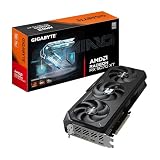
Sapphire 21323-01-20G AMD Radeon RX 7900 XT Gaming Graphics Card with 20GB GDDR6, AMD RDNA 3, Black
Included for 'RTX 4080 Super vs RX 7900 XT: Which GPU Wins?' because the listing specifies AMD RDNA 3 and Black, details this guide uses to compare options.
View on Amazon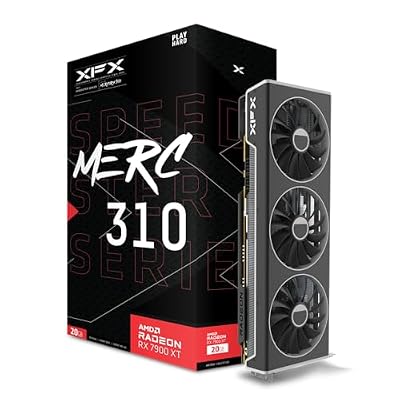
XFX Speedster MERC310 AMD Radeon RX 7900 XT Gaming Graphics Card with 20GB GDDR6, AMD RDNA 3 RX-79TMERCUR
Included for 'RTX 4080 Super vs RX 7900 XT: Which GPU Wins?' because the listing specifies AMD RDNA 3 RX-79TMERCUR, details this guide uses to compare options.
View on Amazon
ASRock AMD Radeon™ RX 7900 XT Phantom Gaming 20GB OC Graphics Card GDDR6 320 Bit 3 Cooling System 7680 x 4320 0dB Silent Cooling 3 x DisplayPort™ 2.1/1 x HDMI™ 2.1
Included for 'RTX 4080 Super vs RX 7900 XT: Which GPU Wins?' as a relevant option in this category; details come from the product listing.
View on Amazon| Specification | GeForce RTX 4080 Super | Radeon RX 7900 XT |
|---|---|---|
| Architecture | NVIDIA Ada Lovelace | AMD RDNA 3 |
| VRAM | 16GB GDDR6X | 20GB GDDR6 |
| Memory bus | 256-bit | 320-bit |
| Rated board power | 320W | About 315W |
| Launch MSRP | $999 | $899 |
| Typical 2026 market position | Usually about $850–$1,050, depending on model and availability | Usually about $600–$800, depending on model and availability |
Board power figures are official reference targets; partner cards can differ. Market prices also change frequently, so the value comparison should use the actual prices of the two cards you are considering rather than launch pricing.
1440p gaming performance
At 2560×1440 without ray tracing, both GPUs are powerful enough for high-refresh gaming. In published reviews, the RTX 4080 Super is commonly around 10–20% faster than the RX 7900 XT in broad rasterized game averages, although the gap can be smaller or larger in individual titles. Results vary with the CPU, game patch, graphics preset, and whether a game favors NVIDIA or AMD hardware.
Typical expectations at high or ultra settings are approximately:
- RX 7900 XT: roughly 100–180 frames per second in many modern rasterized games at 1440p.
- RTX 4080 Super: roughly 115–210 frames per second in the same general class of games.
These are broad published-review ranges, not guaranteed results. Competitive games can run far faster, while demanding releases with intensive effects can fall below them.
For a 1440p monitor running at 144Hz or 165Hz, the RX 7900 XT is often the more rational purchase if it is at least $150–$250 cheaper. The RTX 4080 Super becomes more attractive if you play demanding single-player games, use ray tracing, stream with advanced encoding features, or want extra performance headroom for a future monitor upgrade.
4K performance: where the RTX 4080 Super pulls ahead
At 3840×2160, the RTX 4080 Super’s stronger overall performance and more mature upscaling support matter more. In traditional rasterized games, the difference is generally noticeable but not transformational: published results often place the RTX card approximately 10–20% ahead, with substantial variation between games.
At high or ultra settings, a reasonable expectation in many current games is approximately 60–110 frames per second for the RX 7900 XT and 70–130 frames per second for the RTX 4080 Super. Heavy titles may require upscaling or reduced settings on either card, particularly when ultra-quality shadows, volumetric effects, or large texture packs are enabled.
The RTX 4080 Super is the safer 4K choice when you want a consistently high image quality target rather than simply the best average rasterized frame rate per dollar. DLSS can render internally at a lower resolution and reconstruct a 4K-looking image, preserving performance while often retaining cleaner fine detail than comparable performance modes.
A useful 4K bandwidth calculation
Native 4K contains 8,294,400 pixels per frame. At 60 frames per second, the GPU must produce about 497.7 million pixel positions per second; at 144Hz, that rises to roughly 1.19 billion. This does not equal total shader workload, because lighting, geometry, effects, and upscaling add very different costs, but it explains why a 4K/144Hz target is dramatically more demanding than 1440p/144Hz: 4K has twice as many pixels per frame.
For that reason, pairing either GPU with a 4K/144Hz display usually requires sensible settings, an upscaler in demanding games, or acceptance that not every title will reach 144 frames per second.
Ray tracing and upscaling
The RTX 4080 Super is the clear winner for ray tracing. Its RT hardware and software ecosystem generally deliver higher frame rates when reflections, global illumination, or path tracing are enabled. Depending on the game and ray-tracing preset, published comparisons commonly show the RTX 4080 Super approximately 25–60% ahead of the RX 7900 XT, with larger gaps possible in path-traced workloads.
The practical difference is more important than the percentage. A game that feels comfortable at 60–90 FPS on the RTX card may require reduced ray-tracing settings or more aggressive upscaling on the Radeon card.
- RTX 4080 Super: DLSS Super Resolution, DLSS Frame Generation, strong ray tracing, and broad support in major PC releases.
- RX 7900 XT: FSR support, including frame-generation features in compatible games, but typically weaker ray-tracing performance and less consistent image quality in some reconstruction modes.
Frame generation can raise the displayed frame rate, but it does not replace the responsiveness of a high underlying frame rate. For a good experience, aim for roughly 60 real rendered FPS before enabling frame generation, especially in fast games.
VRAM: is 20GB better than 16GB?
The RX 7900 XT has 20GB of VRAM compared with 16GB on the RTX 4080 Super. That extra capacity is useful for 4K texture packs, heavily modded games, high-resolution creator workloads, and future releases that use larger assets.
However, VRAM capacity alone does not determine performance. The RTX 4080 Super’s faster overall GPU and efficient memory subsystem can still outperform the RX 7900 XT in a game that fits comfortably within 16GB. At 1440p, both cards generally have enough VRAM for high-quality gaming today.
A practical rule is to use:
- 1440p: 12GB is workable for many games, while 16GB or more provides stronger long-term comfort.
- 4K: 16GB is a sensible minimum for a premium purchase; 20GB gives additional margin for texture-heavy games and mods.
- Ultra texture settings: keep them only when they visibly improve the image. Lowering textures from ultra to high can reduce VRAM pressure with a relatively small visual change.
Power, cooling, and system requirements
The two reference power targets are nearly identical: about 320W for the RTX 4080 Super and about 315W for the RX 7900 XT. That means neither card is a low-power option, and case airflow matters more than the small difference in the specification sheet.
Here is a simple power-budget example. Suppose the GPU averages 300W during gaming, the CPU and motherboard use 120W, storage and fans use 40W, and transient headroom adds 25%:
(300W + 120W + 40W) × 1.25 = 575W.
A quality 750W power supply is a sensible baseline for many systems, while a 850W unit provides more margin for a high-power processor, factory-overclocked card, or future upgrades. Always check the specific card manufacturer’s recommendation and use the correct power cables. Connector requirements vary by model, so do not assume every card uses the same arrangement.
Both GPUs can produce substantial heat in a poorly ventilated case. A spacious case with front intake fans, unobstructed GPU airflow, and a rear or top exhaust fan can matter more to sustained performance than a small factory clock-speed difference.
Which GPU offers better value in 2026?
The RX 7900 XT has the stronger value proposition when it costs roughly $600–$700 and your priority is conventional rasterized gaming. At that price, it can deliver excellent 1440p and capable 4K performance while providing 20GB of VRAM.
The RTX 4080 Super is easier to justify around $850–$950 if you care about ray tracing, DLSS, content creation features, or a high-end 4K display. If the two cards are separated by only about $100, the NVIDIA card’s broader feature set makes the premium more reasonable. If the gap reaches $250 or more, the Radeon becomes difficult to ignore for raster-focused gamers.
| Your situation | Better choice | Reason |
|---|---|---|
| 1440p, mostly rasterized games, budget-conscious | RX 7900 XT | Excellent performance per dollar and 20GB VRAM |
| 4K with ray tracing enabled frequently | RTX 4080 Super | Stronger RT performance and DLSS support |
| 4K texture mods and long-term VRAM margin | RX 7900 XT | 20GB capacity provides more room for large assets |
| Streaming, video work, or AI software that favors NVIDIA | RTX 4080 Super | CUDA ecosystem and mature hardware encoding support |
| Competitive 1440p gaming at very high refresh rates | Either, usually RX 7900 XT for value | Both are powerful; CPU choice and game engine may matter more |
Final recommendation
Choose the RX 7900 XT if you want the lowest cost for high-end 1440p or mainstream 4K rasterized gaming, especially when its price is substantially below the RTX 4080 Super. Choose the RTX 4080 Super if you want the better all-round 4K experience, use ray tracing regularly, value DLSS, or need NVIDIA-specific software features.
For most buyers, the deciding question is not whether one card has more VRAM or a slightly higher average frame rate. It is whether the RTX 4080 Super’s ray tracing and software advantages are worth the extra money at the prices available when you buy.
Ready to decide? Our #1 pick for 2026 is the Architecture.
Live price & availability on Amazon.