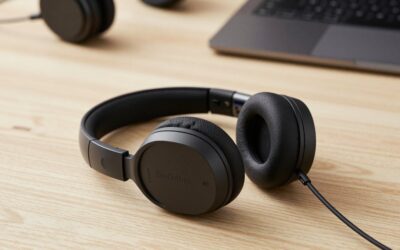
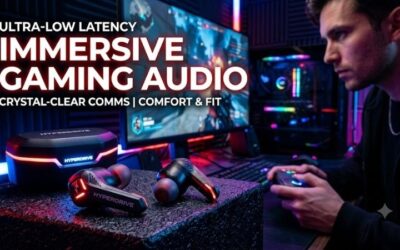
The wireless-versus-wired debate used to be simple: cables sounded better, batteries were a compromise, and competitive players stayed plugged in. That calculus has changed. By 2026, low-latency 2.4GHz dongles, lossless-capable transmission and 60-to-100 hour battery ratings have pushed wireless headsets into territory that once belonged exclusively to wired gear. Meanwhile, wired headsets have quietly become the value play — offering bigger drivers and better build quality per dollar than ever.
So the question is no longer “which one is better?” but “which one is better for how you actually play?” A console player who bounces between a PS5, a Switch and a phone has very different needs from a desk-bound FPS competitor who never moves more than three feet from a monitor. Below we break down the real trade-offs in 2026, name the wireless models worth your money, and explain exactly when a cable is still the smarter buy.
As an Amazon Associate we earn from qualifying purchases at no extra cost to you.

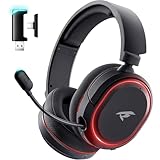

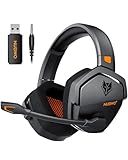


⚡ Save on Your Next PC — Amazon Prime
Prime members get fast free shipping on the systems above, plus early access to Prime Day & Black Friday PC deals. New members get a 30-day free trial.
Watch: Wireless vs Wired Gaming Headset in 2026 — Video Review
Quick Verdict
Buy wireless if you play across multiple devices, value comfort and freedom of movement, or split your time between gaming, music and calls — modern options like the SteelSeries Arctis Nova 5 and Razer BlackShark V3 X HyperSpeed deliver latency low enough that most players will never notice a cable is missing. Buy wired if you want maximum audio fidelity per dollar, zero battery management, guaranteed tournament compatibility, or a headset that will still work perfectly in eight years.
Key Differences
- Latency: A wired connection is effectively instantaneous. Good 2.4GHz wireless now lands in the 20–40ms range — the NUBWO advertises 23ms sync — which is imperceptible for the vast majority of players but not literally zero.
- Audio quality: Wired headsets waste nothing on compression or radio overhead. Wireless has closed the gap dramatically, with “lossless” 2.4GHz modes on models like the Ozeino, though Bluetooth fallback still compresses heavily.
- Battery: Wired headsets never die mid-match. Wireless now stretches from 40 hours on the Ozeino to 100 hours on the NUBWO and other long-life models — enough that most people charge weekly, not nightly.
- Price-to-performance: At any given budget, a wired headset typically ships with better drivers, earcups and microphone hardware, because none of the cost goes toward radios, batteries or a dongle.
- Compatibility: A 3.5mm cable works with any controller, laptop or handheld. Wireless depends on the right dongle and firmware — Turtle Beach’s Stealth 600 covers Xbox, PS5, PC and mobile, but not every headset spans every platform.
- Longevity: Cables can be replaced. Lithium-ion cells degrade, and a five-year-old wireless headset will not hold the charge it did new.
The Case for a Wireless Gaming Headset in 2026
Wireless has become the default recommendation for most players, and the current generation explains why. The SteelSeries Arctis Nova 5 pairs neodymium drivers with a huge library of game-specific audio presets and a 60-hour battery, while offering both 2.4GHz and Bluetooth so you can take a call without unplugging anything. The Razer BlackShark V3 X HyperSpeed brings the esports-focused BlackShark tuning to a wireless chassis, prioritising positional clarity over bass-heavy warmth.
Budget and mid-range wireless has improved just as much. The Ozeino covers PS5, PC and Switch with lossless-capable audio and 40 hours of playback, the Turtle Beach Stealth 600 remains the most reliable pick for Xbox households, and the NUBWO — with 100-hour battery, triple-mode connectivity and low-latency sync aimed squarely at Fortnite and Call of Duty players — proves that the “wireless costs extra” tax has largely disappeared.
The Case for a Wired Gaming Headset in 2026
Wired headsets survive because they solve problems wireless still has. There is no pairing, no dongle to lose, no firmware update that breaks your microphone, and no chance of running out of power during a raid. For streamers running long sessions, or anyone who plays four or five hours at a stretch, plugging in and forgetting about it is a genuine feature rather than a limitation.
They also stretch a budget further. Money that would have gone into a battery and a wireless chipset instead goes into acoustics and comfort, which is why wired models consistently outperform similarly priced wireless ones on raw sound quality. Add universal 3.5mm compatibility — controllers, handhelds, laptops, mixers — and guaranteed acceptance at LAN events and tournaments, and the humble cable still has a strong argument.
Which Should You Buy?
- For multi-platform players: Pick wireless. The Arctis Nova 5 or Turtle Beach Stealth 600 handle console, PC and mobile without rewiring your desk.
- For competitive FPS: Pick either — wired for absolute certainty, or the Razer BlackShark V3 X HyperSpeed if you want esports tuning without the tether.
- For marathon sessions: Pick wired, or a 100-hour wireless model like the NUBWO if you still want freedom of movement.
- For tight budgets: Pick wired for the best sound per dollar, or the Ozeino if wireless convenience matters more than raw fidelity.
- For streamers and creators: Pick wired headphones with a dedicated USB microphone — it beats any headset mic, wireless or otherwise.
Frequently Asked Questions
Is wireless latency still a problem in 2026?
Not for 2.4GHz connections. Current dongles typically deliver 20–40ms, which is below the threshold most players can detect. Bluetooth is a different story — it can exceed 100ms and should be reserved for music, podcasts and calls rather than competitive play.
Do wireless headsets sound worse than wired?
Marginally, and mostly on paper. A wired connection carries an uncompressed signal, but modern lossless-capable 2.4GHz modes are close enough that driver quality and tuning matter far more than the connection type at any given price point.
How long do gaming headset batteries actually last?
Manufacturer ratings assume moderate volume with RGB and features disabled, so expect roughly 70–85% of the advertised figure in practice. The cell itself will hold noticeably less charge after three to four years of regular use.
Can I use a wireless headset while it charges?
Most modern models allow it, and many also include a 3.5mm or USB-C wired mode as a backup. Check the spec sheet before buying if you frequently forget to charge — not every headset supports simultaneous charge and play.
Final Verdict
For most players in 2026, wireless is the right default: the latency argument has been settled, batteries last long enough to be a non-issue, and options like the SteelSeries Arctis Nova 5, Razer BlackShark V3 X HyperSpeed and Turtle Beach Stealth 600 cover every major platform. Choose wired only if your priority is maximum sound quality per dollar, absolute reliability, or a headset you never have to think about charging.
Top picks from this guide
 NUBWONUBWO Wireless Gaming Headset with Mic for Ps5 Ps4 PC,…$30 \xc2\xb7 99/100
 Logitech GLogitech G522 Lightspeed Wireless Gaming Headset - Black$139 \xc2\xb7 99/100
 ValoriseWireless Gaming Headset for PC PS5 PS4 Mac Switch 7.1…$36 \xc2\xb7 98/100
 RazerRazer BlackShark V3 X HyperSpeed Wireless PC Gaming Headset, Black$80 \xc2\xb7 98/100