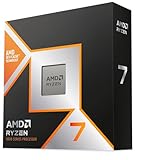
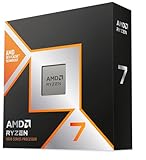
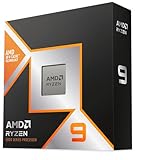
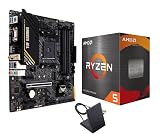
- Top Pick: AMD Ryzen 9 9950X3D 16-Core Processor
- Best Value: AMD Ryzen™ 9 9950X3D2 Dual Edition
- Premium Choice: AMD Ryzen™ 9 9950X 16-Core, 32-Thread Unlocked Desktop Processor
AMD’s 3D V-Cache processors have held the gaming performance crown for three generations, and in 2026 the decision for most enthusiasts narrows to two chips on the same AM5 socket: the 16-core Ryzen 9 9950X3D and the 8-core Ryzen 7 9800X3D. Both run Zen 5 cores and AMD’s second-generation stacked cache design, which places the extra L3 beneath the compute die instead of on top of it — the change that finally let X3D parts clock, boost, and overclock like conventional desktop chips.
The choice matters more than it did a couple of years ago. GPUs have pulled ahead at 1440p, high-refresh monitors are cheap, and a growing share of players stream, edit, or run local AI tooling on the same machine they game on. Choose wrong and you either pay a premium for eight cores that sit idle in your favourite shooter, or you save money now and watch your render queue crawl later. Here is how the two genuinely differ.
As an Amazon Associate we earn from qualifying purchases at no extra cost to you.





⚡ Save on Your Next PC — Amazon Prime
Prime members get fast free shipping on the systems above, plus early access to Prime Day & Black Friday PC deals. New members get a 30-day free trial.
Watch: Ryzen 9 9950X3D vs 9800X3D: 2026 Showdown — Video Review
Quick Verdict
The Ryzen 7 9800X3D remains the smarter buy for the large majority of gamers — it lands within a few percent of the fastest gaming frame rates money can buy, runs cooler, and costs substantially less. The Ryzen 9 9950X3D is for people whose gaming PC is also a workstation: video editors, 3D artists, developers, and streamers running heavy encode-plus-game workloads, where sixteen cores save real time every single day.
Key Differences
- Cores and threads: 16 cores and 32 threads on the 9950X3D against 8 cores and 16 threads on the 9800X3D — a straight doubling that shows up in rendering, compiling and encoding, but rarely in games.
- Cache layout: The 9800X3D is a single chiplet with 96MB of L3, so every core touches the big cache. The 9950X3D splits the job across two chiplets — one cache-stacked, one high-clocking — for 128MB of L3 in total.
- Clock speeds: The 9950X3D boosts higher on its frequency chiplet, which helps lightly threaded and productivity work. The 9800X3D peaks lower but applies its clocks uniformly across all eight cache-backed cores.
- Thread scheduling: Dual-chiplet parts rely on AMD’s chipset driver and Xbox Game Bar to park the wrong cores and route game threads to the cache die. The 9800X3D has nothing to misconfigure.
- Power and cooling: 170W TDP versus 120W. The 9950X3D wants a strong 360mm AIO or a top-tier dual-tower air cooler; the 9
Explore Our Guides & Free Tools