Picking a gaming CPU under $300 has never been more confusing. The gap between a chip that bottlenecks your GPU and one that lets it stretch its legs can be 30% or more in 1% lows, yet spec sheets rarely tell you which is which. Core counts have crept upward, clock speeds all look similar on paper, and the single feature that matters most for frame rates — cache — is buried in the fine print. Spend badly here and you’ll feel it in every competitive shooter and open-world sim you load for the next four years.
This guide cuts through it. Below are the processors that genuinely deliver the best gaming performance per dollar at or near the $300 mark in 2026, drawn from AMD’s current AM5 lineup and the still-excellent AM4 chips that continue to punch above their price. We cover what actually drives gaming performance, review each pick honestly including where it falls short, and answer the questions buyers ask most. Whether you’re building fresh or upgrading an aging AM4 board, there’s a clear recommendation here.
As an Amazon Associate we earn from qualifying purchases at no extra cost to you.





⚡ Save on Your Next PC — Amazon Prime
Prime members get fast free shipping on the systems above, plus early access to Prime Day & Black Friday PC deals. New members get a 30-day free trial.
Watch: Best CPU for Gaming Under $300 — Video Review
How to Choose CPU for Gaming Under $300
- Prioritize cache over core count: For gaming specifically, large L3 cache matters more than extra cores. AMD’s 3D V-Cache chips consistently outperform higher-core-count processors in games because they keep game data closer to the cores, slashing memory latency in simulation-heavy titles.
- Match the platform to your timeline: AM5 gives you a socket with a future upgrade path and DDR5 support, which matters if you plan to keep the board for several years. AM4 is end-of-line but far cheaper to build on, making it ideal if this is a one-and-done machine.
- Budget for the whole platform, not just the chip: A $250 CPU on AM5 also needs a modern motherboard and DDR5 memory. If you already own an AM4 board and DDR4, a drop-in upgrade can deliver most of the gaming benefit for a fraction of the total spend.
- Six cores is the floor, eight is the sweet spot: Six fast cores still handle current games fine, but eight gives you headroom for background tasks, streaming, and the more demanding titles arriving over the next few years without stutter.
- Check cooling and power requirements: Some chips ship with a competent stock cooler and sip power; others expect you to supply your own tower cooler or AIO. Factor that cost in before you decide a chip fits your budget.
The Best Picks Reviewed
AMD Ryzen 7 9800X3D
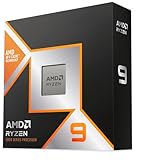
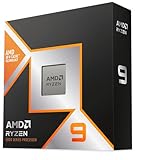
This is the fastest gaming processor most people can buy, and it sits at or just above the top of this budget depending on where you shop. Eight cores, second-generation 3D V-Cache, and full overclocking support make it the chip to get if you can stretch to it — it will not bottleneck any GPU you pair with it for years.
AMD Ryzen 7 7800X3D
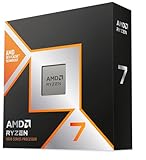
Still the value king of the X3D family, the 7800X3D delivers within single-digit percentages of its successor in most games while costing meaningfully less and running cooler on modest AM5 boards. If your priority is frames per dollar on a modern platform, this is the smartest buy in the entire lineup.
AMD Ryzen 7 5800X3D
The best upgrade in PC gaming history for anyone sitting on an AM4 motherboard — drop it in, update the BIOS, and watch 1% lows transform in CPU-bound titles. It’s outclassed by AM5 chips in raw throughput, but paired with a mid-range GPU at 1440p, the difference in real gameplay is smaller than the price gap suggests.
AMD Ryzen 5 9600X
Six modern Zen 5 cores with excellent single-thread performance and very low power draw, making it a clean fit for compact builds and cheaper cooling. It trails the X3D chips in cache-sensitive games but leads them in productivity per dollar, so it’s the pick if your rig does more than game.
AMD Ryzen 5 5500
The genuine budget entry here, and it comes with a Wraith Stealth cooler in the box so there’s no hidden cost. It’s not a chip for a high-end GPU, but paired with a mainstream card at 1080p it delivers playable, consistent frame rates for a fraction of everything else on this list.
Frequently Asked Questions
Do I really need 3D V-Cache for gaming?
You don’t need it, but it’s the single biggest gaming performance lever in this price range. The gains are largest in simulation, strategy, and open-world games with heavy CPU loads, and smallest in titles that are already GPU-limited at your resolution.
Is AM4 still worth building on in 2026?
For a fresh build, generally no — AM5 boards and DDR5 have come down enough that the platform gap has narrowed. For an upgrade on an existing AM4 system, it’s absolutely still worth it, and a 5800X3D remains one of the best value moves available.
Will a $300 CPU bottleneck a high-end GPU?
At 1440p and 4K, the X3D chips in this guide will not meaningfully bottleneck even flagship graphics cards. At 1080p with a top-tier GPU and uncapped frame rates, you may see the CPU become the limiting factor, but that’s a scenario few builders at this budget actually run.
Do these processors include a cooler?
Only some of them. The Ryzen 5 5500 ships with a Wraith Stealth, while the X3D and 9000-series chips generally expect you to supply your own — budget roughly $30 to $80 for a decent tower cooler.
Final Thoughts
If you want the best gaming performance this budget allows on a platform with a future, the Ryzen 7 7800X3D is the pick that makes the most sense for the most people — it’s within touching distance of far pricier chips and pairs happily with any GPU. Stretch a little further and the Ryzen 7 9800X3D is the outright fastest option here and worth it for high-refresh competitive play. And if you’re already on AM4, don’t overthink it: the Ryzen 7 5800X3D remains the cheapest route to genuinely modern gaming frame rates without replacing your motherboard and memory.