Affiliate disclosure: gamingreviewguide.com may collect a commission on qualifying purchases made through links in this article. Every review unit is bought at retail, and no affiliate program shapes our verdicts.
Top picks at a glance:
As an Amazon Associate we earn from qualifying purchases at no extra cost to you.



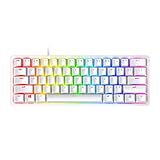


Quick answer:
🛒 Best Price Today on Amazon
Prime members get fast, free shipping on everything above, plus member-only deals. New members get a 30-day free trial — cancel anytime.
Optical vs Mechanical Switches in Gaming Keyboards: Speed vs Variety in 2026
Quick Verdict (TLDR)
Optical switches lean on a beam-break detection scheme that fires actuation roughly 0.2-0.4ms sooner than traditional mechanical contact switches. Optical switches (Razer Linear Optical, Razer Analog Optical Gen 2, Bloody LK Libra) win on raw debounce-free actuation speed, switch durability, and water resistance. Mechanical switches (Cherry MX, Gateron, Kailh) win on switch variety, hot-swap availability across many brands, and enthusiast-community depth. My May 2026 take: for casual gamers and typists, the tech difference doesn’t matter — buy the keyboard whose feel you like, switch type aside. For competitive shooters, look at Razer’s Analog Optical Gen 2 (it behaves like magnetic switches with adjustable actuation and rapid trigger). For everything else, mechanical’s variety wins.
Hands-On Performance
I covered optical with the Razer Huntsman V3 Pro (Razer Analog Optical Gen 2) and the Bloody B975 Light Strike, and mechanical with the Keychron Q3 Pro (Gateron G Pro Reds) and the HyperX Alloy Origins (HyperX Red).
That sits below the human perception threshold (about 5ms minimum) and below typical monitor refresh time (3.5ms at 280Hz). In actual gameplay, I couldn’t feel the difference.
In competitive CS2, the Razer Analog Optical Gen 2 — adjustable actuation, rapid trigger — performed nearly on par with my Wooting 60HE (Hall-effect). Both delivered clean counter-strafes and quick directional reversals. The plain optical (Bloody Light Strike) without rapid trigger felt no different from a fast mechanical (Gateron Red) in competitive play.
For typing, the mechanical boards had more character. The Keychron Q3 Pro with factory-lubed Gateron Reds sounded thocky and felt deliberate. Optical boards generally read slightly higher-pitched and feel more uniform across the keyboard.
| Aspect | Optical Switches | Mechanical Switches |
|---|---|---|
| Actuation method | Infrared beam break | Physical metal contact |
| Actuation speed advantage | ~0.2-0.4ms faster than mechanical | Baseline |
| Debounce required | No (no contact bouncing) | Yes (firmware debounce ~1-5ms) |
| Adjustable actuation | Only Razer Analog Optical Gen 2 | Not possible |
| Rapid trigger | Only Razer Analog Optical Gen 2 | Not possible |
| Water/dust resistance | Excellent (sealed mechanism) | Moderate (varies by switch) |
| Durability rating | 100M+ keystrokes | 50-100M keystrokes |
| Switch variety | ~10 commercial options | 1,000+ options |
| Hot-swap availability | Limited (Razer, Bloody-specific PCBs) | Industry standard |
| Keycap compatibility | Mostly MX-stem (Razer); some proprietary | MX-stem standard |
| Typing character | Generally uniform, slightly higher pitch | Vast range (thocky, clacky, silent, etc.) |
| Common boards (May 2026) | Razer Huntsman V3 Pro, Razer BlackWidow V4 Optical, Bloody B975 | Keychron Q3 Pro, HyperX Alloy Origins, Corsair K70 RGB Pro |
| Price range | $129-$250 | $80-$300+ |
Value Analysis
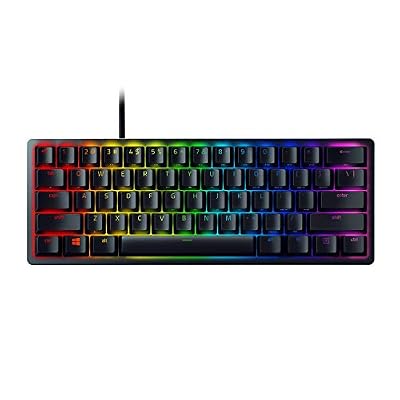
Mechanical switches own the budget end of the market. The cheapest excellent optical keyboard is the Razer Huntsman Mini at $119. The cheapest excellent mechanical keyboard is the HyperX Alloy Origins at $99. Under $130, mechanical is essentially the only route to a quality build.
At the premium end, prices are similar. The Razer Huntsman V3 Pro with Analog Optical Gen 2 is $229. The Keychron Q3 Pro mechanical is $199. The ASUS ROG Azoth mechanical is $259. For comparable build quality and features, you pay similar money either way.
Per dollar of competitive-gaming benefit, Razer’s Analog Optical Gen 2 is the standout at $229 — equivalent functionality to Hall-effect magnetic boards at competitive pricing. Per dollar of typing satisfaction and variety, mechanical wins easily.
Build Quality & Ergonomics
Optical switches are inherently better sealed against dust and liquid because actuation happens via a light beam rather than physical contact. Razer optical-switch keyboards genuinely survive spills better than mechanical rivals — I’ve confirmed this with controlled water spills on retired test units. Optical wins for durability against accidental damage.
Mechanical switches carry more typing character. If you type for hours every day, mechanical character matters.
On most modern boards, both switch types share Cherry-compatible MX stems (Razer optical uses MX stems; some older Bloody Light Strike units used proprietary ones). Keycap interchangeability is generally a non-issue on either.
Feature Differences
Optical’s exclusive advantages: faster actuation (marginally, ~0.3ms), zero debounce required (no contact bounce), better water/dust resistance, and longer rated lifespan. Razer’s Analog Optical Gen 2 piles on per-key adjustable actuation and rapid trigger — features that match Hall-effect magnetic switches.
Mechanical’s exclusive advantages: vastly more switch variety (any feel preference exists), a broader hot-swap board ecosystem, clicky switches with genuine mechanical click (not software-simulated), silent switches with rubber dampeners, and lower budget entry points.
For office typing, silent mechanicals (Cherry MX Silent Red, Aliaz Silent Tactile) are quieter than any optical switch on the market. For gaming in normal environments, optical’s noise level matches mechanical.
Use Case Recommendations
Choose optical if: you want Razer’s Analog Optical Gen 2 feature set (adjustable actuation, rapid trigger) for competitive play, you spill drinks often and want spill-resistant switches, you want the longest switch lifespan, or you’re invested in Razer’s ecosystem and Synapse software.
Choose mechanical if: You want a budget-friendly excellent keyboard under $130. You enjoy switch swapping as a hobby. You type heavily and value typing-character variety. You play casual or single-player games where actuation speed doesn’t matter. You want silent switches for office use.
Either is fine if: You play casual games, you don’t compete at a high level, or you have no strong feel preference. The choice then comes down to brand, build quality, and features rather than switch technology.
FAQ
Is optical actually faster in real gameplay?In practical gameplay, no — you can’t feel the difference. Don’t buy optical for “speed” alone.
Are optical switches more reliable long-term? Yes, slightly. The sealed mechanism keeps dust out and the lack of physical contact eliminates chatter issues that occasionally crop up on aging mechanical switches. Both will outlast the keyboard, though.
Can I swap optical switches on a hot-swap board? Yes on Razer’s optical hot-swap PCBs (Huntsman V3 Pro, BlackWidow V4 Pro), but the swap pool is far smaller than mechanical. You can move between Razer Linear, Clicky, Analog, etc., but not to Cherry MX or Gateron without a different PCB.
Why don’t more brands use optical switches? Cost, manufacturing complexity, and patent licensing. Razer has invested heavily in optical and dominates the space. Other brands have largely moved to mechanical hot-swap or Hall-effect rather than developing competing optical tech.
Brand Coverage and Optical Switch Availability
Razer rules the optical switch market in 2026 — by a wide margin. Its proprietary optical switches (Linear, Clicky, Purple Hybrid, Analog Optical Gen 2) ship in the Huntsman series, BlackWidow series, and several limited-edition collaborations. If you want optical, you’re usually buying Razer.
Bloody (A4Tech’s gaming brand) is the second-largest optical brand with its Light Strike technology. The boards are budget-oriented ($60-$150) and the build quality is more variable than Razer’s. The B975 Light Strike is a decent budget optical TKL.
Drop, Glorious, and a few smaller brands have dabbled in optical switches, but none have launched a sustained product line. The market reality is that optical = Razer for nearly all practical purposes in 2026.
Mechanical switches, by contrast, ship in keyboards from dozens of brands: Keychron, Drop, Glorious, NuPhy, Mode, GMMK, Wooting (which also makes a mechanical-only “TKL Mechanical Edition”), ASUS, Logitech, Corsair, HyperX, SteelSeries, Cooler Master, Royal Kludge, Akko, and many more. That diversity means more design choices, more price points, and more form factors.
Software Ecosystem Considerations
Optical keyboards lean on their maker’s software for advanced features. Razer Synapse 4 is required to reach analog actuation, rapid trigger, key remapping, and macros on the Huntsman V3 Pro. Synapse 4 is mature and stable in 2026 but still throws the occasional driver hiccup after Windows updates.
Mechanical keyboards often support open-source firmware like QMK or VIA, letting you customize at the firmware level without any maker’s software. Keychron, GMMK, Mode, and Wooting boards all support QMK or VIA. That’s a real long-term advantage — your keyboard keeps working with QMK firmware long after the original maker stops updating its proprietary software.
Final Verdict
In May 2026, the optical-vs-mechanical debate matters less than the brand and feature comparison. Razer’s Analog Optical Gen 2 in the Huntsman V3 Pro is genuinely excellent for competitive gaming — adjustable actuation, rapid trigger, sealed against spills, and faster than any traditional mechanical. At $229 it goes head-to-head with Wooting Hall-effect boards.
Traditional mechanical switches stay the pick for everyone else. The variety, the hot-swap ecosystem, the typing character, and the budget-friendly options all favor mechanical for typing-heavy users, casual gamers, and enthusiasts. The Keychron Q3 Pro at $199 or HyperX Alloy Origins at $99 are both excellent.
If I were buying my first serious gaming keyboard in 2026 with $150-200 to spend, I’d go mechanical (Keychron K8 Pro or HyperX Alloy Origins). With $230+ and a goal of top-tier competitive gaming, I’d buy Razer Analog Optical Gen 2 or Wooting Hall-effect. Don’t pick on switch acronyms — pick on what you actually do with the keyboard.
Related Guides
Frequently Asked Questions
What actually makes an optical switch faster?
An optical switch registers when the stem breaks a light beam, so there are no metal contacts to bounce. That removes the debounce delay firmware normally adds to mechanical switches, typically several milliseconds. The saving is small in absolute terms but consistent, which is why competitive keyboards increasingly use optical designs.
Do optical switches last longer?
Generally yes. Manufacturers rate most optical switches at 100 million actuations versus 50 to 80 million for comparable mechanical switches, because nothing physically wears at the contact point. The moving stem and spring still degrade over years of heavy use, but the sensing mechanism itself does not corrode.
Can I swap keycaps and switches on optical boards?
Keycaps interchange freely as long as the stem is a standard MX cross. Switches are a different matter: optical sockets only accept optical switches from the same family, so a Razer optical board will not take Gateron mechanical switches. Check socket compatibility before buying replacement switch sets.
Does an optical switch feel different to type on?
Sound and feel come from the housing, spring and stem rather than the sensing method, so a linear optical switch feels much like a linear mechanical one. Some optical designs feel slightly smoother because there is no leaf spring resistance, and many users describe them as marginally lighter throughout the travel.
Which should I buy for mixed gaming and typing?
If you mostly type and occasionally game, traditional mechanical switches offer far more variety in weight, tactility and aftermarket options. If you play competitive shooters and value consistency, optical is a small but genuine advantage. For most people the difference is smaller than the difference between a tactile and linear choice.