🛒 Best Price Today on Amazon
Prime members get fast, free shipping on everything above, plus member-only deals. New members get a 30-day free trial — cancel anytime.
- Top 5 Wired Gaming Keyboard Picks Compared
- The Five Criteria That Actually Matter
- The Six-Step Buying Checklist
- Mistakes Most Buyers Make
- Spec Primer: What the Numbers Actually Mean
- Wired Gaming Keyboards in 2026: The Specs That Separate the Picks
- More Picks Worth Considering
- Frequently Asked Questions
- Final Take
- Related Articles
Affiliate disclosure: As an Amazon Associate we earn from qualifying purchases. This post contains affiliate links — we may earn a small commission at no extra cost to you. This never affects our picks.
Quick answer: The best wired gaming keyboard for you in 2026 is the one that matches your actual workload, your budget, and the rest of your setup — not whichever option wins the loudest spec-sheet headline. Use the six-step checklist below to land the right pick on the first try.
Picking up a wired gaming keyboard ought to be straightforward, yet the 2026 lineup is noisier than anything we have benchmarked before. Fresh releases land every quarter, spec sheets blur the gaps that actually matter, and genuine owner feedback gets buried under astroturfed chatter. The result is a decision that feels harder than it should. What follows is the same lean, repeatable evaluation method we run at the test bench each week, applied to any wired gaming keyboard you are weighing up.

Read to the end and you will have a tight set of criteria, a grounded read on which compromises are worth making for how you actually use the thing, and a six-point checklist to run before you hit buy.
Top 5 Wired Gaming Keyboard Picks Compared
| Rank | Product | Price | Reviews | Buy |
|---|---|---|---|---|
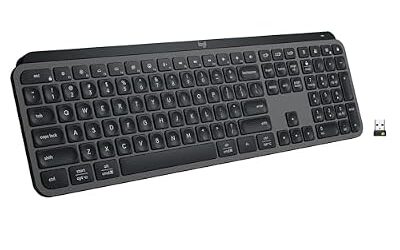
| 1 | Logitech K270 Wireless Keyboard for Windows, 2.4 GHz Wireless, Full-Si… | Check on Amazon | 118,437 | View on Amazon |
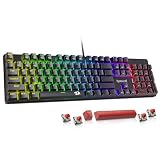
| 2 | Redragon K552 Mechanical Gaming Keyboard, 87-Key Compact, LED Gaming K… | Check on Amazon | 51,553 | View on Amazon |
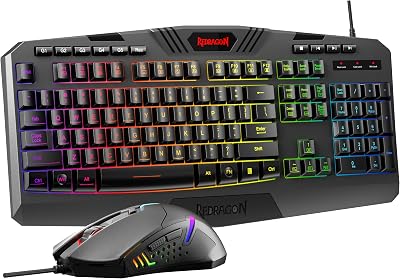
| 3 | Redragon S101M-KS Gaming Keyboard and Mouse Wireless with Tri-Mode, RG… | Check on Amazon | 51,301 | View on Amazon |
| 4 | Redragon S101-3 PRO Gaming Keyboard and Mouse, RGB Backlit Programmabl… | Check on Amazon | 51,301 | View on Amazon |
| 5 | Arteck 2.4G Wireless Keyboard Stainless Steel Ultra Slim Full Size Key… | Check on Amazon | 29,002 | View on Amazon |
The Five Criteria That Actually Matter
No matter which wired gaming keyboard lands in your cart, it needs to pass five tests. In our experience, ignore any single one and buyer’s remorse tends to set in well before the ownership window closes.

- Documented performance. Independent benchmarks first, manufacturer datasheets second. If a unit only shines in first-party tests, treat that as a yellow flag.
- Value at street price. The launch price is rarely the price you pay — track the discount cadence over a few weeks before pulling the trigger.
- Build quality and longevity. Anecdotes from shopper feedback are gold here. A product with thousands of reviews spanning 12+ months has been stress-tested in ways no datasheet can replicate.
- Warranty and return policy. Two-plus year warranty and 30-day returns are the floor for anything above $150. Anything less is fine for cheap accessories, not for centrepieces.
- Compatibility with the rest of your setup. Even the best wired gaming keyboard flops if it does not pair cleanly with your existing kit. Check ports, standards, and supporting software before checkout.
The Six-Step Buying Checklist
This mirrors the workflow we follow for buying calls at the test bench. Budget roughly 20 minutes per shortlist; it reliably spares you hours of repackaging and return labels down the line.
- Define your honest workload. What will this wired gaming keyboard actually be doing 80% of the time? Be ruthless — aspirational use cases burn money.
- Set a hard budget ceiling. Include the platform cost (cables, mounts, software). Decide before you start shopping, not mid-spec-sheet.
- Pull a 5-item shortlist. Cross-reference our latest round-ups with shopper feedback for products that clear all five hurdles above.
- Verify availability and price. Confirm at least two reputable sellers stock the unit at a price you can defend.
- Read the bottom-third reviews. Top-rated reviews sell you the dream. The low-rated ones expose the gotchas. Both matter.
- Commit and document. Save the warranty start date, the return window deadline, and the configuration you bought so you can troubleshoot or upgrade later without guesswork.
Mistakes Most Buyers Make
If only one thing sticks, make it these three pitfalls. Across the wired gaming keyboard communities we monitor, they sit behind the overwhelming share of the “I regret this purchase” threads that surface every year.
- Chasing flagship specs you will never use. A mid-tier wired gaming keyboard from a strong brand outperforms a flagship from a weaker one in every metric that matters for typical use. Pay for features you will reach.
- Ignoring the platform cost. The accessories, software licences, and supporting hardware can easily add 20-40% to the headline price. Budget for the whole stack from day one.
- Buying at launch without waiting for reviews. First-batch units sometimes ship with firmware quirks that get patched within weeks. Waiting 30-60 days after launch is almost always a good deal.
Spec Primer: What the Numbers Actually Mean
Marketing departments are remarkably good at dressing up real specs as hollow badges. The breakdown below translates the headline figures plastered across every wired gaming keyboard listing into what each one genuinely shifts once you put the unit through its paces.
- Generation/series tier. Determines feature set, driver support window, and second-hand value. Newer is usually better within the same tier — across tiers, the picture is less clear.
- Headline performance number. Useful for comparing within a single generation; almost useless across generations or brands. Lean on independent benchmark suites instead.
- Connectivity and standards. Future-proofing lives and dies here. A wired gaming keyboard that lacks the latest standard today may be obsolete in 24 months even if its raw spec still looks fine.
- Warranty terms. Two-year minimum, transferable preferred. Some brands honour a longer warranty in practice than their box says — check community feedback.
Wired Gaming Keyboards in 2026: The Specs That Separate the Picks
The main guide covers the buying criteria and checklist. This add-on goes one layer deeper, into the specifications that actually change how a wired board feels in a match: switch sensing, actuation tuning, polling behaviour, and layout fit. Two boards can share the same headline polling figure and still behave very differently, because polling is only the reporting interval between the keyboard and the PC. It is not the total delay from a press to an on-screen result. Switch design, firmware scanning, debounce handling, and your display chain all sit in between, so treat any single speed number as one part of the picture rather than a verdict on its own.
Decision Table: Match the Board Type to Your Game
| If your priority is… | Look for | Layout that fits | What to give up |
|---|---|---|---|
| Fast repeated movement inputs in shooters | Magnetic or analog optical switches with adjustable actuation and a rapid reset mode | Tenkeyless or 75 percent | Hot-swap freedom on many models, plus a number pad |
| One board for work and evening play | Mechanical switches, a full layout, and a wrist rest in the box | Full size or 96 percent | Desk space and wide mouse sweeps |
| Quiet shared rooms and late sessions | Membrane or low-profile mechanical switches with dampened bottom-out | Full size or tenkeyless | The crisp, tunable feel of magnetic switches |
| Swapping switches and tuning feel over time | Hot-swap sockets and double-shot PBT keycaps | 75 percent or tenkeyless | Often a number pad and dedicated media keys |
| Macros, streaming, and media control | Dedicated media keys, a volume wheel or dial, and onboard profiles | Full size | A compact footprint |
Sizing and Compatibility Checklist
Run through this list before you order, because most returns in this category come from fit problems rather than faulty hardware.
- Measure your desk depth and mouse area first. A full-size board is roughly 440 mm wide, a tenkeyless board roughly 360 mm, and a 75 percent board roughly 330 mm. Leave room for low-sensitivity mouse movement if you play shooters.
- Count the keys you truly use. If spreadsheets, accounting, or data entry are part of your week, keep the number pad and choose full size or 96 percent. If you never touch it, tenkeyless frees meaningful space.
- Check the connector. Most wired gaming boards use USB-C on the keyboard end and USB-A on the PC end. Confirm you have a free USB-A port, or a reliable adapter, and avoid unpowered hubs for high-polling boards.
- Confirm console support separately. A board that works on PC and Mac over USB may still offer only basic typing on PlayStation or Xbox, with no software features and no in-game chat shortcuts. Read the exact model listing for console notes.
- Check the software platform. Configuration apps from the major brands are Windows-first. On Mac, expect key remapping and lighting control to be limited unless the maker publishes a Mac version or the board stores settings onboard.
- Look for onboard memory if you move between PCs. Profiles stored on the board travel with you; software-only profiles do not.
Switch Families, Explained Without the Hype
Mechanical switches close a metal contact at a fixed point. They are predictable, widely available in linear, tactile, and clicky variants, and on hot-swap boards they can be replaced in minutes. Magnetic switches, often called Hall effect, sense how far a key has travelled, which allows adjustable actuation and a rapid reset that re-arms the key as soon as it begins to rise. Analog optical switches use light to read key depth and offer similar tuning, usually inside one brand ecosystem. Membrane boards press a pad onto a circuit sheet; they are quiet and affordable, but they offer no per-key tuning and a softer bottom-out. None of these families is automatically best. Adjustable actuation helps most when you will actually spend time dialling it in per game; otherwise a well-made mechanical board at a fixed setting is the simpler, more consistent choice.
A note on opposed-direction handling: some magnetic and optical boards let you set what happens when you hold left and right at the same time, prioritising the last input. Competitive titles treat this differently, and some restrict it in ranked play. Check the rules for the games you play before enabling it, and keep a plain profile saved for titles that disallow it.
Setup and Care for a Wired Board
Place the board so the cable exits without a sharp bend, and leave a small service loop so the connector is never under tension when you shift position. Set your polling rate in the companion software, then confirm the setting is still active after you reboot the PC; a few boards revert to a default profile when the software is closed. For adjustable-actuation boards, begin with a moderate setting on movement keys, play a full session, and only then go shallower in small steps. Going straight to the shallowest setting is the fastest route to accidental inputs. For cleaning, unplug the board, pull keycaps with a wire puller rather than prying, clear debris with compressed air, and wipe caps with a damp cloth and mild soap before drying them fully. Keep drinks behind the board rather than beside it, and if a spill happens, unplug immediately and let the board dry upside down for a full day before reconnecting.
Who Should Skip a Wired Gaming Keyboard
Skip wired entirely if your setup doubles as a living-room system and the cable run crosses a walkway, or if you regularly move the board between rooms. Skip high-polling magnetic boards if you play mostly turn-based, strategy, or story titles; you will pay for tuning features you will rarely feel. Skip compact 60 and 65 percent layouts if your work relies on function keys, arrow clusters, or a number pad, because layer-based access slows routine shortcuts. Skip boards that depend on companion software if your PC is locked down by an employer, since you may not be able to install the app that unlocks the headline features.
Buyer Questions the Main Guide Does Not Cover
Does a higher polling rate drain more system resources? Higher reporting rates do ask slightly more of the PC, and on older or heavily loaded systems the practical gain can be smaller than the headline suggests. If your machine already struggles to hold frame rates, fix that first.
Can I use a wired gaming keyboard for fast typing work? Yes. Layout and switch weight matter more than gaming branding. A tactile mechanical board in a full or tenkeyless layout suits long typing sessions well; very light linear switches can raise typo counts until you adapt.
What does double-shot PBT give me over standard caps? Legends that are moulded through the cap do not fade, and PBT resists the shiny surface that develops on many stock caps. It is a longevity and feel upgrade, not a speed upgrade.
Should I keep the stock cable? Keep it as your known-good spare. If you replace it, choose a cable rated for data as well as power, and keep the run short and direct to the PC.
More Picks Worth Considering
Razer Huntsman V3 Pro 8KHz
This full-size board is built around second-generation analog optical switches that read key depth with light, giving an actuation range you can tune from a very shallow press to a deep one, plus a rapid reset mode and opposed-direction handling for movement keys. Published specifications list true 8000 Hz polling, double-shot PBT keycaps, dedicated media controls, and a detachable USB-C cable. It fits competitive shooter players who want analog tuning without moving to a magnetic board, and who already use Razer software for other gear. It does not fit tinkerers, because the switches are not hot-swappable, nor Mac-first users who need full software support, nor anyone who wants a compact footprint. Choose it for per-key depth control in a familiar full layout; pass if switch swapping or a number-pad-free desk matters more.
Corsair K70 RGB PRO
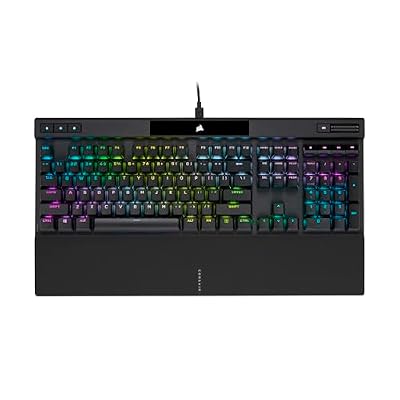
The K70 RGB PRO pairs a brushed aluminium frame with Cherry MX mechanical switches and Corsair AXON processing, with published specifications listing up to 8000 Hz hyper-polling, double-shot PBT keycaps, per-key RGB lighting, and a tournament switch that locks lighting and disables macros for competition settings. The Red linear variant suits players who want a smooth, consistent press for movement and repeated inputs, while the frame and detachable cable suit a fixed desk that sees daily use. It fits full-size loyalists who want proven mechanical feel with modern reporting speed. It does not fit buyers chasing adjustable actuation, because actuation is fixed by the switch, nor minimalists who dislike companion software, since lighting and profiles run through iCUE. It is a strong middle path between basic mechanical boards and fully tunable magnetic models.
HyperX Alloy Elite 2

The Alloy Elite 2 is a full-size mechanical board aimed at players who split time between games, streaming, and media. Published specifications list HyperX Red linear switches, translucent pudding keycaps that let the per-key RGB and the top light bar show through, dedicated media keys with a large volume wheel, a USB 2.0 pass-through port, and a solid steel frame. That pass-through is genuinely useful for a wired mouse or a headset dongle at a crowded desk. It fits multitaskers who value physical media control and a bright, showy lighting setup. It does not fit players who want adjustable actuation, rapid reset features, or hot-swap sockets, because none are offered, and its attached cable and larger footprint suit a permanent desk rather than a portable setup. Pick it for controls and build; skip it for tuning depth.
SteelSeries Apex Pro TKL Gen 3

This tenkeyless board uses OmniPoint 3.0 HyperMagnetic switches with adjustable actuation across a wide range, a rapid reset mode, per-key dual actuation options, and a protection setting that reduces accidental presses on surrounding keys. Published specifications also list an OLED display for on-board adjustments, double-shot PBT keycaps, per-key RGB, and a detachable USB-C connection. The smaller footprint leaves clear mouse room while keeping the function row and arrow keys, which suits shooter and action players who still need everyday navigation keys. It does not fit number-pad users, and it is a different product from the quieter membrane Apex 3 in the main guide, so do not confuse the two when ordering. It also will not suit buyers who prefer to avoid software setup, because its best features reward time spent tuning profiles per game.
Frequently Asked Questions
How much should I spend on a wired gaming keyboard in 2026?
Line your budget up with the workload you honestly have, not the one you imagine. Most buyers are well served in the mid-tier, where the standout wired gaming keyboard picks tend to cluster. Stretching to premium only earns its keep when your usage consistently cashes in the extra headroom.
When is the best time of year to buy a wired gaming keyboard?
Outside the headline holiday events, the late-spring and early-autumn windows have historically served up the most reliable discounting. Where you can, watch the price for a couple of weeks before committing.
Is it worth waiting for the next generation?
Only when what you have is still doing the job. Holding out for the next generation typically buys you three more months of degraded performance and then a launch-window markup on top. The mid-cycle stretch is usually the smart entry point.
What do I do if my wired gaming keyboard arrives faulty?
Capture the fault on camera, reach the seller inside the return window, and ask for an RMA. Solid sellers turn these around within a week. Hang on to the original packaging until you are confident the wired gaming keyboard is a keeper.
Final Take
Settling on a wired gaming keyboard in 2026 comes down to discipline rather than chasing spec numbers. Run the five criteria, work the six-step checklist, and the standout option tends to surface on its own. Cut corners and you invite the regret tax, which more often than not outweighs whatever gap separated the right pick from the wrong one.
For shortlists of specific picks worth considering, browse our latest reviews and round-ups — each one applies the same framework you just read.