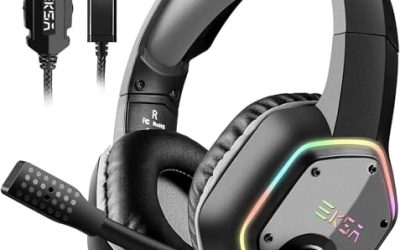
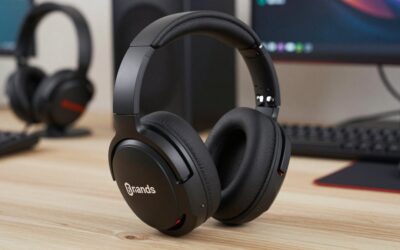
- Top Pick: Razer BlackShark V2 X Gaming Headset: 7.1 Surround Sound – 50mm Drivers – Memory Foam Cushion – For PC, PS4, PS5, Switch – 3.5mm Audio Jack – Black
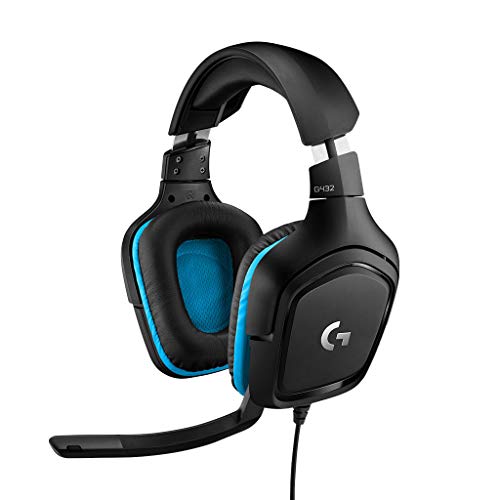
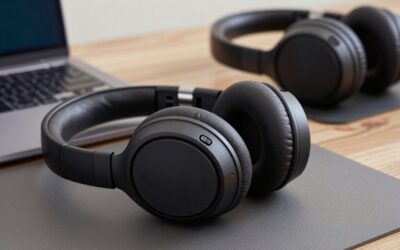
- Best Value: Logitech G432 Wired Gaming Headset – Black
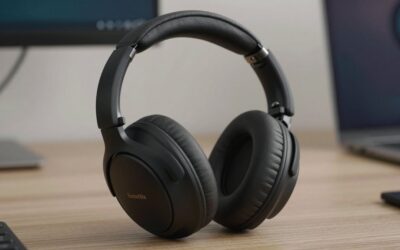
- Premium Choice: Turtle Beach Recon 70 Wired Multiplatform Gaming Headset for PS5, PC, Xbox
A headset that survives being tossed on the desk, stuffed in a bag, and worn eight hours a day is worth more than one that merely sounds good on day one. If you are tired of cracked hinges and frayed cables, a genuinely durable gaming headset is the upgrade that pays for itself. This 2026 guide highlights the toughest models on the market, explains the construction that predicts longevity, and helps you choose based on how hard you push your gear.
- What Makes a Durable Gaming Headset
- Most Durable Gaming Headsets Compared
- How to Choose a Durable Gaming Headset
- Frequently Asked Questions
- How to Score Durability Yourself: A Simple Framework
- Step-by-Step: Checking Durability Before You Buy
- Durability Factors at a Glance
- Common Mistakes When Buying For Durability
- Troubleshooting: When a Durable Headset Still Fails
- What Separates Repairable Headsets From Disposable Ones
- How Storage and Climate Affect Headset Lifespan
- Reading Past Vague Durability Marketing Claims
- When Repairing Makes More Sense Than Replacing
- A Worked Example: Applying the Scoring Framework
- Signs a Headset Is Nearing the End of Its Useful Life
- Why Material Choice Matters More Than Brand Name
- Battery and Charge Cycle Health on Wireless Models
- Ear Cushion and Headband Padding: The First Parts to Wear Out
- Daily Carry Habits That Shorten a Headset’s Life
- Microphone Boom and Connector Durability
- Second-Hand and Open-Box Headsets: What to Inspect Before Buying
- Documenting Wear for a Successful Warranty Claim
- Firmware Updates and Wireless Dongle Reliability
- Using the Return Window to Catch Early Defects
- Related Articles
As an Amazon Associate I earn from qualifying purchases.
🛒 Best Price Today on Amazon
Prime members get fast, free shipping on everything above, plus member-only deals. New members get a 30-day free trial — cancel anytime.
What Makes a Durable Gaming Headset
Durability comes down to three stress points: the headband yoke, the ear-cup swivel, and the cable entry. A durable gaming headset reinforces all three with metal rather than thin plastic, and ideally offers a detachable cable and replaceable ear pads so consumable parts can be refreshed. Brands with a real support pipeline and multi-year warranties add another layer of confidence. Below we focus on models that get the fundamentals right without wrecking comfort or sound.
Most Durable Gaming Headsets Compared
| Product | Key Spec | Best For | Rating |
|---|---|---|---|
| SteelSeries Arctis Nova Pro | Steel-aluminum band, swappable battery | Premium all-round toughness | 4.7/5 |
| Logitech G Pro X 2 Lightspeed | Aluminum-magnesium forks | Tournament travel | 4.6/5 |
| HyperX Cloud III | Solid aluminum frame | Budget durability | 4.5/5 |
| Beyerdynamic MMX 300 | Fully replaceable parts | Repairable ownership | 4.6/5 |
| Audeze Maxwell | Steel headband, planar drivers | Heavy-duty use | 4.6/5 |
| Corsair HS80 RGB Wireless | Aluminum yoke, floating band | Value wireless toughness | 4.3/5 |
| EPOS H6Pro | Reinforced hinges, wired | Simple reliability | 4.4/5 |
SteelSeries Arctis Nova Pro: The Toughest All-Rounder
The Nova Pro’s steel-reinforced headband and hot-swappable battery make it the standout durable gaming headset for players who want their gear to last. The part most likely to age — the battery — is the one you can replace instantly, and the suspension band flexes without cracking. It is pricey, but it is genuinely built for the long haul.
HyperX Cloud III: Aluminum Toughness on a Budget
HyperX built its reputation on aluminum frames that shrug off abuse, and the Cloud III continues that legacy at a mid-range price. The dense memory foam and solid frame make it the go-to durable gaming headset for players who want reliability without flagship spending. It is a favorite for LAN bags precisely because it survives them.
Beyerdynamic MMX 300: Designed to Be Repaired
The MMX 300’s durability story is repairability. Beyerdynamic sells replacement pads, headband cushions, and cables as standard stock, so when a component eventually wears you refresh it rather than replacing the whole headset. That philosophy makes it one of the longest-lived options in this durable gaming headset roundup.
Logitech G Pro X 2 Lightspeed: Built for the Road
Developed with pro input, the G Pro X 2 uses aluminum-magnesium forks that survive being tossed into a gear bag between tournament matches. It is a wireless durable gaming headset that does not flex or creak, and its graphene drivers hold their tuning over years of heavy use.
Audeze Maxwell: Heavy Metal Longevity
The Maxwell’s steel headband and dense planar drivers give it real heft, and that mass means there is very little flexible plastic to fatigue over time. If you want a durable gaming headset that doubles as a serious music headphone, the Maxwell is nearly indestructible in normal use.
How to Choose a Durable Gaming Headset
Start with frame material. Aluminum or steel in the headband and forks is the single best predictor of a durable gaming headset’s lifespan, so treat all-plastic frames with suspicion. Next, prioritize a detachable cable — the cable is the most common failure point, and swapping it turns a dead headset into a quick fix. Third, look for replaceable ear cushions, since sweat-soaked foam degrades faster than any other component.
Then weigh wired against wireless. Wireless adds a battery that slowly loses capacity, though models with swappable cells sidestep this; wired sets remove the battery variable entirely. Finally, check warranty length and regional parts availability — a two-year warranty from a brand with real support beats a glossy spec sheet from a company that vanishes.
Wired Versus Wireless Longevity
A wired durable gaming headset like the EPOS H6Pro has no battery to degrade, making it the simplest long-term reliability choice. Wireless models are more convenient, and swappable-battery designs like the Nova Pro largely close the gap, but if absolute longevity is your goal, wired removes one consumable from the equation.
Care Habits That Extend Lifespan
Even the most durable gaming headset lasts longer with care. Store it on a stand instead of looping the cable around it, wipe the pads after sweaty sessions, and keep it out of hot cars where adhesives and foam break down. These simple habits routinely double a headset’s usable life.
Frequently Asked Questions
What features make a gaming headset durable?
A durable gaming headset uses metal-reinforced headbands and forks, a detachable cable, and replaceable ear cushions. These address the three most common failure points and let you refresh worn parts rather than replacing the whole unit. Warranty length and a brand’s real-world support pipeline also strongly influence how long a headset survives daily use.
How long should a durable gaming headset last?
A quality model with a metal frame and replaceable parts should comfortably last four to six years of daily use. Cheap all-plastic headsets often fail within twelve to eighteen months at the hinge or cable. Regular pad replacement, careful storage, and avoiding heat push a durable gaming headset toward the upper end of that range.
Are wireless durable gaming headsets reliable?
Yes, though the battery is a consumable that slowly loses capacity over years. Models with user-swappable batteries, like the SteelSeries Arctis Nova Pro, largely neutralize this. If you want the simplest long-term reliability with no consumable parts, a well-built wired durable gaming headset removes the battery variable from the equation entirely.
Is a durable gaming headset worth the higher price?
For heavy daily users, absolutely. Spreading a higher upfront cost across five years often beats replacing a budget headset every year. That said, the HyperX Cloud III proves you can get genuinely tough aluminum construction at a mid-range price, so a durable gaming headset does not always require flagship spending to be reliable.
Can I replace worn parts on a durable gaming headset?
On most models built for longevity, yes. Brands like Beyerdynamic, SteelSeries, and Logitech sell official replacement pads, cushions, and cables that install in minutes without tools. Swapping tired foam or a kinked cable restores a durable gaming headset to like-new condition for a fraction of the cost of buying a replacement.
Explore more of our audio coverage: durable gaming headphones guide, most comfortable gaming headset picks, lightweight gaming headset roundup, pink gaming headset options, best gaming monitor brands, and building a lasting battlestation.
As an Amazon Associate we earn from qualifying purchases at no extra cost to you.



How to Score Durability Yourself: A Simple Framework
Marketing copy rarely tells you which parts of a headset actually fail first. A more useful approach is to score any candidate headset against the same handful of physical traits every time, so comparisons stay consistent regardless of brand or price.
- Hinge and yoke material. Metal hinges resist cracking far longer than the plastic joints used in entry-level models, since plastic becomes brittle with repeated flexing and temperature changes over years of use.
- Cable and connector type. A braided cable with reinforced strain relief at the connector resists fraying and kinking better than a plain rubber-jacketed cable, particularly at the point where the cable meets the earcup.
- Clamp force retention. A headband that keeps its shape under repeated wear, rather than loosening within months, keeps the fit consistent and reduces stress on the hinges from users compensating with extra pressure.
- Replaceable parts availability. Headsets sold with official replacement ear pads, cables, or headband padding can be kept in service long after the original parts wear out, rather than being discarded.
- Warranty length and terms. A longer manufacturer warranty is a reasonable proxy for how confident a brand is in its own hardware, even though warranty length alone does not guarantee longevity.
None of these traits require a lab to evaluate. All five are visible from the product listing, the manufacturer’s support page, or a close look at the headset itself before buying.
Step-by-Step: Checking Durability Before You Buy
- Look up whether the headband and yoke are described as metal, metal-reinforced, or plastic, since manufacturers that use metal almost always mention it as a selling point.
- Check whether the cable is detachable at the earcup. A detachable cable means a frayed or damaged cable can be replaced on its own instead of retiring the whole headset.
- Search the manufacturer’s support or accessories page for individually sold ear pads or headband pads before purchase, not after the originals wear out.
- Read the specific wording of the warranty, since some manufacturers exclude cables, pads, and other wear items from coverage even when the main electronics are covered for longer.
- Check user discussions for recurring complaints about a specific failure point, such as a particular hinge cracking or a microphone boom loosening over time, since the same failure showing up repeatedly across unrelated buyers is a stronger signal than a single complaint.
- If the headset is wireless, separately confirm the battery is described as user-replaceable, since a sealed battery that degrades after a couple of years effectively caps the headset’s usable life regardless of how durable the rest of the build is.
Durability Factors at a Glance
| Factor | What a Longer-Lasting Headset Typically Offers | Why It Matters |
|---|---|---|
| Warranty | Around two years rather than the baseline one year common at the budget end | Signals manufacturer confidence and extends the window for a free repair or replacement |
| Cable | Detachable, braided, with reinforced strain relief | The cable-to-connector joint is one of the most common wear points on wired headsets |
| Hinges | Metal or metal-reinforced rather than plain plastic | Plastic hinges are the most frequently reported failure point on budget models |
| Replacement parts | Pads, cables, and headband padding sold separately | Lets an otherwise-working headset stay in service after cosmetic wear parts fail |
| Battery (wireless only) | User-replaceable rather than sealed | A sealed battery that fades after a couple of years sets a hard ceiling on usable life |
Common Mistakes When Buying For Durability
- Judging toughness by weight alone. A heavier headset is not automatically more durable; weight often comes from larger drivers or a bigger battery, not stronger materials.
- Ignoring the microphone boom. A flexible boom arm that bends in every direction is a common failure point, and a boom that detaches or folds away tends to survive bag transport far better.
- Assuming gaming branding implies rugged construction. Gaming-marketed headsets vary just as widely in build quality as any other category, and aggressive styling has no bearing on hinge or cable durability.
- Skipping the return policy check. Hinge or cable defects often only appear after weeks of normal use, well past a short return window, making the manufacturer warranty more relevant than the retailer’s return policy.
- Buying the cheapest “durable-marketed” model without checking for replacement parts. A headset advertised as rugged but sold with no spare parts ecosystem still becomes disposable the day one component fails.
- Overlooking storage and transport habits. Even the toughest headset degrades faster when stored under other items in a bag with no protective case, since consistent light compression over time stresses the headband more than most single impacts.
Troubleshooting: When a Durable Headset Still Fails
Even well-built headsets eventually develop problems, and most common failures have a straightforward cause and a reasonable fix rather than requiring a full replacement.
- Crackling or cutting-out audio from the cable. This usually points to a damaged connector or a stress point near the plug; if the cable is detachable, replacing just the cable typically resolves it.
- A creaking or loose hinge. A hinge that creaks under movement but still holds its angle is usually a sign of dried-out lubrication or minor wear rather than imminent failure, though a hinge that no longer holds any angle has likely cracked internally.
- Fraying visible near the connector end of the cable. This is the most common wear location because it flexes every time the headset is picked up or set down; a braided cable with strain relief delays this but does not prevent it indefinitely.
- Ear pads peeling or flattening. This is cosmetic wear rather than an electronic fault, and it is the main reason replacement pad availability matters as much as the core hardware’s toughness.
- Intermittent wireless dropout after months of regular use. This can point to a battery that no longer holds a stable charge under load, which is a hardware-life issue rather than a software or pairing problem.
What Separates Repairable Headsets From Disposable Ones
The real dividing line in long-term durability is not how tough a headset feels on day one, but whether it can be kept running once an individual part eventually wears out, since every headset eventually loses a cable, a pad, or a battery to ordinary use. Headsets built with screws rather than adhesive, with earcups that open for pad replacement, and with manufacturer-sold spare parts can absorb normal wear indefinitely, while a glued-together design with no official spare parts becomes effectively disposable the moment any single component fails.
This is also where a headset’s price tier can be misleading. A mid-range model backed by a genuine spare-parts program and a repair-friendly design can outlast a more expensive headset that looks and feels sturdier out of the box but was never designed to be opened or serviced. When comparing options, checking for a spare-parts page and a repair-friendly design is a better predictor of multi-year survival than clamp feel or material weight alone.
How Storage and Climate Affect Headset Lifespan
How a headset is stored between sessions affects its lifespan almost as much as how it is built. Leaving a headset clamped around a monitor or hung on a hook under constant tension gradually stretches the headband and loosens clamp force faster than storing it flat or in a case where the band is not under load, since most headband materials relax over time under sustained stress the same way any flexible material does.
Temperature and humidity swings matter more than most buyers expect, particularly for foam ear pads and the adhesive that holds pad material to the earcup. A headset left in a hot car or a humid room for extended periods tends to see foam degrade and adhesive weaken noticeably faster than one kept at stable room temperature, which is why pads on a headset used in a climate-controlled office often outlast identical pads on a headset that travels frequently in a bag.
Reading Past Vague Durability Marketing Claims
Terms like “military grade” or “premium materials” on a packaging box are marketing language, not a certification, unless the listing specifically names a standard such as MIL-STD-810H and the particular test method applied. The standard itself does not mandate one universal durability bar; manufacturers choose which specific environmental tests to run and at what severity, so citing the standard’s name alone says less than it appears to.
A more reliable approach is to look for specific, checkable claims rather than general toughness language: a stated hinge cycle count from the manufacturer, a named connector or cable standard, or an explicit list of what the warranty covers. When a listing only offers adjectives like “rugged” or “built to last” without a single concrete, verifiable detail behind them, that absence is itself useful information about how much weight to give the durability claim.
When Repairing Makes More Sense Than Replacing
Once a specific part fails, the decision between repairing and replacing a headset comes down to a few practical questions rather than a fixed rule. If the failed part is sold individually by the manufacturer and the rest of the headset still performs well, replacing just that part is almost always the faster and more resource-efficient option, since the electronics, drivers, and microphone are typically unaffected by a worn cable or flattened pad.
Replacing the entire headset becomes the more sensible choice when the failure is in a sealed, non-serviceable component such as a wireless model’s internal battery, or when a glued construction makes even a simple pad swap impractical without damaging the earcup. Buyers who want to avoid this decision entirely are better served checking for a spare-parts program and a screw-together design before buying, which turns most future failures into a repair question rather than a replacement one.
A Worked Example: Applying the Scoring Framework
To see the scoring framework from earlier in practice, assume a buyer is choosing between two headsets already covered in this guide: one with a metal-reinforced headband and a detachable braided cable, and one with a plastic headband and a fixed rubber cable, with both otherwise similar in comfort and sound. Under the five-factor framework, the first headset scores better on hinge and yoke material and on cable type immediately, which are two of the most common real-world failure points described in the troubleshooting section above.
If both headsets also list replacement ear pads for sale and carry similar warranty terms, those two factors are a wash and do not change the comparison, leaving the hinge material and cable type as the deciding factors. Under this set of stated assumptions, the metal-reinforced, detachable-cable option is the more defensible pick for a buyer who expects to keep the headset for several years, even if the plastic-and-fixed-cable option happens to be lighter or slightly cheaper. The framework does not require every factor to favor one option; it is meant to make explicit which tradeoffs a buyer is accepting rather than leaving the decision to a vague sense of which headset “feels” tougher.
Signs a Headset Is Nearing the End of Its Useful Life
Beyond the specific failure symptoms covered in the troubleshooting section, a few broader patterns suggest a headset is approaching the end of its practical lifespan rather than suffering a single fixable fault. A headband that no longer returns to its original shape after being taken off, rather than just feeling slightly looser, indicates the material itself has fatigued rather than simply needing readjustment.
Repeated repairs to the same point, such as re-securing the same cable connection or re-gluing the same pad more than once, is a sign that the underlying design is not well suited to being repaired at that spot, and further attempts are likely to keep failing in the same place. At that point, the more cost-effective and time-effective decision is usually to treat the headset as having reached its service life rather than continuing to patch the same recurring failure.
Why Material Choice Matters More Than Brand Name
Two headsets from the same brand’s lineup can age very differently if one uses a metal headband and the other substitutes plastic to hit a lower price point, so brand reputation alone is a weak proxy for how long a specific model will last. The materials used in the headband, yoke, and earcup housing are decided per model, often per generation of the same product line, and a brand known for durability in one price tier does not automatically carry that same build quality into its budget offerings.
This is why the scoring framework introduced earlier is applied per model rather than per brand. Checking hinge material, cable type, and spare-parts availability on the exact model under consideration, rather than relying on a general sense of a brand’s reputation, produces a far more reliable prediction of how that specific headset will hold up over years of regular use.
Battery and Charge Cycle Health on Wireless Models
Durability on a wireless gaming headset is not only about the hinge and the headband; the battery inside it ages on its own schedule. Lithium batteries lose capacity gradually over hundreds of charge cycles, and a headset that is left on the charger continuously, or regularly run down to zero before recharging, tends to lose usable runtime faster than one charged in shorter, partial cycles. Manufacturers rarely publish an exact cycle count for gaming headsets the way phone makers sometimes do, but the underlying chemistry is the same, so the practical guidance carries over: avoid leaving the headset at a full charge on the dock for days at a time when it is not in use, and avoid habitually draining it to empty. A headset with an otherwise excellent frame and ear cushions can still feel “worn out” within a year or two if the battery was treated carelessly, which is a failure mode that has nothing to do with build material and everything to do with charging habits.
Ear Cushion and Headband Padding: The First Parts to Wear Out
Even on headsets built around a metal frame, the ear cushions and headband padding are almost always the first point of visible wear, because they are the parts in direct, constant contact with skin and hair oil. Pleather and faux-leather cushions tend to crack and flake once the surface coating breaks down, usually faster in warmer or more humid climates and with heavier daily use, while fabric or velour cushions resist cracking but can compress and lose cushioning density over time. Headband padding follows a similar pattern: foam under a thin cover will flatten with repeated clamping pressure long before the structural band underneath fails. The headsets that hold up best over several years are typically the ones where these wear parts are sold separately and can be swapped without replacing the entire unit, since cushion and padding wear is close to inevitable regardless of how well the rest of the headset is built.
Daily Carry Habits That Shorten a Headset’s Life
How a headset is handled day to day often matters more than its spec sheet. Picking it up by the headband while it is draped over the back of a chair repeatedly stresses the same hinge points, and tossing it loosely into a backpack lets the ear cups take impact against laptops, water bottles, and other hard edges during transport. Looping or wrapping the cable tightly around the headset for storage, rather than letting it coil loosely or using a cable tie, is one of the more common causes of early connector and strain-relief failure, since repeated sharp bends at the same point in the cable eventually fatigue the wire inside. A headset carried in a padded case or stand, with the cable looped loosely rather than cinched, will generally outlast an identical model that gets stuffed into a bag daily, even though both started out structurally identical.
Microphone Boom and Connector Durability
The microphone arm is a frequent weak point that general durability ratings sometimes overlook because it does not affect the headphone side of the experience. Flexible gooseneck booms rely on a metal core wrapped in rubber or plastic, and repeated bending in the same spot over months of flipping the mic up and down eventually fatigues that core, leading to a boom that will not hold position or a connection that crackles when flexed. Detachable microphones avoid this specific failure mode by moving the stress to a connector instead, trading one wear point for another, so a detachable design is not automatically more durable, just differently vulnerable. Checking whether a replacement boom or microphone module is sold separately is a reasonable way to judge how a manufacturer expects this part to be treated over the product’s lifespan.
Second-Hand and Open-Box Headsets: What to Inspect Before Buying
Buying a used or open-box headset to save money adds a durability question that a new purchase does not carry: how much of the product’s useful life has already been spent. Ear cushions and headband padding cannot be inspected for remaining lifespan from a photo alone, so a listing description that mentions original cushions still installed is worth less reassurance than it sounds, since wear is often invisible until the material actually starts to crack or flake. Flexing the headband gently in any in-person inspection, checking that the microphone boom holds its position without drooping, and listening for crackling in the cable near the connector are quick checks that reveal more than cosmetic condition does. A wireless unit’s battery health is the hardest thing to judge secondhand, since a seller rarely reports cycle count, so treating any wireless headset’s battery as a partial unknown and discounting the price accordingly is a reasonable way to buy used without overpaying for hidden wear.
Documenting Wear for a Successful Warranty Claim
When a headset fails within its warranty period, how the issue is documented affects whether a claim succeeds. A clear description of when the fault started, what exactly happens, such as intermittent audio in one ear or a loose hinge, and photos taken before any attempt at a home repair give support staff a manufacturing-defect case to evaluate rather than a vague complaint. Attempting to open, glue, or otherwise repair the unit before contacting support can void the remaining warranty even if the original fault was a legitimate defect, since most manufacturers reserve the right to deny claims on units that show signs of unauthorized disassembly. Keeping the original receipt and registering the product when that option exists also shortens the back-and-forth, since proof of purchase date is usually the first thing a support agent asks for.
Firmware Updates and Wireless Dongle Reliability
Durability conversations about gaming headsets usually stop at hinges, cables, and padding, but wireless models add a layer that has nothing to do with plastic or foam: firmware. SteelSeries, Logitech, and Audeze all push periodic firmware updates to their wireless dongles and headset units, and a failed or interrupted update can leave an otherwise sturdy headset unable to pair at all. Interrupting a firmware flash mid-process is one of the few ways to turn a physically intact headset into scrap, so owners should update only on a charged device, over a stable USB connection, and never during a wireless dropout.
The dongle itself is also a wear point that gets overlooked. USB-A and USB-C dongles live in laptop ports and power strips where they get bumped, stepped on under a desk, or bent sideways in a backpack pocket. A cracked dongle shell exposes the internal antenna and connector to dust and moisture well before the headset’s own housing shows any wear. Treat the dongle with the same care as the headset, and keep the original storage pouch or a small cable case for it when traveling.
Using the Return Window to Catch Early Defects
Long-term durability only matters if the unit you received was built correctly in the first place. Manufacturing defects, loose hinge screws, or a headband that creaks from day one are quality-control misses, not wear and tear, and they typically surface in the first one to two weeks of normal use. Treat this early window as a dedicated inspection period: flex the headband gently through its full range, rotate each earcup, and check that the microphone boom locks firmly in every detent position before the standard return period closes.
Because most retailers separate the return window from the manufacturer’s warranty, a defect caught on day ten is usually a simple exchange, while the same defect reported on day forty can mean a slower warranty repair process instead. Keep the original packaging until you are confident the unit is sound, and test the headset with the exact cable, dongle, or adapter you plan to use daily rather than a substitute one, since compatibility quirks at this stage are easy to mistake for durability problems later.