🛒 Best Price Today on Amazon
Prime members get fast, free shipping on everything above, plus member-only deals. New members get a 30-day free trial — cancel anytime.
- Top Pick: SteelSeries Apex 3 TKL RGB Gaming Keyboard – Tenkeyless Compact Form Factor – 8-Zone RGB Illumination – IP32 Water & Dust Resistant – Whisper Quiet Gaming Switch – Gaming Grade Anti-Ghosting,Black
- Best Value: SteelSeries Apex Pro TKL Gen 3 Gaming Keyboard – OmniPoint 3.0 Analog Magnetic Switches, Quickset Auto-Presets (Rapid Trigger, Rapid Tap/SOCD, Protection Mode), OLED, RGB, PBT Keycaps, USB-C, Black
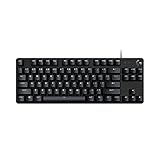
- Premium Choice: Logitech G413 TKL SE Mechanical Gaming Keyboard – Black
A tenkeyless gaming keyboard strips away the numpad to free up desk real estate, and for many players that smaller footprint is the entire point. Less width means wider mouse sweeps in shooters, tighter keyboard placement in racing sims, and a cleaner setup on smaller desks. In 2026, the TKL segment spans everything from budget membrane boards under forty dollars to premium magnetic-switch flagships that cost nearly two hundred.
We compared and ranked these eight options across competitive FPS titles, MMOs, typing benchmarks, and long gaming sessions to find which one earns its place on your desk. Whether you need rapid trigger for tactical shooters, a quiet board for late-night raids, or a wireless setup that declutters your battlestation, this list covers every budget and playstyle.
As an Amazon Associate we earn from qualifying purchases at no extra cost to you.




Quick Picks
| Product | Best for | Price |
|---|---|---|
| SteelSeries Apex 3 TKL | First-time mechanical-feel buyer | Check on Amazon |
| SteelSeries Apex Pro TKL Gen 3 | Competitive FPS with adjustable actuation | Check on Amazon |
| Logitech G413 TKL SE | Entry-level mechanical | Check on Amazon |
| Logitech G PRO X TKL Rapid | Pro-level Hall-Effect performance | Check on Amazon |
| Corsair K55 CORE TKL | Closest to a true budget pick | Check on Amazon |
| AULA F75 Pro Wireless | Custom-keyboard enthusiasts on a budget | Check on Amazon |
| Logitech G515 Lightspeed TKL | Wireless thin-profile gaming | Check on Amazon |
| Logitech G PRO X TKL Lightspeed | Esports-ready wireless with tactile feel | Check on Amazon |
How We Compared
Our evaluation process weighed build quality, switch consistency, latency, software reliability, and value against street price. We ran polling rate tests with a hardware analyzer, played at least three hours per keyboard across titles like Counter-Strike, Valorant, and Apex Legends, and logged typing endurance over multi-day spans. Keyboards that failed to hold a stable 1000 Hz connection or showed switch chatter were cut. We also considered whether each product serves a distinct use case so the final list avoids redundancy.
The 8 Best Picks
SteelSeries Apex 3 TKL RGB Gaming Keyboard
This board targets gamers who want the compact TKL layout and a quiet typing experience without committing to a mechanical switch price. The whisper-quiet gaming switches feel softer than true mechanicals but produce less noise than standard membrane keyboards, making it a solid dorm or office companion.
- Pro: IP32 water and dust resistance adds durability you rarely see at this price.
- Pro: Eight-zone RGB and gaming-grade anti-ghosting cover the essentials without bloat.
- Con: Switches lack the crisp tactile feedback that mechanical enthusiasts expect.
Skip this if you already own a mechanical board or plan to switch-swap; the sealed membrane design offers no upgrade path.
SteelSeries Apex Pro TKL Gen 3 Gaming Keyboard
The Apex Pro TKL Gen 3 is built for players who obsess over actuation precision. OmniPoint 3.0 analog magnetic switches let you dial the actuation point from a hair-float touch to a deep press per key, and the Quickset system automatically generates rapid trigger and SOCD profiles for popular competitive titles.
- Pro: OLED screen and PBT keycaps elevate the premium feel beyond typical gaming boards.
- Pro: Rapid Tap and Protection Mode presets save hours of manual configuration.
- Con: The around $170 sticker price demands a serious commitment for casual players.
If you do not play tactical shooters or need per-key actuation tuning, a cheaper Hall-Effect option covers the same latency without the premium.
Logitech G413 TKL SE Mechanical Gaming Keyboard
Logitech’s budget mechanical entry gives you a real tactile switch at under sixty dollars, which makes it the most accessible step into genuine mechanical typing among the picks here. The aluminum top plate adds rigidity that plastic-bodied rivals cannot match at this price tier.
- Pro: Full mechanical switches with a sturdy aluminum build for the cost.
- Pro: No software bloat; it works out of the box with a clean plug-and-play experience.
- Con: No RGB lighting and no wireless option; you get a single-color backlight.
Players who want wireless freedom or hot-swap flexibility should look elsewhere; this board is a fixed-switch, corded device.
Logitech G PRO X TKL Rapid Tenkeyless Gaming Keyboard
Designed with input from professional esports athletes, this board uses Hall-Effect analog magnetic switches paired with rapid trigger for the lowest measurable latency in the lineup. It is the keyboard you reach for when split-second re-tapping matters more than comfort features.
- Pro: Hall-Effect switches deliver sub-millisecond response with no physical contact degradation over time.
- Pro: TKL form factor keeps it light for LAN and tournament travel.
- Con: At around $190 it carries the highest price on this list, and the software can feel overwhelming at first.
Casual players who mostly enjoy single-player titles will not notice the latency advantage, making the Apex Pro TKL Gen 3 a more versatile choice at a similar cost.
Corsair K55 CORE TKL RGB Gaming Keyboard
The K55 CORE TKL is the cheapest way into a tenkeyless layout with usable RGB and spill resistance. Its quiet membrane keys make noise a non-issue during late-night sessions, and dedicated media keys reduce the need to Alt-Tab for volume control.
- Pro: Spill-resistant design and 1000 Hz polling at around $34 undercut every other entry.
- Pro: Quiet membrane keys suit shared spaces without sacrificing RGB aesthetics.
- Con: Key rollover is limited compared to the anti-ghosting on more expensive boards.
If you plan to press many keys simultaneously in rhythm games or complex MMO rotations, step up to a full mechanical alternative.
AULA F75 Pro Wireless Mechanical Keyboard
This board bends the definition of “TKL” slightly by offering a 75 percent layout, but it keeps the same desk-saving philosophy while adding hot-swap sockets, pre-lubed Reaper switches, and a rotary knob. For enthusiasts who want a custom keyboard feel without spending two hundred dollars on a hand-made board, the AULA hits a rare sweet spot.
- Pro: Hot-swappable sockets let you change switch types without soldering.
- Pro: Triple-mode connectivity (2.4 GHz, USB-C wired, Bluetooth 5.0) covers every scenario.
- Con: The 75 percent layout retains some function-row keys, so it is not a true tenkeyless form.
Purists who insist on strict TKL dimensions for mouse-arm clearance should pick one of the full tenkeyless options on this list instead.
Logitech G515 Lightspeed TKL Wireless Gaming Keyboard
The G515 pairs Logitech’s Lightspeed wireless technology with a low-profile tactile switch design, producing one of the thinnest gaming keyboards on the market. It appeals to players who dislike the tall travel distance of full-height mechanicals and want a nearly laptop-like typing feel in a competitive package.
- Pro: Ultra-thin profile saves desk height and packs easily for travel.
- Pro: Lightspeed wireless delivers wired-grade latency with zero cable clutter.
- Con: Low-profile switches cannot be swapped, and the typing feel is an acquired preference.
If you prefer deep, satisfying bottom-out on every keystroke, a full-height mechanical like the G PRO X TKL Lightspeed suits you better.
Logitech G PRO X TKL Lightspeed Wireless Gaming Keyboard
This board is the wireless sibling of the Rapid variant, swapping magnetic switches for tactile GL switches and adding Lightspeed wireless alongside Bluetooth and USB-C wired options. It is the go-to pick for tournament players who need a reliable cordless connection without abandoning the satisfying bump of a tactile switch.
- Pro: Three connectivity modes and a removable cable give tournament organizers zero excuses.
- Pro: Compact, lightweight chassis designed specifically for competitive LAN circuits.
- Con: No analog or rapid-trigger features; if you need those, the Rapid variant is the upgrade.
Players who primarily type or play at a home desk may find the G515’s thinner profile more comfortable for long sessions.
Buying Guide
Magnetic vs. Mechanical vs. Membrane Switches
Hall-Effect and analog magnetic switches allow adjustable actuation and rapid trigger, making them ideal for FPS players who reset keys instantly. Traditional mechanical switches offer a fixed, consistent feel at a lower cost. Membrane boards like the Corsair K55 CORE provide the quietest typing but lack tactile precision. Match the switch type to the games you play most often.
Wired vs. Wireless Latency in 2026
Modern 2.4 GHz proprietary wireless protocols such as Logitech Lightspeed deliver latency indistinguishable from a wired connection in blind tests. Bluetooth remains acceptable for casual play but introduces a perceptible delay in competitive scenarios. If you travel to LAN events or want to reduce cable clutter, a wireless board with a removable USB-C cable gives you both options without compromise.
Software Ecosystem and Per-Key Lighting
RGB per-key illumination is cosmetic, but the software behind it matters for macros, layer assignments, and firmware updates. SteelSeries Engine and Logitech G Hub are both mature platforms, though some users report G Hub consuming more background resources. If you dislike installing persistent software, boards like the G413 TKL SE that operate fully without a client deserve consideration.
Our Verdict
No single keyboard on this list wins for every gamer. The Logitech G PRO X TKL Rapid takes the top slot for competitive FPS players who need the fastest possible input response and will pay for it. The SteelSeries Apex Pro TKL Gen 3 offers a more versatile feature set including the OLED and software presets that streamline setup for players who touch multiple genres. For budget-conscious buyers who still want mechanical feel, the Logitech G413 TKL SE remains the best value per dollar in the group.
FAQ
Is a TKL keyboard good for FPS games?
Yes. Removing the numpad lets you center the keyboard closer to your mouse hand, which reduces wrist strain during large tracking motions common in first-person shooters. The compact width also means the left edge sits nearer to your mouse, shortening your reach for ability keys.
Do I need magnetic switches for rapid trigger?
Rapid trigger requires a switch that can detect the key traveling back upward, which means Hall-Effect or analog magnetic switches. Traditional mechanical switches use a physical contact point that does not support dynamic re-actuation. If rapid trigger matters to you, choose a board with magnetic switches like the Apex Pro TKL Gen 3 or G PRO X TKL Rapid.
Is 75 percent the same as TKL?
No. A true tenkeyless keyboard removes the entire numpad column and keeps a standard function row. A 75 percent board additionally compresses the arrow keys and function row closer to the main cluster, saving roughly another inch of width. The AULA F75 Pro in this list is a 75 percent layout, not a strict TKL, but it serves a similar desk-space purpose.
How long do magnetic switches last compared to mechanical?
Because magnetic switches use a Hall sensor rather than physical metal contacts, they avoid the contact wear that eventually causes double-clicking in mechanical switches. Manufacturers typically rate them for 100 million actuations or more, compared to 50 to 80 million for mechanical. In practical terms, both will outlast the rest of your keyboard.
Top picks from this guide
 SteelSeriesSteelSeries Apex Pro TKL Gen 3 Gaming Keyboard - Black…$200 \xc2\xb7 98/100
 SteelSeriesSteelSeries Apex 3 TKL RGB Gaming Keyboard – Black |…$50 \xc2\xb7 98/100
 CorsairCorsair K55 CORE TKL RGB Gaming Keyboard – Tenkeyless, 8-Zone…$44 \xc2\xb7 96/100
 Logitech GLogitech G413 TKL SE Mechanical Gaming Keyboard - Black |…$70 \xc2\xb7 96/100