🛒 Best Price Today on Amazon
Prime members get fast, free shipping on everything above, plus member-only deals. New members get a 30-day free trial — cancel anytime.

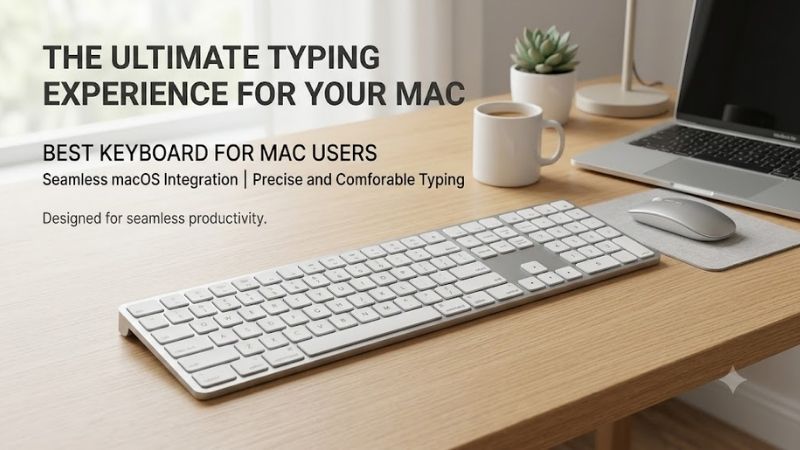
Apple Magic Keyboard with Numeric Keypad - White | Wireless, Bluetooth, Rechargeable. Works with Mac, iPad, or iPhone; US English
Included for 'Best Keyboard for Mac Users: Top Picks for Work and Play' because the listing specifies White and Wireless, details this guide uses to compare options.
View on Amazon
Apple Magic Keyboard with Touch ID | For Mac models with Apple silicon - (USB–C) - US English
Included for 'Best Keyboard for Mac Users: Top Picks for Work and Play' because the listing specifies For Mac models with Apple silicon and (USB, details this guide uses to compare options.
View on Amazon
Macally USB C Wired Keyboard for Mac (USB C + USB A) – Compatible Keyboard for MacBook Pro/Air, iMac & MacMini – Compact Mac Keyboard
Included for 'Best Keyboard for Mac Users: Top Picks for Work and Play' because the listing specifies Compatible Keyboard for MacBook Pro/Air and iMac & MacMini, details this guide uses to compare options.
View on AmazonThe best keyboard for Mac users should match macOS shortcuts, feel comfortable during long typing sessions, and connect cleanly with a MacBook, Mac mini, iMac, or Studio setup. Some users will value Touch ID and Apple-specific keys, while others may prefer mechanical switches, multi-device wireless, or deeper remapping.
Best Keyboards for Mac Users Compared
| Keyboard | Best For | Layout | Switch Style | Connectivity | Main Strength |
|---|---|---|---|---|---|
| Apple Magic Keyboard with Touch ID and Numeric Keypad | Native macOS experience | Full-size | Scissor | Wireless / wired charging | Touch ID and Apple-specific layout |
| Logitech MX Keys S for Mac | Office productivity | Full-size | Low-profile scissor | Bluetooth / Logi Bolt | Multi-device workflow |
| Keychron Q1 Max | Mechanical customization | 75% | Mechanical | 2.4 GHz / Bluetooth / wired | QMK/VIA and hot-swap support |
| NuPhy Air75 V2 | Low-profile mechanical use | 75% | Low-profile mechanical | 2.4 GHz / Bluetooth / wired | Compact mechanical design |
Apple Magic Keyboard with Touch ID and Numeric Keypad
Apple’s Magic Keyboard with Touch ID and Numeric Keypad is the most seamless option for users who want familiar macOS legends, a slim profile, and biometric login on supported Apple silicon Macs. Its low-profile scissor mechanism favors quiet, light typing, while the full-size layout adds a dedicated number pad for spreadsheets and finance work.
Best For: Mac users who want the closest possible match to Apple’s built-in keyboard experience.
Key Features:
- Apple-specific modifier and function keys
- Touch ID on supported Mac models
- Full-size layout
- Dedicated numeric keypad
- Low-profile scissor mechanism
- Wireless operation
- Rechargeable internal battery
What Makes It Different: Native Apple design keeps key legends, shortcuts, biometric authentication, and the physical typing style familiar to anyone moving from a MacBook keyboard.
Pros:
- Native macOS key layout
- Touch ID integration
- Quiet typing
- Thin desktop profile
- Dedicated number pad
- Familiar MacBook-style feel
Cons:
- Limited switch customization
- No hot-swappable switches
- Full-size footprint uses more desk space
- Less attractive for users who prefer mechanical feedback
Use Case: Use it on a Mac mini, Mac Studio, or docked MacBook when you want familiar shortcuts, fingerprint authentication, and a numeric keypad without learning a different keyboard layout.
Who It’s For: Office users, writers, finance professionals, and longtime Apple users who care more about simple macOS integration than mechanical customization.
Logitech MX Keys S for Mac
Logitech MX Keys S for Mac is designed around productivity rather than gaming, with a low-profile layout, macOS key legends, multi-device wireless support, and backlighting. It suits users who move between a MacBook and desktop Mac, especially when they want a familiar laptop-like feel but more dedicated keys and a wider desktop layout.
Best For: Productivity-focused Mac users working across multiple Apple devices or computers.
Key Features:
- Mac-oriented key legends
- Low-profile keys
- Backlit keyboard
- Bluetooth connectivity
- Logi Bolt wireless support
- Multi-device switching
- Full-size layout with numeric keypad
- Logitech customization software support
What Makes It Different: Its strongest advantage is device flexibility, allowing one keyboard to serve several compatible computers without forcing users into a traditional mechanical design.
Pros:
- Mac-specific layout
- Comfortable low-profile design
- Multi-device functionality
- Dedicated number pad
- Backlit keys
- Useful productivity customization
Cons:
- Not hot-swappable
- Less tactile variety than mechanical keyboards
- Full-size design takes more desk space
- Not designed around competitive gaming features
Use Case: Pair it with a MacBook for work, then switch to another desktop computer when needed while retaining familiar shortcuts and a consistent low-profile typing position.
Who It’s For: Remote workers, office professionals, writers, analysts, and Mac owners who frequently move between multiple computers.
Keychron Q1 Max
Keychron Q1 Max suits Mac users who want a premium mechanical keyboard with deeper customization. Its 75% layout keeps arrow keys and a function row without taking full-size desk space, while hot-swappable switches, QMK/VIA support, and Mac-specific key mapping make it far more configurable than a standard office keyboard.
Best For: Mac users who want a customizable mechanical keyboard for programming, writing, productivity, and gaming.
Key Features:
- 75% layout
- Mac and Windows compatibility
- Hot-swappable mechanical switches
- QMK/VIA support
- 2.4 GHz wireless
- Bluetooth
- USB-C wired connectivity
- Aluminum body
- Programmable key mapping
What Makes It Different: QMK/VIA support and hot-swappable switches give experienced users much more control over key placement and typing feel than conventional Mac keyboards.
Pros:
- Strong macOS compatibility
- Hot-swappable switches
- Flexible remapping
- Compact 75% layout
- Multiple connection modes
- Solid aluminum construction
Cons:
- Much heavier than slim office keyboards
- Taller profile may benefit from a wrist rest
- More configuration than casual users may need
- No Touch ID
Use Case: Configure Command, Option, coding shortcuts, macros, and custom layers while choosing switches that match your preferred resistance and feedback.
Who It’s For: Programmers, power users, mechanical keyboard enthusiasts, and Mac gamers who value customization more than Apple-style simplicity.
NuPhy Air75 V2
NuPhy Air75 V2 is a strong choice for Mac users who want a mechanical feel without the height of a traditional custom keyboard. The 75% low-profile layout keeps arrows and function keys, while hot-swap support and wireless connectivity make it practical for a MacBook desk, shared workspace, or portable setup.
Best For: Mac users who want a compact low-profile mechanical keyboard for work and travel.
Key Features:
- 75% layout
- Low-profile mechanical switches
- Hot-swappable switch support
- macOS compatibility
- Bluetooth
- 2.4 GHz wireless
- USB-C wired mode
- QMK/VIA support
- PBT keycaps
What Makes It Different: The Air75 V2 combines mechanical switch feedback with a much slimmer chassis than typical enthusiast keyboards, making it easier to pair with a laptop-oriented workspace.
Pros:
- Compact 75% footprint
- Low-profile mechanical design
- Multiple connectivity modes
- Hot-swappable switches
- macOS support
- QMK/VIA customization
Cons:
- No numeric keypad
- Low-profile switches offer fewer choices than standard MX-style ecosystems
- No Touch ID
- Compact spacing may require adjustment for full-size keyboard users
Use Case: Carry it between home and office or place it beside a MacBook when you want mechanical feedback without adding a bulky full-height board to the desk.
Who It’s For: MacBook owners, mobile professionals, programmers, and users who want a low-profile mechanical alternative to Apple’s keyboard.
How to Choose the Best Keyboard for Mac Users
Check macOS Key Support First
Start with macOS key support because Command, Option, Control, and media shortcuts are used constantly on a Mac. A board with printed Mac legends or a hardware system toggle reduces friction, especially when switching between macOS and Windows. Remapping can solve layout issues, but native Mac labeling is easier for shared or office use.
Choose the Right Keyboard Layout
Choose layout based on what you actually do. A compact 75% board saves mouse space while keeping arrows and function keys, making it useful for coding and general work. TKL layouts add more spacing around navigation keys, while full-size models are better for accounting, spreadsheets, and workflows that depend on a dedicated numeric keypad.
Low-Profile vs Standard Mechanical Keyboards
Low-profile keyboards usually feel closer to a MacBook and can reduce how far your fingers travel, which many office users find comfortable. Standard mechanical boards offer more switch variety, stronger tactile choices, and easier customization, but their taller cases may work better with a wrist rest during long writing or coding sessions.
Consider Bluetooth, 2.4 GHz, and Wired Modes
Bluetooth is convenient for MacBook users because it frees USB ports and makes multi-device switching easier. A dedicated 2.4 GHz connection can offer lower latency for gaming, while wired USB remains simple and dependable for fixed desks. If you use an iPad alongside your Mac, multi-device pairing can be especially useful.
Decide Whether You Need Mechanical Switches
Mechanical keyboards let you choose different levels of resistance, sound, and tactile feedback, which can improve personal comfort during long typing sessions. Hot-swappable boards add even more flexibility. The trade-off is additional height and complexity, while scissor keyboards stay thinner, quieter, and closer to the MacBook experience.
Think About Remapping and Shortcuts
Power users should consider programmable layers and remapping because macOS workflows often depend on shortcuts. Custom keys can trigger application commands, coding functions, window management, or media controls. QMK/VIA boards offer deeper control, while office keyboards generally provide simpler software-based customization for common actions.
Which Mac Keyboard Fits Your Use Case?
| Priority | Recommended Keyboard |
|---|---|
| Native Apple experience | Apple Magic Keyboard with Touch ID and Numeric Keypad |
| Office productivity | Logitech MX Keys S for Mac |
| Mechanical customization | Keychron Q1 Max |
| Low-profile mechanical typing | NuPhy Air75 V2 |
| Numeric keypad | Apple Magic Keyboard or Logitech MX Keys S for Mac |
| Compact desk | Keychron Q1 Max or NuPhy Air75 V2 |
| Hot-swappable switches | Keychron Q1 Max or NuPhy Air75 V2 |
| Multi-device workflow | Logitech MX Keys S for Mac |
FAQ
What Keyboard Layout Is Best for Mac Users?
For most Mac users, a 75% or TKL layout offers the best balance of desk space and practical keys. Both retain arrows and function keys, which matter for coding, navigation, and shortcuts. A full-size keyboard is worth choosing when you regularly enter numbers, while smaller layouts suit minimal desks and users who rely heavily on a mouse.
Are Mechanical Keyboards Good for Mac?
Mechanical keyboards can work very well with macOS as long as the key mapping is correct. Models with Mac legends, a macOS mode, or remapping support make setup easier. The main difference is feel: mechanical switches provide more variation in resistance and feedback, while Apple-style scissor keyboards stay thinner, quieter, and more familiar.
Is Touch ID Worth Having on a Mac Keyboard?
Touch ID is useful if you frequently unlock your Mac, approve purchases, or authenticate with a fingerprint and you use a compatible Apple silicon Mac. It is a convenience feature rather than a typing requirement. Users who care more about switch choice, layout customization, or multi-device flexibility may prefer a third-party keyboard instead.
Do I Need an Apple Keyboard for a Mac?
A keyboard does not need to be made by Apple to work well with a Mac. What matters is macOS compatibility, correct modifier-key placement, reliable connectivity, and access to the shortcuts you use. Third-party models can add mechanical switches, hot-swap sockets, remapping, multi-device pairing, or compact layouts that Apple does not offer.
Is Bluetooth Good Enough for a Mac Keyboard?
Bluetooth is suitable for typing, office work, browsing, and most everyday Mac use because convenience matters more than extremely low input latency in those tasks. Gamers may prefer a dedicated 2.4 GHz receiver or wired connection when supported. Bluetooth remains especially useful when USB ports are limited or several devices share one keyboard.
Conclusion
The best keyboard for Mac users depends on whether you prioritize native Apple integration, quiet productivity, mechanical customization, or portability. Apple’s Magic Keyboard feels most familiar, MX Keys S for Mac favors office work, Keychron Q1 Max adds deep customization, and NuPhy Air75 V2 keeps mechanical typing slim and compact.