Meeting the right gaming PC requirements is what separates a smooth, high-settings experience from a stuttery mess. Modern titles lean heavily on the GPU, but RAM, storage speed, and a balanced CPU all play a role. Understanding these requirements helps you buy a machine that runs today’s games and tomorrow’s.
- Watch: Best Gaming PC Requirements — Video Review
- How to Meet Gaming PC Requirements
- Gaming PC Requirements by Resolution
- The Best PCs for Meeting Requirements Reviewed
- Reading a Requirements Sheet Like a Buyer
- Which One Should You Buy?
- Common Mistakes When Matching a PC to Requirements
- A Worked Example: Matching a Machine to a Game List
- Related Guides
- Frequently Asked Questions
- What to Check Before Buying a Prebuilt Gaming PC
- Final Thoughts
- Related Articles
We compared manufacturer specifications and published listing details for prebuilt gaming PCs that comfortably meet and exceed 2026’s recommended requirements, plus the peripherals that complete a proper setup. Here is what specs to target and which machines hit the mark.

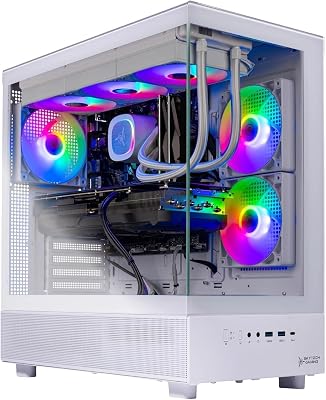


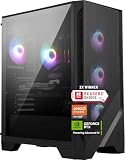
Skytech Gaming O11 Vision Gaming PC, AMD Ryzen 7 7800X3D 4.2GHz, NVIDIA RTX 5060 Ti 16GB, 1TB Gen4 NVMe SSD, 32GB DDR5 RAM 5600, 650W Gold PSU, 360 ARGB AIO, Wi-Fi, Win 11, Desktop
View on Amazon

Skytech Gaming PC Storm, Ryzen 5, RTX 5060 Ti 8GB, 16GB RAM, 1TB SSD | Windows 11, AMD 5500, NVIDIA 5060 Ti 8G, NVMe SSD, DDR4 3200, 650W GOLD PSU, Wi-Fi 5, Desktop
Included for 'Best Gaming PC Requirements' as a representative consumer electronics in this roundup; selection reflects the product set returned for this topic.
View on Amazon
Skytech Gaming PC Desktop, Ryzen 7 5700, RTX 5060, 32GB RAM, 1TB SSD | Windows 11, NVMe SSD, DDR4 3200, 650W GOLD PSU, Wi-Fi 5, Crystal Series
Included for 'Best Gaming PC Requirements' as a representative consumer electronics in this roundup; selection reflects the product set returned for this topic.
View on Amazon
Skytech Gaming PC Shadow 5, Ryzen 7, RTX 5060 Ti 8GB, 16GB RAM, 1TB SSD | Windows 11, AMD 8700F, NVIDIA 5060 Ti 8G, NVMe SSD, DDR5 6000, 750W GOLD PSU, Wi-Fi 5, Desktop
Included for 'Best Gaming PC Requirements' as a representative consumer electronics in this roundup; selection reflects the product set returned for this topic.
View on Amazon🎮 Get More From Your Setup — Free
Prime Gaming gives you free PC games every month, in-game loot, and a free Twitch channel sub — plus fast free shipping on all the gear above. New members get a 30-day free trial.
Watch: Best Gaming PC Requirements — Video Review
How to Meet Gaming PC Requirements
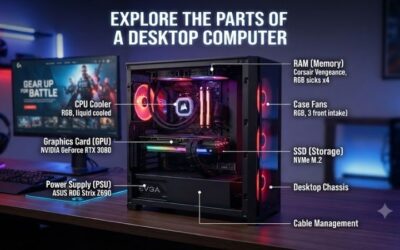
- GPU: A modern RTX 5050 or 5060 meets recommended specs for most 1080p titles, with a 5060 Ti or higher for 1440p.
- CPU: A Ryzen 5, Ryzen 7, or Core i5 keeps games fed and handles background tasks smoothly.
- RAM: 16GB is the current recommended minimum; 32GB adds headroom for future titles.
- Storage: A fast NVMe SSD is now effectively required, cutting load times dramatically.
- Peripherals: A quality mic and monitor complete a setup that meets the full experience, not just the frame-rate spec.
Gaming PC Requirements by Resolution
Requirements depend on the resolution and frame rate you want, not on a single universal list. Use this table to translate your monitor into parts.
| Target | Graphics memory | Processor | Memory | Power supply |
|---|---|---|---|---|
| 1080p, medium to high, 60 frames per second | 8GB | Six-core, such as a Core i5 or Ryzen 5 | 16GB | 500W to 550W |
| 1080p, 144 to 240 frames per second | 8GB, faster GPU | Recent six or eight-core | 16GB to 32GB | 550W to 650W |
| 1440p, 60 to 144 frames per second | 12GB or more | Recent six to eight-core | 32GB | 650W Gold |
| 4K or heavy ray tracing | 16GB or more | Eight-core or better | 32GB | 750W to 850W Gold |
Minimum Versus Recommended
A game’s minimum requirement generally means it will launch at low settings and around 30 frames per second, while the recommended line usually means medium to high settings at 60. Treat minimum as a floor you do not want to live on. If you want smooth play at high refresh rates, aim a tier above the recommended specification.
Component Thresholds That Matter
- Graphics card: 8GB of memory is the practical minimum in 2026; 12GB for 1440p; 16GB for 4K or ray tracing.
- Processor: six cores is the new floor; eight cores help for streaming and simulation games.
- Memory: 16GB is the minimum; 32GB is the comfortable standard; dual-channel is important.
- Storage: a 1TB NVMe drive is the sensible baseline, since many big games exceed 100GB.
- Power supply: 80 Plus Gold from a reputable maker, with at least 650W for mid-range cards.
- Operating system: Windows 11 is the baseline for new titles.
How to Read a Game’s System Requirements
- Find the recommended line on the store page, not the minimum.
- Check which resolution and settings the listing assumes.
- Compare the graphics card model and its memory first, then the processor.
- Look for SSD-only requirements, which are now common.
- Remember that upscaling can reduce graphics demand but does not replace video memory.
Mistakes to Avoid
- Choosing a system with a powerful processor but a weak graphics card.
- Buying a computer with a single stick of memory, which halves memory bandwidth.
- Ignoring the power supply rating and the connectors needed for a future graphics card.
- Treating a very old graphics card with a modern-sounding name as a gaming card.
- Buying peripherals and calling them requirements.
Who Should Skip a Prebuilt
If you enjoy building and already own a case, power supply and storage, buying parts separately can give you better components for the same spend. If you only play older or esports titles, an upgrade to an existing PC may meet your needs without a full replacement. And if you are close to the minimum on a machine you own, adding a graphics card or memory is often cheaper than starting over.
The Best PCs for Meeting Requirements Reviewed
Skytech Crystal
The Crystal pairs a Ryzen 7 5700 with an RTX 5060, 32GB DDR4, and a 1TB SSD, comfortably exceeding recommended specs for modern games. Its Gold PSU and Wi-Fi add reliability.
Skytech Storm
This Storm build teams a Ryzen 5 5500 with an 8GB RTX 5060 Ti, 16GB of DDR4 and a 1TB SSD. It is a solid 1080p high-refresh machine, but the 8GB card and older DDR4 platform leave less headroom for 1440p textures.
Skytech Azure 3
For future-proofing, the Azure 3 packs a Ryzen 7 9800X3D and RTX 5070 Ti, blowing past recommended specs for years to come. It is the enthusiast pick for high-refresh gaming.
Reading a Requirements Sheet Like a Buyer
Minimum, Mid and High-Settings Targets Are Different Promises
Publishers usually list a minimum tier (the game launches, often at 1080p and low settings with frame rates near 30), a middle tier (high settings at 1080p, around 60 frames per second) and sometimes a top tier for 1440p or ray tracing. Meeting the minimum tier is not the same as comfortable play, and a machine that exactly matches the middle tier has no spare capacity for the next two years of releases. Aim one tier above what the games you play list.
Resolution Multiplies the GPU Workload
Pixel counts explain why a card that is comfortable at one resolution struggles at another. 1080p is 2,073,600 pixels, 1440p is 3,686,400 (about 1.78 times as many) and 4K is 8,294,400 (four times 1080p). Frame rate does not fall perfectly in proportion, but this is why the GPU, not the CPU, decides most of the outcome at higher resolutions.
| Target frame rate | Time available per frame |
|---|---|
| 60 fps | 16.7 ms |
| 120 fps | 8.3 ms |
| 144 fps | 6.9 ms |
VRAM, System Memory and Storage
Newer titles with high-resolution textures can fill 8 GB of video memory at higher settings, which is why the same GPU family appears in 8 GB and 16 GB variants, as with the RTX 5060 Ti configurations in the listings above. 16 GB of system RAM is a practical floor, and 32 GB gives headroom when a browser, a chat app and a game run together. Large modern games frequently require 100 GB or more of space, so a 1 TB NVMe drive fills quickly once a few titles are installed.
Power Supply and Cooling
GPU makers publish a minimum power-supply rating for each card, and a prebuilt should meet or exceed it with a reputable unit. Cases with a mesh front and at least one exhaust fan keep boost clocks steadier, and the listing should name the cooler type for the processor, particularly with 3D V-Cache chips such as the Ryzen 7 9800X3D and 7800X3D, which are efficient but still need real cooling.
Which One Should You Buy?
| If you… | Choose… |
|---|---|
| Want the strongest GPU and a processor aimed at high frame rates | Skytech Gaming Azure 3 with the Ryzen 7 9800X3D and RTX 5070 Ti |
| Want 16 GB of video memory at a lower tier | ZOTAC MEK Gaming PC with the RTX 5060 Ti 16GB |
| Want a 3D V-Cache processor with a mid-range GPU | Skytech Gaming O11 Vision with the Ryzen 7 7800X3D |
| Want a straightforward 1080p machine with an Intel processor | CyberPowerPC Gamer Xtreme with the Core i5-14400F |
| Are comfortable with an 8 GB card for 1080p play | MLOONG Gaming PC with the Ryzen 7 8700F |
| Want to compare other tiers from the same builder | Skytech Crystal, Skytech Storm or Skytech Shadow 5 |
Common Mistakes When Matching a PC to Requirements
- Reading only the GPU name. The same GPU family can ship with different memory sizes, and the listing line must show which one you get.
- Ignoring the target resolution. A machine that is ideal at 1080p may feel limited on a 1440p monitor.
- Buying a single memory stick. Two sticks run in dual-channel, which helps frame rates on many processors.
- Forgetting storage growth. Add the sizes of your current library before choosing a drive.
- Treating boost clocks as guaranteed. “Up to” speeds depend on cooling and power limits.
- Overlooking the warranty. A machine with unclear support is harder to fix when a part fails.
A Worked Example: Matching a Machine to a Game List
Suppose you play three kinds of games: an esports shooter at 1080p aiming for 144 frames per second, an open-world title at 1440p, and a large library of older games. The shooter is mostly a processor and frame-time question, so a fast processor with 16 GB of RAM serves it well. The open-world title is a GPU and VRAM question, so the 16 GB graphics-card variants in the lineup above give more room for high-resolution textures than 8 GB cards. The older library barely taxes either, but its total size decides your storage plan.
- List the three heaviest games you plan to play and look up their published requirements.
- Choose the highest resolution and frame rate you will realistically use.
- Match the GPU memory and processor tier to the most demanding entry on the list.
- Add your installed library size to pick the drive capacity.
- Confirm the power supply, warranty and cooling on the listing.
Requirements also shift after launch. Patches, texture packs and new expansions often raise storage and memory needs, so a machine that meets a title today with no spare capacity may fall short a year later.
Related Guides
- All White Gaming PC (2026 Guide)
- Best Xbox One Wired Controller in 2026: Complete Buyer's Guide
- Best Wireless Gaming Headset For Playstation 5 2026
- Best Xbox Controller Wireless in 2026: Complete Buyer's Guide
Frequently Asked Questions
What are the minimum gaming PC requirements in 2026?
Broadly, an RTX 5050-class GPU, a modern Ryzen 5 or Core i5, 16GB RAM, and an NVMe SSD meet recommended specs for most titles.
Is 16GB of RAM still enough?
Yes for current games, though 32GB provides headroom for future titles and multitasking.
Do I really need an SSD?
Effectively yes. Many modern games expect NVMe storage for fast loading and streaming assets smoothly.
Can integrated graphics meet requirements?
Only for lighter and esports titles. Demanding AAA games need a discrete GPU to meet recommended specs.
How much VRAM do I need for gaming in 2026?
Plan on 8GB as the floor for 1080p, 12GB for 1440p and 16GB for 4K or heavy ray tracing. More video memory protects you from stutter as textures grow, even when the graphics chip itself is fast enough.
Is 6 cores enough for a gaming CPU?
Yes, a modern six-core processor handles most games well. Eight cores or more help if you stream, record or play simulation and strategy titles with heavy background work.
What power supply do I need for a gaming PC?
A reputable 80 Plus Gold unit of 650W suits most mid-range builds. Choose 750W to 850W for high-end graphics cards, and check the connectors that your card needs.
Do I need Windows 11 for gaming?
New games and security updates increasingly target Windows 11, so it is the safe baseline. Check each game’s requirement page if you are staying on an older version.
Is a prebuilt gaming PC worth it?
It can be, especially when you value a warranty and a ready-to-use setup. Compare the graphics card, memory and power supply on each listing, since these decide long-term value more than the case or lighting.
What to Check Before Buying a Prebuilt Gaming PC
Listings often emphasise lighting and case design. The parts below decide whether the system will meet requirements for years.
Prebuilt Checklist
- Graphics card model and memory: confirm the exact card and its video memory, not just a series name.
- Memory configuration: look for two sticks running in dual-channel mode.
- Power supply: a named brand with an 80 Plus rating and enough connectors for the card.
- Storage: an NVMe drive of at least 1TB, with a free M.2 slot for expansion.
- Cooling: a recognisable cooler and good case airflow matter more than extra fans.
- Motherboard: a standard layout lets you upgrade later, while proprietary boards limit options.
- Warranty and support: read terms and the return window.
- Operating system: a licensed Windows install saves time and risk.
Sample Requirement Tiers
| Tier | Example parts | What it handles | Cost tier |
|---|---|---|---|
| Entry | Six-core processor, 8GB graphics card, 16GB memory | 1080p at medium to high settings | Budget |
| Balanced | Recent six or eight-core processor, 8GB to 16GB graphics card, 32GB memory | 1080p high refresh or 1440p with tuned settings | Mid-range |
| Performance | Eight-core processor, 12GB to 16GB card, 32GB DDR5 | 1440p high settings and entry 4K with upscaling | Premium |
| Enthusiast | Top processor, 16GB or more card, 32GB to 64GB memory | 4K with ray tracing | Premium |
Upgrade Versus Replace
If your current computer already has a six-core processor, 16GB of memory and an SSD, a graphics card upgrade can bring it up to recommended requirements at a fraction of the cost of a new system. Replace the whole machine when the processor, memory type and motherboard are too old to support a modern card without bottlenecks, or when the power supply cannot be upgraded safely.
Upscaling and Frame Generation
Upscaling technologies such as DLSS, FSR and XeSS render at a lower resolution and rebuild the image, which cuts graphics demand. They help you meet the recommended line with a weaker card, but they do not add video memory, and frame generation adds latency. Treat them as a bonus rather than as a reason to buy a system below the stated requirement.
Cooling and Noise Expectations
High-end processors and graphics cards produce heat, so airflow and a competent cooler are required requirements too. A mesh-fronted case with fans in front and rear usually runs cooler and quieter than a glass-fronted case with poor intake. Keep vents clear and clean dust filters every few months.
Final Thoughts
The Skytech Crystal and Skytech Storm comfortably meet modern requirements, while the Skytech Azure 3 future-proofs your setup.
ZOTAC MEK Gaming PC with Ryzen 5 5500 and RTX 5050 8GB

ZOTAC MEK Gaming PC Desktop, Ryzen 5 5500, NVIDIA GeForce RTX 5050 8GB | 16GB DDR4, 1TB NVMe SSD, 650W 80+ Gold PSU, WiFi 6E, Windows 11 Home, GDDR6, up to 4.2GHz
Included for 'Best Gaming PC Requirements' as a representative consumer electronics in this roundup; selection reflects the product set returned for this topic.
View on AmazonThis is the entry point for meeting today’s minimum requirements without buying an older, weaker system. The listing shows a Ryzen 5 5500 processor, a GeForce RTX 5050 with 8GB of video memory, 16GB of DDR4 memory, a 1TB NVMe drive, a 650W 80 Plus Gold power supply and Wi-Fi. The six-core processor and 8GB card line up with the common 1080p minimum, and the Gold power supply gives room to upgrade the graphics card later.
Who it suits: players targeting 1080p at medium to high settings in current titles, competitive games, and anyone replacing a very old machine. Strengths are the modern graphics architecture, the 1TB solid state drive and a power supply that is better than most budget systems carry. Drawbacks are the DDR4 platform, which limits memory speed and future upgrades, and the 8GB card, which can run short on the heaviest textures in recent games. Compared with the CyberPowerPC pick above, it sits one step lower in graphics power, so choose it only if budget is the main concern. Plan to add memory later if you want 32GB.
ZOTAC MEK Gaming PC with Ryzen 5 9600X and RTX 5060 8GB (White)

ZOTAC MEK Gaming PC Desktop, Ryzen 5 9600X, NVIDIA RTX 5060 8GB, White | 16GB DDR5, 1TB NVMe SSD, 650W 80+ Gold PSU, WiFi 6E, Bluetooth 5.3, Windows 11 Home, GDDR7, up to 5.4GHz
Included for 'Best Gaming PC Requirements' as a representative consumer electronics in this roundup; selection reflects the product set returned for this topic.
View on AmazonThe white MEK is a balanced 1080p-to-entry-1440p system that also looks good beside a monitor. The listing describes a Ryzen 5 9600X, an RTX 5060 8GB, 16GB of DDR5, a 1TB NVMe SSD, a 650W 80 Plus Gold power supply and Wi-Fi. A current-generation six-core processor on DDR5 gives you a platform you can keep upgrading, which older Ryzen systems cannot offer.
Who it suits: gamers who want a recommended-tier 1080p machine that handles 1440p with some settings turned down, plus a clean white build for a bright desk. Strengths are the fast modern processor, DDR5 memory and a power supply that suits future graphics upgrades. Drawbacks are the 8GB of video memory, which is the weakest part of the package as texture sizes grow, and 16GB of RAM that you may wish to double. Against the Skytech Crystal in this guide, which uses older DDR4 and an older Ryzen, this is the better long-term foundation. Add a second 16GB memory kit if you stream or multitask heavily.
STORMCRAFT Sirius Gaming PC with Core i7-14700F and RTX 5060 Ti 16GB

STORMCRAFT Sirius Gaming PC i7 14700F, RTX 5060 Ti 16GB, 32GB DRAM, 1TB SSD | Intel B760 Motherboard, 650w Gold PSU, 1440P AI Performance Prebuilt Tower Computer for Esports, Streaming, VR
Included for 'Best Gaming PC Requirements' as a representative consumer electronics in this roundup; selection reflects the product set returned for this topic.
View on AmazonThis system matters because it pairs a strong processor with a 16GB graphics card, which is the combination that covers 1440p and future texture demands. The listing shows an i7-14700F, an RTX 5060 Ti 16GB, 32GB of memory, a 1TB SSD, a B760 motherboard and a 650W Gold power supply. For video memory, current guidance is roughly 8GB for 1080p, 12GB for 1440p and 16GB for 4K or heavy ray tracing, so 16GB gives real headroom.
Who it suits: players who want 1440p at high settings now and a system that will still meet requirements in several years. Strengths are the 32GB memory, the 16GB card and the large core count of the 14700F, which helps if you stream or record. Drawbacks are heat output from the processor under heavy load, a B760 board with fewer upgrade options than higher chipsets, and a 650W power supply that leaves modest headroom for a much larger graphics card. Against the ZOTAC MEK with the same graphics class in the earlier picks, the Intel build offers more cores, while the ZOTAC offers a bigger power supply and a newer platform.
STORMCRAFT Falcon Gaming PC with Ryzen 7 7800X3D and RTX 5070

STORMCRAFT Falcon Prebuilt RTX 5070 Gaming PC,R7 7800X3D,32GB DDR5,1TB SSD | Best Ryzen CPU,AMD B850 Chipset,6000MHz RGB RAM,850W PSU,360mm AIO,1440p/4K Desktop Tower Computer for Esports, Streaming, VR
Included for 'Best Gaming PC Requirements' as a representative consumer electronics in this roundup; selection reflects the product set returned for this topic.
View on AmazonThe Falcon is the high-frame-rate pick for 1440p. The listing describes an RTX 5070, a Ryzen 7 7800X3D, 32GB of DDR5, a 1TB SSD and an AMD B850 chipset with 6000MHz RGB memory. The 7800X3D is widely known as a strong gaming processor thanks to its large cache, and the 5070 has the power to hold high settings at 1440p and to attempt 4K with upscaling.
Who it suits: competitive players on high-refresh monitors, and anyone who wants a machine that stays well above recommended requirements for years. Strengths are the gaming-focused processor, the 32GB of fast memory and a modern chipset with upgrade headroom. Drawbacks are cost, 12GB of video memory that is less than the 16GB cards for the very heaviest textures, and a need to check the power supply wattage on the listing before you commit. Compared with the Skytech Azure 3 above, it is a cheaper route to strong 1440p, though it will not match the larger system’s 4K ability. Choose it if frame rate matters more than raw video memory.