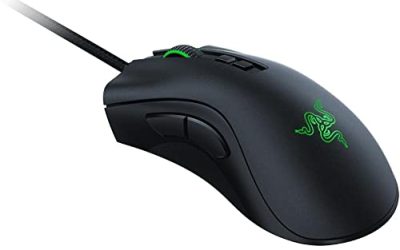
🛒 Best Price Today on Amazon
Prime members get fast, free shipping on everything above, plus member-only deals. New members get a 30-day free trial — cancel anytime.
A mouse that is too long forces a medium hand to stretch for the buttons, while one that is too short leaves the palm hanging off the back with no support. The real decision is not the sensor number on the box, but the length, width, and hump shape that match a hand measuring roughly 17 to 19 cm from wrist to middle fingertip. Get that fit right and the mouse disappears during play; get it wrong and the wrist and fingers work harder on every flick.
This guide is for players with medium hands who play shooters, MOBAs, and action games for long sessions, and for anyone who has bought a mouse that felt either cramped or oversized. The four mice below were chosen from the names and specifications on their Amazon listings, covering wired and wireless models, button-rich and minimal shapes, and weights from 54 to 121 grams. Every one of them measures between 121 and 132 mm long, the range that suits most medium hands.
Quick Picks
As an Amazon Associate, we earn from qualifying purchases.
| Product | Best for | Key spec from title |
|---|---|---|
| Logitech G502 HERO | Palm-grip players who want many buttons | HERO 25K sensor, 25,600 DPI, 11 buttons |
| ASUS ROG Keris II Ace | FPS players with medium hands who want wireless | 54 g, AimPoint Pro 42,000 DPI sensor |
| BenQ ZOWIE EC2-C | Competitive players who want a simple wired mouse | Medium size, Pixart 3360 sensor, driverless |
| Logitech G PRO X Superlight | Claw and fingertip players who want a light wireless mouse | Under 63 g, HERO 25K sensor, 25,600 DPI |
How to Choose
Measure your hand first
Measure from the crease of your wrist to the tip of your middle finger, then across the knuckles for width. Most medium hands run 17 to 19 cm long and 8 to 10 cm wide, and that range points to mice around 120 to 130 mm long. A hand at the short end of that range does better with a 121 mm body like the Keris II Ace, while a hand near 19 cm can use the full 132 mm of the G502 HERO without reaching. Write the numbers down before you shop, because guessing from photos is how most people end up a size off. If two mice look alike, the one closer to your hand length wins.
Match length, width, and hump height
Length decides whether your fingers rest on the buttons or hang past them, width decides whether the sides fill your grip, and hump height decides where the palm sits. A medium hand usually wants a body 120 to 130 mm long, 60 to 68 mm wide, and 38 to 44 mm tall, which is exactly the band all four mice in this guide fall into. A low, flat hump suits claw and fingertip grips because the palm stays free to steer, while a taller rear hump fills the palm for players who rest their whole hand down. Check the listing for all three numbers, not just length, since two mice can share a length and feel different in the hand.
Pick a grip style before a sensor
Palm, claw, and fingertip grips load the hand differently, and the shape should follow the grip, not the other way around. Palm players keep the whole hand on the mouse and need a longer body with a rear hump, which is why the G502 HERO and the EC2-C work well for them. Claw players arch their fingers and want a shorter, lighter body with a clear hump under the palm, like the Superlight or the Keris II Ace. Fingertip players touch only the buttons and the sides, so a narrow, light mouse matters more than a tall hump. If you switch grips between games, a neutral symmetrical shape like the Superlight adapts best.
Weigh wired against wireless, and weight itself
A cable adds drag unless it is a light, flexible one, and wireless adds a receiver and charging to think about. The G502 HERO and EC2-C use cables, the Keris II Ace and Superlight run wireless, and all four keep their connection steady in play. Weight matters as much as connection: a 54 gram mouse flicks fast and tires the wrist less over a long session, while a 121 gram mouse with tuning weights stays planted and steady for precise aiming. Neither is better in the abstract. Try to match the weight to your sensitivity and your games, since low-sensitivity players move the mouse further and feel every extra gram.
The 4 Best Options
Logitech G502 HERO

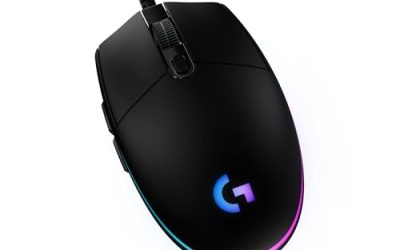
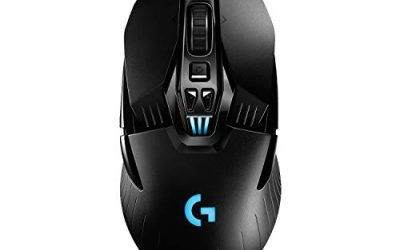
The G502 HERO is the button-rich pick in this guide, and its 132 mm right-handed shell suits medium hands that use a palm grip and want the fingers to land on the buttons without stretching. Eleven programmable buttons cover skills, items, and push-to-talk without moving the left hand off the keyboard, and the dual-mode scroll wheel flips between notched steps and free spin. Five removable 3.6 gram weights sit in the base, so the balance can shift toward the palm or the fingers. At 121 grams it is the heaviest mouse here, which reads as planted and steady rather than slow once the hand settles in.
Specs
- HERO 25K sensor, up to 25,600 DPI
- 11 programmable buttons
- Dual-mode hyper-fast scroll wheel with tilt
- Five removable 3.6 gram tuning weights
- Onboard memory for up to 5 profiles
- Wired USB connection
- Dimensions 132 x 75 x 40 mm, 121 grams
Best for: Palm-grip players with medium hands who want many buttons for skills and items.
Watch out for: The 121 gram weight and right-handed shape do not suit small hands or left-handed players, so confirm the fit before ordering.
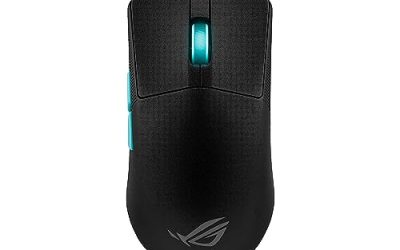
ASUS ROG Keris II Ace

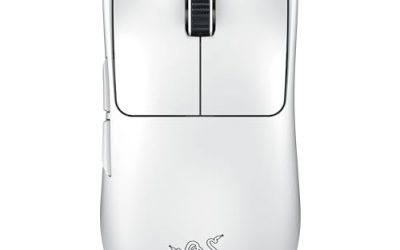
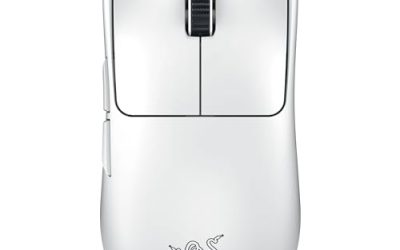
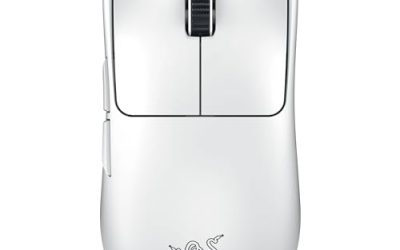
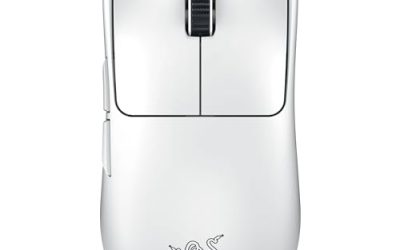
The Keris II Ace is the lightest mouse in this guide at 54 grams, and its 121 mm ergonomic body is the shortest here, which makes it the natural pick for medium hands at the smaller end of the range. The right-handed shape carries a gentle rear hump that fills the palm without pushing the fingers forward, and the tri-mode connection covers 2.4 GHz wireless, Bluetooth, and wired play through one receiver. The AimPoint Pro sensor tracks up to 42,000 DPI, and the polling rate booster lifts wireless polling to 4,000 Hz. It is a focused esports shape with no extra buttons beyond the essentials.
Specs
- ROG AimPoint Pro optical sensor, up to 42,000 DPI
- 54 grams without cable
- Dimensions 121 x 67 x 42 mm
- Tri-mode connectivity: 2.4 GHz wireless, Bluetooth 5.1, USB wired
- Polling Rate Booster: up to 4,000 Hz wireless, 8,000 Hz wired
- ROG 100M optical micro switches
- Up to 107 hours of battery life
Best for: FPS players with medium hands who want an ultralight wireless mouse.
Watch out for: This listing is the Moonlight White version, so check the listing for the Black version if that color suits the setup better.
BenQ ZOWIE EC2-C

The EC2-C is the simplest mouse in this guide, and that simplicity is the point for competitive players who want a medium shape with nothing to configure. Its 123 mm right-handed ergonomic shell fits medium hands in palm and claw grips, and the driverless design means it works the moment it is plugged in, with DPI and polling rate changed by buttons on the underside. The Pixart 3360 sensor tracks up to 3,200 DPI in four steps, and the paracord-style cable stays light and flexible on the desk. At 73 grams it sits between the ultralight picks and the heavier G502 HERO.
Specs
- Pixart PMW 3360 optical sensor, 400 to 3,200 DPI in four steps
- Medium size, right-handed ergonomic shape, 123 mm long
- 73 grams without cable
- Polling rate 125, 500, or 1,000 Hz
- 5 buttons, driverless plug and play
- Paracord-style cable, 24-step scroll wheel
Best for: Competitive players who want a simple wired mouse in a medium shape.
Watch out for: There is no software for remapping buttons, so the five-button layout and the fixed DPI steps are what the mouse ships with.
Logitech G PRO X Superlight
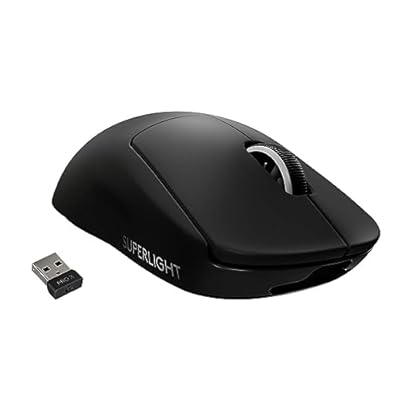
The Superlight is the symmetrical pick in this guide, and its 125 mm body suits medium hands in claw and fingertip grips, where the palm floats and the fingers steer. At under 63 grams it is light enough for fast flicks without tiring the wrist, and the LIGHTSPEED wireless connection keeps the response steady with no cable drag at all. The HERO 25K sensor tracks up to 25,600 DPI, and the five programmable buttons cover the essentials without crowding the shell. A 70-hour battery rating means charging is a weekly habit rather than a daily one, and the PTFE feet glide cleanly across the pad.
Specs
- HERO 25K sensor, 100 to 25,600 DPI
- Under 63 grams
- Dimensions 125 x 63.5 x 40 mm
- LIGHTSPEED wireless technology
- 5 programmable buttons, onboard memory
- Up to 70 hours of battery life
- No-additive PTFE feet, POWERPLAY compatible
Best for: Claw and fingertip players with medium hands who want a light wireless mouse.
Watch out for: The original Superlight charges over Micro-USB rather than USB-C, so check the cable in the box matches the rest of the setup.
Which One Fits Your Situation
You play FPS games with a palm grip
Pick the G502 HERO or the EC2-C. Both give the palm a full rear hump and a body long enough to support the hand through long rounds, and the wired connection keeps the response steady. The G502 HERO adds eleven buttons for skills and items, while the EC2-C stays minimal and driverless. If the hand measures near 19 cm, the G502 HERO fits better; near 17 cm, the EC2-C feels more natural.
You want the lightest wireless mouse you can get
Pick the Keris II Ace. At 54 grams it is the lightest mouse in this guide, and the 121 mm body suits medium hands at the smaller end of the range. The tri-mode connection covers wireless, Bluetooth, and wired play, and the polling rate booster lifts wireless polling to 4,000 Hz. Keep the receiver close to the mouse for the steadiest link, and check the battery indicator before a long session.
You switch between claw and fingertip grips
Pick the Superlight. Its symmetrical 125 mm shell does not push the hand into one grip, so claw and fingertip players can shift mid-game without fighting the shape. At under 63 grams it stays quick on flicks, and the wireless connection removes cable drag entirely. The five-button layout keeps the sides clean, which helps when the fingers lift and reposition often during fast play.
You want a mouse that just works, no setup
Pick the EC2-C. Plug it in and it works, with DPI and polling rate changed by buttons on the underside. The medium shell fits palm and claw grips, and the 73 gram weight stays light all session. It suits a tournament bag or any desk where installing software is not an option.
Common Mistakes
- Buying by sensor numbers before checking whether the shell length matches the hand.
- Choosing a large palm mouse for a 17 cm hand and then stretching for the side buttons.
- Picking an ultralight mouse for low-sensitivity play without testing how the light weight feels on long swipes.
- Ignoring the hump shape and finding the palm has no support after an hour of play.
- Forgetting to check whether the listing is the wired or wireless version before ordering.
Frequently Asked Questions
What hand size counts as medium for a gaming mouse?
Most guides treat a hand measuring 17 to 19 cm from wrist crease to middle fingertip as medium, with a width of 8 to 10 cm across the knuckles. Mice around 120 to 130 mm long usually fit that range, and all four mice in this guide fall inside it. Measure the hand before ordering, since two hands of the same length can differ in width and grip style.
Is a lighter mouse always better for medium hands?
No. A lighter mouse flicks faster and tires the wrist less, which suits fast shooters and claw grips, but a heavier mouse stays planted and steady for precise aiming at low sensitivity. The 54 gram Keris II Ace and the 121 gram G502 HERO both suit medium hands, and the right weight depends on the games and the sensitivity. Try both ends of the range before settling on one weight.
Do I need software for these mice?
The EC2-C needs none at all, since DPI and polling rate change with buttons on the underside. The G502 HERO, Keris II Ace, and Superlight all work straight out of the box with default settings, and their makers provide optional software for remapping buttons and saving profiles. If the desk is shared or software installs are blocked, the driverless EC2-C is the simplest choice of the four.
Can a medium hand use a large mouse?
Yes, if the length stays within reach and the side buttons fall under the thumb without stretching. A 132 mm mouse like the G502 HERO works for medium hands near 19 cm, especially with a palm grip, but the same mouse can feel oversized for a 17 cm hand. The safer test is the side buttons: if the thumb reaches them without shifting the palm, the size works.