🛒 Best Price Today on Amazon
Prime members get fast, free shipping on everything above, plus member-only deals. New members get a 30-day free trial — cancel anytime.
The cheapest RTX card is rarely the best value RTX card, and the gap between those two ideas is where most budget buyers lose money. A card that costs $50 less can leave you without frame generation, without enough memory, or without a power connector you already have. The right way to shop is by price step: at each rung of the MSRP ladder, ask what the next $30 to $50 actually buys.
So this guide is organized as a ladder from the lowest launch price upward, covering the cheapest NVIDIA GPU options and the best RTX price to performance sweet spots between them. All prices are launch MSRPs from the manufacturer, which is the only honest anchor, since street prices move constantly. Use the numbers to find the cliff edges, then check the live listing price in 2026 before you commit.

msi Gaming RTX 3050 Ventus 2X 6G OC Graphics Card (NVIDIA RTX 3050, 96-Bit, Boost Clock: 1492 MHz, 6GB GDDR6 14 Gbps, HDMI/DP, Ampere Architecture)
Included for 'Cheap RTX Graphics Card (2026): How to Choose' because the listing specifies 96-Bit and Boost Clock: 1492 MHz, details this guide uses to compare options.
View on Amazon
msi Gaming GeForce RTX 3060 Ventus 2X 12G OC V1 Graphics Card - 15 Gbps GDRR6 Boost Clock: 1807 MHz 192-Bit HDMI/DP PCIe 4 Torx Twin Fan Ampere
Included for 'Cheap RTX Graphics Card (2026): How to Choose' as a relevant option in this category; details come from the product listing.
View on Amazon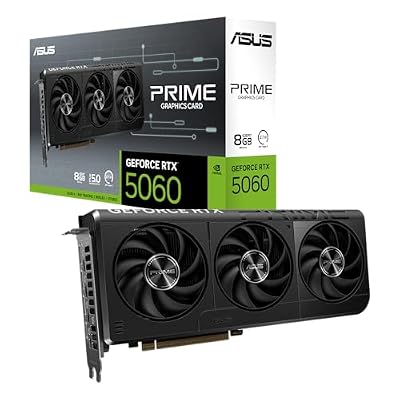
ASUS Prime GeForce RTX 5060 8GB GDDR7 Gaming Graphics Card
Included for 'Cheap RTX Graphics Card (2026): How to Choose' as a relevant option in this category; details come from the product listing.
View on AmazonQuick answer: Our top pick in 2026 is the GeForce RTX 3050 8GB — our #1 rated choice. See the full ranked comparison, alternatives and buying advice below.
Quick Picks
| Product | Best for | Price (launch MSRP) |
|---|---|---|
| GeForce RTX 3050 8GB | Absolute lowest entry to RTX, esports at 1080p | $249 |
| GeForce RTX 5060 8GB | Cheapest card with the newest NVIDIA features | $299 |
| GeForce RTX 3060 12GB | Memory-first buyers on a hard cap | $329 |
| GeForce RTX 5060 Ti 16GB | Best long-term value if you can stretch | $429 |
Cards from other generations are also on sale. Treat the MSRP column as launch pricing and compare each against the live price.
Reading the Price Ladder
NVIDIA’s lower tiers cluster tightly around $250 to $430 at launch. Within that band there are three cliffs that matter more than any single benchmark: the line between 8GB and 12GB or more of video memory, the line between DLSS upscaling only and frame generation, and the line where the newest cards add multi frame generation. Reviews from TechPowerUp, Tom’s Hardware and Hardware Unboxed have discussed all three, and they are what separate a purchase that feels fine in year three from one that feels dated in year one.
Four Rungs, Ranked by What You Get
GeForce RTX 3050 8GB
The lowest rung on our list, at a $249 launch MSRP and a 130W target. It is an RTX 30-series card, so it supports DLSS upscaling and ray tracing hardware but not frame generation. It makes sense as a first RTX upgrade for esports or older libraries on a very small budget, or as a stopgap.
- Pro: Lowest entry price to the RTX feature set
- Pro: 130W target works with many older power supplies
- Con: Limited speed and 8GB of memory narrow its longevity
Skip it if the live price is close to a newer 5060, which will give you far more for the difference.
GeForce RTX 5060 8GB
For $50 more at launch ($299), the 5060 jumps a full generation. It adds frame generation and multi frame generation, which are the features that make a modest card feel faster in supported games, and its 145W target keeps power needs low. This is the card most people with a $300 budget should look at first.
- Pro: Newest NVIDIA features at the second-lowest price
- Pro: 145W target fits small cases and basic supplies
- Con: 8GB limits 1440p and high texture settings
Skip it if you want to hold the card for many years or play at 1440p.
GeForce RTX 3060 12GB
A memory-first alternative. At $329 launch and a 170W target, it brings 12GB, which is more than several newer entry cards offer. It lacks frame generation, so you give up a feature in exchange for room. Pick it when the games you play are known to be memory-hungry and the card is priced well below newer models.
- Pro: 12GB of memory at a low entry price
- Pro: DLSS upscaling and ray tracing support
- Con: No frame generation, and the older architecture is less efficient
Skip it if the listing price is higher than a new RTX 5060.
GeForce RTX 5060 Ti 16GB
The first rung where “cheap” starts turning into “good value for years.” It launched at $429 with a 180W target and 16GB, and it gets DLSS 4 with multi frame generation. An 8GB version also exists at $379, so read the listing for the memory size. This is the sweet spot for the best RTX card for the money.
- Pro: 16GB at this price removes the memory cliff
- Pro: Full RTX 50 feature set at 180W
- Con: $180 above the cheapest entry on our list at launch
Skip it if your budget is firm at $300 or you only play esports titles.
What Makes a Cheap RTX Card a Good Deal
Compare Cost Per Useful Feature, Not Cost Per Frame
Since we are not publishing benchmark figures, use features as your yardstick. Does the card have enough VRAM for your games, support frame generation, and fit your power supply? A cheap card that checks all three beats a cheaper one that checks none.
Check Your Power Supply and Connectors
Cards under 150W often run from a basic power connector or none at all, which saves the cost of a new supply. Cards higher up the ladder need more careful matching, so check the board’s spec page.
Mind the CPU and Slot
A budget GPU paired with an old processor can hit a CPU limit first. Zen 3 and 10th or 12th generation Intel chips are fine partners. Make sure the PCIe slot is enabled for the card’s lanes and that resizable BAR is on.
The Short Version
For $300 or less at launch pricing, the RTX 5060 is the card with the most features. If you can reach $429, the RTX 5060 Ti 16GB is the value pick. The RTX 3050 and RTX 3060 are for specific situations where the live price makes them clear winners.
FAQ
What is the cheapest RTX GPU I should buy?
The RTX 3050 8GB is the lowest-priced option on our list at $249 launch MSRP, but the RTX 5060 offers much more for a small step up.
Is an older RTX card worth it?
Only if the price is clearly lower than a new RTX 5060 and you do not need frame generation.
Which RTX card has the best price to performance?
The RTX 5060 Ti 16GB is a strong all-round value, with the RTX 5060 as the budget sweet spot.
Do I need a new power supply?
Often not for cards under 150W, but confirm with the manufacturer’s recommendation for the specific board.
Ready to decide? Our #1 pick for 2026 is the GeForce RTX 3050 8GB.
Live price & availability on Amazon.