🛒 Best Price Today on Amazon
Prime members get fast, free shipping on everything above, plus member-only deals. New members get a 30-day free trial — cancel anytime.
- Verdict at a glance
- Borderlands 4 official PC requirements
- How demanding is Borderlands 4? What benchmarks show
- Best GPUs for Borderlands 4 by resolution
- Radeon RX 9070 XT: best overall (AMD)
- GeForce RTX 5070 Ti: best overall (NVIDIA)
- GeForce RTX 5090 and RTX 5080: best for 4K
- RX 9060 XT 16GB and RTX 5060 Ti 16GB: best value
- Intel Arc B580: best budget
- Recommended settings by GPU tier
- Will my current GPU run Borderlands 4?
- Gaming laptops and handhelds
- Should you upgrade just for Borderlands 4?
- CPU and memory: do not ignore them
- Common mistakes
- Products Mentioned in This Guide
- How we compared
- Sources
- Frequently Asked Questions
The best GPU for Borderlands 4 for most players is a 16GB card in the RX 9070 XT or RTX 5070 Ti class, which TechPowerUp’s launch testing showed was the minimum tier for 60fps at native 1080p on maximum settings, and which handles 1440p comfortably with upscaling on the patched game. Video memory matters more than usual: TechPowerUp measured around 14GB of VRAM use at 4K max and well above 10GB at lower resolutions, and TechSpot found the 16GB RTX 5060 Ti 73% faster than the 8GB version. For budget builds, choose a 12GB or 16GB card such as the Arc B580, RX 9060 XT 16GB or RTX 5060 Ti 16GB and avoid 8GB models.
Verdict at a glance
- Best overall: Radeon RX 9070 XT or GeForce RTX 5070 Ti. Both have 16GB and sit in the tier TechPowerUp identified for 60fps native 1080p at max settings at launch.
- Best for 4K: GeForce RTX 5090, the fastest card in every launch review, followed by the RTX 5080 with DLSS and frame generation.
- Best value for 1080p and 1440p with upscaling: RX 9060 XT 16GB or RTX 5060 Ti 16GB. The 16GB versions avoid the VRAM collapse that hit 8GB cards.
- Best budget: Intel Arc B580 (12GB), which Gearbox lists in the official recommended spec.
- Avoid: any 8GB card for high settings, and cards with 6GB or less, which TechPowerUp found either could not run the game or suffered heavy memory swapping.
Borderlands 4 official PC requirements
Gearbox’s support site lists two tiers. Minimum targets 1080p at 30fps on the Low preset; recommended targets 1440p at 60fps on Medium.
| Component | Minimum | Recommended |
|---|---|---|
| OS | Windows 10 / 11 64-bit | Windows 10 / 11 64-bit |
| CPU | Core i7-9700 / Ryzen 7 2700X (8 cores) | Core i7-12700 / Ryzen 7 5800X (8+ cores) |
| RAM | 16GB | 32GB |
| GPU | RTX 2070 / RX 5700 XT / Arc A580 | RTX 3080 / RX 6800 XT / Arc B580 |
| VRAM | 8GB | 12GB or more |
| Storage | 100GB SSD (required) | 100GB SSD (required) |
Some secondary sites list 8GB VRAM for the recommended tier; Gearbox’s own page says 12GB or more, and that is the figure to trust. Note that the original 10GB RTX 3080 technically falls short of that VRAM recommendation.
How demanding is Borderlands 4? What benchmarks show
Launch testing (September 2025)
Borderlands 4 is built on Unreal Engine 5 and launched as one of the hardest games of the year to run. Key findings from the major benchmark reviews:
- TechPowerUp (30+ GPUs): for 60fps at native 1080p on max settings you needed an RTX 4070 Ti, RTX 5070 Ti, RX 7900 XTX, RX 9070 XT or faster. At native 1440p only the RTX 4090 and RTX 5090 cleared 60fps, and at native 4K nothing did. Hardware Lumen ray tracing is not exposed in the menus, though lighting still looks excellent.
- TechSpot (40+ GPUs): with the Badass preset, the RTX 5090 averaged 101fps at 1080p and 45fps at 4K. The 16GB RTX 5060 Ti was 73% faster than the 8GB model, a stark demonstration of the VRAM problem.
- Hardware Times: the RTX 4060, a typical 1080p card, averaged about 30fps with 1% lows around 24fps.
- Notebookcheck: an RTX 4080 desktop dropped from 87.1fps on High to 63.9fps on Badass at 1080p, which shows how expensive the top preset is.
Patches since launch
Gearbox has released several performance updates. The December 11, 2025 patch introduced profile-guided optimization for CPU performance and reorganized texture and mesh memory pools for better VRAM use. The version 1.5 patch on March 26, 2026 reworked HLOD handling of distant detail and trimmed effect polygon counts; Gearbox’s own comparison against launch version 1.0.2 showed its RTX 4080 system rising from about 55fps to about 78fps at 1440p Very High, and its minimum-spec system rising from about 37fps to about 53fps at 1080p Low. A further major update, version 1.9, arrived on July 30, 2026 with more stability and optimization work.
That means launch benchmarks now understate performance, especially on mid-range cards. The relative ranking of GPUs, and the importance of VRAM, has not changed.
Best GPUs for Borderlands 4 by resolution
| Target | Recommended GPU | VRAM | Suggested preset | Upscaling |
|---|---|---|---|---|
| 1080p 60fps (budget) | Arc B580, RX 9060 XT 16GB, RTX 5060 Ti 16GB | 12GB to 16GB | Medium to High | XeSS / FSR / DLSS Quality |
| 1080p high refresh | RX 9070, RTX 5070 | 12GB to 16GB | High to Very High | Quality mode |
| 1440p 60 to 100fps | RX 9070 XT, RTX 5070 Ti | 16GB | High to Very High | FSR 4 / DLSS Quality |
| 4K 60fps and above | RTX 5080, RTX 4090, RTX 5090 | 16GB to 32GB | High to Very High | DLSS Balanced or Performance, frame generation optional |
These pairings combine TechPowerUp and TechSpot launch data with the improvements Gearbox reported from later patches. Very High rather than Badass is the sensible top setting; PCOptimizedSettings found Very High only 8 to 10% faster than Badass, while Corsair’s guide said Badass adds almost no visible improvement over Very High.
Radeon RX 9070 XT: best overall (AMD)
The RX 9070 XT has 64 RDNA 4 compute units and 16GB of GDDR6. TechPowerUp’s launch results placed it in the group able to hold 60fps at native 1080p on max settings, and with FSR 4 Quality it is a strong 1440p card for this game.
Reasons to pick:
- 16GB of VRAM comfortably covers the game’s memory needs at 1440p.
- FSR 4 machine-learning upscaling on RDNA 4 looks far better than older FSR.
- Usually cheaper than the RTX 5070 Ti in 2026.
Reasons to skip:
- TechPowerUp notes frame generation in Borderlands 4 is vendor-specific: AMD cards get FSR Frame Generation only.
- Gearbox published an NVIDIA optimization guide after launch, so NVIDIA users have more official tuning advice.
The catch: for 4K you will lean on Balanced or Performance upscaling.
GeForce RTX 5070 Ti: best overall (NVIDIA)
The RTX 5070 Ti, with 16GB of GDDR7, also appears in TechPowerUp’s 60fps-at-1080p-max group. It gives you DLSS 4 upscaling and DLSS Frame Generation, which TechPowerUp confirms is the only frame generation option on NVIDIA GPUs in this game.
Reasons to pick: DLSS 4 upscaling quality, Multi Frame Generation for higher displayed frame rates, official NVIDIA tuning guide from Gearbox.
Reasons to skip: its 2026 street price has risen more than the RX 9070 XT’s, for similar raster performance.
The catch: frame generation feels best when your base frame rate is already near 60fps; it does not rescue a 30fps experience.
GeForce RTX 5090 and RTX 5080: best for 4K
The RTX 5090 was the fastest GPU in every launch review, but even it could not hold 60fps at native 4K on max settings in TechPowerUp’s testing, and TechSpot measured 45fps at 4K on Badass. With DLSS and the post-launch patches, it is the only card that makes high-refresh 4K realistic. The RTX 5080 is the more sensible 4K choice for most, using DLSS Balanced or Performance and frame generation.
Reasons to pick: the most headroom for 4K, plenty of VRAM (32GB on the RTX 5090), best ray tracing for other games.
Reasons to skip: premium pricing; Borderlands 4’s art style holds up well at 1440p with upscaling.
The catch: even here, Very High is a better use of performance than Badass.
RX 9060 XT 16GB and RTX 5060 Ti 16GB: best value
These are the cards to buy for 1080p and entry-level 1440p, but only in their 16GB versions. TechSpot’s 73% gap between the 16GB and 8GB RTX 5060 Ti in this game is the clearest argument in any 2025 benchmark for paying extra for memory. TechPowerUp also observed that 8GB NVIDIA cards landed out of order in its charts because they all ran out of VRAM, even at 1080p.
Reasons to pick: affordable, 16GB of VRAM, good upscaling support.
Reasons to skip: 1440p needs upscaling and Medium to High settings.
The catch: check the memory size on the box; 8GB versions share the same name.
Intel Arc B580: best budget
The Arc B580 has 12GB of VRAM and appears in Gearbox’s recommended spec alongside the RTX 3080 and RX 6800 XT. TechPowerUp notes that Intel GPUs get XeSS Frame Generation in this game.
Reasons to pick: 12GB for a budget card, officially recommended by Gearbox, XeSS upscaling and frame generation.
Reasons to skip: needs Resizable BAR enabled and a reasonably modern CPU for best results; drivers have historically been less consistent than AMD’s and NVIDIA’s.
The catch: aim for Medium at 1080p with XeSS Quality rather than High.
Recommended settings by GPU tier
Borderlands 4’s graphics menu includes HLOD Loading Range, Geometry Quality, Texture Quality, Texture Streaming Speed, Anisotropic Filtering, Foliage Density, Volumetric Fog, Volumetric Cloud, Shadow Quality, Directional Shadow Quality, Volumetric Cloud Shadows, Lighting Quality, Reflections Quality, Shading Quality and Post-Process Quality, plus upscaling and frame generation options. Presets run up to Badass.
| Setting | Entry (Arc B580, 9060 XT 16GB) | Mid (RX 9070 XT, RTX 5070 Ti) | High (RTX 5080, 5090) |
|---|---|---|---|
| Preset base | Medium | High to Very High | Very High |
| Texture Quality | High on 12GB to 16GB | Very High | Very High |
| Volumetric Fog | Low | Medium | High |
| Volumetric Cloud Shadows | Off | Off | On if frame rate allows |
| HLOD Loading Range | Near or Medium if CPU-limited | Far | Far |
| Foliage Density | Medium | High | Very High |
| Upscaling | Quality | Quality at 1440p | Balanced at 4K |
| Frame generation | Off below 50fps base | Optional | On at 4K |
The Volumetric Fog and Volumetric Cloud Shadows advice reflects Digital Foundry-style optimized settings reported by Wccftech, which used HLOD Far, Volumetric Fog Medium and Volumetric Cloud Shadows disabled to look close to Very High while running up to 40% faster in some scenes. Because the March patch reworked HLOD, re-check that setting on your system.
Will my current GPU run Borderlands 4?
If you are deciding whether to upgrade, compare your card with the official tiers and the VRAM findings above. The guidance below combines Gearbox’s requirement tiers with the memory behavior TechPowerUp and TechSpot observed.
| Your current GPU | VRAM | Where it sits | What to expect | Upgrade? |
|---|---|---|---|---|
| GTX 1060, GTX 1660, RX 580 | 6GB to 8GB | Below minimum | Not realistically playable at a smooth frame rate | Yes |
| RTX 2060, RTX 3050 | 6GB to 8GB | Below minimum | Memory swapping and heavy stutter per TechPowerUp’s 6GB findings | Yes |
| RTX 2070, RX 5700 XT, Arc A580 | 8GB | Official minimum | 1080p Low with upscaling, around the 30fps target Gearbox set, better after patches | Recommended |
| RTX 3060 12GB, RX 6700 XT | 12GB | Between minimum and recommended | 1080p Medium with upscaling; the extra VRAM helps | Optional |
| RTX 3070, RTX 4060 Ti 8GB | 8GB | Fast GPU limited by VRAM | Keep textures at Medium or lower to avoid stutter | Consider a 16GB card |
| RTX 3080, RX 6800 XT, Arc B580 | 10GB to 16GB | Official recommended | 1440p Medium at 60fps target with upscaling | Not needed |
| RTX 4070 Ti, RX 7900 XT and above | 12GB to 24GB | Above recommended | 1440p High to Very High with upscaling | No |
Gaming laptops and handhelds
Laptop GPUs share names with desktop cards but run at lower power and often with less memory, so a laptop RTX 4060 or RTX 5060 with 8GB will behave like the 8GB desktop cards discussed above, or slightly worse. Notebookcheck’s Borderlands 4 review was titled around the idea that there is almost no chance without DLSS and similar upscalers, and that is especially true on laptops. If you play on a laptop, use the dedicated GPU, keep the system plugged in with a performance power profile, start from the Low or Medium preset, and enable DLSS, FSR or XeSS in Quality or Balanced mode. Notebookcheck also published a separate Steam Deck analysis; handheld PCs are best treated as a low-settings, upscaled experience in this game.
Should you upgrade just for Borderlands 4?
If your card has 8GB of VRAM or less, Borderlands 4 is a good example of the direction Unreal Engine 5 games are heading, and a 16GB card will serve you better across many 2025 and 2026 releases, not just this one. If you already own a 12GB or 16GB card from the RTX 3080 or RX 6800 XT tier upward, try the patched game with Very High textures, Medium fog and upscaling before spending money; the March and July 2026 updates may have closed much of the gap you remember from launch coverage.
CPU and memory: do not ignore them
Borderlands 4 asks for an eight-core CPU even at minimum. If lowering resolution barely changes your frame rate, you are CPU-limited; reduce HLOD Loading Range, Foliage Density and shadow settings first. 32GB of RAM matches the recommended spec and helps reduce stutter during traversal. Install the game on an NVMe SSD, which Gearbox lists as required.
Common mistakes
- Buying an 8GB card for this game. Every major benchmark showed 8GB cards struggling.
- Running Badass. It costs significant performance for little visible gain.
- Using frame generation from a low base frame rate, which increases latency and artifacts.
- Judging performance from launch reviews alone; patches since have improved frame rates considerably.
- Pairing a fast GPU with a six-core or older CPU below the official minimum.
Products Mentioned in This Guide
These are specific listings for the graphics cards recommended above, all in the 12GB or 16GB memory sizes this game needs.
XFX Swift AMD Radeon RX 9070 XT Triple Fan Gaming Edition 16GB

XFX Swift AMD Radeon RX 9070XT Triple Fan Gaming Edition with 16GB GDDR6 HDMI 3xDP, AMD RDNA 4 RX-97TSWF3BA
Included for 'Best GPU for Borderlands 4 (2026): 1080p, 1440p and 4K Picks' as a representative home product in this roundup; selection reflects the product set returned for this topic.
View on AmazonBest overall on the AMD side: in the launch group that held 60fps at native 1080p on max settings, and a strong 1440p card with FSR 4 Quality.
GIGABYTE GeForce RTX 5070 Ti Gaming OC 16G

GIGABYTE GeForce RTX 5070 Ti Gaming OC 16G Graphics Card, 16GB 256-bit GDDR7, PCIe 5.0, WINDFORCE Cooling System, GV-N507TGAMING OC-16GD Video Card
Included for 'Best GPU for Borderlands 4 (2026): 1080p, 1440p and 4K Picks' because the listing adds cooling or gel-infused layers, which is the attribute this article compares.
View on AmazonBest overall on the NVIDIA side, with 16GB of GDDR7, DLSS 4 upscaling and DLSS Frame Generation, the only frame generation option for NVIDIA cards in this game.
MSI Gaming RTX 5080 16G Ventus 3X OC

msi Gaming RTX 5080 16G Ventus 3X OC Black Graphics Card (16GB GDDR7, 256-bit, Extreme Clock 2640 MHz, DisplayPort x 3 2.1a, HDMI 2.1b, NVIDIA Blackwell Architecture)
Included for 'Best GPU for Borderlands 4 (2026): 1080p, 1440p and 4K Picks' as a representative home product in this roundup; selection reflects the product set returned for this topic.
View on AmazonThe more sensible 4K choice for most players, using DLSS Balanced or Performance and frame generation.
ASRock Radeon RX 9060 XT Challenger 16GB OC
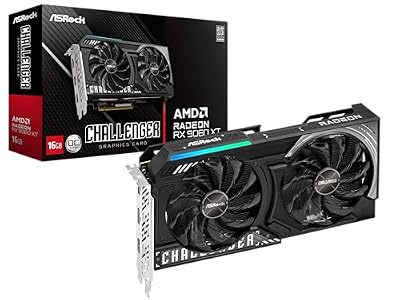
ASRock Radeon RX 9060 XT Challenger 16GB OC, RDNA 4, 3290MHz Boost, 16GB GDDR6 128-bit, PCIe 5.0, Dual Fans, 0dB Silent, LED Indicator, DisplayPort 2.1a, HDMI 2.1b
Included for 'Best GPU for Borderlands 4 (2026): 1080p, 1440p and 4K Picks' as a representative home product in this roundup; selection reflects the product set returned for this topic.
View on AmazonA best value pick for 1080p and entry-level 1440p with upscaling. Buy the 16GB version, since 8GB cards ran out of memory even at 1080p.
ASUS Dual GeForce RTX 5060 Ti 16GB OC Edition

ASUS Dual GeForce RTX 5060 Ti 16GB GDDR7 OC Edition Gaming Graphics Card
Included for 'Best GPU for Borderlands 4 (2026): 1080p, 1440p and 4K Picks' as a representative home product in this roundup; selection reflects the product set returned for this topic.
View on AmazonThe NVIDIA value pick, and the card whose 16GB version TechSpot found 73% faster than the 8GB model in this game.
Sparkle Intel Arc B580 Titan OC 12GB

Sparkle Intel Arc B580 Titan OC, 12GB GDDR6, Torn Cooling 2.0, Axial Fan, Breathing Light, Metal Backplate, SB580T-12GOC
Included for 'Best GPU for Borderlands 4 (2026): 1080p, 1440p and 4K Picks' because the listing adds cooling or gel-infused layers, which is the attribute this article compares.
View on AmazonBest budget: 12GB of VRAM, listed in Gearbox’s recommended spec, with XeSS upscaling and frame generation. Enable Resizable BAR and aim for Medium at 1080p.
How we compared
We compared these graphics cards using manufacturer specifications, the publisher’s official requirements, independent benchmark data from the sources named above, and owner reports. We did not bench-test these cards ourselves. Launch benchmark figures predate later patches, which Gearbox says improved performance.
Sources
- Gearbox Software, Borderlands 4 PC system requirements (support site)
- TechPowerUp, Borderlands 4 performance benchmark review
- TechSpot, Borderlands 4 GPU benchmark
- Hardware Times, Borderlands 4 GPU benchmarks
- Notebookcheck, Borderlands 4 review
- PCOptimizedSettings, Borderlands 4 settings optimization guide
- Corsair, Borderlands 4 PC performance optimization guide
- Wccftech, Borderlands 4 optimized settings
- DSOGaming and VideoCardz, Borderlands 4 patch performance coverage
- PC Gamer, Borderlands 4 system requirements analysis
Frequently Asked Questions
What is the best GPU for Borderlands 4?
For most players, a 16GB card in the RX 9070 XT or RTX 5070 Ti class. For 4K, the RTX 5080 or RTX 5090 with DLSS.
Is 8GB of VRAM enough for Borderlands 4?
Only at low settings. TechPowerUp measured well above 10GB of use at lower resolutions, and TechSpot found the 16GB RTX 5060 Ti 73% faster than the 8GB version.
Can an RTX 4060 run Borderlands 4?
Yes, but Hardware Times measured about 30fps at launch on a typical 1080p setup. Use Low to Medium settings and upscaling; patches since have helped.
Does Borderlands 4 support DLSS and FSR?
Yes. Upscaling and frame generation are vendor-specific: NVIDIA cards get DLSS Frame Generation, AMD cards FSR Frame Generation and Intel cards XeSS Frame Generation, per TechPowerUp.
Has Borderlands 4 performance improved since launch?
Yes. Gearbox’s March 2026 patch raised its RTX 4080 test system from about 55fps to about 78fps at 1440p Very High compared with the launch build, and further updates followed in July 2026.
Is the Badass preset worth it?
Generally no. Corsair’s guide said it adds almost nothing visually over Very High, and Notebookcheck saw an RTX 4080 drop from 87fps on High to 64fps on Badass at 1080p.
Does Borderlands 4 have ray tracing?
TechPowerUp found no ray tracing options in the menus and hardware Lumen not enabled, though software lighting still looks excellent.
How much RAM do I need for Borderlands 4?
16GB is the minimum and 32GB is recommended by Gearbox.