🛒 Best Price Today on Amazon
Prime members get fast, free shipping on everything above, plus member-only deals. New members get a 30-day free trial — cancel anytime.
- Use a Small Desk Plant
- Add a Desk Lamp
- Keep a Coordinated Color Scheme
- Use a Large Desk Mat
- Add Framed Photos
- Display a Small Art Print
- Use a Monitor Stand
- Add a Stylish Pen Holder
- Use Cable Management Accessories
- Add a Small Clock
- Add a Catch-All Tray
- Use Floating Shelves Above the Desk
- Add a Small Whiteboard
- Use Matching Storage Boxes
- Add Subtle Ambient Lighting
- How to Decorate a Work Desk Without Creating Clutter
- FAQ
- Conclusion
The best desk decor ideas for work combine style with function. A good workspace should feel personal without becoming distracting, while practical accessories can improve organization, comfort, and focus. From plants and lighting to cable management and storage, small changes can make a desk feel much more inviting.
Use a Small Desk Plant
A small plant can make a work desk feel less sterile without taking up much space. Compact options such as succulents, pothos, or small artificial plants fit easily beside a monitor and add a softer visual element to a setup dominated by screens, cables, and office equipment.
Choose a plant based on available light and maintenance preferences. Artificial greenery works well in offices without windows, while low-maintenance live plants are better for users who enjoy caring for them. Avoid oversized pots that reduce usable desk space or interfere with mouse movement.
Add a Desk Lamp
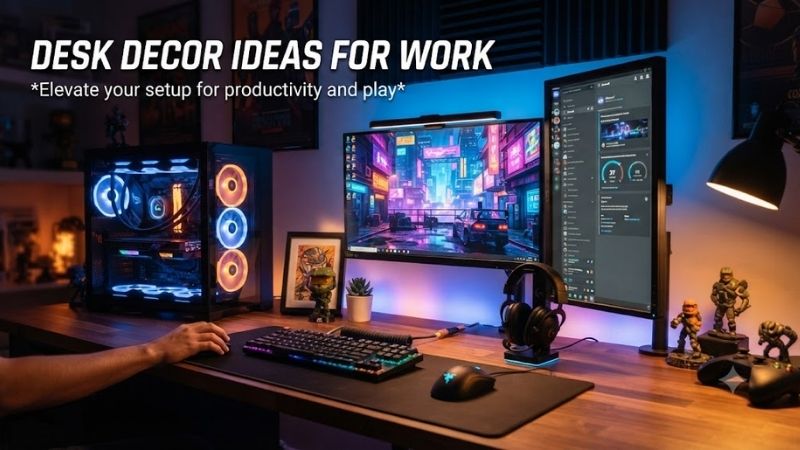
A desk lamp provides both decoration and practical task lighting. A simple adjustable lamp can illuminate documents, notebooks, and the keyboard while reducing dependence on harsh overhead lighting. Warm light can create a relaxed atmosphere, while neutral white light is better for detailed work.
Position the lamp so it does not create glare on the monitor. For dual-monitor setups, place it toward one side or behind the screens. A compact lamp with adjustable brightness provides more flexibility than a decorative light that offers only one fixed intensity.
Keep a Coordinated Color Scheme
A coordinated color palette makes a desk feel intentional rather than cluttered. Choose two or three colors and repeat them across accessories such as the desk mat, pen holder, notebook, lamp, storage trays, or monitor stand instead of mixing many unrelated finishes.
Neutral colors such as black, white, gray, beige, and wood tones are easy to combine. Small accent colors can then add personality without overwhelming the workspace. Matching accessories is especially effective in small offices where every visible item contributes to the overall appearance.
Use a Large Desk Mat
A desk mat visually ties together the keyboard, mouse, and other accessories while protecting the work surface. It can also make typing and mouse use feel more comfortable, especially on hard desks made from glass, laminate, or metal.
Choose a mat large enough to fit your main peripherals without covering the entire desk. Leather-style mats create a professional appearance, while fabric designs feel softer and work well for gaming or creative setups. Neutral designs are usually easier to match with other decor.
Add Framed Photos
Personal photos can make a work desk feel more familiar and motivating. A small frame with family, friends, pets, or a favorite travel memory adds personality without affecting productivity when positioned away from the main working area.
Limit the number of frames to avoid visual clutter. One or two well-positioned photos often look better than a large collection. Digital photo frames can also work well for users who want variety without using additional desk space for several individual frames.
Display a Small Art Print
A small art print, illustration, quote, or postcard can add character to a desk without requiring a major wall decoration project. Place it in a simple frame or lean it against a shelf, monitor riser, or wall behind the desk.
Choose artwork that complements the workspace colors rather than competing with them. Minimalist prints are especially useful in professional environments because they add personality while keeping the desk visually calm and appropriate for meetings or shared offices.
Use a Monitor Stand
A monitor stand adds vertical structure to the desk and creates extra storage underneath. It can raise the screen closer to eye level while providing space for notebooks, a keyboard, a small drawer, or other accessories when they are not being used.
Wood stands add warmth, while metal designs create a more modern look. Before buying, confirm that the stand is wide and strong enough for the monitor. Dual-screen setups may benefit more from a monitor arm, which clears even more desk space.
Add a Stylish Pen Holder
A pen holder is a small detail that can make a workspace look more organized. Instead of leaving pens, highlighters, scissors, and markers scattered across the desk, keep the most frequently used tools together in one compact container.
Choose a holder that matches the desk style. Metal mesh works well in traditional offices, while wood, ceramic, acrylic, or minimalist plastic designs can create a cleaner appearance. Keep only regularly used items inside to prevent the holder from becoming another cluttered storage area.
Use Cable Management Accessories
Visible cables can make even an expensive desk setup look unfinished. Cable clips, sleeves, trays, and Velcro ties help route charging cables, monitor wires, and power cords away from the main work area.
Start by removing cables that are no longer needed, then group the remaining ones according to destination. A cable tray under the desk can hide a power strip and adapters, while small clips keep charging cables from falling behind the desk when disconnected.
Add a Small Clock
A small desk clock can be both decorative and functional. It allows you to check the time without opening a phone or browser window, which can help reduce unnecessary distractions during focused work.
Choose a design with a clear display and avoid clocks with bright lighting or loud ticking sounds. Digital clocks work well in modern setups, while analog designs can add a traditional or minimalist touch depending on the materials and colors used.
Add a Catch-All Tray
A small tray provides one place for loose items such as keys, earbuds, USB drives, coins, access cards, and charging adapters. Keeping these objects together prevents them from spreading across the desk and makes them easier to find when leaving work.
Leather, wood, metal, and felt trays can all work well depending on the desk style. Select a shallow design so items remain visible rather than turning the tray into a hidden pile of clutter.
Use Floating Shelves Above the Desk
Floating shelves add storage and decoration without consuming desktop space. They can hold books, small plants, framed prints, collectibles, or boxes containing accessories that are not needed every day.
Avoid placing heavy objects directly above expensive monitors or equipment unless the shelves are installed securely. Keep the display relatively simple so the area remains visually balanced instead of creating a crowded wall above the workspace.
Add a Small Whiteboard
A small whiteboard can function as both practical office equipment and part of the desk decor. Use it for daily priorities, reminders, project milestones, or short notes that need to remain visible throughout the day.
Choose a board with a minimal frame and mount it where it can be seen without dominating the workspace. Clearing outdated notes regularly helps keep the board useful rather than allowing it to become visual noise.
Use Matching Storage Boxes
Small storage boxes can hide cables, adapters, spare stationery, and miscellaneous accessories that would otherwise remain visible. Matching containers make the workspace look more intentional while keeping less attractive items within easy reach.
Label boxes if several are used so you do not need to search through each one. Stackable designs are especially useful on shelves, while low-profile boxes can fit underneath a monitor stand or inside a desk drawer.
Add Subtle Ambient Lighting
LED light strips, small lamps, or monitor backlighting can make a desk feel more comfortable during evening work. Soft ambient light behind a monitor can also reduce the contrast between a bright screen and a dark room.
Use moderate brightness and avoid constantly changing colors in a professional workspace. Warm white or a single muted color usually creates a cleaner look. Gaming setups can use more dramatic lighting, but work desks generally benefit from a calmer approach.
How to Decorate a Work Desk Without Creating Clutter
Start by keeping the center of the desk clear. The keyboard, mouse, monitor, and notebook should remain easy to access, while decorative items belong around the edges, on shelves, or beneath a monitor stand.
Use vertical storage whenever possible. Monitor arms, shelves, and stands make better use of limited space than adding more objects directly to the desktop. Each decorative item should either have a function or provide enough visual value to justify the space it occupies.
A simple rule is to remove one item before adding another. This prevents gradual clutter and makes it easier to maintain the finished setup. A desk should still feel like a workplace first, even when decoration is an important part of the design.
FAQ
What should I put on my desk for decoration?
Good desk decorations include small plants, framed photos, art prints, a desk lamp, a stylish pen holder, a clock, and a large desk mat. Choose a few items that match the color scheme and keep enough open space for normal work.
How can I make my work desk look professional?
Use a limited color palette, hide cables, keep stationery organized, and avoid excessive decorative objects. A monitor stand, neutral desk mat, simple lamp, and one or two personal items can make the workspace look polished without feeling overly formal.
How do I decorate a small work desk?
Focus on vertical space and compact accessories. Use a monitor arm, floating shelf, small plant, cable clips, and a narrow storage tray. Avoid large decorations that reduce mouse space or make it difficult to access the keyboard.
Are plants good for office desk decor?
Yes. Small plants can add color and texture to an otherwise technical workspace. Choose low-maintenance varieties or artificial greenery if natural light is limited. Keep pots small enough that they do not interfere with work equipment.
What colors are best for a work desk?
Neutral colors such as white, black, gray, beige, and natural wood are easy to coordinate and create a calm workspace. Add one accent color through accessories or artwork if you want more personality without making the desk look busy.
Conclusion
The best desk decor ideas for work make the workspace more attractive without sacrificing function. Plants, lighting, desk mats, monitor stands, storage, photos, and cable management can completely change the feel of a desk. Keep the setup simple, coordinated, and organized so decoration supports productivity rather than becoming another distraction.