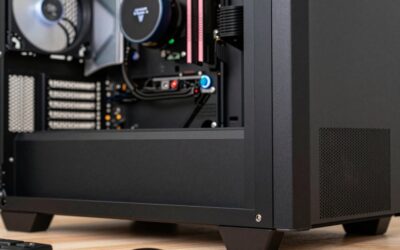
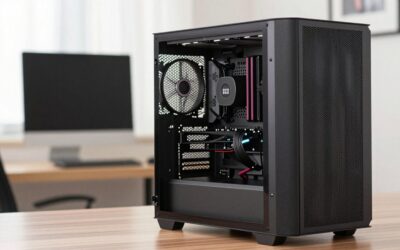
- Top Pick: msi Codex Z2 Gaming Desktop: AMD R7-8700F, GeForce RTX 5070, 32GB DDR5, 2TB m.2 NVMe SSD, USB Type-C, VR-Ready, Windows 11 Home : A8NVP-436US
- Best Value: KOTIN Prebuilt Gaming PC RTX 5070 12GB, Ryzen 7 9700X, 32GB DDR5, 1TB SSD
- Premium Choice: Alienware Aurora Gaming Desktop, RTX 5070, Intel Core Ultra 7 265F
Shopping for a gaming desktop under $1,000 in 2026 is a genuinely confusing exercise. Spec sheets look nearly identical across brands, “RTX-ready” marketing blurs the line between a capable 1440p machine and a badge-engineered budget box, and the same GPU can perform very differently depending on the CPU, RAM speed, and cooling paired with it. Add fluctuating street prices and it’s easy to overpay by $200 for hardware that will be a bottleneck within a year.
This guide cuts through that. We’ve focused on prebuilt desktops that realistically land at or below the $1,000 mark, prioritizing current-generation GPUs, DDR5 memory, and enough NVMe storage to hold more than three modern installs. Below you’ll find our shortlist, a practical buying framework, honest reviews of the top contenders, and answers to the questions we see most often from first-time prebuilt buyers.
As an Amazon Associate we earn from qualifying purchases at no extra cost to you.


⚡ Save on Your Next PC — Amazon Prime
Prime members get fast free shipping on the systems above, plus early access to Prime Day & Black Friday PC deals. New members get a 30-day free trial.
Watch: Best Gaming PC Under $1000 — Video Review
How to Choose Gaming PC Under $1000
- Prioritize the GPU above all else: Your graphics card determines frame rates more than any other component. At this budget, an RTX 5060 Ti is the sensible floor and an RTX 5070 is the target — it comfortably handles 1440p at high settings in most current titles.
- Don’t overpay for CPU headroom you won’t use: A Ryzen 7 8700F or Core Ultra 7 is more than enough to feed a mid-range GPU. Spending extra on a flagship CPU in a $1,000 build almost always means compromising elsewhere.
- Insist on 32GB of DDR5 where possible: 16GB still works, but 32GB has become the comfortable baseline for modern titles running alongside Discord, a browser, and streaming software. DDR5 also future-proofs any later upgrade.
- Check storage capacity, not just type: Every machine here uses NVMe SSDs, but 512GB fills up after two or three AAA installs. Aim for 1TB minimum and treat 2TB as a genuine value add rather than a luxury.
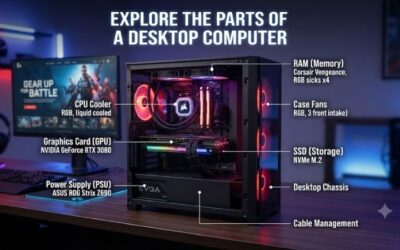
- Look at the chassis, PSU, and cooling: Cheap prebuilts often save money on proprietary power supplies and restrictive cases, which limits GPU upgrades later. Standard ATX layouts and a reputable PSU are worth a small premium.
The Best Picks Reviewed
MSI Codex Z2 (RTX 5070, 32GB, 2TB)
This is the standout configuration of the group: an RTX 5070 paired with a Ryzen 7 8700F, 32GB of DDR5, and a 2TB NVMe drive is genuinely hard to beat at this price point. MSI’s chassis and thermals are proven, and the storage capacity alone saves most buyers a $100 upgrade down the line.
KOTIN Prebuilt Gaming PC (RTX 5070, Ryzen 7 9700X)
KOTIN pairs the same RTX 5070 with a newer Ryzen 7 9700X, which gives it a real edge in CPU-heavy titles like simulators and competitive shooters running at high refresh rates. The 1TB SSD is the only compromise, but it’s an easy and inexpensive fix.
Alienware Aurora (RTX 5070, Core Ultra 7 265F)
The Aurora is the choice for buyers who want a polished machine with proper support and a warranty they can actually call — Dell’s build quality and thermal design are a step above most budget prebuilts. Just be aware that Alienware’s chassis and power supply are less upgrade-friendly than a standard ATX build.
MSI Codex Z2 (RTX 5060 Ti, 16GB, 1TB)
This trimmed-down Codex Z2 is the value pick if the RTX 5070 models push past your budget, delivering strong 1080p performance and competent 1440p gaming with the same reliable MSI platform. The 16GB of DDR5 is the main limitation, though adding another kit is straightforward.
YAWYORE Gaming PC (Ryzen 7 5700X, RTX 5060)
A sensible entry point that pairs a current-generation RTX 5060 with the older but still capable Ryzen 7 5700X, making it well suited to 1080p esports and moderately demanding single-player games. The previous-gen CPU platform limits long-term upgrade paths, so treat this as a complete package rather than a foundation.
Frequently Asked Questions
Can a $1,000 gaming PC handle 1440p gaming in 2026?
Yes, provided you’re realistic about settings. The RTX 5070 builds on this list will run most current titles at 1440p with high settings and upscaling enabled, typically landing between 70 and 120 FPS depending on the game.
Is a prebuilt worse value than building it myself?
The gap has narrowed considerably. Prebuilt manufacturers buy components at volume, so at the $1,000 mark you’re often paying only a modest premium for assembly, a warranty, and a licensed copy of Windows 11.
Should I choose more RAM or a bigger SSD?
If you have to pick one, take the RAM. Moving from 16GB to 32GB has a measurable effect on frame-time consistency in modern titles, whereas storage is the cheapest and easiest component to add later.
Do any of these include a monitor, keyboard, or mouse?
Generally no — most desktops in this range ship as a tower only, though budget peripheral bundles are occasionally offered. Factor $150 to $250 into your total budget for a decent 1440p monitor and peripherals if you’re starting from scratch.
Final Thoughts
For most buyers, the MSI Codex Z2 with the RTX 5070, 32GB of DDR5, and 2TB of storage is the clear recommendation — it offers the strongest overall specification for the money and needs no immediate upgrades. If CPU performance matters more to you, the KOTIN RTX 5070 build with the Ryzen 7 9700X is the sharper option, while the RTX 5060 Ti version of the Codex Z2 remains the smartest choice for anyone gaming primarily at 1080p and looking to keep the total spend well under budget.