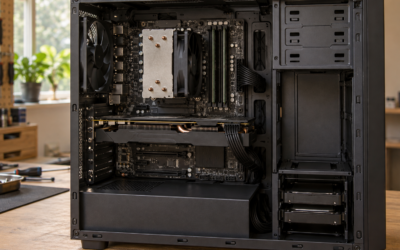
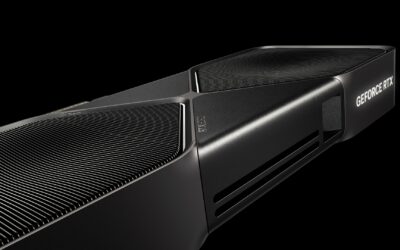
Video editing pushes a computer harder than most games do. A timeline packed with 4K footage, color grading, and layered effects leans heavily on CPU cores for encoding and exporting, GPU horsepower for accelerated playback and rendering, and a generous pool of RAM to keep large projects responsive. Fast NVMe storage matters too, since scrubbing through high-bitrate clips off a slow drive turns editing into a stuttering slideshow. The good news is that the same components that make a prebuilt desktop a strong gaming machine also happen to be exactly what editors want.
That overlap is why a well-specced gaming PC doubles as a capable editing workstation. A modern Ryzen or Intel processor with plenty of cores chews through renders, a discrete RTX GPU accelerates encoding in Premiere Pro, DaVinci Resolve, and CapCut, and 32GB of RAM keeps timelines fluid. The builds below balance both worlds, ranging from budget-friendly starters to serious multi-core machines, so you can jump into 4K editing and high-refresh gaming without piecing together parts yourself.
As an Amazon Associate we earn from qualifying purchases at no extra cost to you.



🎮 Get More From Your Setup — Free
Prime Gaming gives you free PC games every month, in-game loot, and a free Twitch sub — plus fast free shipping on the rigs above. New members get a 30-day free trial.
Watch: Best Prebuilt Gaming PC for Video Editing — Video Review
What to Look for in a Video Editing PC
- CPU cores and clock speed: Editing and exporting scale directly with core count, so aim for at least an 8-core chip like a Ryzen 7 or Intel i7; more cores mean faster renders on complex 4K timelines.
- GPU with strong encoders: Look for an NVIDIA RTX card with modern NVENC hardware, which offloads encoding and dramatically speeds up exports and effects in Premiere Pro and DaVinci Resolve.
- 32GB of RAM or more: Video editing is memory-hungry, and 32GB is the practical sweet spot for 4K projects; 16GB works for 1080p but fills up fast once you stack effects and previews.
- NVMe SSD storage: A fast NVMe drive keeps high-bitrate footage scrubbing smoothly and shortens project load times; a large capacity also gives your scratch files and cache room to breathe.
- Room to upgrade: Check for free RAM slots, extra drive bays, and a power supply with headroom so you can add memory, storage, or a bigger GPU as your projects grow more demanding.
The Best Prebuilt PCs for Gaming & Video Editing
KOTIN RTX 5070 Editing Powerhouse
If you want a machine that never feels like a compromise, the KOTIN pairs a Ryzen 7 9700X with an RTX 5070 and 32GB of RAM. That combination is a genuine editing workhorse: the eight fast Zen 5 cores crush 4K exports while the 5070’s modern NVENC encoder accelerates playback and rendering in Premiere Pro and DaVinci Resolve. It also happens to be a superb 1440p and entry-4K gaming rig. At roughly $1,900 it sits at the premium end here, but for editors who value shorter render times and future-proof headroom, it is the clear top pick.
WIWB RTX 5060 Ti Balanced Build
The WIWB slots in as the smart middle-ground option at around $1,100, built around an RTX 5060 Ti. That GPU carries the latest-generation encoders, so it punches well above its price for accelerated editing and exports, and the extra VRAM helps when you are working with effects-heavy timelines. For creators editing mostly 1080p and light 4K who also want strong 1440p gaming, this build delivers most of the flagship experience for a lot less money, making it the best overall value on this list.
YAWYORE Ryzen 7 5700X RTX 5060
Priced near $1,300, the YAWYORE combines a Ryzen 7 5700X with an RTX 5060. The eight-core CPU gives you plenty of threads for encoding and multitasking, while the RTX 5060 handles GPU-accelerated timelines and exports comfortably. It is a well-rounded pick for someone who edits regularly but does not need bleeding-edge silicon, and the platform leaves easy room to add storage or memory down the road as your workload expands.
suevery RTX 3050 Ryzen 5 Budget Starter
For editors on a tight budget, the suevery build lands around $700 with a Ryzen 5 processor and an RTX 3050. It is best suited to 1080p editing and lighter projects, where the RTX 3050’s NVENC encoder still meaningfully speeds up exports over CPU-only encoding. Do not expect flagship render times on dense 4K timelines, but as an affordable entry into GPU-accelerated editing and 1080p gaming, it is a sensible first step you can upgrade later.
STGAubron i7 RTX 3050 32GB
The STGAubron makes an interesting case at about $820 by pairing an Intel i7 with an RTX 3050 and a full 32GB of RAM. That memory headroom is the standout: many budget builds skimp on RAM, but 32GB lets you keep larger 4K projects and multiple applications open without constant slowdowns. The RTX 3050 is modest for heavy rendering, yet the strong CPU and generous memory make this a capable value pick for editors who prioritize smooth multitasking over raw GPU speed.
Frequently Asked Questions
How much RAM do I need for 4K video editing?
32GB is the practical minimum for comfortable 4K editing in 2026. It gives your editing software room for large previews, cache, and background tasks without stalling. You can technically edit 4K on 16GB, but you will hit slowdowns once you layer effects, run color grading, or keep other apps open, so 32GB or more is the safer target.
Does the GPU matter for video editing?
Yes, more than many people expect. Modern editors like Premiere Pro and DaVinci Resolve use the GPU to accelerate playback, apply effects, and encode exports through hardware like NVIDIA’s NVENC. A stronger RTX card means smoother scrubbing and noticeably faster render times, which is why every build here uses a discrete GPU rather than relying on integrated graphics.
Is Ryzen or Intel better for editing?
Both are excellent, and the choice usually comes down to the specific chip rather than the brand. AMD’s Ryzen 7 processors offer outstanding multi-core performance for exports at competitive prices, while Intel’s i7 chips deliver strong all-around speed. For editing, prioritize core count and the overall platform balance with GPU and RAM instead of fixating on one manufacturer.
Can a gaming PC edit video well?
Absolutely. Gaming PCs are built around exactly the components editors need: a powerful multi-core CPU, a capable discrete GPU, fast storage, and plenty of RAM. A well-specced gaming desktop doubles as a serious editing workstation, which is why the balanced builds on this list handle high-refresh gaming and 4K timelines equally well.
Final Thoughts
The best prebuilt for gaming and video editing is the one whose CPU cores, GPU encoder, and RAM match your footage and budget. The KOTIN RTX 5070 build is the standout for editors who want maximum speed and headroom, while the WIWB RTX 5060 Ti offers the best balance of price and performance for most creators; budget-focused buyers will find the STGAubron and suevery builds a solid, upgradeable entry into accelerated editing and gaming alike.