🛒 Best Price Today on Amazon
Prime members get fast, free shipping on everything above, plus member-only deals. New members get a 30-day free trial — cancel anytime.
- What an RTX 5090 Build Actually Demands
- Best CPU for RTX 5090: What Will and Will Not Bottleneck It
- Motherboard and Chipset: Does PCIe 5.0 Actually Matter?
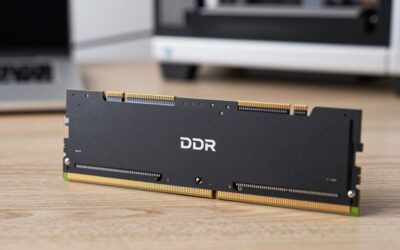
- RAM: Speed and Capacity That Are Worth Paying For
- What PSU Do You Need for an RTX 5090?
- Warning: 12VHPWR Seating and Adapter Daisy-Chaining
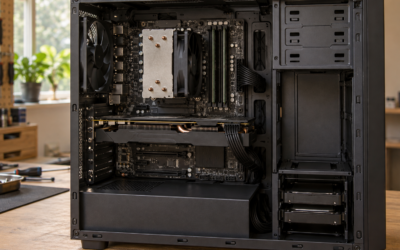
- Case Clearance, Airflow and Cooling
- Monitor Pairing: Do Not Waste the Card
- Full Parts Tier Table
- Frequently Asked Questions
An RTX 5090 needs four things from the rest of the build: a current flagship CPU (Ryzen 7 9800X3D, Ryzen 9 9950X3D or Core Ultra 9 285K), 32GB of DDR5 at a speed your memory controller can actually run, a 1000W ATX 3.1 power supply with a native 12V-2×6 cable, and a case with roughly 360mm of clearance and real front-to-back airflow. Everything else is preference.
The card draws up to 575W and pushes that heat straight into your case. That one number drives the PSU, case and cooling decisions together, which is why a 5090 build is less about picking parts than about making sure nothing you pick quietly throws away the performance you paid for.
What an RTX 5090 Build Actually Demands
Some constraints here are hard and some are marketing. Hard: power delivery, physical clearance, thermal headroom. Soft: PCIe generation, exotic RAM kits, chipset tier. Builders routinely overspend on the soft ones and underspend on the hard ones, then wonder why the card throttles in a glass-fronted case or why the system reboots during a shader-compilation spike.
Settle your target resolution first. A 5090 at 4K is GPU-limited in almost everything, so the CPU barely matters. The same card at 1440p on a 240Hz panel is CPU-limited in plenty of titles, which makes the processor the biggest variable in the build. Our notes on how CPU and GPU bottlenecks show up in frametimes are worth reading first.
Best CPU for RTX 5090: What Will and Will Not Bottleneck It
At 4K, the CPU is a supporting actor
At native 4K with ray tracing on, the GPU does so much per-frame work that frame rates converge across every modern high-end CPU — a 7800X3D and a 9950X3D land within a couple of percent of each other. If you already own a 7800X3D or a 13700K-class chip and play only at 4K, pairing it with a 5090 is not a mistake.
At 1440p and with frame generation, the CPU decides
Drop to 1440p, turn on DLSS upscaling (which lowers the internal render resolution and the GPU load with it), or chase 200+ fps in an esports title, and the CPU becomes the ceiling. Frame generation does not change that: the base framerate is still CPU-bound. Large 3D V-Cache helps a lot here, which is why the 9800X3D is the default high-refresh pick.
| CPU | Best for | Trade-off | Verdict with a 5090 |
|---|---|---|---|
| Ryzen 7 9800X3D | Pure high-refresh gaming, 1440p and 4K | 8 cores limit heavy multitasking/rendering | Best all-round pairing |
| Ryzen 9 9950X3D | Gaming plus streaming, compiling, 3D work | Costs noticeably more; needs good cooling | Best if you also work on the machine |
| Core Ultra 9 285K | Productivity-heavy mixed use, high memory speeds | Trails X3D parts in CPU-bound gaming | Fine, not the gaming optimum |
| Ryzen 7 7800X3D | Existing AM5 owners | Slightly behind 9800X3D in CPU-limited scenes | Keep it; no bottleneck at 4K |
| Core i5 / Ryzen 5 mid-range | Nothing, in this build | Measurable frame-rate loss even at 4K in sim titles | Do not pair — rebalance the budget |
Motherboard and Chipset: Does PCIe 5.0 Actually Matter?
Practically, no. The RTX 5090 uses a PCIe 5.0 x16 interface, but bandwidth testing on every high-end card in recent generations shows a low single-digit percentage difference between PCIe 5.0 x16 and PCIe 4.0 x16, and the 5090’s 32GB of VRAM means it rarely has to stream over the bus in the first place. Do not replace a working PCIe 4.0 platform purely for the slot.
VRM quality and layout matter more. Pick X870E, X870 or a well-built B850 for Ryzen; Z890 for the Core Ultra 9 285K. Check that the primary x16 slot is reinforced (a 2kg-plus card hangs off it), that the top M.2 heatsink clears a 3.5-slot cooler, and that there are enough fan headers. Our breakdown of what the chipset tiers actually change covers lane-splitting for multiple Gen5 SSDs.
RAM: Speed and Capacity That Are Worth Paying For
32GB is the sensible floor in 2026 — several recent titles genuinely use more than 16GB of system memory with a 4K texture pack loaded, and 32GB costs little enough that undersizing is false economy. 64GB is for creators, heavy multitaskers and people running local models, not for gamers.
Speed is platform-specific. On AM5, DDR5-6000 CL30 running 1:1 with a 2000MHz fabric clock is still the sweet spot; DDR5-8000 usually forces a divider that costs latency. Intel’s LGA1851 controller is happier high, so DDR5-7200 to 8000 is realistic. Either way, enable EXPO or XMP — a kit left at its 4800MT/s JEDEC default is a self-inflicted bottleneck and the most common first-build mistake. See our guide to choosing DDR5 speed and timings.
What PSU Do You Need for an RTX 5090?
Plan for 1000W, and read the fine print: the 5090’s 575W board power is an average, not a peak. Cards of this class produce millisecond transient spikes well above the rated draw. A supply without headroom for them does not warn you — it trips over-current protection and the machine reboots mid-game, usually during a loading screen or shader compile.
Buy an ATX 3.1 unit with a native 12V-2×6 cable. ATX 3.x units are designed and certified to tolerate power excursions well above their continuous rating, which is exactly the behaviour this card exercises. An older, otherwise excellent ATX 2.x unit with a bundled adapter is the configuration most likely to cause you grief.
| CPU paired with the RTX 5090 | Minimum sane PSU | Recommended | Why |
|---|---|---|---|
| Ryzen 7 9800X3D (stock) | 850W ATX 3.1 | 1000W ATX 3.1 | Efficient CPU; 850W works but leaves little transient margin |
| Ryzen 9 9950X3D | 1000W | 1000–1200W | 16 cores can add 200W+ under mixed load |
| Core Ultra 9 285K | 1000W | 1200W | Higher sustained package power under all-core load |
| Any CPU + GPU overclock / higher power limit | 1200W | 1200–1300W | Raising the board power ceiling raises the spikes too |
| Heavy multi-drive, AIO, 8+ fan build | +100W over the above | — | Peripheral draw adds up faster than people expect |
Gold versus Platinum affects your power bill and heat, not stability — headroom and cable type are the real decisions. Reusing an old unit? Check its age as well as its rating; a seven-year-old 1000W supply is not a 1000W supply any more. More detail in our ATX 3.1 power supply buying guide.
Warning: 12VHPWR Seating and Adapter Daisy-Chaining
Do not skim this one. The 12VHPWR / 12V-2×6 connector carries up to 600W through six conductor pairs, and the failures that made headlines share a pattern: a plug that was not fully seated, or a load spread unevenly across the pins.
- Seat it until it clicks, then look at it. A partially inserted plug leaves the sense pins engaged while the power pins make poor contact — high resistance, heat, melted plastic. Any visible gap at the shroud means it is not in.
- Use the PSU’s own native cable. One cable from a 12V-2×6-equipped ATX 3.1 unit to the card is the lowest-risk setup. Modular cables from another brand can use different pinouts — that mistake destroys both ends.
- Never daisy-chain or stack adapters. An 8-pin-to-12VHPWR adapter feeding another adapter, or two 8-pins doing the work of four, concentrates current through fewer conductors than the design assumes.
- Do not force a tight bend at the connector. Keep at least 35mm of straight cable before any bend so the terminals stay square in their housing. This is a real argument for a wider case.
- Check it after a week. Power down, feel the housing after a long session, look for discolouration. Warm is normal; hot or brown is not.
Case Clearance, Airflow and Cooling
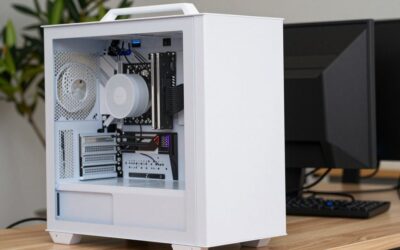
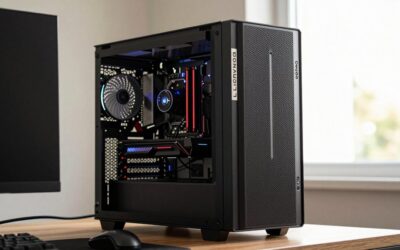
Partner RTX 5090 cards run roughly 300–360mm long and 3 to 3.5 slots thick, and weigh enough to sag a slot over time — budget for a support bracket. Measure your case’s stated GPU clearance with front fans installed, because that figure is usually quoted without them.
Airflow matters more than cooler choice. All 575W passes through your case on its way to the room. Target three front intakes, one or two exhausts at the rear and top, and a mesh front panel — tempered glass costs double-digit degrees on both GPU and CPU. With a 9950X3D or 285K, a 360mm AIO exhausting from the top keeps the CPU out of the GPU’s hot air. Our case airflow setup guide has fan curves, and the AIO vs air cooler comparison covers clearance with tall RAM.
Monitor Pairing: Do Not Waste the Card
A 5090 driving a 60Hz 1080p panel is the most expensive way to cap your own frame rate. Pair it with a 4K 144Hz+ display (OLED if the budget allows) or a 1440p 240–360Hz panel for competitive shooters, and use DisplayPort 2.1b on a certified cable for full bandwidth at high refresh. More in our 4K gaming monitor guide.
Full Parts Tier Table
| Component | Budget-sane | Balanced | No-compromise |
|---|---|---|---|
| CPU | Ryzen 7 7800X3D | Ryzen 7 9800X3D | Ryzen 9 9950X3D |
| Motherboard | B650E / B850 | X870 | X870E |
| RAM | 32GB DDR5-6000 CL30 | 32GB DDR5-6000 CL28 | 64GB DDR5-6000 CL30 |
| PSU | 850W ATX 3.1 Gold | 1000W ATX 3.1 Gold | 1200W ATX 3.1 Platinum |
| Cooling | Dual-tower air | 360mm AIO | 360–420mm AIO, 7+ fans |
| Case | Mid-tower mesh, 360mm+ GPU clearance | High-airflow mid-tower | Full tower, vertical clearance for cable bend |
| Storage | 2TB PCIe 4.0 NVMe | 2TB Gen5 + 4TB Gen4 | 4TB Gen5 NVMe |
| Display | 1440p 240Hz | 4K 160Hz OLED | 4K 240Hz OLED |
The budget-sane column is not a compromised build — it is the same 4K experience for meaningfully less money, and it is what most people should buy. The no-compromise column is for people who also render, compile or stream. First build? Walk through our step-by-step PC assembly guide before opening a box.
Frequently Asked Questions
Will a Ryzen 7 7800X3D bottleneck an RTX 5090?
At 4K, effectively no — the GPU is the limiting factor in nearly every demanding title, and the 7800X3D lands within a few percent of the newest chips. At 1440p, or with heavy upscaling that reduces GPU load, you will see a measurable gap versus a 9800X3D in CPU-heavy games like simulators and strategy titles. If you play at 4K, keep the chip and spend the money elsewhere in the build.
Is an 850W power supply enough for an RTX 5090?
It can work with an efficient CPU like a stock 9800X3D, provided the unit is a quality ATX 3.1 model with a native 12V-2×6 cable, but it leaves very little margin for the card’s millisecond transient spikes. A 1000W ATX 3.1 unit is the safer standard recommendation, and 1200W is appropriate if you pair the card with a 16-core Ryzen 9 or a Core Ultra 9 285K, or if you raise the GPU’s power limit.
Do I need PCIe 5.0 for an RTX 5090?
No. The card runs a PCIe 5.0 x16 link, but real-world differences between Gen5 and Gen4 x16 for gaming are within a few percent, and the 32GB frame buffer means the card rarely streams heavily across the bus. Do not upgrade a functioning Gen4 platform for the slot alone. Where Gen5 genuinely helps is storage bandwidth, which is a separate decision entirely.
How much RAM should an RTX 5090 build have?
32GB is the right amount for a gaming-focused build in 2026, and it is enough for modern titles with high-resolution texture packs plus a browser and Discord running alongside. Go to 64GB only if you edit video, run virtual machines, compile large projects or run local AI models. What matters more than capacity is enabling your EXPO or XMP profile so the kit runs at its rated speed rather than a 4800MT/s default.
Can I reuse my old 12VHPWR adapter with an RTX 5090?
You should not. A native 12V-2×6 cable from an ATX 3.1 power supply is the lowest-risk connection, because adapters concentrate current through fewer conductors and add two more contact points where resistance and heat can build. Never stack one adapter into another, never mix cables between PSU brands, and always confirm the plug is fully seated with no visible gap at the shroud before powering on.