🛒 Best Price Today on Amazon
Prime members get fast, free shipping on everything above, plus member-only deals. New members get a 30-day free trial — cancel anytime.
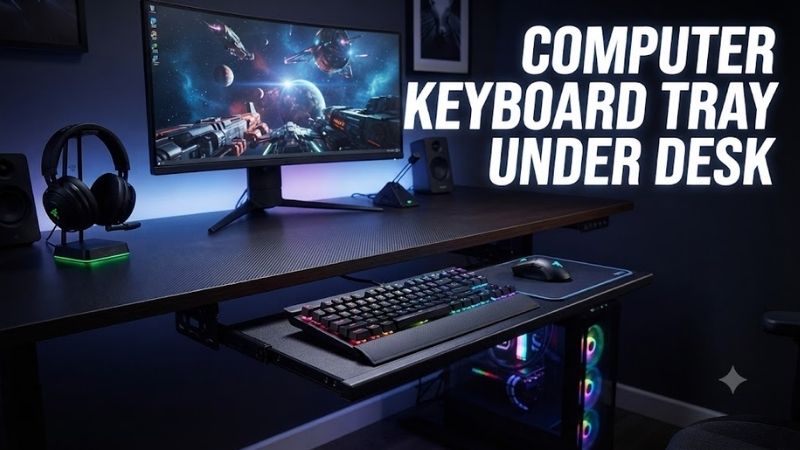
A Computer Keyboard Tray Under Desk can free valuable desktop space while placing the keyboard and mouse closer to a comfortable working height. The best trays combine smooth sliding, stable mounting, enough mouse room, and useful height or tilt control without reducing knee clearance or conflicting with desk frames.
Quick Comparison
| Product | Best For | Key Advantage | Limitation |
|---|---|---|---|
| UPLIFT Big Standard Keyboard Tray | Best Overall | Large shared keyboard and mouse platform | Requires under-desk installation |
| 3M AKT80LE Keyboard Tray | Best Ergonomic Adjustment | Wide height, tilt, and swivel control | Knob adjustment is slower |
| Humanscale 6G Keyboard System | Best Premium | Compact ergonomic mechanism | Premium price |
| VIVO MOUNT-KB05E | Best Clamp-On | No drilling required | Limited height adjustment |
| UPLIFT Big Ultra-Thin Keyboard Tray | Best Low-Profile | Thin platform preserves knee room | Less premium than articulating systems |
| Fellowes Underdesk Keyboard Manager | Best Basic Storage | Simple slide-out organization | Limited ergonomic adjustment |
Best Computer Keyboard Tray Under Desk Picks
UPLIFT Big Standard Keyboard Tray
Best For: Full-size keyboards, office work, and users who want the keyboard and mouse on one platform.
Key Features:
- 27-inch-wide platform
- 11-inch depth
- Keyboard and mouse side-by-side layout
- Height adjustment
- Positive and negative tilt
- 360-degree swivel
- Multiple under-desk track options
- Integrated wrist-support area
The UPLIFT Big Standard is a strong all-around choice because the broad platform can accommodate a full-size keyboard and mouse without separating them onto different surfaces. Keeping both input devices at the same height can make a workstation easier to position, particularly when the desktop itself sits too high for comfortable typing.
Its articulating mechanism provides more control than a simple sliding shelf. Depending on configuration, users can alter height, tilt, and swivel before pushing the tray back below the desk. The main consideration is mounting clearance because standing-desk frames, cable trays, control boxes, and crossbars can interfere with the track.
What Makes It Different: The combination of a large shared surface and meaningful ergonomic adjustment makes it more versatile than narrow keyboard-only trays.
Pros:
- Spacious keyboard and mouse area
- Adjustable height and tilt
- Full 360-degree swivel
Cons:
- Requires mounting beneath the desk
- Large tray needs sufficient clearance
Who Should Buy It: Choose it for a permanent office or standing-desk workstation where comfort and usable mouse space matter more than quick installation.
3M AKT80LE Keyboard Tray
Best For: Users who need precise height and tilt positioning.
Key Features:
- Adjustable keyboard platform
- Separate mouse surface
- Mouse pad can be positioned left or right
- Positive and negative tilt
- Height adjustment
- 360-degree swivel
- Gel wrist support
- Under-desk storage
The 3M AKT80LE is designed for workstations where the keyboard needs more than a simple pull-out shelf. Its articulating arm allows the platform to move above or below its mounted position while also providing tilt adjustment. This can help users bring the keyboard closer to elbow level instead of raising the chair excessively.
A separate mouse surface can be placed on either side, making the system practical for left- and right-handed users. The included wrist-support area also distinguishes it from bare wooden trays, although the platform and mechanism require enough unobstructed depth beneath the desk for the track and arm to move correctly.
What Makes It Different: The AKT80LE places more emphasis on positioning than storage. Height, tilt, swivel, and ambidextrous mouse placement create a workstation that can be tuned more precisely.
Pros:
- Strong height and tilt adjustment
- Left- or right-side mouse platform
- Gel wrist support
Cons:
- Installation requires drilling
- Knob-based adjustment is less immediate than quick-release systems
Who Should Buy It: This model is appropriate for office users who have a fixed-height desk that leaves the keyboard too high for comfortable daily work.
Humanscale 6G Keyboard System
Best For: Premium ergonomic desks and compact sit-stand installations.
Key Features:
- Compact articulating mechanism
- Negative tilt support
- Height adjustment
- Multiple platform choices
- Optional palm supports
- Designed for limited under-desk space
- Compatible with workstation-focused setups
Humanscale’s 6G system is built around ergonomic positioning rather than simply creating storage beneath the desk. Its compact mechanism is particularly useful on desks where motors, crossbars, or cable-management components limit the depth available for a long keyboard track. The platform can be configured for different workstation needs.
Negative tilt is a key part of the design. Instead of raising the rear of the keyboard toward the user, the platform can angle away from the body, helping keep the wrists closer to neutral when the tray is positioned near elbow height. The trade-off is cost, as this is a premium system rather than an inexpensive desk accessory.
What Makes It Different: The compact mechanism and ergonomic emphasis make the 6G especially suitable for higher-end sit-stand desks where clearance is limited.
Pros:
- Compact premium mechanism
- Useful negative tilt
- Multiple platform configurations
Cons:
- Expensive
- Requires careful installation
Who Should Buy It: Choose the 6G if you use a keyboard for many hours each day and want a permanent ergonomic solution rather than a basic slide-out drawer.
VIVO MOUNT-KB05E Clamp-On Keyboard Tray
Best For: Renters, temporary setups, and users who do not want to drill into a desk.
Key Features:
- Clamp-on mounting
- Wide keyboard and mouse surface
- Smooth sliding rails
- C-clamp installation
- Anti-skid desk protection
- Multiple finish options
- Under-desk storage
- No permanent holes required
The VIVO MOUNT-KB05E solves one of the biggest problems with traditional keyboard trays: installation. Instead of attaching a long track with screws, the system clamps to the front edge of a compatible desktop. This makes it easier to remove, reposition, or move to another desk without leaving permanent holes behind.
The broad platform offers enough room for many standard keyboards and a mouse, while the sliding mechanism lets the entire surface retract beneath the desk. Because the tray hangs from front-mounted clamps, users should verify desktop thickness, edge shape, and clearance before buying. Rounded or reinforced desk edges can prevent proper mounting.
What Makes It Different: Its reversible clamp installation provides most of the desk-space benefits of an under-desk tray without permanently modifying furniture.
Pros:
- No drilling
- Large shared work surface
- Easy to remove or relocate
Cons:
- Desk-edge compatibility matters
- Limited ergonomic adjustment compared with articulating arms
Who Should Buy It: It is ideal for apartments, student rooms, rented offices, and desks where permanent screw holes are undesirable.
UPLIFT Big Ultra-Thin Keyboard Tray
Best For: Users concerned about knee clearance.
Key Features:
- Low-profile platform
- Wide work surface
- Keyboard and mouse support
- Under-desk track system
- Adjustable positioning
- Designed to reduce platform thickness
- Compatible with UPLIFT keyboard tray hardware
Under-desk accessories can create a new problem if the tray, track, and mechanism occupy too much vertical space above the knees. UPLIFT’s Big Ultra-Thin design addresses that issue with a slimmer platform while still giving the keyboard and mouse a dedicated surface below the main desktop.
A thin platform is especially useful on fixed-height desks with limited legroom or standing desks whose frame already reduces clearance. The design still needs a compatible track and enough under-desk space to retract fully, so measuring the frame, knees, and mounting surface remains important before installation.
What Makes It Different: The emphasis is not on adding more features but on reducing unnecessary thickness beneath the desktop while retaining a wide typing surface.
Pros:
- Better knee clearance
- Wide keyboard and mouse space
- Cleaner under-desk profile
Cons:
- Still requires permanent mounting
- Fewer premium ergonomic features than Humanscale
Who Should Buy It: Choose this style when you want a full-width under-desk tray but cannot afford to sacrifice much vertical legroom.
Fellowes Underdesk Keyboard Manager
Best For: Simple slide-out keyboard storage on traditional desks.
Key Features:
- Under-desk mounting
- Slide-out keyboard platform
- Separate mouse area
- Basic workstation organization
- Compact office-oriented design
- Keeps input devices off the desktop
The Fellowes Underdesk Keyboard Manager is better viewed as a storage and organization accessory than a high-end ergonomic system. It gives the keyboard a dedicated surface beneath the desktop and provides mouse space, allowing paperwork, a laptop, or other accessories to occupy the main desk without competing with the keyboard.
Its simpler design is useful for users who do not need advanced tilt or articulating height adjustments. The trade-off is that it cannot adapt to body position as precisely as the 3M or Humanscale systems. Before installation, users should still check whether the desk has enough uninterrupted underside area for the mounting hardware.
What Makes It Different: The straightforward design focuses on freeing desktop space without the complexity of a premium articulating arm.
Pros:
- Simple slide-out storage
- Dedicated mouse space
- Useful for traditional office desks
Cons:
- Limited ergonomic adjustment
- Permanent mounting required
Who Should Buy It: It fits basic office, reception, and home workstations where the primary goal is moving the keyboard below the desktop.
How to Choose an Under-Desk Keyboard Tray
Measure the Keyboard and Mouse Together
A tray may appear wide enough for a keyboard but become cramped once a mouse is added. Full-size boards with number pads need more horizontal space than compact or tenkeyless models, while low-sensitivity mouse users need additional movement room. Measure the complete working area rather than the keyboard alone.
A wide shared platform such as the UPLIFT Big Standard or VIVO design keeps both devices at the same height. Separate mouse platforms can save space and support left-handed configurations, but they may provide less room for broad mouse movements. Gaming users should be particularly careful with narrow mouse sections.
Check Under-Desk Clearance Before Buying
Look underneath the desk before choosing a track-mounted tray. Standing-desk motors, crossbars, drawers, cable trays, power strips, and control boxes can block the mounting location even when the desktop looks completely clear from above. Measure both the available width and the usable depth.
Knee clearance also matters. A tray that lowers the keyboard comfortably may place its mechanism directly above the thighs. Thin platforms can help in shallow spaces, while compact mechanisms such as Humanscale’s are useful when long tracks are difficult to fit around an existing desk frame.
Choose Clamp-On or Screw-Mounted Installation
Clamp-on trays are easier to install, remove, and reuse. They are particularly useful on rented furniture or desks that you may replace soon. Their weakness is compatibility: thick desktop edges, decorative trim, front beams, or beveled surfaces can stop the clamps from sitting flat and secure.
Screw-mounted systems take more effort but usually provide a cleaner installation and broader adjustment options. They also place the mounting hardware beneath the desk instead of around the front edge. Before drilling, confirm the desktop is thick enough for the supplied screws and does not contain fragile hollow sections.
Prioritize Height and Negative Tilt for Ergonomics
The main ergonomic benefit of a keyboard tray is the ability to position the keys closer to elbow height while the shoulders remain relaxed. A simple sliding shelf creates more desk space, but an articulating system can also correct a desktop that is too high for comfortable typing.
Negative tilt can be useful because it angles the keyboard slightly away from the user rather than lifting the rear edge. This can reduce upward wrist extension when the tray is correctly positioned. Adjustment range matters most for people using the workstation for several hours every day.
Consider Your Desk Type
Traditional fixed desks usually provide more freedom for long mounting tracks because their underside can be relatively open. Standing desks are more difficult because frames, lifting columns, motors, and control hardware occupy the same space that keyboard tray mechanisms need.
For standing desks, check whether the tray can retract without colliding with the frame at any desk height. Shorter tracks, spacers, or compact mechanisms may solve the problem. Never assume a tray marketed for office use will automatically fit every sit-stand desk.
FAQ
Is an Under-Desk Keyboard Tray Better for Ergonomics?
It can be when the tray lets you position the keyboard near elbow height while keeping the shoulders relaxed and wrists relatively neutral. Height and negative-tilt adjustment make a larger difference than simply storing the keyboard below the desk. Poor installation can still create knee-clearance or reach problems.
How Wide Should a Computer Keyboard Tray Be?
A full-size keyboard typically needs considerably more room once a mouse is added beside it. A platform in the upper-20-inch range is useful for many conventional setups, while compact keyboards can work on narrower trays. Gamers using low mouse sensitivity should prioritize additional mouse movement space.
Can I Install a Keyboard Tray Without Drilling?
Yes. Clamp-on trays such as the VIVO MOUNT-KB05E attach to a compatible desktop edge using C-clamps. They can be removed without leaving screw holes, making them useful for rentals and temporary workstations. The desktop still needs the correct thickness, shape, and clear front edge for secure mounting.
Will a Keyboard Tray Work With a Standing Desk?
Many trays can work with standing desks, but compatibility depends on the frame beneath the desktop. Motors, crossbars, cable trays, and control boxes can interfere with mounting tracks. Compact mechanisms, shorter tracks, or spacer brackets can make installation easier when underside clearance is limited.
Should the Mouse Be on the Same Keyboard Tray?
Keeping the mouse and keyboard at the same height can reduce unnecessary reaching and simplify workstation positioning. A shared platform is convenient for most users, while separate mouse surfaces are useful when desk width is limited or when the tray needs to support left- and right-handed configurations.
Conclusion
The best Computer Keyboard Tray Under Desk depends on how much adjustment and installation flexibility you need. UPLIFT Big Standard offers the strongest overall balance, 3M AKT80LE and Humanscale 6G provide better ergonomic control, VIVO works without drilling, UPLIFT Ultra-Thin preserves legroom, and Fellowes handles simple storage well.