🛒 Best Price Today on Amazon
Prime members get fast, free shipping on everything above, plus member-only deals. New members get a 30-day free trial — cancel anytime.
- Top 6 Most Powerful Handheld Gaming Pc Picks Compared
- How We Compared These Most Powerful Handheld Gaming Pc
- Our Top 3 Picks Explained
- The Most Powerful Handheld Gaming PCs Ranked by Chip
- Every Handheld on Our List: Specs, Strengths and Trade-Offs
- What Separates a Great Most Powerful Handheld Gaming Pc From a Mediocre One
- Before You Hit “Buy”: A Quick Checklist
- Common Mistakes to Avoid
- What the Specs Really Mean
- Most Powerful Affordable Handheld Gaming PC in 2026
- Windows 11 vs SteamOS on a Handheld
- Quick Picks: Which Powerful Handheld Fits You?
- Which Is the Most Powerful PC Handheld Right Now?
- Frequently Asked Questions
- Final Take
- Related Guides
Affiliate disclosure: As an Amazon Associate we earn from qualifying purchases. This post contains affiliate links — we may earn a small commission at no extra cost to you. This never affects our picks.
Quick answer: The most powerful handheld gaming PC in 2026 is the GPD Win 5 (Ryzen AI Max+ 395, 64GB LPDDR5X), and the most powerful affordable handheld gaming PC is the ASUS ROG Xbox Ally X (Ryzen AI Z2 Extreme, 24GB RAM, 80Wh battery), our best overall pick for most players — though the best fit still depends on your budget and needs. The MSI Claw A8 is the 8-inch alternative in the same chip class. The full ranked list and buying advice are below.
If you’ve started shopping for a most powerful handheld gaming pc, you’ve probably noticed how hard it is to compare options apples-to-apples. We did that work for you — comparing chip class, memory, screens, battery size and maker specifications in one ranked list, plus a short buying guide that flags the mistakes most shoppers make.
Updated October 2026 – chip tiers and models checked against current maker specifications. The Ryzen AI Max+ 395 handhelds remain the fastest, and the ASUS ROG Xbox Ally X is still the best-value Z2 Extreme option.
Top 6 Most Powerful Handheld Gaming Pc Picks Compared
| Rank | Product | Chip | Best for | Buy |
|---|---|---|---|---|
| 1 | GPD Win 5 Handheld Gaming PC (64GB LPDDR5X, 2TB SSD) | Ryzen AI Max+ 395 | Maximum raw power | View on Amazon |
| 2 | ONEXFLY Apex (8-inch touchscreen) | Ryzen AI Max+ 395 | Strix Halo with a larger screen | View on Amazon |
| 3 | ASUS ROG Xbox Ally X (24GB RAM, 1TB SSD, 80Wh battery) | Ryzen AI Z2 Extreme | Best balance of power and price | Check price |
| 4 | MSI Claw A8 (24GB LPDDR5x, 8-inch 120Hz display) | Ryzen Z2 Extreme | 8-inch Z2 Extreme value | View on Amazon |
| 5 | ASUS ROG Xbox Ally (16GB RAM, 512GB SSD) | Ryzen Z2 A | Entry Xbox handheld | View on Amazon |
How We Compared These Most Powerful Handheld Gaming Pc
To rank these most powerful handheld gaming pc options we compared chip class and graphics compute units first, then memory, display, battery size, cooling and price tier, using maker specifications and published coverage. We did not test these devices ourselves, and the ranking is not influenced by paid placement — we earn a commission only if you buy, never for a higher rank.
Our Top 3 Picks Explained
Best Overall: ASUS ROG Xbox Ally X
The ASUS ROG Xbox Ally X is our best overall pick for most players. It pairs the Ryzen AI Z2 Extreme with 24GB of RAM, a 1TB SSD, an 80Wh battery and a 7-inch 1080p 120Hz screen, and it costs far less than the Strix Halo machines while running most new games at reduced settings with upscaling. A full write-up is in the list below.
Most Powerful: GPD Win 5 (Ryzen AI Max+ 395)
The GPD Win 5 has the largest graphics engine in any handheld: AMD’s Radeon 8060S with 40 compute units, backed by 64GB of LPDDR5X and a 2TB SSD in the configuration listed here. It is the pick for maximum performance when plugged in. Expect the highest price in the category, extra weight and short battery life at full power.
Best 8-Inch Value: MSI Claw A8 (Ryzen Z2 Extreme)
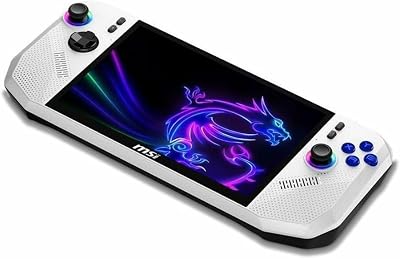
The MSI Claw A8 offers the same Ryzen Z2 Extreme class and 24GB of LPDDR5x as the ROG Xbox Ally X, on an 8-inch FHD+ 120Hz display. Choose it if you want a larger screen and can accept a bulkier body, and compare listing prices because they vary widely between sellers.
The Most Powerful Handheld Gaming PCs Ranked by Chip
In a handheld, almost all of the gaming performance comes from one component: the processor, which combines the CPU and graphics on a single chip. That makes it easy to rank handhelds by raw power, because every device built on the same chip lands in roughly the same performance class. Cooling, power limits and memory decide where each device falls within its tier.
| Tier | Chip | Graphics | Handhelds in this guide | What to expect |
|---|---|---|---|---|
| 1 (most powerful) | AMD Ryzen AI Max+ 395 | Radeon 8060S, 40 compute units | GPD Win 5, ONEXFLY Apex | The highest raw graphics power in any handheld; laptop-class results when given enough wattage |
| 1 | Intel Arc G3 Extreme | Intel Arc integrated graphics | MSI Claw 8 EX AI+ | Rated by major reviewers as one of the fastest handhelds in real-world play, with strong results at lower power limits |
| 2 | AMD Ryzen Z2 Extreme | RDNA 3.5, 16 compute units | ASUS ROG Xbox Ally X, MSI Claw A8 | Today’s mainstream flagship tier; strong in modern games at 1080p with upscaling |
| 2 | AMD Ryzen AI 9 HX 370 | Radeon 890M, 16 compute units | ONEXFLY F1 Pro | A laptop chip in the same broad class as the Z2 Extreme |
| 3 | AMD Ryzen Z2 | RDNA 3, 12 compute units | Lenovo Legion Go 2 (Z2 configuration) | Capable in most games at moderate settings |
| 4 | AMD Ryzen Z2 Go, Ryzen Z2 A, Steam Deck APU | RDNA 2, 8 to 12 compute units | Lenovo Legion Go S, ASUS ROG Xbox Ally, Steam Deck OLED | Entry tier; great for indie and older games, low settings in demanding new releases |
| Retro | Rockchip RK35-series ARM | Mobile ARM graphics | RG43V Pro | Classic-console emulation, not Windows PC games |
Two points are worth keeping in mind. First, the tier 1 machines only reach their full potential at high power levels, which shortens battery life and raises fan noise, so their lead is largest when plugged in. Second, performance claims from manufacturers are rarely measured the same way, so it is safer to compare chips and power limits than headline frame-rate numbers.
Why the Ryzen AI Max+ 395 is in a class of its own
AMD’s Ryzen AI Max+ 395, known by the codename Strix Halo, was designed for thin laptops and compact desktops. It packs 16 Zen 5 CPU cores and the Radeon 8060S, a 40-compute-unit graphics engine that is more than twice the size of the graphics in a Z2 Extreme. Paired with up to 64GB of fast shared memory in the configurations listed here, it can hold higher settings in demanding games than mainstream handheld chips when it is given enough power. The trade-offs are size, weight, heat and a price that sits well above every mainstream handheld.
Every Handheld on Our List: Specs, Strengths and Trade-Offs
Here is a closer look at each handheld, ordered from the most powerful chip to the least. Use it alongside the table above to match raw power, screen and budget to the way you play.
GPD Win 5 (Ryzen AI Max+ 395) — Most Raw Power
The GPD Win 5 is built around AMD’s Ryzen AI Max+ 395 with Radeon 8060S graphics, and the configuration in this guide pairs it with 64GB of LPDDR5X memory and a 2TB SSD. That is the biggest graphics engine available in a handheld, with enough memory to give the GPU plenty of room. GPD uses a detachable external battery pack rated at 80Wh that can be swapped, so you can carry a spare for long trips or run from wall power at the desk; confirm that the listing includes the pack. It suits enthusiasts who want the most performance possible in a portable form and also use the device for emulation of demanding systems. Expect a premium price, more weight than mainstream handhelds and short battery life at full power.
Pros
- Top-tier Strix Halo graphics
- 64GB of memory and 2TB of storage
- Swappable battery design
Cons
- Highest price in the category
- Heavy battery drain at high power settings
ONEXFLY Apex (Ryzen AI Max+ 395) — Strix Halo With an 8-Inch Screen
The ONEXFLY Apex uses the same Ryzen AI Max 395-class chip and Radeon 8060S graphics as the GPD Win 5, in a design with an 8-inch touchscreen running Windows 11. The maker also sells a liquid-cooled configuration aimed at sustaining higher power levels without throttling, but the listing linked in this guide is the standard 8-inch model, so check the cooling, memory and storage on the product page before you buy. It suits players who want Strix Halo power with a larger display than most compact handhelds. Like every tier 1 handheld, it is expensive, and it is at its best when plugged in. Compare the memory and storage on the listing carefully, since the configurations differ.
Pros
- Strix Halo graphics with an 8-inch touchscreen
- Liquid-cooled option for sustained performance
Cons
- Premium pricing
- Configurations vary between listings
MSI Claw 8 EX AI+ (Intel Arc G3 Extreme) — Fastest Conventional-Size Handheld
MSI’s Claw 8 EX AI+ runs Intel’s Arc G3 Extreme processor with 32GB of LPDDR5X memory, a 1TB SSD, an 8-inch FHD+ 120Hz display with variable refresh rate, a microSD Express card reader, Thunderbolt 4 and an 80Wh battery. Major hardware publications have rated it among the fastest handhelds in real-world play, with strong results even at lower power limits. Some reviewers did report driver-related hitches in a few titles, so expect occasional rough spots in newer drivers. Intel’s XeSS upscaling is supported in many games. It suits players who want top-tier performance in a more conventional handheld size than the Strix Halo machines. The main drawback is price, which overlaps with full gaming laptops.
Pros
- Among the fastest real-world handheld performance
- 32GB of memory and Thunderbolt 4
- Fast microSD Express storage expansion
Cons
- Very expensive for a handheld
- Intel graphics drivers have historically trailed AMD in older games
ASUS ROG Xbox Ally X — Best Balance of Power and Price
The ROG Xbox Ally X is the flagship of the ASUS and Xbox partnership and one of the most widely recommended handhelds of 2026. It runs AMD’s Ryzen AI Z2 Extreme with 24GB of RAM and a 1TB SSD, behind a 7-inch FHD 120Hz display. Its 80Wh battery is among the largest in a mainstream handheld, and the device boots into the Xbox full screen experience, a console-style interface layered over Windows 11 that pulls together Game Pass, Steam and other launchers. Contoured grips and impulse triggers make it comfortable for long sessions, and a USB4 port handles docks and external displays.
It suits most players who want flagship Z2 Extreme performance without paying Strix Halo prices. The 7-inch screen is smaller than the 8-inch rivals, and it still costs noticeably more than the standard ROG Xbox Ally.
Pros
- Ryzen AI Z2 Extreme with 24GB of RAM
- Large 80Wh battery
- Console-style Xbox interface and comfortable grips
Cons
- Smaller screen than 8-inch competitors
- Well above entry handheld prices
MSI Claw A8 (Ryzen Z2 Extreme) — Best 8-Inch Z2 Extreme Handheld
The Claw A8 brings AMD’s Z2 Extreme to MSI’s 8-inch chassis, with 24GB of LPDDR5x, a 1TB NVMe SSD, an FHD+ 120Hz display, an SD card reader and a port listed as Thunderbolt 4. It matches the ROG Xbox Ally X on chip and memory, so the choice between them comes down to screen size, ergonomics and price. The larger display makes text and HUDs easier to read, while the bigger body adds some weight. It suits players who want flagship AMD performance with more screen.
Pros
- Z2 Extreme with 24GB of memory
- Large 8-inch 120Hz display
Cons
- Bulkier than 7-inch handhelds
- Pricing varies widely between sellers
ONEXFLY F1 Pro (Ryzen AI 9 HX 370) — Best Compact OLED
The ONEXFLY F1 Pro uses AMD’s Ryzen AI 9 HX 370, a laptop chip with Radeon 890M graphics, paired with 32GB of RAM and a 2TB SSD in this configuration. Its 7-inch 144Hz OLED screen delivers deep contrast and fast motion, and the 12,600mAh battery, Hall-effect joysticks and Wi-Fi 6E round out a well-equipped compact design. It suits players who value an OLED display and lots of storage in a smaller body. It sits in the same broad performance class as Z2 Extreme handhelds, but at a higher price in this configuration.
Pros
- 7-inch 144Hz OLED display
- 32GB of RAM and 2TB of storage
- Hall-effect joysticks resist drift
Cons
- Expensive for its performance tier
- Smaller brand with a lighter support network
MSI Claw 8 AI+ (Core Ultra 7 258V) — Best Intel Lunar Lake Handheld
- Processor: Intel Core Ultra 7 258V (Lunar Lake)
- Memory / storage: 32GB LPDDR5, 1TB NVMe SSD
- Display: 8-inch FHD, 120Hz
- Expansion: microSD card reader and Thunderbolt 4
- Software: Windows 11 Home
The MSI Claw 8 AI+ is the earlier Intel-powered Claw and a sensible alternative if you want an 8-inch screen, 32GB of memory and Thunderbolt 4 without paying for the newer Claw 8 EX AI+. It sits below the Arc G3 Extreme and Strix Halo machines in raw power, but its efficient Lunar Lake chip handles most games at 1080p with XeSS or FSR upscaling at lower settings. The larger screen makes menus and text easier to read, and the extra memory helps with background apps. Check which configuration a listing includes, since MSI sells several memory and storage options.
Pros
- 32GB of memory and a 1TB SSD
- Large 8-inch 120Hz display
- Thunderbolt 4 and microSD expansion
Cons
- Older generation than the Claw 8 EX AI+
- Intel graphics drivers have historically trailed AMD in older games
Skip it if you want the fastest chip available or a 7-inch handheld that is easier to hold for long sessions.
Lenovo Legion Go 2 — Best Big-Screen Handheld
The Legion Go 2 is all about its display: an 8.8-inch WQXGA PureSight OLED running at 144Hz, the largest and sharpest screen on this list. This configuration uses the Ryzen Z2 with 16GB of memory and a 1TB SSD, and adds a fingerprint reader. Like the original Legion Go, its controllers detach, and a built-in kickstand turns it into a small portable monitor with a controller in each hand, which is handy on a plane or a desk. Lenovo also sells the Legion Go 2 with the faster Z2 Extreme, so check which chip a listing includes before buying; the Z2 version here is a tier below the Z2 Extreme models in raw power.
Pros
- Stunning 8.8-inch 144Hz OLED display
- Detachable controllers and kickstand
Cons
- Ryzen Z2 configuration trails Z2 Extreme handhelds
- Large and heavy for handheld play
ASUS ROG Xbox Ally — Best Entry Xbox Handheld
The standard ROG Xbox Ally shares the Xbox full screen experience and comfortable grips of the Ally X but uses AMD’s Ryzen Z2 A, an efficient chip in the same class as the Steam Deck’s processor, with 16GB of RAM, a 512GB SSD and a 7-inch 1080p 120Hz touchscreen. This listing includes a three-month Xbox Game Pass Premium trial. It is not one of the most powerful handhelds, but it is a sensible entry point for Game Pass, indie titles and older games, with good battery life thanks to its efficient chip. Players who want to run new AAA releases at decent settings should step up to the Ally X.
Pros
- Lower price than flagship handhelds
- Xbox interface and Game Pass trial
Cons
- Entry-tier performance in demanding games
- 512GB fills quickly
Lenovo Legion Go S — Best 8-Inch Entry Handheld
The Legion Go S pairs AMD’s Ryzen Z2 Go with 16GB of memory, a 512GB SSD and an 8-inch 120Hz PureSight IPS display. The listing here is the Windows edition, and Lenovo also sells a SteamOS edition of the same hardware for players who prefer Valve’s console-style software. Performance sits in the entry tier, so it is best for lighter games, Game Pass titles and older favorites rather than the newest AAA releases at high settings.
Pros
- Large 8-inch 120Hz screen at an entry price tier
- Choice of Windows or SteamOS editions
Cons
- Z2 Go is one of the slower chips here
- Limited 512GB storage
Valve Steam Deck OLED 1TB — Best Software Experience
The Steam Deck OLED is the least powerful true PC handheld on this list, yet it remains one of the most enjoyable to use. Its custom AMD processor, 16GB of memory and 7.4-inch HDR OLED display at 90Hz are tuned around SteamOS, Valve’s console-like operating system, and thousands of games carry Valve’s Verified or Playable ratings so you know how they will run. Its 50Wh battery stretches well in lighter games, sleep and resume work like a console, and this model comes with 1TB of storage. It suits players with a big Steam library who value polish over peak power; it cannot match the newer chips in demanding new releases, and games with certain anti-cheat systems do not run on SteamOS.
Pros
- Polished SteamOS experience with instant sleep and resume
- Gorgeous HDR OLED display
Cons
- Lowest raw performance of the PC handhelds here
- Some multiplayer games with anti-cheat are unsupported
RG43V Pro — Budget Retro Pick, Not a Windows PC
The RG43V Pro is a different kind of device from everything else in this guide. It uses a Rockchip RK35-series ARM processor, a 4.3-inch IPS screen and a dual-system software setup built for emulating classic consoles. It costs a fraction of any Windows handheld and suits players who mainly want retro games in a pocketable size. It cannot run Windows or Steam PC games, so if raw power for modern PC titles is your goal, choose one of the tier 1 or tier 2 handhelds above.
Pros
- Very low price and pocket-friendly size
- Built for retro emulation
Cons
- Does not run Windows PC games
- Small 4.3-inch screen
What Separates a Great Most Powerful Handheld Gaming Pc From a Mediocre One
When we compare most powerful handheld gaming pc options, four factors do most of the work in predicting whether you’ll be happy a year later:
- Reliability over time — warranty terms, the maker’s update record and recent owner feedback on the retailer page are your best proxy for long-term durability.
- Right-sized features — paying for capability you’ll never touch is the most common buyer regret.
- Everyday usability — setup friction and daily ergonomics matter more than headline specs.
- Honest value — the sweet spot is where price, build, and features intersect, not the lowest sticker.
Before You Hit “Buy”: A Quick Checklist
- Pin down your budget ceiling so you don’t overspend on extras.
- List the one or two features you truly need and ignore the rest.
- Read the most recent owner reviews for real durability signals.
- Verify it fits your space, size, and current gear.
- Compare live prices on the picks above — they move often.
- Confirm the return policy in case it isn’t the right fit.
Common Mistakes to Avoid
Three mistakes sink most most powerful handheld gaming pc purchases: buying more than you need, under-buying to save a few dollars on something you’ll replace, and overlooking warranty and returns. Match the pick to your actual use and the rest takes care of itself.
What the Specs Really Mean
Don’t let a wall of specs overwhelm you. For most powerful handheld gaming pc, the figures that matter map directly to your use case; when two picks look close on paper, cooling design, battery size and current price are the better tiebreakers.
Processor and graphics
The chip sets the ceiling for everything else. For gaming, the graphics side matters most: look at the number of compute units and the architecture generation. RDNA 3.5 graphics in the Z2 Extreme, HX 370 and Ryzen AI Max+ 395 are more efficient than the RDNA 3 graphics in the Ryzen Z2 and the RDNA 2 graphics in the Z2 Go, Z2 A and Steam Deck. More compute units of a newer architecture means more frames at the same power.
TDP and power modes
TDP is the power budget the chip is allowed to use, and in handhelds it is adjustable. Most mainstream handhelds run games somewhere between about 15W and 30W, while Strix Halo devices can go far higher when plugged in. Performance rises with wattage but with diminishing returns: the jump from 15W to 25W is usually large, while going much higher adds less and drains the battery quickly. A handheld with a powerful chip but weak cooling may never sustain its top power mode, which is why cooling design matters as much as the chip name.
Memory
Handhelds share one pool of memory between the CPU and graphics, so the GPU takes part of it as video memory. 16GB is the minimum for modern games, while 24GB to 32GB leaves more room for textures and background apps, and 64GB is aimed at Strix Halo machines with their much larger graphics engine. Faster LPDDR5X memory also helps, because integrated graphics are sensitive to memory bandwidth.
Display
A higher resolution looks sharper but costs performance. On a 7- to 8-inch screen, 1080p or 1200p is plenty, and many players run demanding games at a lower render resolution with FSR or XeSS upscaling. A 120Hz or 144Hz refresh rate makes motion smoother, variable refresh rate keeps fluctuating frame rates from stuttering, and OLED panels add deep blacks and HDR at a higher cost.
Battery life
Battery capacity is listed in watt-hours. An 80Wh battery is large for a handheld, while 50Wh to 60Wh is common in entry models. In demanding games at high power, even a large battery may only last around an hour or two; lighter indie games, lower power modes and capped frame rates can stretch that much further. Plan on charging access or a power bank that supports USB-C Power Delivery at a high enough wattage for long trips.
Storage
Modern games often need 50GB to more than 100GB each, so 1TB is the comfortable minimum for a powerful handheld. Check which SSD size the device accepts, since some use the short M.2 2230 format and others the longer 2280, and whether it has a microSD or faster microSD Express slot for extra space.
Connectivity and docking
USB4 or Thunderbolt ports let a handheld connect to a dock, an external monitor, fast storage and, on supported models, an external graphics enclosure for big-screen play at home. Wi-Fi 6E or Wi-Fi 7 helps with large downloads and game streaming.
Weight and ergonomics
The most powerful handhelds are also among the heaviest, and 8-inch-plus screens add bulk. If you plan to play for hours in your hands, rather than on a desk or with a stand, comfortable grips and balanced weight can matter more than an extra tier of performance.
Most Powerful Affordable Handheld Gaming PC in 2026
The most powerful affordable handheld gaming PC in 2026 is the ASUS ROG Xbox Ally X, because its Ryzen AI Z2 Extreme, 24GB of RAM and 80Wh battery deliver flagship Z2 Extreme performance at a fraction of the price of a Strix Halo handheld. The MSI Claw A8 matches it on chip and memory with an 8-inch screen. Price bands below are rough listing ranges for October 2026 and move often, so check the current price before you buy.
Z2 Extreme class
- ASUS ROG Xbox Ally X: Ryzen AI Z2 Extreme · 24GB RAM · 1TB SSD · 80Wh battery · 7-inch 1080p 120Hz
- MSI Claw A8: Ryzen Z2 Extreme · 24GB LPDDR5x · 1TB NVMe · 8-inch FHD+ 120Hz
Entry class
- ASUS ROG Xbox Ally: Ryzen Z2 A · 16GB RAM · 512GB SSD · 7-inch 1080p 120Hz · Xbox full screen experience
- Lenovo Legion Go S: Ryzen Z2 Go · 16GB RAM · 512GB SSD · 8-inch 120Hz IPS · Windows or SteamOS editions
- Valve Steam Deck OLED 1TB: custom AMD APU · 16GB RAM · 7.4-inch HDR OLED 90Hz · SteamOS
Strix Halo class (well above $2,000)
- GPD Win 5: Ryzen AI Max+ 395 · Radeon 8060S · 64GB LPDDR5X · 2TB SSD · swappable battery
- ONEXFLY Apex: Ryzen AI Max+ 395 · Radeon 8060S · 8-inch touchscreen · liquid-cooled version available
If you only need to run new games at 1080p with upscaling, the Z2 Extreme class is the sweet spot; pay for Strix Halo only if you want the highest settings and will keep the device plugged in.
Windows 11 vs SteamOS on a Handheld
Most powerful handhelds run Windows 11, which gives access to every PC storefront, Game Pass and games with anti-cheat that only supports Windows. The trade-off has been a desktop interface that is awkward to use with a controller. The Xbox full screen experience on the ROG Xbox Ally models helps by launching into a console-style home screen and trimming background tasks, and manufacturers add their own control-center software for power modes and settings.
SteamOS, used on the Steam Deck and available on the Legion Go S, is built for controller use from the ground up. Sleep and resume are instant, performance settings are simple, and Valve’s Verified ratings tell you how games will run. It plays most of the Steam library through Valve’s Proton compatibility layer, but some games with kernel-level anti-cheat and some third-party launchers do not work. If you play mainly from a Steam library, SteamOS is the more relaxed experience; if you rely on Game Pass, multiple launchers or anti-cheat multiplayer games, Windows is the safer choice.
Quick Picks: Which Powerful Handheld Fits You?
- Maximum performance at any price: GPD Win 5 or ONEXFLY Apex with the Ryzen AI Max+ 395.
- Fastest conventional-size handheld: MSI Claw 8 EX AI+.
- Best balance of power, battery and price: ASUS ROG Xbox Ally X.
- Flagship AMD power on a bigger screen: MSI Claw A8.
- Best display: Lenovo Legion Go 2 for its 8.8-inch OLED, or the ONEXFLY F1 Pro for a compact OLED.
- Best for a Steam library on a budget: Steam Deck OLED.
- Best low-cost Windows entry: ASUS ROG Xbox Ally or Lenovo Legion Go S.
- Retro games only: RG43V Pro.
Which Is the Most Powerful PC Handheld Right Now?
What is the most powerful gaming handheld ever made?
As of October 2026, the most powerful gaming handhelds are the Ryzen AI Max+ 395 models: the GPD Win 5 and the ONEXFLY Apex.
Both use the Radeon 8060S graphics engine with 40 compute units and up to 64GB of shared LPDDR5X, more than twice the graphics size of a Z2 Extreme handheld. The MSI Claw 8 EX AI+ with Intel’s Arc G3 Extreme is the closest rival in real-world play, and the ASUS ROG Xbox Ally X is the best-value flagship.
What is the most powerful hand PC (handheld PC) for the money?
For the money, the most powerful handheld PC is the ASUS ROG Xbox Ally X, with the MSI Claw A8 as the 8-inch alternative.
Both use the Ryzen Z2 Extreme class of chip with 24GB of memory, so they run most new games at reduced settings with FSR upscaling while costing far less than a Strix Halo handheld.
Frequently Asked Questions
How did you rank these most powerful handheld gaming pc options?
By chip class and graphics power first, then memory, display, battery size, cooling and price, using maker specifications and published coverage. We did not test these devices ourselves, and we update picks as prices and stock change.
Is it better to buy a most powerful handheld gaming pc online?
Usually yes. Online retailers show the most current pricing, configurations and return terms, which matter because handheld prices and stock change quickly. Check the exact chip, memory and storage in the listing title, since the same model is often sold in several configurations.
What should I avoid when buying a most powerful handheld gaming pc?
Avoid paying for features you won’t use, trusting marketing over real reviews, and skipping the fit/compatibility check. The table above keeps you focused on what matters.
What is the best most powerful handheld gaming pc overall?
For most buyers in 2026, ASUS ROG Xbox Ally X offers the best balance of power, battery life and price; for maximum raw power, choose the GPD Win 5 or ONEXFLY Apex — see the ranked table above for the full comparison.
Which handheld gaming PC has the most powerful chip in 2026?
For raw graphics power, handhelds built on AMD’s Ryzen AI Max+ 395 lead the field, including the GPD Win 5 and ONEXFLY Apex in this guide. The MSI Claw 8 EX AI+ with Intel’s Arc G3 Extreme is right alongside them, and some major reviewers rate it the fastest in real-world play, especially at lower power limits. The ROG Xbox Ally X and MSI Claw A8 with the Ryzen Z2 Extreme form the next tier at much lower prices.
Can a handheld gaming PC run new AAA games?
Yes, with realistic expectations. Z2 Extreme, HX 370 and Arc G3 Extreme handhelds run most new releases at reduced settings and lower render resolutions with FSR or XeSS upscaling, and Strix Halo handhelds can push higher settings when plugged in. Entry chips such as the Z2 A, Z2 Go and Steam Deck APU handle many AAA games only at low settings, and some of the most demanding titles may struggle.
How long does the battery last at full power?
Usually around one to two hours in demanding games at the highest power modes, even with a large 80Wh battery. Lighter games, lower power limits and frame-rate caps can extend that to several hours. Strix Halo handhelds use the most power, so they benefit most from wall power or a swappable battery.
Is a powerful handheld better than a gaming laptop?
It depends on where you play. A gaming laptop with a dedicated GPU is faster for the money and better for desk use, while a handheld is far more portable, works on the couch or in bed, and can still connect to a monitor at home. The most expensive handhelds now cost as much as a capable gaming laptop, so buy one for portability rather than raw value.
Can I connect a handheld gaming PC to a TV or monitor?
Yes. Every Windows handheld in this guide can output video over USB-C to a monitor, a TV through an adapter, or a dock with HDMI, USB and Ethernet ports. Models with USB4 or Thunderbolt also support faster docks and, on compatible devices, external graphics enclosures for higher performance at a desk.
Is the Steam Deck OLED still worth buying in 2026?
Yes, for the right player. It is slower than the newer Windows handhelds, but SteamOS is polished, the HDR OLED screen is excellent, and Valve’s Verified ratings make it easy to know what will run well. If you mainly play from a Steam library and value ease of use over maximum power, it remains a great choice; if you want the newest AAA games at higher settings, choose a Z2 Extreme or faster handheld.
Final Take
When in doubt, ASUS ROG Xbox Ally X is the low-risk pick. Power users should look at the GPD Win 5 or ONEXFLY Apex, and shoppers watching their budget can compare the MSI Claw A8 and the ASUS ROG Xbox Ally, then confirm current stock and price before choosing the most powerful handheld gaming pc that fits their priorities.