🛒 Best Price Today on Amazon
Prime members get fast, free shipping on everything above, plus member-only deals. New members get a 30-day free trial — cancel anytime.
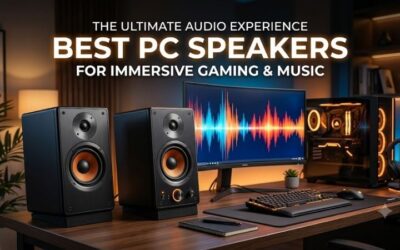
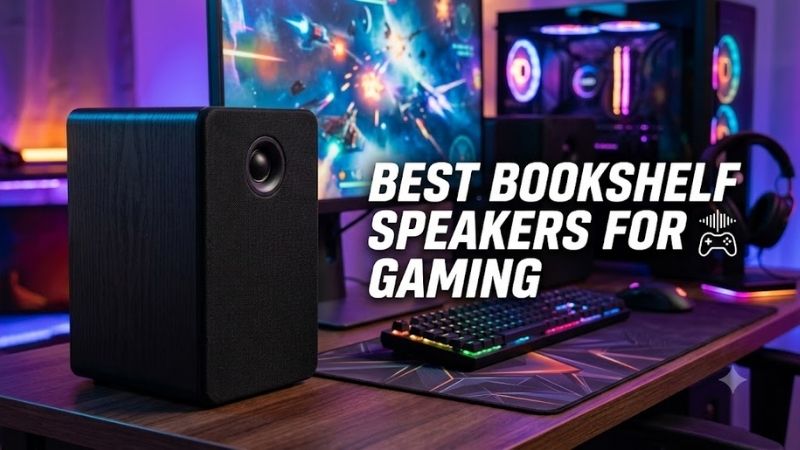
The best bookshelf speakers for gaming should create a convincing stereo image, keep dialogue clear, and deliver enough bass for action without overwhelming a desk. This roundup focuses on powered speakers that connect easily to gaming PCs and consoles while offering practical controls, compact cabinets, and upgrade options.
Quick answer: For most people in 2026, the best bookshelf speakers for gaming is the Speakers — our #1 rated choice. See the full ranked comparison, alternatives and buying advice below.
Quick Comparison
| Speakers | Best For | Power | Drivers | Key Connections |
|---|---|---|---|---|
| Edifier R1280DBs | Overall gaming value | 42W RMS | 4″ + 0.5″ | Optical, Coaxial, RCA, Bluetooth |
| Klipsch R-40PM | Powerful gaming sound | 70W continuous | 4″ + 1″ | USB, Optical, RCA, Bluetooth |
| Kanto YU4 | Compact premium setups | 140W peak | 4″ + 1″ | Optical, RCA, Bluetooth aptX |
| Audioengine A2+ | Small gaming desks | 60W peak | 2.75″ + 0.75″ | USB, 3.5mm, RCA, Bluetooth |
| PreSonus Eris 3.5BT | Near-field accuracy | 50W | 3.5″ + 1″ | TRS, RCA, 3.5mm, Bluetooth |
Edifier R1280DBs
Best For: Overall value for PC and console gaming
Key Features:
- 42W RMS total power
- 4-inch mid-bass drivers
- 0.5-inch silk-dome tweeters
- 51Hz–20kHz frequency response
- Optical and coaxial inputs
- Dual RCA inputs
- Bluetooth
- Subwoofer output
- Remote control
The Edifier R1280DBs is one of the easiest bookshelf speakers to integrate into a gaming setup because the amplification is already built in. Its optical, coaxial, RCA, and Bluetooth inputs let it work with PCs, TVs, DACs, and compatible console setups without requiring a separate stereo amplifier or receiver.
Each speaker system combines a 4-inch mid-bass driver with a 0.5-inch tweeter, while total amplification is rated at 42W RMS. Edifier lists a 51Hz to 20kHz frequency response, giving the pair enough low-frequency extension for general gaming while preserving clear upper frequencies for dialogue, environmental details, and soundtrack information.
The front-facing bass reflex design is useful on a gaming desk because rear wall spacing becomes less critical than with some rear-ported speakers. You can still improve imaging by moving each cabinet away from the monitor and angling the tweeters toward your ears, but placement is relatively forgiving when desk depth or wall clearance is limited.
A subwoofer output provides an easy upgrade path if explosions, engines, cinematic games, or movies eventually demand deeper bass. That feature matters because bookshelf speakers can reproduce mid-bass convincingly without reaching the lowest frequencies produced by a dedicated subwoofer. You can start with a simple stereo pair and expand later.
What Makes It Different: The R1280DBs combines several digital and analog inputs with straightforward controls and a dedicated subwoofer output. Instead of specializing in studio monitoring or premium desktop audio, it offers a practical mix of connectivity and sound for gamers who also use the same speakers for music, streaming, and movies.
Pros:
- Optical and coaxial digital inputs
- Bluetooth connectivity
- Dedicated subwoofer output
- Front bass reflex port
- Remote control included
- No separate amplifier required
- Bass and treble adjustment
Cons:
- Larger than compact desktop speakers
- No USB audio input
- Less deep bass than a speaker-and-subwoofer setup
Use Case: A desktop gaming PC connected through analog or digital audio, with a TV or another source sharing the same pair of speakers.
Who It’s For: Gamers who want versatile powered bookshelf speakers without building a separate amplifier or DAC-based speaker system.
The R1280DBs works especially well for mixed entertainment. You can use a wired connection for gaming, switch to Bluetooth for casual music, and add a subwoofer later if you want more impact. That flexibility makes the pair easier to keep through future PC, monitor, TV, or console upgrades than basic single-input desktop speakers.
Klipsch R-40PM
Best For: Dynamic gaming and entertainment sound
Key Features:
- 70W continuous total system power
- 240W peak system power
- 4-inch TCP woofers
- 1-inch aluminum LTS tweeters
- 90 x 90-degree Tractrix horns
- USB input
- Optical input
- Bluetooth
- RCA/phono input
- Subwoofer output
The Klipsch R-40PM is a powered speaker system designed to connect directly to PCs, televisions, turntables, and wireless sources without an external receiver. For gaming, USB and optical inputs are particularly useful because they allow a direct digital connection while preserving analog and Bluetooth options for other equipment.
Klipsch rates the R-40PM at 70W continuous total system power, with 35W assigned to each channel. Each cabinet combines a 4-inch spun-copper TCP woofer with a 1-inch aluminum LTS tweeter mounted inside a 90 x 90-degree Tractrix horn. The listed frequency response extends from 60Hz to 20kHz.
The horn-loaded tweeter design gives the R-40PM a distinct presentation compared with softer near-field speakers. Clear upper-mid and treble energy can help effects, dialogue, and directional information stand out during games, although listeners sensitive to a more forward presentation should consider placement and listening distance carefully.
The rear-firing bass reflex port means desk positioning deserves attention. Placing the cabinet extremely close to a wall may emphasize low frequencies differently than positioning it with additional clearance. Klipsch also provides a subwoofer output, so users who want deeper effects can add a powered sub rather than replacing the speakers.
What Makes It Different: The R-40PM combines powered convenience with Klipsch’s horn-based speaker architecture. It also includes unusually broad source support, including USB, optical, Bluetooth, 3.5mm, and switchable phono or line input, making it suitable for a gaming desk that also doubles as a music and entertainment system.
Pros:
- USB digital audio
- Optical digital input
- 70W continuous system power
- Wide connectivity
- Subwoofer output
- No receiver required
- Strong multimedia flexibility
Cons:
- Rear port needs placement consideration
- Cabinets are larger than micro desktop speakers
- Sound presentation may be energetic for some listeners
Use Case: A PC gaming station that also handles movies, music, a TV, or a turntable and needs more output than typical computer speakers.
Who It’s For: Gamers who want an energetic powered speaker system with several wired source options and room to add a subwoofer later.
The R-40PM can make sense when gaming speakers must serve more than one purpose. Instead of dedicating a small pair solely to a computer, the Klipsch system can become the audio center for a larger desk or bedroom setup. The main requirement is enough physical space to position the cabinets correctly rather than squeezing them behind monitors.
Kanto YU4
Best For: Premium compact gaming setups
Key Features:
- 140W peak power
- 4-inch Kevlar woofers
- 1-inch silk-dome tweeters
- 60Hz–20kHz frequency response
- Two optical inputs
- RCA input
- Bluetooth with aptX
- Subwoofer output
- Remote control
The Kanto YU4 combines a compact bookshelf footprint with amplification powerful enough for a desktop or smaller gaming room. Its 4-inch Kevlar woofers and 1-inch silk-dome tweeters operate through a Class D amplifier, while Kanto specifies 140W of peak output and a frequency response from 60Hz to 20kHz.
Two optical inputs are particularly convenient for gaming setups containing several digital sources. A TV, desktop DAC, console-compatible display, or another optical source can remain connected without constantly swapping cables. An RCA input and Bluetooth with Qualcomm aptX add analog and wireless options for music and everyday listening.
Each cabinet measures roughly 5.5 inches wide, 8.7 inches high, and 7.5 inches deep, making the YU4 easier to position beside a monitor than larger bookshelf speakers. That smaller footprint is useful for dual-monitor desks, although the speakers should still have enough separation to create a convincing stereo image around the player.
A dedicated subwoofer output allows the YU4 to become the foundation of a 2.1 gaming system. This is valuable because compact 4-inch speakers prioritize desk-friendly dimensions over very deep bass. Adding a subwoofer later can strengthen explosions and cinematic effects while letting the YU4 handle dialogue, music, and positional stereo detail.
What Makes It Different: The YU4 combines genuinely compact cabinets with dual optical inputs, Bluetooth aptX, analog connectivity, and subwoofer expansion. It sits between small computer speakers and larger powered bookshelves, making it a strong match for users who want cleaner desktop aesthetics without abandoning traditional stereo separation.
Pros:
- Compact bookshelf dimensions
- Two optical inputs
- Bluetooth aptX
- 4-inch Kevlar woofers
- Subwoofer output
- Remote control
- Integrated amplification
Cons:
- Deep bass still benefits from a subwoofer
- No native USB audio input
- More expensive than basic desktop speakers
Use Case: A clean gaming desk with limited side space, multiple digital sources, and the option to expand into a 2.1 audio system.
Who It’s For: Gamers who want compact premium speakers without dropping down to tiny multimedia speakers or moving to a full passive hi-fi system.
For desk use, the YU4’s physical dimensions are one of its most practical features. Large speakers can force monitors inward or reduce separation, which hurts both ergonomics and stereo imaging. The Kanto pair offers enough cabinet volume for traditional two-way construction while remaining manageable beside modern gaming monitors.
Audioengine A2+
Best For: Small desks and near-field gaming
Key Features:
- 60W peak total power
- 15W RMS per channel
- 2.75-inch aramid-fiber woofers
- 0.75-inch silk-dome tweeters
- 65Hz–22kHz response
- USB audio input
- 3.5mm input
- RCA input
- Variable RCA output
Audioengine’s A2+ is considerably smaller than many bookshelf speakers, making it useful for gaming desks where available space is the main limitation. The system uses 2.75-inch aramid-fiber woofers and 0.75-inch silk-dome tweeters, with Class AB amplification rated at 15W RMS per channel and 60W peak total output.
USB audio is a key advantage for PC gaming because the speakers can receive a digital signal directly from a computer rather than depending on the motherboard’s analog output. The A2+ also provides 3.5mm and RCA inputs, so users can connect additional sources through analog audio when USB is reserved for the gaming system.
Audioengine specifies a 65Hz to 22kHz frequency response, which reflects the compromise created by the small cabinets and drivers. The A2+ can provide convincing near-field stereo sound at a desk, but users expecting deep rumble from explosions or racing games should plan around the variable RCA output and an optional subwoofer.
Its compact form also helps with stereo placement. Instead of pushing large cabinets behind an ultrawide display, the A2+ can sit beside a monitor with better left-right separation. Raising the speakers slightly or using angled desktop stands can point the tweeters toward ear level, improving image focus without requiring a large listening room.
What Makes It Different: The A2+ is designed as a true desktop speaker system rather than a large bookshelf pair adapted to a computer desk. USB audio, compact cabinets, and a variable output make it easy to build a tidy near-field setup that can later gain a subwoofer if low-frequency impact becomes more important.
Pros:
- Very compact cabinet design
- USB audio input
- Class AB amplification
- Variable RCA output
- Easy near-field placement
- Wide upper-frequency extension
- No external amplifier required
Cons:
- Small woofers limit deep bass
- Less output than larger bookshelf systems
- Best suited to close listening distances
Use Case: A compact gaming desk using one or two monitors where larger speakers would interfere with display placement or consume too much usable surface space.
Who It’s For: Gamers who prioritize desk space, USB connectivity, and clean stereo imaging over maximum volume or deep standalone bass.
The A2+ is most convincing when treated as a near-field system. Place the speakers relatively close to the listener and form a balanced triangle between the two cabinets and your seating position. That approach emphasizes stereo imaging and clarity, while a subwoofer can handle the low frequencies that tiny desktop cabinets cannot reproduce effectively.
PreSonus Eris 3.5BT 2nd Gen
Best For: Accurate near-field gaming and content creation
Key Features:
- 50W Class AB amplification
- 3.5-inch woven-composite woofers
- 1-inch silk-dome tweeters
- 80Hz–20kHz response
- Bluetooth 5.0
- Balanced TRS inputs
- RCA inputs
- 3.5mm stereo input
- Headphone output
- High and low acoustic tuning
The PreSonus Eris 3.5BT 2nd Gen approaches gaming audio from a studio-monitor perspective. It combines 3.5-inch woven-composite low-frequency drivers with 1-inch silk-dome tweeters and 50W of Class AB amplification. PreSonus specifies an 80Hz to 20kHz response and a peak SPL of 98dB at one meter.
Connectivity includes balanced quarter-inch TRS, RCA, a stereo 3.5mm input, and Bluetooth 5.0. The front panel also includes a headphone output that mutes the speakers when headphones are inserted. This is useful for gamers who frequently alternate between open speaker playback and private late-night sessions.
High- and low-frequency tuning controls allow the speaker response to be adjusted for the room and desk. This matters because placing monitors close to walls or on a reflective desktop can change perceived bass and treble. Simple acoustic controls provide more flexibility than speakers with only a master volume knob and fixed voicing.
The Eris 3.5BT is not designed to produce deep cinematic bass by itself. Its 80Hz lower response limit means low-frequency effects lose the extension available from larger bookshelf speakers or a subwoofer. The benefit is compact near-field clarity, making the pair suitable for dialogue, competitive gaming, editing, music, and general desktop use.
What Makes It Different: The Eris combines gaming-friendly dimensions with monitor-style connectivity and acoustic tuning. Balanced TRS inputs are particularly useful for creators using an audio interface, while Bluetooth and consumer analog connections keep the speakers practical when the same desk handles gaming, music, streaming, and editing.
Pros:
- Compact near-field design
- Balanced TRS connectivity
- Bluetooth 5.0
- Front headphone output
- High and low tuning controls
- 50W amplification
- Useful for content creation
Cons:
- Limited deep bass
- No optical input
- No USB audio connection
Use Case: A gaming and content-creation desk using an audio interface for streaming, editing, music production, or microphone recording.
Who It’s For: Gamers who want relatively neutral near-field speakers and also create videos, streams, podcasts, or other media on the same PC.
The Eris 3.5BT is particularly logical when gaming is only one part of the workstation. A creator can connect an audio interface through balanced cables, use Bluetooth for a phone, and plug headphones directly into the speaker when needed. Users focused purely on cinematic gaming may prefer larger drivers or pair the system with a subwoofer.
How to Choose the Best Bookshelf Speakers for Gaming
Choose Powered Speakers for a Simpler Setup
Powered bookshelf speakers contain their own amplification, so you do not need a separate amplifier or receiver. That is valuable on a gaming desk where space is already occupied by monitors, keyboards, microphones, and other hardware. Passive speakers can offer more upgrade flexibility, but they require additional components and wiring.
Prioritize Stereo Imaging
Good stereo imaging helps place sounds across the left-to-right soundstage instead of concentrating everything around the monitor. Position both speakers at similar distances from your ears and angle them inward slightly. Competitive games can benefit from clear directional separation, although headphones remain more precise for private positional audio.
Use Wired Audio for Gaming
Bluetooth is convenient for music, but wired USB, optical, analog, or another direct connection is usually preferable for gaming. Wireless audio can introduce additional latency depending on the hardware and codec. A wired source removes that variable and keeps sound effects more closely synchronized with actions displayed on the screen.
Check Speaker Size Against Your Desk
Large cabinets can provide fuller bass but create placement problems beside ultrawide or dual-monitor setups. Measure available width and depth before buying. Speakers should not be forced behind the screen or pushed together simply to fit, because poor positioning can reduce the stereo separation that makes bookshelf speakers attractive for gaming.
Consider a Subwoofer Output
A subwoofer output gives compact speakers a useful upgrade path. Bookshelf speakers can handle voices, music, and effects well, but smaller drivers cannot reproduce the deepest frequencies with the same authority as a dedicated sub. A 2.1 system can add impact to explosions, engines, cinematic soundtracks, and open-world environments.
Look at Input Options
USB is convenient for desktop PCs, while optical works well with TVs, DAC-equipped displays, and certain gaming configurations. RCA and 3.5mm connections remain universal choices for analog sources. If several devices share the speakers, multiple inputs reduce cable swapping and make the setup easier to use every day.
Raise the Tweeters Toward Ear Level
Bookshelf speakers often perform best when their tweeters are near ear height. On a desk, short stands or angled isolation pads can improve vertical alignment while reducing vibration transferred into the desktop. Better positioning can produce a clearer stereo image without changing speakers, amplifiers, cables, or software settings.
Do Not Chase Maximum Wattage
More amplifier power does not automatically mean better gaming sound. Listening distance, cabinet design, driver quality, room size, and distortion matter alongside wattage. A compact near-field system can provide plenty of output at a desk, while larger powered speakers become more useful when you sit farther away or fill a bigger room.
FAQ
Are Bookshelf Speakers Good for Gaming?
Yes. A properly positioned pair can create a wide stereo image, clear dialogue, and substantially fuller sound than monitor speakers or many compact computer systems. They work especially well for single-player games, racing, strategy titles, and general entertainment where open-room sound is preferable to wearing a headset.
Are Bookshelf Speakers Better Than Gaming Speakers?
Bookshelf speakers often provide larger drivers, wider cabinet volume, and more traditional stereo separation than small gaming speakers. Gaming-specific models may add RGB, USB controls, or virtual surround features. The better choice depends on whether you value audio reproduction and versatility or gaming-focused convenience and effects.
Do I Need a Subwoofer for Gaming?
No, but a subwoofer improves the deepest effects. Larger bookshelf speakers can deliver useful bass on their own, while compact models lose output at lower frequencies. Add a subwoofer when explosions, racing engines, cinematic soundtracks, and movies matter more than keeping the gaming setup small and mechanically simple.
Is Optical or USB Better for Gaming Speakers?
Both can provide clean digital audio when implemented correctly. USB is convenient for a gaming PC because the speakers can function as a direct audio device. Optical is useful when speakers must connect to a TV or another digital source. Choose according to your hardware rather than expecting one connection to improve every speaker automatically.
Should Gaming Speakers Be Angled Toward Me?
Usually yes. Angling the speakers toward the main listening position can improve high-frequency balance and stereo imaging, especially during near-field desktop use. Try to keep the left and right speakers symmetrical, with similar distances from your ears and enough separation that directional effects do not collapse toward the center.
Can Bookshelf Speakers Replace a Gaming Headset?
They can replace a headset when privacy, microphone integration, and maximum positional isolation are not required. Speakers are more comfortable during long sessions and create a natural open soundstage, while headphones remain useful for competitive play, late-night gaming, voice chat, and situations where sound must not disturb other people.
Conclusion
The best bookshelf speakers for gaming depend on desk space, connectivity, bass expectations, and how you use the PC beyond games. Edifier R1280DBs offers flexible value, Klipsch R-40PM delivers powerful multimedia sound, Kanto YU4 balances size and output, Audioengine A2+ saves space, and Eris 3.5BT favors near-field accuracy.
Ready to decide? Our #1 pick for 2026 is the Speakers.
Live price & availability on Amazon.