🛒 Best Price Today on Amazon
Prime members get fast, free shipping on everything above, plus member-only deals. New members get a 30-day free trial — cancel anytime.
- Verdict: Who the Threadripper 1950X Suits and Who Should Skip It
- Ryzen Threadripper 1950X Specs
- Is the Threadripper 1950X Good for Gaming?
- Productivity: Where the 1950X Still Earns Its Place
- Platform: Socket TR4, X399 Boards and RAM
- Power and Thermals
- Creator Mode, Game Mode and Memory Access Modes
- Worked Example: Gaming and Streaming on One PC
- Overclocking, XFR and Precision Boost
- The Real Cost of an X399 Build
- Pre-Purchase Checklist for a Used 1950X
- How the 1950X Compares with Newer Threadripper Chips
- Companion Parts for a Threadripper 1950X Build
- Alternatives to the Threadripper 1950X
- Is the Threadripper 1950X Still Worth Buying in 2026?
- Buying Options: New, Used or Pulled from Workstations
- Frequently Asked Questions
- Sources
The Ryzen Threadripper 1950X is not worth buying for gaming in 2026. It is a 16-core, 32-thread workstation chip from 2017 on the X399 platform, and a modern Ryzen 5 or Ryzen 7 on AM4 or AM5 plays games faster, runs cooler and costs less to build around. Buy a 1950X only if you already own an X399 board and need cheap multi-core rendering or virtual machine capacity.
Verdict: Who the Threadripper 1950X Suits and Who Should Skip It
The 1950X was AMD’s first 16-core desktop-class processor when it launched on August 10, 2017. For its day it was a landmark for multi-threaded work. As a gaming chip it was always a compromise, and by 2026 it is a legacy part: you will find it mostly used, in old workstation pulls or leftover new-old-stock listings.
| You are… | Verdict |
|---|---|
| Building a new gaming PC | Skip. Buy a current Ryzen 5 or 7 instead. |
| Upgrading an existing X399 workstation that also games | Reasonable if you already own the board and RAM. |
| Rendering, compiling or running many virtual machines on a tight budget | Worth a look used, with caveats on power and cooling. |
| Streaming and gaming on one PC | Possible, but a modern 8-core is simpler and quicker in games. |
Ryzen Threadripper 1950X Specs
These figures come from AMD’s launch material and public specification databases such as WikiChip. Memory support limits vary by source, so the memory row shows the official speed rather than a maximum capacity.
| Spec | Ryzen Threadripper 1950X |
|---|---|
| Cores and threads | 16 cores, 32 threads |
| Base clock | 3.4 GHz |
| Boost clock | 4.0 GHz, with XFR up to 4.2 GHz |
| Cache | 8 MB L2, 32 MB L3 |
| TDP | 180 W |
| Socket and chipset | TR4 (also written sTR4 or SP3r2), X399 |
| Memory | Quad-channel DDR4, official speed 2666 MT/s |
| PCIe lanes | 64 on the platform |
| Process | 14 nm (GlobalFoundries), Zen architecture |
| Integrated graphics | None, a discrete GPU is required |
| Launch | August 10, 2017 |
Is the Threadripper 1950X Good for Gaming?
It is playable, not good. Games mostly depend on a few fast cores, and the 1950X’s first-generation Zen cores have lower instructions per clock than Ryzen 5000 and later chips. Its boost clock of 4.0 GHz is also modest. The chip has plenty of cores, but few games can use sixteen of them.
Two design details hurt gaming more than the raw clock speed.
- Multi-die layout. The 1950X spreads its cores across two active dies connected by Infinity Fabric. When a game’s threads land on different dies, memory access time rises, which can cause uneven frame times.
- Game Mode. AMD added a Game Mode in its Ryzen Master software that disables one die and limits memory access to a single node. That can improve frame pacing in some titles, at the cost of halving the active cores while it is on.
The practical effect is that the 1950X can run modern games at 1080p and 1440p with a mid-range or better graphics card, but it will usually trail a six- or eight-core Ryzen 5000 or newer chip. How much it trails depends on the game, resolution and graphics card, so treat any figure you see as approximate.
Gaming by Resolution and GPU Class
| Resolution and GPU class | Expected result with a 1950X (approximate) |
|---|---|
| 1080p, high refresh, fast GPU | Often CPU-limited. Newer chips pull ahead the most here. |
| 1080p, 60 FPS target, mid-range GPU | Fine for most games. |
| 1440p, mid-range to fast GPU | GPU becomes the limit, so the gap narrows. |
| 4K, fast GPU | GPU-bound in most titles, so the CPU matters least. |
These are directional estimates from how CPU and GPU limits behave, not benchmark results. Games that lean on one or two threads show the weakest results, while well-threaded titles hold up better.
Productivity: Where the 1950X Still Earns Its Place
Sixteen cores and 32 threads remain useful for tasks that scale across threads. Video encoding, 3D rendering, code compilation and running several virtual machines at once all use the extra cores. Quad-channel memory and 64 PCIe lanes also let one board host many NVMe drives, capture cards and a graphics card without lane sharing, which a mainstream AM4 board cannot match.
The trade-off is efficiency. A modern 16-core chip finishes the same work faster and with lower power draw. If your workloads are heavy and constant, the electricity cost of a 180 W part can outweigh a low purchase price.
Platform: Socket TR4, X399 Boards and RAM
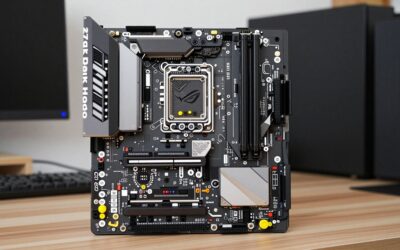
- Socket: TR4 is a large land-grid socket. It works with X399 motherboards only, and it is not compatible with AM4, AM5 or later Threadripper sockets.
- Memory: The chip uses quad-channel DDR4. Populate all four channels, and use a kit that the board vendor lists as compatible. Official speed is 2666 MT/s, and many owners run faster kits with manual settings, but results vary.
- BIOS: The 1950X works on launch-era X399 boards, but if you also plan to try second-generation Threadripper chips later, check that your board has a current BIOS first.
- Cooler: No cooler is in the box. You need a cooler made for the TR4 socket, because the chip is larger than a normal desktop processor.
- Power: Use a quality power supply and a board with a solid power delivery design. Entry-level X399 boards can run hot under heavy loads.
Power and Thermals
The 1950X has a 180 W TDP, nearly three times a typical 65 W Ryzen 5. Under all-core loads it produces a lot of heat across a large area, so plan for a case with strong airflow, a TR4-compatible air cooler or a large all-in-one liquid cooler that covers the full heat spreader.
Standard AM4 coolers do not fully cover the chip and are not a good match. Choose a cooler explicitly sold for TR4 and SP3.
Worked Power-Supply Calculation
Take a 180 W CPU, a 220 W graphics card and about 100 W for the board, drives, RAM and fans. That totals about 500 W. Add roughly 30 percent headroom for transient spikes, and an 650 W or 750 W power supply is a sensible choice. An overclocked 1950X can draw considerably more than its rating, so a 750 W unit is the safer pick if you plan to push it.
Creator Mode, Game Mode and Memory Access Modes
Threadripper 1000-series chips can run in two broad ways, and picking the right one matters more for gaming than any overclock.
| Setting | What it does | Good for | Trade-off |
|---|---|---|---|
| Creator Mode (default) | All 16 cores and 32 threads active | Rendering, encoding, virtual machines | Games may see uneven frame times |
| Game Mode (Ryzen Master) | Disables one die, leaves a smaller core pool | Older or lightly threaded games | Half the cores until you switch back; needs a restart |
| Distributed (UMA) memory | Spreads memory accesses across all channels evenly | Mixed workloads | Average latency is higher |
| Local (NUMA) memory | Keeps each die on its nearest memory | Programs that handle NUMA well | Games rarely benefit |
The practical advice is simple. Leave the chip in Creator Mode for work and switch to Game Mode only for a title that stutters. Many modern games run acceptably without any mode change because the Windows scheduler has improved since 2017, but there is no guarantee for every title. If you play a lot of older or poorly threaded games, a mainstream Ryzen chip avoids the whole issue.
Worked Example: Gaming and Streaming on One PC
Streaming is the one gaming scenario where extra cores can pay off. Suppose you play at 1080p and stream with software x264 encoding. A typical modern game wants roughly 6 to 8 threads, and a software stream encode can use several more. A 32-thread chip has the spare capacity to run both at once without the game stealing from the encoder.
The catch is that dual-die latency can still make the game side uneven, and modern GPUs offer hardware encoders that move the stream workload off the CPU entirely. With a recent graphics card, a hardware encoder gives a quality-per-cost result that makes the extra CPU cores unnecessary for streaming. That removes the main gaming argument for the 1950X. These figures are planning estimates, not results from our own use of the chip.
Overclocking, XFR and Precision Boost
The 1950X has an unlocked multiplier, and it also had Extended Frequency Range, which could add a bit over the 4.0 GHz boost clock when cooling allowed it, up to 4.2 GHz according to published figures. In practice most owners found that an all-core overclock gave more total throughput but cost a lot of extra power and heat, while single-core boost fell behind newer chips regardless.
- A mild all-core overclock is often a sensible compromise for rendering.
- For gaming, an overclock helps little because the limit is architecture and memory latency, not clock speed.
- Faster memory is the most useful tweak, because Infinity Fabric speed is tied to the memory clock on these chips.
The Real Cost of an X399 Build
People are drawn to the 1950X because the chip itself can look cheap on the used market. The full platform tells a different story. Compare what you need to buy in each case.
| Part | 1950X build | Modern gaming build (for example Ryzen 5 5600) |
|---|---|---|
| CPU | Used or new-old-stock chip | Boxed chip with a cooler included |
| Motherboard | X399 board, often used | Budget A520 or B550 board |
| Memory | Four sticks for quad-channel | Two sticks |
| Cooler | TR4-specific, separate purchase | Often in the box |
| Power supply | Larger unit advised | Mid-size unit |
| Result in games | Slower in most titles | Faster in most titles |
Once you add the cooler, four memory sticks and a bigger power supply, the cost difference usually vanishes. The older platform also has no real upgrade path beyond second-generation Threadripper chips such as the 2950X and 2990WX, which use the same socket. That makes a 1950X a near dead end, whereas an AM4 board can accept a Ryzen 7 5800X3D or Ryzen 9 5900X later.
Pre-Purchase Checklist for a Used 1950X
- Confirm the seller shows clear photos of the socket and the chip’s contacts, with no bent pins or residue.
- Check the motherboard model and its BIOS version, and confirm that all four memory channels work.
- Ask whether a TR4 cooler and mounting hardware are included, and whether the original retention bracket is present.
- Verify the model name printed on the heat spreader, since the 1900X, 1920X and 1950X look alike.
- Look for a return window of at least two weeks so you have time to run stability checks.
- Run a long memory test and a CPU stress run before you trust the system with important work.
How the 1950X Compares with Newer Threadripper Chips
If you want the Threadripper experience in 2026 rather than a bargain, the current lines are in a different league. Later Threadripper generations moved to newer sockets, DDR5 and far higher core counts, and they cost many times more. They are workstation products rather than gaming chips, so none of them make sense for a gaming-first build either. The 1950X sits in a small niche: the cheapest way to get 16 cores and many PCIe lanes, with the compromises that come with a 2017 design.
Companion Parts for a Threadripper 1950X Build
AMD Ryzen Threadripper 1950X (Exact Chip)
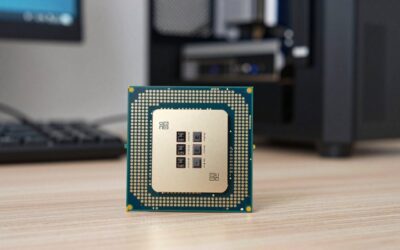
The listing for the 1950X is the boxed chip with 16 cores and 32 threads. Treat unusually high listing prices for a 2017 part with suspicion, because a newer mainstream chip usually gives you better results. If you do buy, confirm the item is the exact 1950X, sold new or well described, and that the seller supports returns.
Noctua NH-U14S TR4-SP3 Cooler
This is a tower cooler built for the TR4 and SP3 sockets, with a larger contact plate than normal desktop coolers. It is a quiet, well-regarded way to cool a 1950X on air, and it needs roughly 165 mm of case clearance, so check your case before you buy.
Noctua NH-U12S TR4-SP3 Cooler
The smaller sibling suits cases with less height, at about 158 mm tall. It has fewer heat pipes than the U14S, so it is better for moderate workloads than for sustained all-core rendering.
ID-COOLING A8-SP3 Cooler
This dual-fan air cooler lists eight heat pipes and a 320 W rating for AMD EPYC and Threadripper sockets. It sits at a lower cost tier than the Noctua options and is a candidate for builders who want strong cooling on a budget.
Ryzen 9 5900XT: A Modern AM4 Alternative
If you want 16 cores without the X399 platform, the Ryzen 9 5900XT is listed as a 16-core, 32-thread AM4 desktop chip. It is a far simpler base for both work and gaming, because it fits ordinary AM4 boards and dual-channel memory.
Alternatives to the Threadripper 1950X
| Chip | Cores and threads | Platform | Best for |
|---|---|---|---|
| Ryzen 5 5600 | 6 / 12 | AM4, DDR4 | Budget gaming |
| Ryzen 7 5800X3D | 8 / 16 | AM4, DDR4 | Gaming on an AM4 board |
| Ryzen 9 5900X | 12 / 24 | AM4, DDR4 | Gaming plus heavier creative work |
| Ryzen 9 5900XT | 16 / 32 | AM4, DDR4 | Same core count as the 1950X on a simpler platform |
| Ryzen 5 7600X | 6 / 12 | AM5, DDR5 | New budget build with an upgrade path |
For pure gaming, the Ryzen 7 5800X3D and the AM5 chips beat the 1950X comfortably in most games. For multi-threaded work on a budget, the Ryzen 9 5900X or 5900XT delivers similar or better throughput with far lower power draw.
Ryzen 5 5600 for Budget Gaming
The Ryzen 5 5600 is a 6-core, 12-thread chip that ships with a Wraith Stealth cooler. It is the obvious pick if gaming is the goal, since it will usually outrun a 1950X in games while using a small fraction of the power.
Is the Threadripper 1950X Still Worth Buying in 2026?
For almost everyone, no. The 1950X made sense when it launched, and it retains some value as a cheap many-core chip for people who already own the platform. For new builds the board, quad-channel RAM and TR4 cooler add cost, and the result is slower in games and less efficient than modern alternatives.
It can still make sense in three narrow cases: you already own an X399 board and RAM, you need many PCIe lanes for storage or capture cards, or you want a cheap virtual-machine host. Outside those cases, buy a current chip.
Buying Options: New, Used or Pulled from Workstations
- New-old-stock: Rare, and often priced above what a faster modern chip costs. Compare against current alternatives first.
- Used: The most common source. Check for bent socket pins, a clean heat spreader and a seller who accepts returns.
- Bundles: Used X399 board, CPU and RAM bundles can be reasonable value, but confirm the BIOS version and that all four memory channels work.
- Warranty: Do not expect manufacturer support on a used chip. Plan for the seller’s return window only.
We have not used the 1950X for this article. The guidance here comes from published specifications and editorial reviews, so check current listings and compatibility lists before you buy.
Frequently Asked Questions
Is the Threadripper 1950X good for gaming?
It is playable but not recommended. Lower per-core speed and a multi-die design make it slower than modern six- and eight-core chips in most games.
How many cores does the Threadripper 1950X have?
It has 16 cores and 32 threads, a 3.4 GHz base clock, a 4.0 GHz boost clock and a 180 W TDP.
What socket does the Threadripper 1950X use?
It uses socket TR4, also written sTR4, on X399 motherboards. It does not fit AM4, AM5 or newer Threadripper sockets.
Does the Threadripper 1950X have integrated graphics?
No. You need a discrete graphics card to get any display output.
What cooler does the Threadripper 1950X need?
You need a cooler made for the TR4 or SP3 socket, either a large air cooler or a liquid cooler with a TR4 mounting kit. Standard AM4 coolers do not cover the chip.
What is Game Mode on the 1950X?
Game Mode is an AMD Ryzen Master setting that turns off one die, which can improve frame pacing in some games but halves the active cores.
What should I buy instead of a Threadripper 1950X?
For gaming, buy a Ryzen 5 5600 or Ryzen 7 5800X3D on AM4, or a Ryzen 5 7600X on AM5. For heavy multi-threaded work, a Ryzen 9 5900X or 5900XT is a simpler option.
Sources
- AMD, press release on the Ryzen Threadripper 1950X and 1920X launch, August 2017
- WikiChip, Ryzen Threadripper 1950X entry
- PC Perspective, AMD Ryzen Threadripper 1950X and 1920X review
- Technical City, Ryzen Threadripper 1950X specifications
Last updated: October 2026