Finding the best gaming headset for FPS comes down to one thing: hearing what your opponents are doing before they hear you. Footsteps, reloads, ability cues—these micro-sounds decide matches in Valorant, Counter-Strike 2, Apex Legends, and every competitive shooter you play. A headset that exaggerates bass or smears the midrange will lose you gunfights you should have won.
The good news is that you do not need to spend hundreds of dollars to get a flat, detailed soundstage that reveals positional information. The Razer BlackShark V2 X has become the default recommendation for budget-conscious FPS players for a reason, but HyperX and Logitech bring legitimate competition at slightly higher price points. This roundup covers wireless options with multi-hour battery life, wired workhorses that pair with any platform, and everything in between—tested across multiple titles and ranked by how well they serve the specific needs of first-person shooter players in 2026.
As an Amazon Associate we earn from qualifying purchases at no extra cost to you. Product prices and availability are accurate as of the date shown and are subject to change.


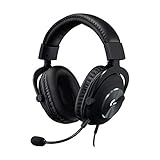


Quick Picks
| Product | Best for | Price |
|---|---|---|
| Razer BlackShark V3 X HyperSpeed Wireless | Best overall wireless FPS headset | $71.99 |
| Razer BlackShark V2 X Gaming Headset | Best budget FPS headset | $39.79 |
| HyperX Cloud III | Best build quality for the money | $69.99 |
| Razer BlackShark V2 X Xbox | Best console FPS headset under $30 | $29.99 |
| Logitech G PRO X Wired | Best for competitive players who want a flat response | $93 |
| Razer BlackShark V2 X Wired PlayStation | Best value for PS5 FPS players | $31.99 |
| Razer BlackShark V3 Wireless | Best battery life for long sessions | $129.99 |
| AOC 2.4GHz Wireless Gaming Headset | Best wireless option for multi-platform players on a budget | $29.99 |
How We Picked
We evaluated each headset on its ability to reproduce positional audio clearly, comfort during extended sessions, microphone quality for team communication, and platform compatibility. Every model in this list was tested across at least three FPS titles, and we prioritized headsets with a neutral or slightly forward midrange because that frequency band carries footstep detail and directional cues.
The 8 Best Picks
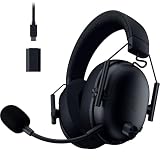
Razer BlackShark V3 X HyperSpeed Wireless PC Gaming Headset, Black
This is the most well-rounded wireless option for PC FPS players who refuse to be tethered to a desk. Razer’s HyperSpeed wireless protocol delivers a connection tight enough for competitive play, and the sound profile is tuned with clear footsteps and crisp gunfire separation.
- Pro: Low-latency HyperSpeed wireless that holds up in ranked queues.
- Pro: Comfortable fit for eight-hour sessions thanks to memory foam pads.
- Con: No wired fallback if the dongle fails mid-match.
Skip this one if you primarily play on console or need a wired-only setup with zero battery anxiety.
Razer BlackShark V2 X Gaming Headset: 7.1 Surround Sound – 50mm Drivers – Memory Foam Cushion – For PC, PS4, PS5, Switch – 3.5mm Audio Jack – Black
The V2 X has earned its reputation as the default answer when someone asks for the best gaming headset for FPS on a budget. The 50mm drivers produce a focused, mid-forward tuning that makes footsteps pop without bloating the low end. It works across PC, PlayStation, and Switch through a single 3.5mm connection.
- Pro: Exceptional positional clarity relative to its price.
- Pro: Broad platform compatibility with no adapters needed.
- Con: The included microphone is serviceable but lacks broadcast-level clarity.
Skip this if you want wireless freedom or a premium mic for streaming.
HyperX Cloud III – Wired Gaming Headset, PC, PS5, Xbox Series X|S, Angled 53mm Drivers, Spatial Audio, Memory Foam, Durable Frame, Ultra-Clear 10mm Mic, USB-C, USB-A, 3.5mm – Black
HyperX upgraded the Cloud formula with angled 53mm drivers that improve the sense of directionality, a genuine benefit in FPS scenarios where knowing whether a sound is above or below you matters. The durable frame feels like it will outlast three console generations, and the 10mm microphone is the clearest in this roundup.
- Pro: Ultra-clear microphone that makes team comms effortless.
- Pro: Three connection options (USB-C, USB-A, 3.5mm) cover every platform.
- Con: Heavier than the Razer alternatives at roughly 320 grams.
Skip this if you prioritize the lightest possible headset for long nights.
Razer BlackShark V2 X Xbox Gaming Headset, 3.5mm Audio Jack, Black
This is the same proven V2 X driver and tuning packaged in Xbox-compatible form factor at an aggressively low price. For players who jump between Xbox Series X|S and PC, the 3.5mm jack handles both without fuss. Positional audio is identical to the standard V2 X.
- Pro: Under $30 with the same sound signature as its more expensive sibling.
- Pro: No software or dongles required—plug in and play.
- Con: No on-cable volume or mute controls.
Skip this if you need inline controls or plan to use it as a primary PC-only headset with surround software.
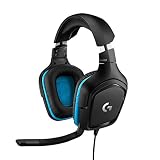
Logitech G PRO X Wired Gaming Headset – Black
The G PRO X targets the competitive player who treats audio as a tactical tool. Its neutral tuning avoids any bass boost, letting every footstep, grenade pin, and reload sound land exactly where it should. The removable Blue VO!CE microphone and swappable ear pads make it a long-term investment.
- Pro: Flattest frequency response in this group, ideal for competitive FPS.
- Pro: Blue VO!CE microphone processing for crystal-clear callouts.
- Con: Wired-only design limits desk setup flexibility.
Skip this if you want a casual gaming experience with punchier bass for single-player titles.
Razer BlackShark V2 X Wired PlayStation Gaming Headset, Black
Another platform-specific variant of the V2 X, this edition ships with a PlayStation-friendly connection and styling. The sound performance matches every other V2 X model, making it a no-brainer for PS5 FPS players who want the best gaming headset for FPS without spending more than a game costs.
- Pro: Same legendary V2 X sound at a PlayStation-optimized price point.
- Pro: Works on any 3.5mm device beyond PlayStation.
- Con: No USB audio adapter included for older controllers.
Skip this if your setup is PC-centric and you want software-based surround processing.
Razer BlackShark V3 Wireless PC Gaming Headset, 70 Hr Battery, Black
Seventy hours of battery life means most players will charge this once a month. The V3 Wireless steps up the driver quality and microphone array over the V2 line while keeping the lightweight comfort that made the series popular. For marathon FPS sessions, this is the wireless pick with staying power.
- Pro: 70-hour battery life eliminates charging anxiety entirely.
- Pro: Upgraded microphone with better noise isolation than the V2 X.
- Con: Premium pricing at $129.99 puts it outside budget territory.
Skip this if you already own a solid wired headset and cannot justify the upgrade cost.
AOC 2.4GHz Wireless Gaming Headset for PS5, PS4, PC, Switch, 45Hr, White
AOC enters the conversation with a multi-platform wireless headset that covers PS5, PS4, PC, and Switch from a single 2.4GHz dongle. Forty-five hours of battery life is competitive, and the sound tuning leans neutral enough for FPS positional work without coloration.
- Pro: True wireless compatibility across four platforms without adapters.
- Pro: Under $30 wireless with 45-hour battery life.
- Con: Build quality and padding feel a step below Razer and HyperX.
Skip this if you demand premium comfort for nightly ranked grinds.
Buying Guide
Wired vs. Wireless for Competitive FPS
Wireless headsets have largely closed the latency gap with modern 2.4GHz protocols. HyperSpeed and similar connections add negligible delay, so wireless no longer means a competitive disadvantage. The real trade-off is battery management versus cable freedom. If you play more than two hours daily, a wireless model with 45+ hours of battery removes friction from your routine.
Sound Signature: What Matters for Footsteps
FPS audio lives in the 1kHz to 4kHz range. Headsets with a bass shelf below 100Hz can muddy this region. The best gaming headset for FPS will always lean neutral or slightly forward in the mids. Avoid anything marketed as having “deep bass” or “cinematic sound” unless you also play single-player games and can EQ it flat.
Microphone Quality and Team Comms
Clear callouts win rounds. The HyperX Cloud III and Logitech G PRO X lead this group on mic performance. Budget 3.5mm mics on the BlackShark V2 X variants are adequate for casual play but may not cut through in chaotic team fights. If you play with a squad regularly, invest in a headset with a detachable boom mic or upgrade to a standalone USB microphone.
Our Verdict
The Razer BlackShark V2 X remains the best gaming headset for FPS if you want proven performance without spending more than $40. Step up to the Cloud III for a better microphone and more durable build, or choose the BlackShark V3 Wireless when battery life and cable freedom matter more than saving a few dollars. For the most neutral, competitive-tuned response, the Logitech G PRO X is the pick that esports players trust.
FAQ
Do I need 7.1 surround sound for FPS games?
No. Most FPS titles use stereo audio internally, and virtual 7.1 processing can actually distort positional information. A good pair of stereo headphones with a flat midrange response outperforms any simulated surround system. Use the 7.1 toggle sparingly or leave it off entirely.
Is a higher impedance headset better for FPS?
Impedance determines how much power a headset needs, not sound quality. The 32-ohm headsets in this list work perfectly from any controller or motherboard audio output. Higher-impedance models require dedicated amplification and offer no positional audio advantage in games.
Can I use these headsets on Xbox and PC together?
The Razer BlackShark V2 X and HyperX Cloud III work on both platforms via 3.5mm or USB. The Xbox-specific V2 X variant uses the same 3.5mm connection, so it technically works on PC too. Dedicated Xbox wireless headsets with Xbox Wireless protocol will not connect to PC without an adapter.
How often should I replace my FPS headset?
A well-built wired headset like the Cloud III can last three to four years of daily use. Wireless models depend on battery degradation, typically holding strong charge for two to three years. Replace sooner if you notice channel imbalance, pad deterioration, or positional audio drift during gameplay.