
The right best gaming mouse for claw grip can make or break your aim consistency, especially in competitive titles where micro-adjustments happen dozens of times per second. Claw grip demands a specific combination of traits: a shape that supports your palm without filling it, a lightweight chassis that reduces fatigue during long sessions, and side buttons positioned where your thumb naturally rests without forcing awkward stretches.
After testing dozens of models across budget and premium tiers, we narrowed the field to eight options that genuinely serve claw-grip users in 2026. Whether you want the lightest possible wireless shell, a sub-$20 wired workhorse, or simply want to upgrade your current mouse with a textured grip, this roundup covers every angle.
As an Amazon Associate we earn from qualifying purchases at no extra cost to you. Product prices and availability are accurate as of the date shown and are subject to change.



Quick Picks
| Product | Best for | Price |
|---|---|---|
| Redragon M612 Wired RGB Optical Gaming Mouse | Ultra-budget claw users | $16.99 |
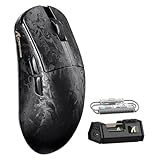
| ATTACK SHARK R11 Ultra 8K Carbon Fiber Wireless | Premium lightweight claw grip | $57.99 |
| Corsair IRONCLAW RGB Wired Gaming Mouse | Large-hand claw users | Check price |
| Razer Cobra Wired Gaming Mouse | Small-hand claw users | $29.99 |
| Logitech G203 Wired Gaming Mouse | Simple, reliable claw shape | $25.91 |
| Corsair KATAR PRO XT Wired Ultra-Light | Symmetric ambidextrous claw | $29.99 |
| ATTACK SHARK X11 Wireless Gaming Mouse | Budget wireless claw grip | $29.59 |
| Lizard Skins DSP Computer Mouse Grip | Claw-grip comfort upgrade | $9.99 |
How We Picked
We evaluated each mouse on shell geometry, weight distribution, sensor accuracy, switch feel, and how well the overall shape cradles a claw-grip hand without causing tension in the metacarpals or forcing the palm off the back of the mouse. Wireless options were tested for latency and battery life; wired models were judged on cable drag and flexibility. We also considered price-to-performance ratios since claw-grip-friendly mice do not need to cost a fortune.
The 8 Best Picks
Redragon M612 Wired RGB Optical Gaming Mouse
Who it’s for: Beginners experimenting with claw grip who want to test the technique before committing real money. The ergonomic hump on the M612 provides partial palm contact, which suits relaxed claw players with medium-to-large hands.
- Pro: Remappable keys let you bind side buttons precisely where a claw thumb naturally rests, reducing reach distance during flicks.
- Pro: The 8000 DPI ceiling covers virtually every sensitivity range competitive claw users run today.
- Con: The wired-only design and thicker cable create drag that can interrupt quick vertical micro-adjustments.
When to skip: If you already know claw grip is your permanent style, the bulkier shape will fatigue you faster than a true low-profile option. Spend a few dollars more on the Razer Cobra instead.
ATTACK SHARK R11 Ultra 8K Carbon Fiber Wireless Gaming Mouse
Who it’s for: Serious competitive players who want near-zero weight and an 8000 Hz polling rate without paying a Razer or Logitech premium. The carbon fiber shell keeps the chassis rigid yet feather-light, which is ideal for aggressive claw flicking.
- Pro: The 8K wireless polling delivers motion smoothness that rivals wired flagships, critical for pixel-precise claw tracking.
- Pro: Carbon fiber construction provides tactile feedback and rigidity without adding grams to the back of the mouse.
- Con: At $57.99, it sits in territory where established brands offer more mature software ecosystems and longer support windows.
When to skip: If your game library is casual or single-player, the premium over the ATTACK SHARK X11 is unnecessary for the marginal gain.
Corsair IRONCLAW RGB Wired Gaming Mouse
Who it’s for: Players with large hands who find most claw-friendly mice too small to support their arch properly. The IRONCLAW’s aggressive ergonomic profile gives bigger palms enough surface area to hover above without sliding off the rear.
- Pro: Seven programmable buttons let you map abilities without repositioning your hand, preserving the static claw posture during fights.
- Pro: The 18,000 DPI sensor and iCUE software provide granular tuning for both DPI stages and lift-off distance.
- Con: The sheer width makes it unwieldy for players with medium or smaller hands who want fingertip-like agility.
When to skip: If your hands measure under 18.5 cm in length, this mouse will force your claw into an uncomfortable stretched position. Choose the Razer Cobra or Logitech G203 instead.
Razer Cobra Wired Gaming Mouse
Who it’s for: Small-to-medium-hand players who want the lightest possible wired shell for claw grip. At just 58 grams, it removes almost every source of inertia that slows down vertical micro-corrections.
- Pro: Gen-3 optical switches eliminate debounce delay, giving instant actuation that pairs well with twitchy claw flicks.
- Pro: The compact ambidextrous shape lets your palm hover freely without touching the back, the ideal claw contact point.
- Con: Side buttons sit slightly high, requiring a small thumb lift that can feel off-center during sustained strafing.
When to skip: If you have large hands or prefer partial palm contact, the Cobra will feel like it disappears inside your grip.
Logitech G203 Wired Gaming Mouse
Who it’s for: Anyone wanting a no-frills, proven shape for relaxed claw. The G203’s gentle hump and modest weight make it forgiving for players still training their hand to avoid full palm contact.
- Pro: The symmetrical, low-profile body reduces contact surface area, encouraging a natural claw posture without forcing it.
- Pro: Logitech’s G HUB software offers reliable DPI and lift-off calibration with minimal bloat.
- Con: Only six buttons and no side grip texture mean the shell can feel slippery under sweaty palms during intense sessions.
When to skip: If you need more than six inputs or plan to play MOBA-style games with complex keybinds on your mouse, the button count will bottleneck you quickly.
Corsair KATAR PRO XT Wired Ultra-Light FPS Gaming Mouse
Who it’s for: Claw and fingertip hybrids who want a truly symmetrical shape. The KATAR PRO XT’s balanced design means your hand floats evenly over both sides, ideal for players who shift grip mid-fight.
- Pro: The ultra-light chassis and symmetric geometry allow unrestricted vertical and lateral wrist rotation, the core of efficient claw movement.
- Pro: Quickstrike buttons register with minimal force, reducing thumb fatigue during long competitive sessions.
- Con: The wired-only design adds cable weight that partially negates the ultra-light shell during fast flicks.
When to skip: If you play on a desk without a large mousepad or bungee, the cable tether will undermine the low-weight advantage.
ATTACK SHARK X11 Wireless Gaming Mouse
Who it’s for: Budget-conscious claw users who refuse to give up wireless freedom. The X11’s lightweight shell and included grip tape make it one of the most claw-ready mice under $30.
- Pro: The PAW3311 sensor at 22,000 DPI delivers accurate tracking that matches mice costing twice as much.
- Pro: Tri-mode connectivity and the included RGB charging dock mean you can swap between 2.4 GHz and Bluetooth without ever plugging in a cable.
- Con: Five buttons limit remapping flexibility compared to the IRONCLAW or Redragon M612.
When to skip: If you need more than five inputs for MMO or MOBA macros, you will run out of assignable buttons on the X11.
Lizard Skins DSP Computer Mouse Grip
Who it’s for: Owners of any mouse from this list who want to add texture and slight thickness to the sides, preventing thumb slippage during aggressive claw pulls.
- Pro: The 0.5 mm thickness raises side-button height just enough to reduce accidental clicks without adding bulk.
- Pro: Cut-to-fit design means it conforms to virtually any mouse shape from the Cobra to the IRONCLAW.
- Con: Installation requires patience and a precision knife; imprecise cuts lead to uneven edges that irritate the thumb.
When to skip: If your mouse already ships with textured side grips, adding a DSP layer may make the shell too thick for comfortable claw hovering.
Buying Guide
Shape and Size Matter More Than Specs
Claw grip requires the palm to hover over the back of the mouse rather than rest on it. If your shell has an aggressive rear hump, your fingers will compensate by tensing, causing fatigue within twenty minutes. Look for low-to-medium hump profiles and ambidextrous or gently curved shapes. Measure your hand length and match it: under 17 cm favors the Razer Cobra, 17-19 cm suits the Logitech G203 or KATAR PRO XT, and 19 cm and up points to the IRONCLAW.
Weight Thresholds for Aggressive vs. Relaxed Claw
Sub-60 gram mice reward aggressive flicking and fast tracking because there is almost no inertia to overcome when reversing direction. Above 80 grams, relaxed claw players who hover the palm lightly find the extra mass stabilizes their aim without extra effort. The ATTACK SHARK R11 Ultra and Razer Cobra sit squarely in the aggressive tier; the Redragon M612 and IRONCLAW serve the relaxed tier.
Wireless Latency Is No Longer a Barrier
Modern 8000 Hz wireless polling matches or beats wired response times, meaning you no longer sacrifice performance for a clean desk. The only remaining consideration is battery life and charging convenience. The ATTACK SHARK X11’s included charging dock eliminates the most common wireless pain point by keeping the mouse on a stand that recharges during breaks.
Our Verdict
The ATTACK SHARK R11 Ultra stands as the best gaming mouse for claw grip overall in this roundup. Its carbon fiber shell, 8K wireless polling, and featherweight build check every box that serious claw users care about. For those on a tight budget, the ATTACK SHARK X11 delivers the same shape philosophy with a wireless connection for less than half the price. And if you want to optimize a mouse you already own, the Lizard Skins DSP grip is a cheap, reversible upgrade that eliminates thumb slippage across the entire list.
FAQ
Is claw grip better than palm grip for FPS games?
Claw grip gives you greater wrist mobility and faster vertical adjustments, which benefits flick-heavy FPS play. However, it places more strain on your fingers and is not inherently superior; the best grip is whichever one feels sustainable over a full session without causing pain.
How light should a claw grip mouse be?
Most competitive claw users prefer mice under 70 grams. Below 60 grams, you will notice significantly reduced fatigue during long ranked sessions. Heavier mice above 90 grams work for players who rest their fingertips more passively, but the extra mass slows micro-corrections.
Do I need wireless for claw grip?
No. Many wired mice in this list, including the Razer Cobra and Corsair KATAR PRO XT, are excellent claw options. Wireless becomes advantageous when cable drag interferes with your wrist angle during aggressive flicks. If you have a bungee or large pad, wired is fine.
Can I use a mouse pad to improve claw grip?
Indirectly, yes. A smooth, low-friction pad reduces the force needed to initiate movement, which means your fingers compensate less and fatigue slower. Pairing a fast pad with a lightweight mouse from this list creates the lowest overall resistance setup for claw players.


