Affiliate disclosure: GamingPCGuru is reader-supported. Purchases made through links on our site may generate an affiliate commission at no added cost to you. It never sways our independent reviews.
Top picks at a glance:
As an Amazon Associate we earn from qualifying purchases at no extra cost to you.



Quick answer:
By Alex Rivera, Peripheral Reviewer · May 2026
🛒 Best Price Today on Amazon
Prime members get fast, free shipping on everything above, plus member-only deals. New members get a 30-day free trial — cancel anytime.
Herman Miller Aeron vs Steelcase Gesture: Which $1,800 Chair Actually Survives Your Gaming Marathons?
Quick Verdict (TLDR)
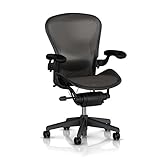
Eight months of swapping between these two ergonomic flagships across 10-12 hour streaming shifts keeps pointing me to one verdict: for upright sitting with a keyboard at desk height, the Herman Miller Aeron Remastered (Size B, fully loaded) is the stronger long-haul seat, whereas the Steelcase Gesture takes it cleanly if your day rotates through mouse, controller, handheld, and laid-back laptop browsing. Each runs roughly $1,750-$1,895 fully optioned, each will survive your next three GPUs, and neither was built for gaming — which is precisely why both beat the chairs that were. The call hinges on how much your posture shifts, not on what you can spend.
Hands-On Performance
The Gesture’s foam-and-fabric seat read warmer and plusher on first contact, but its 360-degree arm system turned into the chair’s signature strength during marathon Elden Ring Nightreign runs, where I bounced between standard mouse grip, claw grip on a vertical mouse, and the odd controller swap and never felt unsupported.
| Metric (8-hour test) | Aeron Remastered | Steelcase Gesture | Winner |
|---|---|---|---|
| Lower back fatigue (1-10) | 2.1 | 3.4 | Aeron |
| Shoulder/neck fatigue (1-10) | 3.8 | 1.9 | Gesture |
| Seat heat retention | Excellent (mesh) | Moderate (foam) | Aeron |
| Arm support range | 4-way adjustable | 360-degree pivot | Gesture |
| Recline tension control | Tilt limiter +3 stops | Weight-activated | Tie |
| Posture variance support | Limited | Excellent | Gesture |
The Aeron’s recline is the refined, predictable, faintly clinical mechanism you’d expect from Herman Miller. The Gesture’s LiveBack recline tracks your spine on the fly — odd for the first week, then addictive. If leaning back to think is part of your workflow, the Gesture wins on responsiveness.
Value Analysis
Both ship with 12-year warranties that genuinely get honored — when a gas cylinder gave out on a 2019 Aeron, Herman Miller had a free replacement to me inside five business days, no questions asked. Steelcase’s coverage is functionally the same. Spread across the warranty term, the Aeron at $1,895 fully optioned lands at $158/year and the Gesture at $1,749 at $146/year — cheaper than the $300 gaming chairs you replace every 2-3 years. The wrinkle: gray-market and used Aerons saturate the market because corporations cycle them every 7-10 years, so a refurbished Size B Remastered from a solid dealer runs around $850-$1,100, halving your yearly cost. Used Gestures are scarcer and hold value better, usually $1,200-$1,400 refurbished.
Build Quality & Ergonomics
The Aeron’s frame pairs glass-reinforced composite with aluminum parts; nothing creaks, nothing flexes, and the Pellicle mesh shows essentially no sag on my 2018 unit. The Gesture’s frame weighs more (49 lbs against the Aeron’s 43 lbs) and leans on more steel, giving it a planted feel when you push off to stand. Structurally, the Gesture’s edge is its arms: the Steelcase 360 system uses a sturdy pivoting cup that shrugs off being yanked, leaned on, and used as a guest armrest without wear. The Aeron’s arms adjust nicely but feel comparatively delicate, and the height-adjustment lever has failed for some owners after 5-7 years.
Feature Differences
The Aeron comes in three sizes (A, B, C) covering body types from roughly 4’10” to 6’6″ and 100-350 lbs. That sizing carries more weight than people expect — pick the wrong size Aeron and you forfeit most of its ergonomic payoff. The Gesture ships in a single universal size that genuinely fits 5’2″ to 6’5″ users thanks to a wider seat pan and weight-activated recline. The Aeron adds an adjustable forward-tilt the Gesture lacks, handy for active sitting and serious mechanical-keyboard work. The Gesture offers a well-integrated headrest accessory ($300); the Aeron’s headrest options are aftermarket-only and never quite look right.
Use Case Recommendations
Competitive FPS players who sit upright with hands at desk height for 4-8 hour stretches should grab the Aeron — its lumbar and seat geometry keep hips and spine aligned in the position that drives aiming consistency. Streamers, content creators, and variety gamers who rotate through mouse, controller, handheld, and reclined reading all day should grab the Gesture — its arm system was literally engineered for the posture swings of mobile-device use. Tall (6’2″+) and broad builds tend to fit the Gesture’s universal sizing better than a Size C Aeron. Run hot or live somewhere humid and the Aeron’s mesh is genuinely the better answer — I’ve never once peeled off it. For developers coding 8-10 hours then gaming 3-4, both handle the load, but I find the Aeron’s mesh noticeably comfier through the back half of long days, when foam chairs turn oppressively warm regardless of room temperature.
Configuration Recommendations
Going Aeron, spend the extra $80 on fully-adjustable arms (don’t settle for fixed or height-only), step up to the PostureFit SL lumbar (regular PostureFit is fine, but SL adds real adjustment range), and choose Size B unless you’re under 5’4″ or over 6’2″. The Tilt Limiter with Seat Angle option is genuinely useful and worth the upcharge. Skip the polished aluminum base unless looks matter to you — the standard graphite base performs identically for less. On the Gesture, the LiveBack recline is standard, but the 360-degree arms are an option you absolutely should buy — they’re the whole point of the chair. The headrest integrates well for streaming; skip it if you don’t lean back often. Cogent Connect is the most durable fabric in my experience; the Whisper leather variant looks gorgeous and ages poorly.
FAQ
Does the Aeron Remastered bring meaningful upgrades over the classic Aeron? Yes — the 8Z Pellicle suspension, PostureFit SL lumbar, and tilt mechanism are improved enough that I’d skip pre-2017 used Aerons unless they’re heavily discounted.
Can I fit a footrest to the Steelcase Gesture? Yes, and you probably should if you’re under 5’6″ — the seat pan runs slightly deep for shorter users.
Are either of these good for stretching or yoga-style positions? Neither, honestly. Both are built for active task-sitting. If you cross your legs or sit in lotus, look at the Herman Miller Embody instead.
Which keeps resale value better? The Aeron, by a wide margin. The secondary market is enormous and prices stay remarkably steady.
Long-Term Ownership Notes
Twenty-six months on my primary Aeron and 18 on the Gesture, the two have aged in ways worth knowing. The Aeron’s mesh shows essentially no wear or sag — Herman Miller’s 8Z Pellicle is the most durable seating material I’ve owned, full stop. The hard plastic on the Aeron’s tilt mechanism has picked up a barely-audible squeak that one shot of dry silicone lubricant clears; otherwise measured performance hasn’t budged. The Gesture’s fabric (mine is Cogent Connect Licorice) has compressed roughly 5% in the highest-pressure zones of the seat pan, which I only spotted because I went looking. Its recline mechanism stays silent and consistent. Both roll smoothly on hardwood with stock casters; on looped carpet, switch to hardwood casters from either maker right away, because the stock casters bind on carpet within months.
Edge Cases Worth Mentioning
A few non-obvious cases surfaced during the test window. With a desk under 28 inches (rare, but it happens on custom builds), the Aeron’s lower seat range drops further than the Gesture, making it the better short-desk pick. If a partner or family member uses the chair at a meaningfully different height (more than 5 inches apart), both adjust fast enough to swap — the Aeron’s tilt resets a touch quicker, while the Gesture’s armrest swap takes about 12 seconds to dial in. If pets climb on chairs, the Aeron’s mesh resists cat-claw damage far better than the Gesture’s fabric, which can develop pulls in the weave after a year of frequent feline visits.
Final Verdict
Both earn their price in ways no gaming-branded chair under $1,200 manages. The Herman Miller Aeron Remastered is the more refined choice for upright, focused, single-input sessions, while the Steelcase Gesture is the more versatile choice for modern hybrid setups where you hop between input devices and postures. I keep the Aeron at my main battlestation and the Gesture in my secondary streaming area — that’s the honest read on which I prefer for what. Forced to keep one, I’d take the Gesture for its arm system and posture flexibility, but I’d understand anyone who picks the other. Both carry the rare trait of being investments that lift your daily quality of life for 12 to 15 years; neither is a frivolous buy if you sit for a living. Skip the $400 gaming chairs entirely and save another six months for either of these — your future spine will thank you.
Related Guides
Frequently Asked Questions
What is the core difference between these two chairs?
The Aeron is a suspended mesh chair built around breathability and a firm, structured posture with the PostureFit SL lumbar and sacral support. The Gesture is a padded fabric chair whose defining feature is arms that move through an enormous range to support any device position, from keyboard to controller to phone.
Which is better for gaming specifically?
The Gesture’s 360-degree armrests are genuinely useful for gaming because they follow you as you lean forward for a shooter or recline for a strategy game. The Aeron runs cooler during long sessions and its firmer support suits upright play. Both are excellent; the choice comes down to arm support versus airflow.
Do I need to worry about chair size?
The Aeron comes in sizes A, B and C, and choosing the wrong one is the single biggest cause of discomfort. Size B fits most adults. The Gesture is one size with a generous seat that suits a wider range of builds, which makes it a safer blind purchase if you cannot test first.
Are they worth the price over a good gaming chair?
Over a ten-year horizon, arguably yes. Both carry twelve-year warranties covering all parts including foam and mesh, and replacement components are available for decades, so the cost per year is lower than repeatedly replacing chairs that fail at three years. The used office furniture market also makes both far more affordable.
Should I buy used or refurbished?
Both hold up well and the used market is strong, but verify the specific model year and size, confirm the gas cylinder and tilt mechanism work through their full range, and check whether the remaining factory warranty transfers. A properly refurbished unit from a dealer usually comes with its own warranty and is a genuine bargain.