🛒 Best Price Today on Amazon
Prime members get fast, free shipping on everything above, plus member-only deals. New members get a 30-day free trial — cancel anytime.
Whether laptop insurance covers the battery depends on the policy you hold and on how the battery failed. The answer differs for a battery that failed on its own and one damaged in an accident. Most policies draw a line between sudden accidental damage, which is often covered, and gradual wear, which is usually not. The only way to know where your policy draws that line is to read the document itself, because the wording varies widely between insurers.
This guide is for laptop owners who are wondering whether a battery problem is worth claiming, and for anyone choosing a policy and trying to understand what it actually covers. It explains the usual distinction between accidental damage and wear, what a manufacturer warranty covers, and the questions to ask your insurer before you file a claim. It gives general guidance about how these policies usually work, not a ruling on any single policy.
As an Amazon Associate we earn from qualifying purchases
How to Choose
Read the accidental damage section first
The accidental damage section is where most battery claims live or die, because a battery damaged by a drop, a spill, or another sudden event is usually treated differently from one that simply wore out. Open your policy and look for the words that describe accidental damage, then check whether the battery is named among the parts covered. Some policies cover the whole laptop including the battery, while others list specific parts and leave the battery out. If the wording is unclear, ask the insurer in writing before you claim, because a written answer is far easier to rely on than a verbal one.
Understand the wear and tear exclusion
Almost every laptop insurance policy excludes gradual wear and tear, and a battery that slowly holds less charge over years of use falls squarely into that category. Batteries are consumable parts: their capacity fades with every charge cycle, and insurers treat that fading as normal use rather than damage. A battery that suddenly swells, overheats, or stops working altogether may be treated differently, but a battery that simply lasts fewer hours than it did when new almost never qualifies. Knowing this in advance saves you a claim that is likely to be refused.
Compare insurance with the manufacturer warranty
A manufacturer warranty and an insurance policy cover different things, and the warranty is often the better route for a battery that fails on its own. Warranties usually cover defects in materials and workmanship for a set period, which can include a battery that swells or fails early, while insurance usually covers accidents. Check the warranty first when a battery fails without any accident, because a warranty claim is often simpler and does not affect your insurance record. Some makers also offer a separate battery warranty with its own terms, so check the battery coverage specifically rather than assuming the general warranty applies.
Check the excess, the limits, and the claim process
Even when a battery is covered, the excess you pay may be close to the cost of a replacement battery, which makes a claim poor value. Read the excess for your policy and compare it with the price of a new battery for your model, remembering that a claim can also affect future premiums. Check the claim limits too, because some policies cap the amount they pay for a single part. Finally, look at the claim process: some insurers ask for photos, a repair estimate, or the damaged part itself, and knowing that in advance makes the claim far smoother. Keep the policy number and the insurer’s claims number somewhere you can find them quickly, since a claim filed late can be refused.
What to Check in Your Policy
The exact wording on batteries, wear, and accidents
Policies differ in the small print, and the small print is what decides a battery claim. Look for the battery by name in the covered parts list, and look for the words wear, tear, gradual, and deterioration in the exclusions, because those words usually decide whether a fading battery qualifies. Check whether accidental damage is a standard part of your plan or an add-on you may not have bought, and check whether the policy covers a swollen battery as a safety issue rather than as wear. If any of these points is unclear, contact the insurer and ask for the answer in writing before you spend money on a repair.
What the insurer asks for when you claim
A battery claim usually needs evidence, and the insurer will say what kind. That may be photos of the damage, a written report from a repair shop, or the battery itself sent in for inspection. Keep the damaged battery and any paperwork from the incident, and do not throw anything away until the claim is settled. Note the date the problem appeared and what happened just before it, because a clear account helps the insurer decide quickly. If the battery is swollen or hot, handle it carefully and follow the maker’s safety guidance before doing anything else.
How a claim affects future cover
A claim is not free even when it is paid, because it can affect the cost of renewing the policy and the excess you pay next time. Some insurers raise the premium after a claim, and some count a battery claim the same as any other, so a small claim can cost more over time than the repair itself. Before claiming, compare the payout after the excess with the cost of paying for the replacement yourself, and remember that a claim history follows you to the next insurer. A claim makes sense when the amount is large; for a small battery it often does not.
Which One Fits Your Situation
Your battery was damaged in an accident
A battery damaged by a drop or a spill is the situation most likely to be covered, provided your policy includes accidental damage and names the battery among the covered parts. Read the accidental damage section, check the excess against the cost of a replacement, and contact the insurer before paying for a repair. Keep photos and the damaged battery as evidence. File the claim promptly, because policies often set a time limit for reporting accidental damage.
Your battery swelled or stopped working on its own
A battery that swells or fails without any accident is more likely a warranty matter than an insurance one, so check the manufacturer warranty first. Some policies do cover a sudden failure, so read the wording on sudden damage and ask the insurer if it is unclear. Do not keep using a swollen battery, and follow the maker’s safety guidance while you arrange a replacement.
Your battery simply holds less charge than it used to
A battery that fades gradually with use is almost never covered by insurance, because wear and tear is a standard exclusion. The practical answer is a replacement battery bought directly, which is often cheaper than the excess on a claim would be. Check the maker’s own battery replacement service, which may be simpler than a third-party repair.
You are choosing a policy and want battery cover
Read the policy before you buy, and look for accidental damage cover that names the battery, plus the excess and the claim limits. Compare the excess with the cost of a replacement battery for your model, because a policy with a high excess may never be worth claiming on for a battery alone. Ask the insurer in writing if the wording leaves any doubt.
Common Mistakes
- Assuming all laptop insurance covers the battery, when many policies exclude it or treat it as wear.
- Filing a claim for a gradually fading battery that falls under the wear and tear exclusion.
- Claiming on insurance for a battery failure that the manufacturer warranty would have covered free.
- Paying for a repair before checking the excess, then finding the claim pays almost nothing.
- Throwing away the damaged battery before the insurer has seen the evidence.
Protection Gear That Lowers the Odds of a Battery Claim
Insurance is the fallback, but a few cheap accessories reduce the chances of battery damage in the first place. They protect against power problems and heat, which are common causes of premature wear.
APC BE600M1 UPS Battery Backup and Surge Protector
A compact 600VA backup with outlets for a computer, router and small devices. It buys a few minutes to save work and shut down cleanly during an outage.
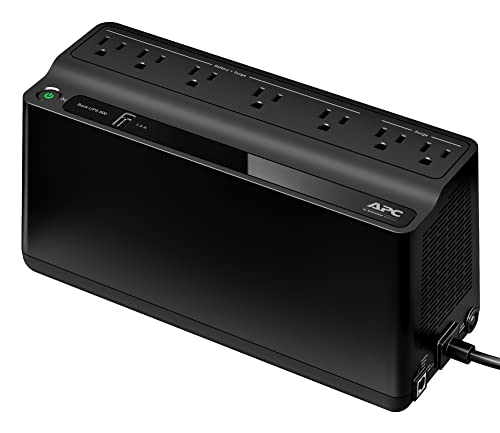
APC UPS Battery Backup & Surge Protector BE600M1 for Computer, Router, NAS | 600VA/330W Backup Battery Power Supply for Power Outages, 7 Outlets, USB charging, 490 J surge protect. Replaceable Battery
Included for 'Does Laptop Insurance Cover the Battery? (November 2026)' as a representative mattress protector in this roundup; selection reflects the product set returned for this topic.
View on AmazonAnker 12-Outlet Surge Protector Power Strip
A 2100-joule surge-protected strip with a flat plug and a long cord. It gives a laptop, monitor and chargers a protected place to plug in.

Anker Power Strip with 2100J Surge Protector, Outlet Extender, 20W, 12 AC | 5ft Extension Cord with Multiple Outlets, 1 USB C, 2 USB A, Home Office, Dorm Room Essentials, TUV Listed
Included for 'Does Laptop Insurance Cover the Battery? (November 2026)' as a representative mattress protector in this roundup; selection reflects the product set returned for this topic.
View on AmazonKootek Laptop Cooling Pad with 5 Quiet Fans
A five-fan stand for 12 to 17 inch laptops. Lower temperatures put less stress on the cells, and it is easy to try because it runs from a USB port.

Kootek Laptop Cooling Pad Cooler Stand with 5 Quiet Fans for 12"-17" Laptop | 5 Quiet & High‑Performance Laptop Fan for 360° Full Coverage, USB‑Powered, 2 Extra USB Hubs, 6 Adjustable Height, Blue LED
Included for 'Does Laptop Insurance Cover the Battery? (November 2026)' because the listing adds cooling or gel-infused layers, which is the attribute this article compares.
View on AmazonINIU 20000mAh 65W Laptop Power Bank
A compact pack with 65W fast charging and a flight-friendly capacity. It suits ultrabooks and most 13 to 14 inch laptops that charge over USB-C. Check your laptop’s wattage first.

INIU Laptop Power Bank, Smallest 20000mAh 65W Fast Charging Battery Pack | USB C Cable, Flight-Safe, Travel Essentials, Portable Charger for MacBook Pro, Steam Deck, iPhone, iPad etc
Included for 'Does Laptop Insurance Cover the Battery? (November 2026)' as a representative home product in this roundup; selection reflects the product set returned for this topic.
View on AmazonFrequently Asked Questions
Does laptop insurance cover the battery?
It depends on the policy and on how the battery failed. Accidental damage to the battery is often covered when the policy includes it, while gradual wear is almost always excluded. A battery that swells or fails suddenly may be covered by the manufacturer warranty instead. Read your own policy document for the final answer.
Is a swollen laptop battery covered by insurance?
Sometimes, but it depends on the wording. A swollen battery is a sudden failure rather than gradual wear, so some policies treat it as covered damage, while others point you to the manufacturer warranty. Stop using a swollen battery at once, follow the maker’s safety guidance, and ask the insurer in writing before arranging a repair.
Does the manufacturer warranty cover the battery?
Often yes, for a set period, because a battery that fails early or swells is usually treated as a defect in materials or workmanship. The warranty period for the battery can be shorter than for the rest of the laptop, so check the battery terms specifically. If the warranty has expired, insurance or a direct replacement are the remaining options.
Should I claim on insurance for a new battery?
Weigh the excess against the cost of a replacement battery first, because the excess may be close to the battery’s cost and a claim can affect future premiums. If the excess is low and the battery is clearly covered, a claim makes sense. If the battery faded through normal use, a direct replacement is usually the better choice.