Affiliate disclosure: This article contains affiliate links. GamingReviewGuide.com earns commission on qualifying purchases, with no cost to you.
Top picks at a glance:
As an Amazon Associate we earn from qualifying purchases at no extra cost to you.




Quick answer:
By Alex Rivera — Peripheral & Accessory Reviewer, updated May 2026.
🛒 Best Price Today on Amazon
Prime members get fast, free shipping on everything above, plus member-only deals. New members get a 30-day free trial — cancel anytime.
Corsair vs SteelSeries Mouse Brand Comparison 2026: The Tier-Two Brands That Quietly Got Very Good
Quick Verdict (TLDR)
In 2026, Corsair takes it for productivity-minded gamers and the Scimitar Elite MMO crowd — their sliding-keypad design has no equal, and iCUE is still the best multi-device sync software going. SteelSeries takes it for hybrid players (the Aerox 9 is the lightest MMO mouse), for audio-mouse ecosystem buyers (Arctis + Aerox sync), and for anyone allergic to bloated software (GG really is lighter than iCUE). Neither brand fields a true FPS-tier flagship to rival Razer or Logitech’s top mice in 2026, and that’s the real ceiling on both.
Hands-On Performance
250+ hours across FPS, MMO, and ARPG.
On FPS, neither brand has reeled in Razer or Logitech. The Corsair Sabre Pro Wireless at 79 g is competent but heavier than current FPS flagships. The SteelSeries Prime Wireless at 80 g is similarly behind the pace. Sensor performance matches Razer/Logitech at the flagship tier, but the shells, switches, and overall click feel still trail the top mice by half a generation.
On MMO, Corsair leads. The Scimitar Elite Wireless sliding keypad is the best ergonomic answer to “where’s button 12” that anyone has shipped. The Aerox 9 wins on weight (89 g vs 122 g) but loses on keypad refinement. Both have solid wireless.
| Category | Corsair 2026 flagship | SteelSeries 2026 flagship | Winner |
|---|---|---|---|
| FPS ultralight | Sabre Pro Wireless (79 g) | Prime Wireless (80 g) | Neither competes with Razer/Logitech |
| MMO | Scimitar Elite Wireless (sliding pad) | Aerox 9 (lightest MMO) | Corsair on refinement; SteelSeries on weight |
| Productivity hybrid | Dark Core (112 g, RGB-heavy) | Aerox 5 (74 g, honeycomb) | SteelSeries (lighter) |
| Software polish | iCUE (deep, somewhat heavy) | GG (lighter, simpler) | Tied — different priorities |
| Audio ecosystem sync | Available via iCUE | Best-in-class with Arctis | SteelSeries |
| RGB ecosystem depth | iCUE controls 50+ device types | GG ties Aerox / Arctis / Apex | Corsair (broader) |
Value Analysis
Both brands price aggressively under Razer and Logitech at matching tiers. The Scimitar Elite Wireless at $129 undercuts the Razer Naga V2 Pro at $179 by $50 — a real gap. The Aerox 9 at $149 undercuts dedicated MMO rivals meaningfully. For budget-minded buyers who’d rather skip the Logitech/Razer tax, Corsair and SteelSeries are the smart play in 2026.
Long-term value rides on warranty experience. Corsair’s RMA is solid but slow (10-14 days US). SteelSeries RMA averages 8-11 days in 2026. Both honor warranty fairly. Resale sits lower than Razer/Logitech (60-68% MSRP at 12 months), which hurts buy-and-resell players but doesn’t matter much to keep-and-use buyers.
Build Quality & Ergonomics
Corsair’s shell materials feel a touch more premium across the board — denser plastics, tighter tolerances on the side panels, better-finished scroll wheels. SteelSeries’s honeycomb construction on the Aerox line is divisive but rigid enough in practice. Both ship excellent PTFE feet that glide cleanly straight out of the box.
Ergonomic refinement is where Corsair pulls ahead. The Scimitar Elite Wireless and Dark Core shapes clearly reflect many product iterations. SteelSeries’s shape language is more conservative and “safe” — the Aerox line all uses variants of the same symmetrical mold, which limits shape choices for buyers with specific grip needs.
Feature Differences
iCUE is the deepest multi-device sync software on the market in 2026. Own a Corsair keyboard, headset, and mouse, and iCUE can sync RGB and per-game profiles across all of them from one settings file. The cost is iCUE’s footprint — it’s the heaviest gaming-peripheral software in active use, and it has historically had reliability hiccups (mostly resolved by 2026, but the reputation lingers).
SteelSeries GG is lighter, simpler, and integrates better with Arctis headsets. Own an Arctis Nova Pro Wireless and an Aerox mouse, and GG runs both with elegant integration. The downside is fewer features — GG’s macro editor and per-game profile auto-switching aren’t as capable as iCUE or Razer Synapse.
Use Case Recommendations
- MMO player who values keypad refinement: Corsair Scimitar Elite Wireless.
- MMO + occasional FPS hybrid: SteelSeries Aerox 9.
- Already own Corsair keyboard/headset: Corsair (iCUE sync).
- Already own Arctis headset: SteelSeries (best Arctis integration).
- Productivity-heavy with RGB sync needs: Corsair.
- Lighter, simpler software preference: SteelSeries.
- Competitive FPS at high rank: Look at Razer/Logitech instead — neither brand competes at top tier.
FAQ
Q: Is iCUE finally stable in 2026?
Yes, mostly. The major resource-leak problems that dogged iCUE 4 (2022-2023) are fixed in iCUE 5.x. The software is still heavy on system resources (~300 MB RAM idle) but it no longer crashes or refuses to launch the way the older versions did.
Q: Does the Scimitar Elite Wireless work without iCUE installed?
Yes. The mouse holds three profiles on-board. You only need iCUE for advanced macro editing and per-app profile switching.
Q: Is the Aerox 9’s IP54 rating actually useful?
Yes. I’ve spilled coffee and Topo Chico on mine more than once with no damage. The honeycomb shell makes cleaning trivial — compressed air clears any debris from the chambers.
Q: Can I use a Corsair mouse with SteelSeries headset RGB sync (or vice versa)?
Not directly. Both brands keep their RGB ecosystems closed. You can run both apps at once, but they won’t share color profiles. For unified cross-brand sync, look at OpenRGB (open-source).
Software Stability and Resource Footprint
iCUE 5 in 2026 idles around 280-320 MB RAM with a single Corsair mouse connected. Crash frequency has dropped sharply from the iCUE 4 era — I haven’t had a hard crash in 6 months of daily use. The memory-leak issues that plagued iCUE 4 are gone in the current build.
SteelSeries GG idles around 150-180 MB RAM, noticeably lighter. The trade-off is fewer features and a less polished UI. Sonar (the audio component) tacks on another 80-120 MB when active. Even combined, GG + Sonar beats iCUE on footprint, though iCUE bundles substantially more features into the same package.
Where Each Brand Wins Beyond Mice
Corsair’s ecosystem dominance lives in productivity-adjacent gear. iCUE drives the Stream Deck XL, Elgato lighting (Corsair owns Elgato), keyboards, mice, headsets, RGB strips, smart-display monitor mounts, and the new Corsair Memory Pro RGB sticks all from one software stack. For a fully unified RGB and macro environment, no other brand matches the breadth.
SteelSeries’s ecosystem strength is more focused. The Arctis Nova Pro Wireless paired with an Aerox mouse and an Apex Pro Mini keyboard makes a tight, well-integrated experience through SteelSeries GG. The Sonar audio EQ system is the standout — applying different EQ curves per application (game vs voice vs music) is genuinely powerful and unique to the SteelSeries ecosystem.
Want one brand to cover everything across desk peripherals plus smart-home-adjacent RGB? Corsair. Want one brand to nail gaming peripherals deeply with best-in-class audio integration? SteelSeries.
Long-Term Brand Roadmap Notes
Corsair’s 2026 roadmap points to continued focus on hybrid productivity/gaming gear, with the next Scimitar refresh expected in early 2027. SteelSeries looks set to expand the Aerox honeycomb line with more shape variants (a confirmed Aerox 7 refresh is rumored for Q3 2026). Neither brand has signaled a head-on run at Razer/Logitech’s FPS-flagship tier in 2026.
Both brands have stable finances and committed product teams, so either purchase is a safe long-term bet. The deeper risk is the feature roadmap: SteelSeries GG has historically iterated slower than Synapse or GHUB, which could mean fewer new features over your mouse’s life. iCUE moves faster but trades that pace for the occasional stability hiccup.
Cross-Brand Setup Notes
If you mix Corsair and SteelSeries gear (a Corsair keyboard with an Aerox mouse, say), you’ll run iCUE and SteelSeries GG together. Both stacks coexist fine in 2026 (they didn’t always — there were USB driver conflicts in 2021-2022). Combined idle RAM lands around 450-500 MB, noticeable on 16 GB systems. For tighter resource control, prefer single-brand setups when you can.
Final Verdict
For MMO players in 2026, Corsair and SteelSeries are actually better buys than Razer or Logitech — the Scimitar Elite Wireless and Aerox 9 are both meaningfully better MMO mice than anything Razer or Logitech currently ships. For FPS players, neither brand competes at the top — go Razer or Logitech. Pick the ecosystem that fits your peripheral collection, with iCUE for breadth and SteelSeries GG for Arctis integration.
If you’re shopping for a single mouse and price is the deciding factor, both Corsair and SteelSeries undercut the equivalent Razer/Logitech offering by $30-60 at parallel tiers. That’s real money you can roll into a better mousepad, a better headset, or a future second mouse. For value-conscious buyers, these two brands deserve serious consideration even if they don’t grab the marketing spotlight their bigger rivals do.
Related Guides
Frequently Asked Questions
Which brand makes lighter competitive mice?
SteelSeries has pushed harder on weight with the Aerox line, using a honeycomb shell to reach the mid-60 gram range while retaining a water-resistant coating rated IP54. Corsair’s Katar and Sabre lines are competitive but generally a few grams heavier. For claw and fingertip grip players chasing minimum mass, SteelSeries currently leads.
How do their software suites compare?
SteelSeries GG with Engine is lighter and generally less intrusive on system resources. Corsair iCUE is far more powerful if you own multiple Corsair components, since it unifies lighting, fan curves and peripherals in one place, but it is heavy, installs background services and is widely criticised for bloat.
Do both offer onboard memory so I can skip the software?
Yes. Both brands store DPI stages, polling rate, button assignments and lighting profiles on the mouse itself, so you can configure once and then uninstall the software or move the mouse to another PC. This is the recommended approach for competitive players who want minimal background processes.
Which has better sensors?
Both use flagship PixArt sensors in their high-end models, and at this point sensor performance is effectively solved: tracking is flawless for human hand speeds on either brand. Differences come down to click latency, switch feel, shape and weight rather than raw sensor capability, so do not choose on DPI numbers.
Which brand has better build quality and warranty?
Both offer two-year warranties on most models with reasonable support. Corsair mice generally feel more solid with less shell flex, while SteelSeries honeycomb designs trade some rigidity for weight. Switch durability has improved across both brands, with optical switch options available to avoid the double-click failures common with mechanical switches.
Top picks from this guide
 CorsairCorsair NIGHTSWORD RGB Adjustable Weight FPS MOBA PC Gaming Mouse…$75 \xc2\xb7 98/100
 SteelSeriesSteelSeries Rival 5 Gaming Mouse - Black$64 \xc2\xb7 97/100
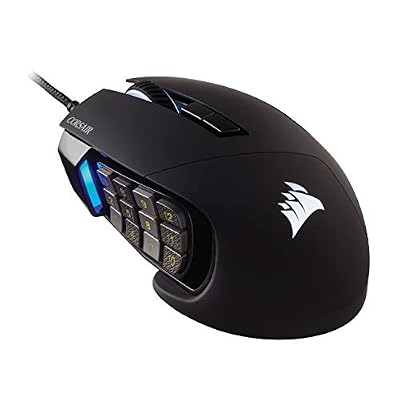 CorsairCorsair Scimitar RGB Elite Wired MMO MOBA PC Gaming Mouse…$89 \xc2\xb7 95/100
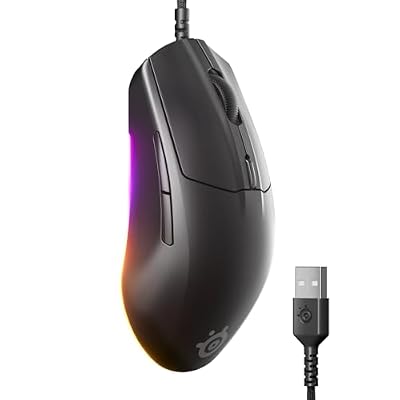 SteelSeriesSteelSeries Rival 3 Gen 2 Gaming Mouse - Black$35 \xc2\xb7 94/100