🛒 Best Price Today on Amazon
Prime members get fast, free shipping on everything above, plus member-only deals. New members get a 30-day free trial — cancel anytime.
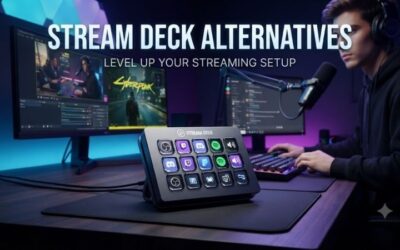
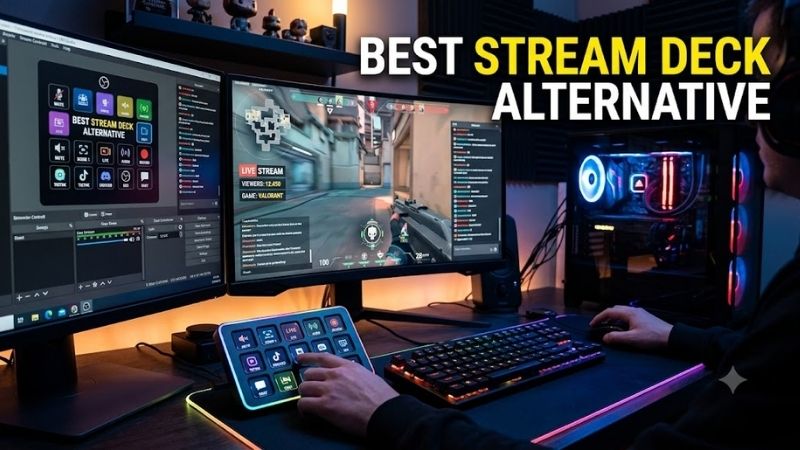
The best Stream Deck alternative should make streaming, editing, and repetitive desktop tasks faster without forcing every command onto a keyboard. This roundup focuses on customizable controllers with macro buttons, dials, displays, app profiles, OBS support, and flexible controls for streamers, editors, and gaming creators.
Quick answer: For most people in 2026, the best stream deck alternative is the Controller — our #1 rated choice. See the full ranked comparison, alternatives and buying advice below.
Quick Comparison
| Controller | Best For | Main Controls | Connection | Key Advantage |
|---|---|---|---|---|
| Loupedeck Live | Streaming and editing | 12 touch keys, 6 dials, 8 buttons | USB | Dials plus deep creator controls |
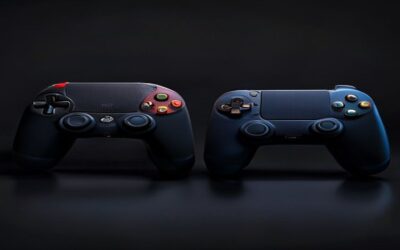
| Razer Stream Controller X | Streamers | 15 buttons | USB | Simple button-focused layout |
| Loupedeck Live S | Compact streaming | 15 touch keys, 2 dials, 4 buttons | USB | Dials in a small footprint |
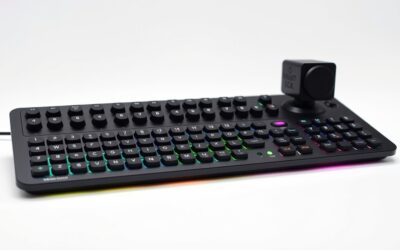
| TourBox Elite Plus | Editing and creator workflows | Buttons, knobs, scroll, dial | Bluetooth/Wired | Tactile one-handed control |
| Xencelabs Quick Keys | Shortcut-heavy creative work | 8 keys, dial, OLED | Wireless/Wired | Physical shortcuts and OLED labels |
Loupedeck Live
Best For: Streaming, editing, and audio control from one console
Key Features:
- 12 touch-sensitive buttons
- Six analog dials with press functions
- Eight round hardware buttons
- Two touch-screen side bars
- Haptic feedback
- OBS Studio support
- Twitch and Streamlabs integration
- Windows and macOS compatibility
Loupedeck Live combines touch controls with physical buttons and six analog dials, giving it a different workflow from controllers built only around programmable keys. The dials are particularly useful for volume, brush size, timeline adjustments, exposure, or other parameters that feel awkward when assigned to repeated button presses.
Its touchscreen provides 12 customizable touch buttons, while eight round hardware buttons handle persistent actions and workspace navigation. The controls can change according to the active workspace or application. This lets one compact device contain separate layouts for streaming, video editing, photo editing, and general desktop tasks.
Streaming support includes OBS Studio, Twitch, Streamlabs on Windows, Voicemod, vMix, and Ecamm. Loupedeck’s OBS integration allows actions to be assigned directly to buttons or dials, including scene controls. This makes the Live useful for creators who need more than launching apps or triggering simple keyboard shortcuts during a broadcast.
The controller also supports applications such as Premiere Pro, Photoshop, Lightroom Classic, After Effects, Audition, Final Cut Pro, and Ableton Live. That broader software coverage matters if streaming is only part of your workflow because the same hardware can remain useful when editing highlights, thumbnails, audio, or recorded content.
What Makes It Different: Six physical dials distinguish Loupedeck Live from button-focused macro pads. A streamer can trigger scenes with touch controls while using dials to change audio levels. Editors can then switch profiles and use the same controls for timeline navigation, color adjustments, brush sizes, or application parameters.
Pros:
- Six analog dials
- 12 customizable touch controls
- Eight physical buttons
- OBS and Twitch integration
- Broad editing software support
- Multiple customizable workspaces
- Compact desktop footprint
Cons:
- Touch buttons provide less physical feedback than mechanical keys
- More controls require more initial configuration
- Loupedeck has announced the end of product sales
Use Case: A Twitch or YouTube creator who switches OBS scenes during streams and later edits video, images, or audio on the same computer.
Who It’s For: Creators who want physical dials and deep application control rather than replacing every shortcut with another programmable button.
Loupedeck has announced the end of Loupedeck product sales, which changes the purchasing decision despite the Live remaining capable hardware. Existing software and support considerations matter more when buying discontinued hardware, especially if long-term plugin development is essential to your workflow. Buyers should account for that before choosing it today.
Razer Stream Controller X
Best For: Streamers who want a simple 15-button layout
Key Features:
- 15 programmable membrane buttons
- Detachable angled stand
- Loupedeck software
- OBS workflow support
- Streamlabs support
- Windows compatibility
- macOS compatibility
- USB-C device connection
The Razer Stream Controller X uses 15 membrane buttons arranged in a traditional macro-pad layout. Each control can be assigned through Loupedeck software, making it easier to build recognizable pages for scenes, applications, sound effects, shortcuts, or productivity actions without learning a mixture of touch bars, dials, and specialized physical controls.
Fifteen buttons provide enough visible actions for a normal streaming page while profiles and software layouts can expand what the device controls. Streamers can dedicate one layout to OBS scenes, another to audio or chat actions, and additional profiles to applications. This reduces dependence on keyboard combinations during an active broadcast.
Razer uses Loupedeck software rather than building an entirely separate macro ecosystem for the controller. Streamlabs actions can be configured inside that software, and the platform also provides access to creator-focused functionality. Users already familiar with Loupedeck therefore encounter a recognizable configuration approach.
The included detachable stand changes the viewing angle, which matters because a button controller is easier to operate when labels remain readable from the normal seated position. Razer lists a two-meter USB-A-to-USB-C cable, giving users enough cable length to position the unit beside a keyboard, microphone interface, or other streaming controls.
What Makes It Different: Stream Controller X avoids dials and complex physical controls in favor of a familiar 15-button design. That makes it better suited to creators who mainly trigger discrete actions such as switching scenes, muting sources, launching applications, playing effects, or running macros rather than continuously adjusting values.
Pros:
- 15 dedicated buttons
- Straightforward layout
- Loupedeck software
- Streamlabs integration
- Detachable angled stand
- Long included USB cable
- Windows and macOS support
Cons:
- No physical adjustment dials
- Less useful for continuous audio adjustments
- Relies on the Loupedeck software ecosystem
Use Case: An OBS or Streamlabs setup where most controls are scene changes, source toggles, microphone actions, application launches, chat commands, or multistep macros.
Who It’s For: Streamers who prefer a conventional button grid and do not need the knobs or editing controls found on more complex creator consoles.
The Stream Controller X is easier to justify when your workflow is action-based rather than parameter-based. If you mostly press commands once, 15 buttons provide a straightforward interface. If you constantly change microphone levels, music volume, brush sizes, timeline positions, or other values, a controller with physical rotary dials may require fewer repeated inputs.
Loupedeck Live S
Best For: Compact streaming setups that still need dials
Key Features:
- 15 touchscreen buttons
- Two pressable dials
- Four RGB hardware buttons
- Custom icons
- App-specific profiles
- Loupedeck Marketplace
- Windows support
- macOS support
The Loupedeck Live S combines 15 touchscreen buttons with two physical dials and four RGB buttons, providing more varied controls than a basic macro pad without requiring as much desk space as the larger Loupedeck Live. Each touchscreen key can carry an icon, while the dials can control continuous values and include press functions.
Two rotary controls make the Live S particularly useful for stream audio. One dial can adjust microphone volume while another controls music, game audio, or another frequently changed parameter. Pressing a dial can trigger a related function, allowing volume and mute controls to occupy the same physical area instead of several separate buttons.
The 15 touch controls can handle streaming commands, application shortcuts, macros, and plugin actions, while four RGB buttons provide physical controls for frequent functions. Users can create pages and application-specific profiles, allowing the same hardware to behave differently when switching between OBS, editing software, or ordinary desktop work.
Loupedeck Marketplace provides plugins, profiles, icon packs, and other downloadable resources for supported hardware. This can shorten initial configuration when a suitable integration already exists. Custom actions remain important, however, because every creator eventually develops personal macros that do not match a preconfigured streaming or editing profile.
What Makes It Different: Live S sits between a button-only streaming pad and a larger editing console. The combination of 15 touch buttons and two dials is particularly effective for streamers who need many commands but only a couple of continuously adjustable controls, such as microphone and desktop audio levels.
Pros:
- 15 touchscreen controls
- Two pressable dials
- Four RGB hardware buttons
- Custom icons
- Application profiles
- Compact format
- Marketplace support
Cons:
- Touch buttons lack traditional mechanical key feel
- Only two dials
- Long-term ecosystem considerations apply to Loupedeck hardware
Use Case: A compact Twitch setup where the creator needs scene controls and macros alongside convenient microphone and media volume adjustment.
Who It’s For: Streamers who want something more flexible than a button-only macro pad but do not need six dials or a full editing-oriented control surface.
Like the larger Live, the Live S must be considered in the context of Loupedeck ending product sales. The control layout remains useful, but future buyers should weigh software longevity and marketplace development alongside current functionality. This consideration is especially important for anyone planning to rely on the device for several years.
TourBox Elite Plus
Best For: Video editors and creators who want tactile controls
Key Features:
- Multiple tactile buttons
- Rotary dial and knobs
- Scroll control
- Dual-channel Bluetooth
- Wired connection on PC and Mac
- Windows compatibility
- macOS compatibility
- iPadOS support
- Android support
- Application-specific customization
TourBox Elite Plus takes a completely different approach from LCD-button controllers. Its physical controls use distinct shapes and positions so users can operate the device by touch instead of constantly looking down at labels. That can make it particularly effective for editing workflows where one hand stays on the controller while the other uses a mouse, pen, or keyboard.
TourBox supports configurable single presses, double presses, combinations, and other control behaviors, expanding the number of possible commands beyond its visible hardware controls. Users can build application-specific presets for editing, drawing, system commands, and other workflows instead of dedicating one physical button permanently to each action.
Software compatibility targets creative work heavily, including applications such as Photoshop, Lightroom, DaVinci Resolve, Blender, Affinity, Cubase, and Procreate on supported platforms. The Elite Plus also supports iPad and Android tablets through Bluetooth, giving creators another use case beyond the Windows or macOS streaming desk.
Dual-channel Bluetooth allows quick switching between two supported devices, such as two computers or a computer and tablet. Windows and macOS systems can also use a wired connection. The controller runs from two AA batteries during wireless operation rather than using an internal rechargeable battery, an important detail for mobile workflows.
What Makes It Different: TourBox is designed for tactile muscle memory rather than visual LCD labels. Its differently shaped dials, wheels, and buttons make it easier to identify controls without looking away from the main display. That concept is especially useful for repetitive video editing and creative work where visual attention should stay on the content.
Pros:
- Strong tactile control design
- Multiple knobs and wheels
- Extensive shortcut combinations
- Bluetooth and wired PC support
- iPad and Android compatibility
- Broad creative software support
- Dual-device Bluetooth switching
Cons:
- No individual LCD shortcut keys
- Less streaming-focused than button-grid controllers
- Uses replaceable AA batteries wirelessly
Use Case: Editing Twitch highlights, YouTube videos, photos, graphics, or other content where timeline navigation and parameter adjustment happen more often than live scene switching.
Who It’s For: Creators who want physical muscle-memory controls and spend as much time editing content as they do livestreaming it.
TourBox can function as a Stream Deck alternative, but the workflow philosophy is different. It is strongest when commands need to become instinctive rather than visually labeled. A Twitch streamer who mainly wants recognizable scene buttons may prefer a screen-based pad, while an editor working for hours can benefit greatly from tactile knobs and shortcuts.
Xencelabs Quick Keys
Best For: Shortcut-heavy editing and creative applications
Key Features:
- Eight programmable physical keys
- Five key sets for up to 40 shortcuts
- OLED display
- Physical adjustment dial
- Programmable dial modes
- Wireless connectivity
- Wired connection
- Compact handheld-friendly design
Xencelabs Quick Keys is a compact shortcut remote built around eight programmable buttons, an OLED display, and a physical dial. Five sets allow the eight buttons to represent up to 40 shortcuts within a workflow, while the screen displays labels. This approach provides physical feedback without forcing users to memorize every active key assignment.
The OLED labels are especially useful when application profiles contain similar commands. Instead of relying only on colored icons, users can identify actions through displayed names. This can shorten the learning curve for editing software where shortcuts may change depending on the current task, tool, application, or custom profile.
Its dial is intended for adjustments that would otherwise require repeated key presses or mouse movements. Creative users can map it to functions such as zoom, brush size, timeline navigation, or other variable controls. Combined with the buttons, this gives Quick Keys an advantage over conventional keypads when editing requires both actions and continuous adjustments.
Wireless operation helps keep the controller movable around a drawing tablet or editing desk, while wired operation provides a straightforward alternative when charging or fixed positioning is preferable. Its compact shape also makes it easier to reposition than larger desktop consoles when switching between keyboard-heavy tasks and creative applications.
What Makes It Different: Quick Keys combines real physical buttons with an OLED label display rather than placing LCD screens inside each button. That gives users tactile presses and visible shortcut names while keeping the control surface compact. Five sets increase available commands without requiring dozens of permanent hardware keys.
Pros:
- Physical programmable keys
- Up to 40 shortcuts across sets
- OLED shortcut labels
- Physical adjustment dial
- Wireless operation
- Compact design
- Useful for editing workflows
Cons:
- Only eight shortcut keys visible at once
- Less focused on livestream integrations
- Requires switching sets for larger command libraries
Use Case: Editing videos, images, graphics, or digital artwork where frequently used keyboard shortcuts and adjustment controls need to remain close to one hand.
Who It’s For: Creators who want physical buttons and a dial but prefer displayed shortcut labels over a completely memorized tactile controller.
Quick Keys is more compelling for post-production than live streaming. Its OLED and physical keys make large shortcut libraries easier to manage, while the dial handles incremental changes well. OBS users can still map keyboard commands, but streamers wanting deep native integrations and visually recognizable scene buttons may prefer a dedicated streaming controller.
How to Choose the Best Stream Deck Alternative
Decide Between Buttons and Dials
Buttons are ideal for actions with clear on-or-off states, including scene changes, microphone muting, opening apps, sending chat messages, or triggering macros. Dials make more sense for values such as volume, timeline position, zoom, brush size, and exposure. Choose the controller type based on what you adjust repeatedly.
Check OBS and Streaming Integration
If livestreaming is the main purpose, verify that the controller can interact reliably with OBS Studio or your preferred broadcasting application. Native plugin support is more convenient than mapping everything to keyboard shortcuts because actions can expose specific scenes, sources, audio controls, and states directly through the controller software.
Consider Software Longevity
Hardware is only one part of a macro controller. Plugins, operating-system compatibility, configuration software, and application APIs determine whether it remains useful after programs update. A controller with excellent hardware can become frustrating if its ecosystem stops receiving integrations, so software longevity deserves equal weight with physical specifications.
Think About Visual Feedback
LCD keys help when you have many profiles because each button can visually explain its current function. OLED labels provide a similar benefit with physical buttons, while purely tactile controllers rely more on muscle memory. Visual interfaces are easier to learn, but experienced editors may operate faster when they no longer need to look down.
Look for Multistep Macros
A useful control surface should do more than replace individual keyboard keys. Multistep macros can open several applications, change scenes, configure audio, trigger lights, or perform repetitive desktop sequences with one action. These workflows often provide more productivity value than simply assigning Ctrl+C or another basic shortcut to a button.
Check Application Support
Streaming may be only one part of your workload. If you also edit videos, design thumbnails, process photos, or mix audio, check support for Premiere Pro, DaVinci Resolve, Photoshop, Lightroom, Final Cut Pro, or your other applications. A controller becomes easier to justify when it continues saving time after the livestream ends.
Consider Desk Space
Streaming desks quickly fill with microphones, audio interfaces, keyboards, controllers, tablets, and other equipment. A smaller macro controller can be easier to reach than a feature-heavy console placed too far away. Measure the area beside your keyboard and decide whether the device will sit flat, angled on a stand, or move between workstations.
Wired vs Wireless
Wired USB provides predictable connectivity and requires no battery management, making it the easiest choice for a fixed streaming desk. Wireless operation is more useful for editors who move the controller around a drawing tablet or studio. Choose wireless for positional freedom rather than assuming fewer cables automatically improve the workflow.
FAQ
What Is the Best Stream Deck Alternative for Streaming?
A useful streaming alternative needs fast access to scenes, microphone controls, sources, applications, and macros. Loupedeck Live and Live S provide OBS-oriented controls plus physical dials, while Razer Stream Controller X favors a simpler button grid. The right layout depends on whether you need adjustable values or mostly trigger actions.
Can I Use a Macro Pad Instead of a Stream Deck?
Yes. A programmable macro pad can trigger keyboard shortcuts, applications, scripts, and OBS hotkeys without dedicated streaming hardware. However, a basic keypad normally lacks dynamic labels, plugins, state feedback, application profiles, and deep integrations. It works best when your command set is simple enough to memorize.
Are Dials Useful for Streaming?
Dials are particularly useful for audio because they allow quick incremental changes instead of repeated button presses. A streamer can adjust microphone, game, music, or chat levels while continuing to watch the broadcast. Dials also become valuable after streaming when the same controller is used for editing timelines or creative settings.
Do I Need LCD Buttons?
LCD buttons are convenient but not essential. They help when commands change between profiles because every key can display its current purpose. Physical buttons with OLED labels or carefully memorized layouts can provide equally effective control. The decision depends on whether visual identification or tactile feedback matters more to your workflow.
Can Stream Deck Alternatives Control OBS?
Several alternatives can control OBS either through native plugins, integrations, or mapped keyboard shortcuts. Loupedeck provides dedicated OBS support, while other programmable controllers can trigger OBS hotkeys. Native integration is preferable when you want direct access to scenes, sources, or specific functions without building keyboard mappings manually.
Is a Stream Controller Useful if I Do Not Stream?
Yes. Programmable controllers can launch apps, run macros, control media, manage meetings, edit videos, change brush settings, navigate timelines, or automate repetitive work. Loupedeck and TourBox particularly emphasize broader creative workflows, while even simple macro pads can save time in productivity applications with shortcut-heavy interfaces.
Conclusion
The best Stream Deck alternative depends on whether your workflow needs visible buttons, physical dials, tactile shortcuts, or editing controls. Loupedeck Live offers six dials, Razer Stream Controller X favors simple actions, Live S balances both approaches, while TourBox Elite Plus and Xencelabs Quick Keys target deeper creative workflows.
Ready to decide? Our #1 pick for 2026 is the Controller.
Live price & availability on Amazon.