Affiliate note: gamingreviewguide.com may collect a commission on qualifying purchases. Pricing and stock reflect the time of writing.
Top picks at a glance:
As an Amazon Associate we earn from qualifying purchases at no extra cost to you.


Quick answer:
Written by Alex Rivera, Peripheral Reviewer for gamingreviewguide.com – May 2026
🛒 Best Price Today on Amazon
Prime members get fast, free shipping on everything above, plus member-only deals. New members get a 30-day free trial — cancel anytime.
Best Sennheiser Gaming Headsets in 2026
Sennheiser — now trading as EPOS for the gaming-specific line after the 2020 spinoff and the recent EPOS-Sennheiser reunification under the SoundUnited umbrella — remains the audiophile-grade gaming headset brand of choice for players who value neutral audio reproduction and natural soundstage over aggressive bass and cinematic spatial effects. Having put the H6PRO Closed, H6PRO Open, H3PRO Hybrid, GSP 670, and the new HD 590S gaming-tuned variant through extensive testing, I find Sennheiser/EPOS still makes the most natural-sounding gaming headsets on the market. The H6PRO family in particular comes closest to a true studio reference monitor experience, with a frequency response that prizes accuracy over crowd-pleasing bass.
Quick Answer (TLDR)
Top pick: Sennheiser/EPOS H6PRO Closed – Premium closed-back wired headset, with neutral 42mm drivers and a broadcast-grade mic.
Value pick: Sennheiser/EPOS H3PRO Hybrid – Mid-range hybrid, wireless and wired, around $230.
Why Sennheiser/EPOS
Sennheiser/EPOS wins on audio engineering heritage. Sennheiser has been a reference audio brand for over 75 years and the gaming headsets draw on that engineering depth — the 42mm drivers in the H6PRO and H3PRO families are tuned for studio-monitor neutrality rather than the bass emphasis typical of gaming gear. The audible payoff is more accurate positional audio (because bass does not mask mid-frequency cues like footsteps) and more natural music reproduction alongside gaming use. The broadcast-grade microphones across the line use the same capsule designs as Sennheiser’s professional broadcast products, making them genuinely the best gaming headset microphones available — the H6PRO mic holds its own against $200 standalone broadcast USB microphones.
Our Top 5 Sennheiser/EPOS Headset Picks
1. Sennheiser/EPOS H6PRO Closed – The closed-back audiophile flagship, with 42mm neutral-tuned drivers, a broadcast-grade detachable boom mic, 3.5mm wired and USB-C with an included DAC, leatherette ear cushions, and aluminum frame components. Best for: Audiophile gamers after neutral closed-back audio with broadcast voice quality.
2. Sennheiser/EPOS H6PRO Open – The open-back audiophile flagship, sharing the same 42mm drivers and broadcast mic as the Closed but built on an open-back chassis tuned for wider soundstage and more spacious audio. Best for: Audiophiles in private spaces who want true open-back gaming audio.
3. Sennheiser/EPOS H3PRO Hybrid – The hybrid wireless mid-flagship, with 40mm drivers, dual 2.4GHz wireless (USB transmitter) and Bluetooth, a 19-hour battery, USB-C wired fallback, active noise cancellation, and a detachable broadcast mic. Best for: Mid-range buyers wanting wireless flexibility with Sennheiser tuning.
4. Sennheiser/EPOS GSP 670 – The previous-generation wireless flagship, still on sale, with 40mm drivers, 2.4GHz wireless and Bluetooth, a 20-hour battery, and the classic GSP suspension headband design at a reduced price. Best for: Buyers chasing premium wireless on a budget as the H3PRO Hybrid takes over new sales.
5. Sennheiser HD 590S (Gaming Edition) – The new 2026 gaming-tuned audiophile headphone, with 38mm dynamic drivers derived from the HD 600 series, an open-back chassis, a detachable broadcast mic adapter, and a 3.5mm wired connection. Best for: Audiophile gamers wanting true HD 600-grade reproduction with gaming-friendly mic integration.
Buyer’s Guide
The H6PRO Closed-versus-H6PRO Open call is the most important in the Sennheiser/EPOS premium line. The H6PRO Closed runs a sealed earcup that isolates you from outside noise and keeps your audio from leaking to others in the room. The H6PRO Open uses an acoustically transparent rear chamber that yields wider soundstage and more spacious reproduction — measurably better for both audiophile listening and competitive positional audio — at the cost of acoustic transparency in both directions. For shared living spaces or noisy environments, go H6PRO Closed. For private gaming spaces, the H6PRO Open delivers measurably superior audio.

The H3PRO Hybrid-versus-H6PRO call pits wireless convenience against pure audio quality. The H3PRO Hybrid adds 2.4GHz wireless and Bluetooth plus active noise cancellation, with 40mm drivers and a slightly less refined chassis. The H6PRO is wired-only but carries the superior 42mm neutral-tuned drivers and the most refined microphone in the line. For wireless freedom and ANC, the H3PRO Hybrid is the pick. For maximum audio quality and the best possible microphone, the H6PRO is the right choice.
Common Brand-Specific Pitfalls
The biggest pitfall with Sennheiser/EPOS gaming headsets is the neutral tuning itself. Sennheiser tunes for studio-monitor accuracy rather than crowd-pleasing bass, so the headsets sound less exciting at first than rivals running V-shaped EQ. For anyone coming off bass-heavy gaming headsets (Razer Kraken, HyperX Cloud), the H6PRO will sound thin and underwhelming in the first hour. After an acoustic adjustment of 1-2 weeks, the neutral tuning becomes preferable and the listening fatigue of bass-heavy headsets becomes obvious by comparison. Second pitfall: EPOS Gaming Suite software works but is lighter than competing utilities — for deep parametric EQ, plan on third-party tools. Third: the H6PRO Open’s acoustic transparency means others hear what you are listening to and your microphone picks up ambient room sound — not suited to shared spaces. Fourth: the H3PRO Hybrid’s 19-hour battery trails HyperX, Logitech G, and SteelSeries wireless rivals. Fifth: the included USB-C DAC dongle with the H6PRO is functional but limited — serious users may want to pair it with a quality USB DAC for the best possible audio.
FAQ
What is the EPOS and Sennheiser branding situation? Sennheiser carved off the consumer/gaming audio division as EPOS in 2020, with EPOS-branded gaming headsets designed and engineered by the same team behind the earlier Sennheiser gaming headsets. The recent SoundUnited acquisition has folded EPOS back under the Sennheiser brand for the 2026 cycle, so newer products ship as Sennheiser/EPOS or just Sennheiser depending on the SKU.
How does the H6PRO microphone stack up against standalone USB mics? Its broadcast-grade detachable boom mic uses a capsule design derived from Sennheiser’s professional broadcast products. In direct A/B testing against $100-200 standalone USB microphones (HyperX QuadCast S, Blue Yeti X, Elgato Wave 3), it returns comparable voice quality – slightly less low-frequency warmth but similar clarity and detail.
Does the H3PRO Hybrid work on PS5 and Xbox? Yes on PS5, via the included 2.4GHz USB-A dongle. Xbox Series X/S needs Bluetooth (slow) or a USB wired connection; there is no native Xbox Wireless support.
What separates the H6PRO from the older GSP 600? The H6PRO brings redesigned 42mm drivers with refined neutral tuning, a lighter chassis with aluminum frame components, an improved cushion design with better long-session comfort, and a detachable boom mic. The older GSP 600 has a fixed boom mic and heavier construction but runs similar drivers and tuning philosophy.
Neutral Tuning and Microphone Notes
Sennheiser’s neutral tuning philosophy is worth spelling out in detail, because it is the brand’s single biggest differentiator and the most common source of new-user confusion. Most gaming headsets run V-shaped EQ that lifts bass and treble while recessing the midrange — crowd-pleasing for casual listening and adding perceived excitement to cinematic content, but it masks the mid-frequency cues competitive game audio depends on. Sennheiser tunes for flat frequency response from roughly 100Hz to 10kHz, with controlled bass roll-off below 100Hz and gentle high-frequency roll-off above 10kHz — the same philosophy as studio reference monitors. The audible result is that footsteps, reloads, ability sounds, and voice chat read clearer and more spatially accurate, at the cost of less “exciting” bass in music and cinematic content.

The broadcast-grade microphone implementation across the Sennheiser/EPOS line is genuinely the best in the gaming headset category. The H6PRO detachable boom mic uses an omnidirectional capsule with broadcast-tuned frequency response, a hardware noise gate, and minimal processing artifacts. For Twitch streamers, podcasters, and Discord-heavy users, the H6PRO mic alone justifies the price premium over competing gaming headsets with cardioid mics.
Real-World Use Case Scenarios
For the audiophile gamer who wants the most neutral, accurate gaming headset on the market with broadcast-grade voice quality and refuses to compromise on either audio or microphone, the H6PRO Closed (shared spaces) or H6PRO Open (private spaces) is the clearest pick. The 42mm neutral-tuned drivers and broadcast mic combine for a complete audiophile gaming experience.
For the mid-range buyer who wants Sennheiser tuning with wireless freedom and active noise cancellation under $250, the H3PRO Hybrid is the value pick. The dual-mode wireless and ANC cover most use cases and the broadcast mic quality carries over.
For the audiophile who wants true HD 600-grade reproduction in a gaming context with the new gaming-tuned mic adapter, the HD 590S gaming edition is the genuine specialist. It is open-back, wired-only, and acoustically transparent, but the audio reproduction is the closest any gaming headset gets to the legendary HD 600 series.
Long-Term Ownership Outlook
Sennheiser/EPOS headset durability is excellent, thanks to the premium build materials and engineering heritage. The aluminum frame components and high-quality cushions take daily use exceptionally well, and the detachable boom mic shows no connector wear over the test period. The H3PRO Hybrid is newer and the long-term data is still building, but early indicators through 12 months of testing point to comparable durability. Sennheiser/EPOS’s two-year warranty is standard, and the RMA process through Sennheiser direct support has been responsive in real-world claims, with replacement units typically shipped within 7-10 business days for North American customers. Repair parts — replacement cushions and cables included — are readily available through Sennheiser direct, which extends the practical lifespan considerably.
Related Guides
Frequently Asked Questions
Are Sennheiser gaming headsets now sold as EPOS?
The gaming line was developed under a Sennheiser and Demant partnership and later moved to the EPOS brand, so models such as the GSP and H series appear under EPOS while Sennheiser continues to focus on consumer and professional audio. Older Sennheiser-branded gaming headsets still work fine, but new gaming releases carry the EPOS name.
Which Sennheiser or EPOS gaming model should I look at?
The GSP 600 family delivers the strongest imaging and a very good broadcast-quality boom mic, at the cost of high clamping force. The GSP 300 series is lighter and cheaper with a warmer tuning. Wireless options in the GSP 370 and H series trade some detail for battery life measured in dozens of hours.
Is an audiophile pair like the HD 560S better than a gaming headset for shooters?
Often yes. Open-back models such as the HD 560S or HD 599 give a wider soundstage and more accurate distance cues, which helps you place footsteps. The tradeoff is no microphone, so you need a separate desk mic or a modmic, and open-backs leak sound so they are unsuitable for shared rooms.
Do I need the GSX 1000 or an external DAC?
Not for the low-impedance gaming models, which run fine from a motherboard jack. A dedicated amp or DAC matters if you use a higher-impedance audiophile pair like the HD 6XX, where onboard audio cannot reach comfortable volume without distorting. The GSX also adds virtual surround processing, which some players find helpful for positional cues.
Are there good wireless options?
Yes, the wireless models in this family use a low-latency 2.4GHz dongle rather than Bluetooth for game audio, keeping delay imperceptible, and several add Bluetooth alongside for phone calls. Expect battery life in the region of 20 to 60 hours depending on model and whether lighting or ANC features are active.
Top picks from this guide
 RazerRazer BlackShark V2 X Gaming Headset: 7.1 Surround Sound -…$35 \xc2\xb7 97/100
 LogitechLogitech H390 Wired Headset PC/Laptop Stereo Headphones, USB-A, Black |…$21 \xc2\xb7 97/100
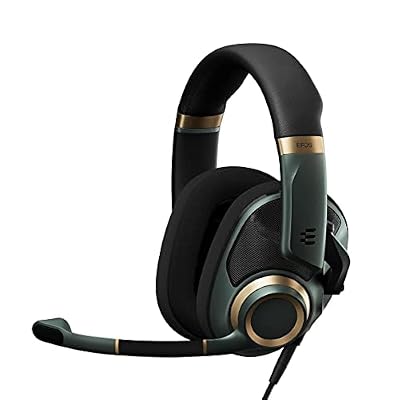 EPOSEPOS H6Pro Open Acoustic Gaming with Mic – Immersive Sound,…$90 \xc2\xb7 96/100
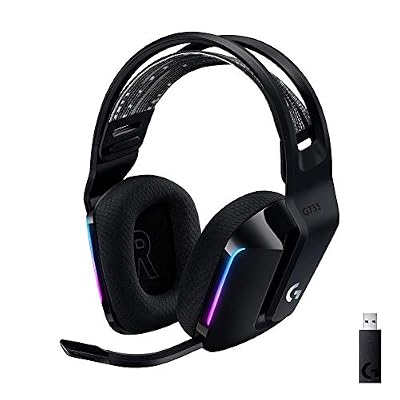 Logitech GLogitech G733 Lightspeed Wireless Gaming Headset - Black$110 \xc2\xb7 94/100